







Business, Financial & Legal - Page 125
Catch up on business, finance, and legal news shaping tech, gaming, and science - mergers, lawsuits, antitrust, IPOs, Big Tech earnings, and market trends. - Page 125
Stay Updated
Follow TweakTown for breaking tech news, reviews, and daily updates.


As an Amazon Associate, we earn from qualifying purchases. TweakTown may also earn commissions from other affiliate partners at no extra cost to you.
BlackBerry to leave the consumer market, 4,500 employees to be let go
BlackBerry is about to cut 4,500 staff from its books, which represents the 40% layoff numbers we heard a couple of days ago now. But the news gets worse: BlackBerry is leaving the consumer market.
This is something we've been expecting here at TweakTown, but the news is quite sudden. This all comes from the failure that is the BlackBerry Z10 smartphone, which has cost the Canadian phone maker $1 billion in losses in the last quarter alone. BlackBerry says it will take a "primarily non-cash, pre-tax charge against inventory and supply commitments in the second quarter of approximately $930 million to $960 million" due to the Z10.
In the second quarter of this year, BlackBerry shipped only 3.7 million smartphones, most of which were running BlackBerry 7, not the company's BB10 OS that ships on the Z10. BlackBerry didn't reveal how many BB10-based devices it sold in the quarter, which should give us a hint in where those numbers must lie.
Continue reading: BlackBerry to leave the consumer market, 4,500 employees to be let go (full post)
Tim Cook says that Microsoft is copying Apple's strategy
You know that saying of eating your own words? It looks like Tim Cook is going to get very full, very soon. Apple CEO, Tim Cook, sat down with Bloomberg Businessweek, enjoying a joint interview with head of design, Jony Ive and software chief Craig Federighi.
One of the topics discussed was Microsoft's recent acquisition of Nokia's Devices and Services division, where Tim Cook said "everybody is trying to adopt Apple's strategy. We're not looking for external validation of our strategy, but I think it does suggest that there's a lot of copying, kind of, on the strategy and that people have recognized that importance."
Ironically, Cook says that everyone should have their eyes on Nokia, as he thinks that the company is the perfect example "to everyone in business that you have to keep innovating and that to not innovate is to die."
Continue reading: Tim Cook says that Microsoft is copying Apple's strategy (full post)
EA's new CEO is an Aussie, no shrimps on EA's barbie, though
Former executive VP of EA Sports, Andrew Wilson, has just stepped into the shoes of the company's CEO position. Wilson took to EA's official website, breaking the news himself, and took some time to discuss EA's future.
He said: "From my start at EA in Australia back in 2000, through stops in Asia, Europe and now North America, I've worked with people in this company who have consistently amazed and inspired me. It's my passion for our people and the great products we all impact that gives me such excitement for our future. I hope you all feel the same level of energy and optimism that I do as we embark on this journey together."
Wilson believes that the path EA is currently walking, is the right one, which includes exploring online gaming, digital revenue streams and continuing to make high-quality AAA games, such as Battlefield 4. One of his additional goals is to instill "a culture of execution that will drive profitable growth."
Continue reading: EA's new CEO is an Aussie, no shrimps on EA's barbie, though (full post)
Google acquires mobile startup Bump for $30 million
Today, the tech startup Bump announced that it has been acquired by Google in what industry analysts say is a deal worth between $30 million and $60 million. Bump was the first app that allowed users to "bump" their iPhones together to automagically transfer files from one phone to the other.
The original app has been downloaded over 100 million times. In the years, the company has expanded to feature a group photo sharing app called Flock. While the price tag of $30 million seems to be a home run for the company, it had already raised about $20 million from backers including Sequoia Capital, making the deal not so sweet.
"Bump and Flock will continue to work as they always have for now," Bump CEO David Lieb wrote in a blog post today. With the company now being owned by Google, it leaves many industry insiders to believe that we will see deep integration of Bump's IP into Android 5.0
Continue reading: Google acquires mobile startup Bump for $30 million (full post)
Samsung investing $500 million into new testing facility in China
It looks like Samsung is putting down $500 million to build a new testing facility in Xi'an, an industrial city in Northwest China. The new facility will see packaging and testing done under its roof, and is the South Korean giants latest investment in a string of investments for its future in the last couple of months.
The new facility will be built in the same city that Samsung built a $7 billion chip plant in last year, on top of the $1.7 billion it spent in 2012 on improving its operations in the manufacturing hub Kunshan. All of these steps that Samsung has made are all part of a $41.4 billion capital expansion that Samsung started last year. The electronics giant has seen gigantic success in the mobile devices segment, and is now packed with cash.
The company is using its flow of cash to invest in its future, which we're constantly seeing. In its Chinese supply chain network, Samsung has over 250 manufacturers, which is definitely saying something. The new factory will begin construction in January next year, and should be finished by the end of 2014.
Continue reading: Samsung investing $500 million into new testing facility in China (full post)
Netflix uses pirate sites to decide on which TV shows to purchase
According to Netflix's Vice President of Content Acquisition, Kelly Merryman, the company partly determines which shows it should buy based on the popularity of such shows on file-sharing platforms, which should come as quite the shock.
The video streaming company sees itself as one of the biggest competitors to pirate sites, where Netflix offers a subscription-based model, and pirate sites offering it for free. But, while the pirate sites may offer it for free and make money from ads and other sources, Netflix uses these sites to gain information on which shows are popular, which helps them decide on which content they should acquire for their ever-growing base of customers.
This week, the video streaming giant rolled out its Netflix service to the Netherlands, with Merryman stating: "With the purchase of series, we look at what does well on piracy sites." Mellyman used Prison Break as a prime example, saying that Netflix acquired the rights to the Wentworth Miller starring prison drama because it is heavily pirated locally. Netflix CEO, Reed Hastings, even commented, saying that the company is aware that people download content without permission through pirate sites.
Continue reading: Netflix uses pirate sites to decide on which TV shows to purchase (full post)
HTC America lays off 20% of its employees, continues its nose dive
Taiwanese smartphone manufacturer HTC has been in a downward spiral for quite a while now, with a little bit of help in the last couple of months coming from its latest flagship handset, the HTC One. But now there are reports that HTC has laid off 30 employees and contractors from its HTC America division.
30 employees might not seem like a lot, but it amounts to 20% of HTC's employees in the US. A statement was given to The Verge, which said that these layoffs are strategic moves in order to help HTC "streamline and optimize our organization." We don't know which departments have seen employees packing their bags, but they might actually be helped by HTC. Jason Mackenzie, President of HTC America said in a letter to employees that those hit with the layoff news will be 'treated with respect' and the company will help them out with resources to continue their careers elsewhere.
Continue reading: HTC America lays off 20% of its employees, continues its nose dive (full post)
Google dumps Oracle's MySQL database in favor of MariaDB
Today at the Extremely Large Database conference being held in Stanford California, Google announced that it will be migrating its MySQL systems over to MariaDB. Google has assigned one of its engineers to the MariaDB foundation to aid in the migration.
"Were running primarily on [MySQL] 5.1 which is a little outdated, and so we're moving to MariaDB 10.0 at the moment," said Google senior systems engineer Jeremy Cole in a presentation he gave on the general state of the MySQL ecosystem.
Cole said that Google has been working with the MariaDB foundation since the beginning of the year in an effort to make the migration over to MariaDB as smooth as possible. He went on to say that the migration involves thousands of MySQL servers within the Google ecosystem and that Google's MySQL team is looking forward to working with the SkySQL MariaDB team to advance the reliability and feature set of MariaDB.
Continue reading: Google dumps Oracle's MySQL database in favor of MariaDB (full post)
Cisco will acquire Whiptail to strengthen Unified Computing Systems
Today Cisco announced that it intends to acquire the solid state memory manufacturer WHIPTAIL for $415 million. Cisco says that this acquisition will strengthen the company's Unified Computing System strategy and enhance application performance by introducing scalable solid state memory into the UCS's fabric computing architecture.
Our good friend, Jim Handy of Objective Analysis was kind enough to send over his take on the whole acquisition and I have posted the entire statement below. Jim says that he feels that this move by Cisco was a good decision and that the price seemed reasonable enough based on other recent acquisitions in the market.
Continue reading: Cisco will acquire Whiptail to strengthen Unified Computing Systems (full post)
SK Hynix fire not as bad as first thought, one plant re-opened
If you didn't tune in to our first Podcast, you might want to check that out here, where we had Jim Handy from Objective Analysis on the show talking with us about the SK Hynix factory fires.
SK Hynix provided an update today, where it has said that the fab that was damaged by the fire is still being evaluated, but the second fab has been re-opened. The company said in a statement: "Our plan is to resume normal operations with full production capacity in the shortest time by ramping up operations in stages as soon as the damaged facilities are replaced."
Handy says that this seems to contradict earlier reports from the company, where it said it would see operations resumed quickly so that production volume wouldn't be impacted in the long-term. SK Hynix has said that it has inventory in Korea, where they said: "We will continue to make every effort to minimize the impact on supply with our inventories of finished products and completely processed wafers as well as production support from our headquarters."
Continue reading: SK Hynix fire not as bad as first thought, one plant re-opened (full post)
Newegg wins another battle against patent troll Erich Spangenberg
Today, Newegg announced that it has won yet another battle in its ongoing fight against the notorious "patent trolls" Soverain Software and TQP Development. Newegg says that on September 4, 2013, the Federal Circuit Court of Appeals invalidated an additional claim made by Soverian Software LLC on its "Shopping Cart" patent.
Additionally, the court denied Soverain's request for a rehearing of the initial January 22, 2013 decision that invalidated the balance of the asserted claims. As a result of this decision, Newegg says that all patent claims asserted by Soverain have been held invalid for being no more than obvious variations of old patents held by CompuServe technology.
Newegg says that it is looking forward to going to trial later this year against TQP Development LLC, a shell company affiliated with the notorious patent troll Erich Spangenberg. Newegg says that it hopes that Spangenberg will allow the patent to be tested by the court system this time around and feels that it will be the end to the "shopping cart" patent for good.
Continue reading: Newegg wins another battle against patent troll Erich Spangenberg (full post)
Lenovo CEO to give $3.25 million of personal bonus away to employees
Today, a new report from Bloomberg suggests that Lenovo CEO, Yang Yuanqing, plans on giving away $3.25 million of his bonus to 10,000 of the company's lowest paid workers. Workers in 20 countries will get the payments, including a facility in Mooresville, North Carolina, where Lenovo's US headquarters is located.
The deal works out to about $325 per employee, which may not sound like much to the US crowd, but $325 is just about the equivalent of one month's pay for the company's workers in China where 85 percent of the company's employees are located. Yang says that he is giving away a significant portion of his annual bonus so that all employees understand the impact they have on making Lenovo the largest PC manufacturer in the world.
10,000 workers only work out to about a third of Lenovo's total employees, but Yang has decided to give the payouts to those who earn the least amount, are paid by the hour, or not eligible for commission or other bonuses that would increase their normal rate of pay. The $3.25 million will not affect Mr. Yang, though, as last year he earned 14.6 million and owns roughly 7 percent of the company's stock.
Continue reading: Lenovo CEO to give $3.25 million of personal bonus away to employees (full post)
Ballmer says Nokia acquisition is a good deal for Microsoft
Microsoft's early morning announcement of its pending acquisition of Nokia has the entire tech world talking this morning, with many speculating about what the future may hold for both companies. Shortly after the official announcement, Microsoft CEO Steve Ballmer issued a statement to Microsoft employees in the form of a company-wide memo.
The memo mentions that the partnership between Microsoft and Nokia over the last two years has yielded some incredible work and cites the recently released Lumia 1020 41-megapixel Windows Phone as its greatest achievement. Ballmer says that he believes that now is the time for Microsoft to build on this momentum and capitalize on Windows Phone's growing popularity on the Lumia platform.
He goes on to say that Microsoft's acquisition of Nokia is a good deal for both companies in that Microsoft is on the receiving end of some incredible talent, technology, and intellectual property. In an article I posted earlier this morning, Ballmer alluded to the fact that he feels that Microsoft can take the Lumia line of smartphones to an entirely new level that was unachievable with Nokia. I have pasted the full memo below in the event you would like to read it.
Continue reading: Ballmer says Nokia acquisition is a good deal for Microsoft (full post)
Microsoft receives less than $10 per Nokia Windows Phone sold
Maybe this is one of the driving forces behind Microsoft's acquisition of Nokia's Services and Devices division today, in that the Redmond-based company isn't even making $10 per Windows Phone-based Nokia device sold.
Part of it's "rationale for the deal", Microsoft revealed that under its current deal with Nokia, it receives less than $10 per phone in software royalties. This would mean that if Windows Phone were to overnight, somehow, with maybe a wish from a genie, become the number one mobile OS in the world and sell millions of handsets through Nokia, it wouldn't exactly equal huge money for Microsoft.
So while people might be looking at Microsoft taking a big risk acquiring the Services and Devices division from Nokia, in the long run it obviously hopes it'll help them. Microsoft has also said that Nokia's Windows Phones have a gross profit margin in the range of $40 per phone. The Redmond-based software giant is also signing a rather large cheque to Nokia for "platform support", which is kinda like a bribe so that Nokia goes all-in with Windows Phone instead of Android.
Continue reading: Microsoft receives less than $10 per Nokia Windows Phone sold (full post)
Microsoft still loves other Windows Phone makers, not just Nokia
I'm sure that most, if not all of Microsoft's Windows Phone partners were calling emergency board meetings today when the Redmond-based giant announced it had acquired Nokia's Devices and Services division, but what does this mean for the future of Windows Phone?
Well, apart from writing an article about it (which you can expect in the coming days, as well as a new surprise addition to the site), Microsoft's EVP of Operating Systems, Terry Myerson, has said that Microsoft won't be cutting ties with other WP partners. He has been quoted as saying: "Acquiring Nokia's Devices group will help make the market for all Windows Phones, from Microsoft or our OEM partners. We collaborate with our Microsoft hardware teams in the same way we partner with our external hardware partners... We look forward to building new products together that will provide valuable business opportunity for the ecosystem and enable OEMs."
Without going into much detail, I don't think we'll see anything big from the acquisition. By then, Google would have put its foot right down to the metal with Android 5.0 "Key Lime Pie", Google Glass, and enjoying its partners pushing out countless devices. Apple is going to be the underdog going into 2015 with the iPhone, and Microsoft, well, they could surprise us, but they haven't so far.
Continue reading: Microsoft still loves other Windows Phone makers, not just Nokia (full post)
Apple wants to trademark the word "startup," application under review
It's no secret that Apple would like to own the IP rights to everything ever created, and a recent trademark filing seems to affirm this. Today, website TMwatch spotted a recent trademark application filed by the Cupertino giant in which the company wishes to obtain exclusive rights to the word "startup."
The trademark was filed with the Australian legal firm Baker and McKenzie at the company's California headquarters. If the trademark is granted, it would prevent future new companies from using the term "startup" to describe their business ever again. It would also prevent the phrase being used in retail stores, being used in literature to describe what your computer does when you press the power button, and even educational settings such as classes and workshops.
Fortunately, trademark applications usually take a couple of years to process which leaves plenty of time for individuals and other companies to protest the filing. However, if the trademark application is approved, it could spell major issues for the tech industry as a whole. On a lighter note, could you imagine a world in which Robert Scoble could not use the term "startup" anymore?
Continue reading: Apple wants to trademark the word "startup," application under review (full post)
Is Ballmer's retirement 100 percent voluntary? Some analysts say no
Last week, Microsoft CEO Steve Ballmer announced his retirement in an aptly named internal memo titled "Moving Forward." The memo depicts Ballmer leaving the company on his own decision, but many industry analysts are speculating that the sometimes wild CEO was actually being forced out by the company's board.
GigaOm journalist Barb Darrow said in a recent article that "Several former and one current Microsoft execs told me that there was no way Ballmer would step down unless Gates withdrew his long-time support" when this is paired with Ballmer's own statement from the memo "My original thoughts on timing would have had my retirement happen in the middle of our transformation to a devices and services company focused on empowering customers in the activities they value most." It's easy to interpret Ballmer's retirement as a not so voluntary departure.
The article on GigaOm goes on to quote another former vice president who it says is still tightly connected with Microsoft; "Bill must have flipped the bit on Steve," said the VP, adding that the recent reshuffling of most major executive roles--Ballmer's his own--"lined everything up behind Steve."
Continue reading: Is Ballmer's retirement 100 percent voluntary? Some analysts say no (full post)
NSA hacked encrypted UN communications, where's the uproar?
Julian Assange. Bradley Manning. Michael Hastings. Edward Snowden. These are all men who are either dead, stuck in another country, in jail or are in the run because they exposed US government secrets. This is wrong, and the reverse should be happening.
These men should be awarded for exposing the lies from within the biggest government in the world, but instead, they're paying the price for exposing things that the Obama administration promised would be more 'transparent.' Now there's news that the National Security Agency (NSA) hacked into encrypted communications of the United Nations' internal video conferencing system.
The news is coming from Germany's Der Spiegel, a source we used when we were the first mainstream site to report that a German government official considered Microsoft's Xbox One console a "monitoring device." This even landed us on the front page of Reddit, with multitudes of sites reporting on the story afterwards.
Continue reading: NSA hacked encrypted UN communications, where's the uproar? (full post)
Steve Ballmer's biggest regret while CEO of Microsoft? Windows Vista
Steve Ballmer, the current CEO of Microsoft, has announced he's stepping down in 2014, but what is his biggest regret as his time as Chief Executive Officer at the biggest software company in the world?
Oh, you guessed it already: Windows Vista. Ballmer spoke with ZDNet's Mary Jo Foley, where he said: "I would say probably the thing I regret most is the, what shall I call it, the loopedy-loo that we did that was sort of Longhorn to Vista. I would say that's probably the thing I regret most. And, you know, there are side effects of that when you tie up a big team to do something that doesn't prove out to be as valuable."
But, from the doom and gloom of Windows Vista was one of Microsoft's most successful operating systems: Windows 7. This was while Ballmer was CEO of course, so he can at least give himself credit for something big.
Continue reading: Steve Ballmer's biggest regret while CEO of Microsoft? Windows Vista (full post)
NSA paid millions to US tech companies for their cooperation
Can it get any worse? When will the people of the United States realize the Constitution is, and has been worthless for years? This latest news should help boil that kettle a little hotter...
The Guardian, who also broke the NSA PRISM news thanks to NSA whistleblower Edward Snowden, is now reporting that US-based tech giants such as Google, Yahoo, Microsoft and Facebook all received funds from the NSA so they could meet new certification demands after a ruling from the Foreign Intelligence Surveillance (FISA) court.
This was declassified by the Obama administration during the week, but happened back in October of 2011. The document states something that Edward Snowden himself talked about, the Special Source Operations division which he called the "crown jewel" of NSA's PRISM system, and that they relied on "corporate partnerships" with telecommunications companies and ISPs in order to access communications data. Mad yet?
Continue reading: NSA paid millions to US tech companies for their cooperation (full post)
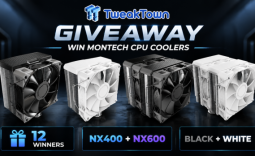 Giveaway: 12 Winners Will Score MONTECH NX400 and NX600 CPU Coolers
 GTA 6 leaks have reportedly led to a morale drop at Rockstar, with Netflix frustrated as well
 The Blood of Dawnwalker won't hit 60 FPS on any console, PS5 Pro tops out at 40 FPS
 AMD claws back ground against Intel in the CPU market, climbs to 35% share in desktop CPUs
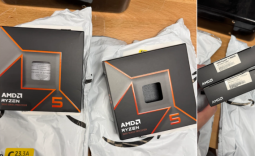 Redditor receives not one but TWO empty boxes of Ryzen 5 9600X from Amazon
 Xbox Series X25 Limited Edition Console is priced at $900, arrives November 2026
 Dave Bautista officially cast as Kratos in Amazon's 'God of War' TV Series, replaces Ryan Hurst
 Take-Two begins the hunt for GTA 6 leaker CyberLeek, subpoenas Microsoft and Discord
 PlayStation 6 handheld not expected to stay under $600, warns leaker
 AMD confirms the Radeon RX 9050 4GB will have a tiny 64-bit bus and just 16MB Infinity Cache
 Intel 'Nova-Lake-S' 28-core CPU with bLLC reportedly draws 296W at PL2
 Cooler Master MasterFan A120 Fan Review
 GIGABYTE MO27Q2A Gaming Monitor Review: 1440p, 280Hz, and QD-OLED is a winning combination
 Cooler Master V8 ACE 3DHP BLACK CPU Cooler Review
 ASUS ROG Strix XG129C Review: A $199 Gaming Monitor You Don't Play Games On
 Cooler Master HAF II 500 Mid-Tower Chassis Review
 Corsair HS35 v3 Wireless Gaming Headset Review - An Affordable Winner
 D-Link F518 5G Wi‑Fi 6 AX1800 Mobile Hotspot Review: All-Day Mobile Hotspot
 Bose Lifestyle Ultra Speaker Review - Impressively Detailed Room-Filling Sound
 MSI Z890 Gaming Plus WIFI6E Review - Z890 for under $200
 Mortal Kombat (1995) 4K Ultra HD Blu-ray Review
 Using Multiple Monitors? Change these Windows settings for a Better Experience
 Windows Sandbox is The Windows Security Feature Most People Never Use
 I ditched the Windows 11 context menu for this open-source tool, and here's why
 Windows 11 may be encrypting your drive already, and I checked where my recovery key went
 GIGABYTE's 40 Days of INFINITY celebrates 40 Years of Innovation with stunning GeForce RTX graphics cards and rewards
 I swapped File Explorer for this free file manager and finally got the layout I wanted
 How to tell if someone has been using your Windows PC without your permission
 6 Task Manager tips for troubleshooting Windows performance problems
 ASUS ROG's 20th Anniversary Line-up of Premium PC Gaming Gear has Arrived - Here's Everything You Need to Know
 Six File Explorer tips every Windows user should know