







Electric Vehicles & Cars - Page 39
Get the latest news on electric vehicles (EVs) and ICE cars, including new Tesla models, upcoming car releases, and emerging automotive technologies. - Page 39
Stay Updated
Follow TweakTown for breaking tech news, reviews, and daily updates.


As an Amazon Associate, we earn from qualifying purchases. TweakTown may also earn commissions from other affiliate partners at no extra cost to you.
Samsung's Smart Windshield concept looks freakin' incredible
Samsung has just unveiled a new concept for its Smart Windshield, which has been teased on a motorcycle, with its awesome technological advancement for the windshield.
The new Samsung Smart Windshield could eventually find itself into normal cars and trucks, but the company says that it's a simple technology with the technology already existing, and put into production. The Smart Windshield uses a smartphone - such as the Galaxy S7 from Samsung, with an accompanying app that connects to the small projector on the windshield, throwing up specific information to the driver.
The concept project allows riders and drivers to navigate information, send automated responses over email/SMS, receive/decline phone calls and text messages, and more. Navigation feels like the best fit here, but I'm sure that eventually there will be information from the vehicle thrown to the Smart Windshield, such as gas mileage, maintenance information, and more.
Continue reading: Samsung's Smart Windshield concept looks freakin' incredible (full post)
Goodyear concept tires are spherical, intended for driverless cars
Goodyear has been in the tire game for 117 years, and now it's looking to turn it on its head with spherical tires. Eagle-360 tires, as they're known, are only a concept, but the company says they "present an inspiring solution for the long-term future when autonomous driving is expected to be more mainstream."

Safety is a major concern of autonomous driving skeptics and Eagle-360 tires are a direct response to that: as they are multi-orientation and sport "active technology", they can move in all directions which is said to make for increased maneuverability and reduced sliding caused by black ice, obstacles, and so on. Additionally, sensors register tire wear for extended mileage, and communicate road conditions to the car and nearby vehicles. Interesting to note: the tread is 3D printed, and so could be customized for different terrain in different regions, making for safer driving due to better equipped vehicles.
As for luxury features, the tire is suspended by magnetic fields, and as such is said to offer more comfort and less noise than with a traditional tire.
Continue reading: Goodyear concept tires are spherical, intended for driverless cars (full post)
Consumer Product Safety Commission declares current hoverboards unsafe
The U.S. Consumer Product Safety Commission (CPSC), following a months-long investigation, has declared the use of hoverboards -- and self-balancing scooters -- currently on the market to be unsafe. Consequently, retailers, manufacturers, and importers are now required to follow safety standards in order to sell current and future boards, lest they face legal action. Until now, no safety standards were in place. The news is expected to result in mass recalls.
Although it has admitted open flame was never achieved in its testing (which comprised examining hoverboard circuit boards, batteries, and burned hoverboards, as well as dynamometer tests), the CPSC witnessed enough melting and overheating to feel comfortable making their move. No doubt the 52 hoverboard fires constituting $2 million in property damage and killing two dogs and nearly three children -- all between December 1 and February 17 -- helped to that end as well.
New, certified hoverboards should start selling later this year.
Continue reading: Consumer Product Safety Commission declares current hoverboards unsafe (full post)
Telsa's new 'Summon' feature parks, and retrieves your Model S vehicle
One of the coolest new features being rolled out to the Model S is its new "Summon" feature, which is part of Tesla Motors' v7.1 software for the Model S.

Summon will allow Model S owners to park, and retrieve their Model S vehicles without being inside of the car, or even near it. But, Consumer Reports' latest video has some testing done with Summon, which failed some of their safety tests. They found if you exited the Tesla app on the iPhone 6S while the Model S was moving out of its park, the car would continue to move - which is worrying.
Telsa has been playing with the smartphone app, limiting its Summon abilities for this very reason. The key fob that Model S owners have will be able to stop the car, but not drive it - while the app itself will require users to have their finger on the screen for the feature to work.
Continue reading: Telsa's new 'Summon' feature parks, and retrieves your Model S vehicle (full post)
Tesla's Model 3 priced as low as $25,000 after tax subsidies in the US
Most people would love to own a Tesla, but their price keeps them away from the average consumer - which is why the electric car maker is working on the Model 3.
According to Bloomberg, the Model 3 could be found as low as $25,000 when it arrives, after tax subsidies drops it from its starting price of $35,000. Tesla spokeswoman Khobi Brooklyn told Bloomberg: "We can confirm it's $35,000 before incentives. We haven't changed our minds".
If we consider the average American wants to spend $31,000 on a new car (according to an analysis by Salim Morsy of Bloomberg New Energy Finance), the $35,000 starting price on the Model 3 from Tesla is getting very close to that point. Adding in tax subsidies and hitting $25,000 - well then, it's looking very good for consumers.
Continue reading: Tesla's Model 3 priced as low as $25,000 after tax subsidies in the US (full post)
NVIDIA's Pascal-powered Drive PX 2 is as powerful as 150 MacBook Pros
CES 2016 - NVIDIA held its CES 2016 press conference, announcing its new Drive PX 2 system. The predecessor to NVIDIA's in-car computer is liquid-cooled and as powerful as 150 of Apple's MacBook Pros.
Drive PX 2 features 12 CPU cores and 8 TFLOPS of processing power. When it comes to the GPU side of things, it features NVIDIA's next-gen Pascal GPU baked on the 14nm process. NVIDIA claims that Drive PX 2 has the same processing power as six Titan X video cards, which is saying quite a lot.
All of the horsepower that NVIDIA's Drive PX 2 is capable of is required to pull in all of the stuff around it - people, cars, and everything else. It has a bunch of maps and sensors that it needs to deal with on-the-fly, with NVIDIA cramming in a liquid-cooled, 250W system powered by Pascal.
Continue reading: NVIDIA's Pascal-powered Drive PX 2 is as powerful as 150 MacBook Pros (full post)
NASA green technology could cut airline fuel use in half, save $255 bn
NASA's aeronautics department has developed and refined green technology through its Environmentally Responsible Aviation (ERA) project the past six years, and the results are excellent. It says what it's done could "cut airline fuel use in half, pollution by 75 percent and noise to nearly one-eighth of today's levels."
For airlines, this means a potential $255 billion in savings between 2025 and 2050. And before you think the savings won't be passed onto you, airline prices have actually dropped by 50 percent the last three decades.
The project cost NASA $400 million, with an additional $250 million put up by industry partners. Its intent was to explore new vehicle concepts and technologies that would reduce the environmental impact of aviation. One example: a "radical new morphing wing technology that allows an aircraft to seamlessly extend its flaps, leaving no drag-inducing, noise-enhancing gaps for air to flow through" (pictured above). While the rest of the developments are yet to be confirmed as on track for commercialization (they will be discussed at the American Institute of Aeronautics and Astronautics Sci-Tech Conference in San Diego this week), this one has already been picked up by FlexSys and Aviation Partners of Seattle.
Continue reading: NASA green technology could cut airline fuel use in half, save $255 bn (full post)
ArcaSpace creates first real-life hoverboard, on sale for $20,000
In a milestone that pushes humanity one step closer to science fiction, ArcaSpace has created the world's first real hoverboard.

Unlike hoverboard "impostors" like the uni-wheeled gyro skateboard or Lexus' SLIDE board, the ArcaBoard actually levitates up to a height of one foot over surfaces. Although the ArcaBoard is an authentic hoverboard, it's very much unlike Marty McFly's 80's kistch sci-fi wonder: as the tech is still in its early stages, the board is quite bulky, weighing it at 180lbs. With that kind of heft, it's more like a floating coffee table rather than a svelte aerodynamic street-hopper.
The ArcaBoard's hovering action is powered by a massive array of 36 high-powered electric fans that generate up to 272 horsepower and 430 lbs of thrust. The board can also hit a top speed of 12.5 miles-per-hour. Sadly the levitating fun will be short-lived as the fan system drains the board's batteries in six minutes flat. Additionally, it takes about six hours or so to get the board charged again, but ArcaSpace also sells a quick-charging ArcaDock for $4,500 that will have you up and levitating again in half an hour.
Continue reading: ArcaSpace creates first real-life hoverboard, on sale for $20,000 (full post)
Tesla CEO says we'll have 'complete autonomy' in vehicles in two years
Tesla Motors CEO Elon Musk was at the Stanford FutureFest recently, where he updated his timeline for the progression of AI.
During the chat, Musk said "If any given year you find your predictions are going further out or coming closer in, that actually one way to think of acceleration [of progress] because otherwise what's the quantitative measure of AI?"
While talking with Fortune's Kirsten Korosec, Musk said "We're going to end up with complete autonomy, and I think we will have complete autonomy in approximately two years". Now, keep in mind that Musk is referring to a "level 4 autonomous vehicle", which The National Highway Traffic Safety Administration (NHTSA) describes as a "vehicle designed to perform all safety-critical driving functions and monitor roadway conditions for an entire trip".
Continue reading: Tesla CEO says we'll have 'complete autonomy' in vehicles in two years (full post)
Rumor: Google pairing with Ford to build driverless cars
Following Google's discovery driverless cars are a bit too good at driving for their own good, the company is said -- according to three sources aware of the plans -- to be partnering with classic car maker Ford to make new ones. This news is in line with what co-founder Sergey Brin said earlier in the year: it wants manufacturing partners interested in its self-driving technology.
The deal is said to be non-exclusive, meaning it can partner with other companies if it pleases. As well, it's understood Ford will not be liable for any accidents to come out of the venture.
The Ford deal makes sense because the head of Google's self-driving car project, John Krafcik, worked 14 years at the company. Other employees attached to the project have history there, too. More, Ford's previous chief executive Alan Mulally is on the Google board as of 2014. Giving additional credence to the rumor is Ford CEO Mark Fields consistent support of a future where it sells cars as "on-demand services".
Continue reading: Rumor: Google pairing with Ford to build driverless cars (full post)
Driverless cars too lawful, crash rate double that of regular cars
Programmers and engineers at Google and the GM-Carnegie Mellon Autonomous Driving Collaborative Research Lab, among other institutions, are finding driverless cars are too good at what they do, and it's causing a crash rate double that of cars with human drivers. That is to say, a robot driver that obeys the law to the letter every time doesn't mesh so well with human drivers that don't do the same. For example, a driverless car will go the speed limit on a busy highway whereas everyone else will be going well above it, or be wanting to, thus increasing the probability of a crash. As well, the reflexes of a driverless car are better, which can catch a human off guard.
Though all crashes have been minor and none of them the fault of a driverless car, researchers are of course debating what to do about the situation. One possibility: programming the vehicles to behave more like humans and better fit into the "social game" (as Google describes it) that is driving, even if that means making them a little less lawful.
"It's a sticky area," says Brandon Schoettle, co-author of the University of Michigan's Transportation Research Institute's study. "If you program them to not follow the law, how much do you let them break the law?"
Continue reading: Driverless cars too lawful, crash rate double that of regular cars (full post)
Google will make autonomous cars within its Alphabet company in 2016
It looks like Google will be making a self-driving unit within its Alphabet company, according to "a person briefed on the company's strategy", reports Bloomberg.
Google's autonomous vehicles have clocked up over 1 million miles (or 1.6 million kilometers) on public roads throughout San Francisco, and Austin, Texas. These cities are where Alphabet (or Google, or whatever) will roll out their autonomous vehicles first, with an Uber-like service. The person that Bloomberg talked with asked not to be identified as "the plans are private". The new autonomous vehicles would be deployed in confined areas at first, such as "campuses, military bases or corporate office parks", according to Bloomberg's source.
One of Google's main goals with autonomous vehicles is to reduce traffic accidents, which claim around 33,000 lives every year in the United States alone. Back in September, Google and Alphabet co-founder Sergey Brin said that self-driving cars would first reach humanity as a form of service, saying that countless people could try the technology, and that having "the vehicle come back to us every day" meant that Google could update the machines at a much higher rate than consumer-owned autonomous cars.
Continue reading: Google will make autonomous cars within its Alphabet company in 2016 (full post)
Volkswagen rumored to unveil an electric concept car at CES 2016
After a tumultuous year for Volkswagen, there are rumors that the German carmaker is set to unveil an EV concept at the Consumer Electronics Show in January.
Volkswagen looks to be using a sexy futuristic design, with the electric vehicle sporting an awesome-looking illuminated grille and squinting headlights. We should see the full shape including some vintage cues from the iconic van, something that would include short overhangs, a wide D-pillar, and boxy overall aesthetic.
VW should be using the concept car as a way to push into the future, with Volkswagen's chairman set to unveil the EV during his keynote at CES on January 5, where he will focus on "the latest developments in electromobility as well as the next generation of connectivity".
Continue reading: Volkswagen rumored to unveil an electric concept car at CES 2016 (full post)
Porsche's all-electric 'Mission E' vehicle will be here before 2020
Tesla gets all the headlines when it comes to electric vehicles, but Porsche will soon be competing in the all-electric vehicle race with its forthcoming Mission E sedan.
Porsche showed off the four-door Mission E concept vehicle in September, saying that the all-electric vehicle would have the equivalent of 600 horsepower. This will provide the Mission E car with 0-60 mph times of under 3.5 seconds, with a range of more than 310 miles. At these specs, Porsche's Mission E car will be slower than Telsa's more-than-impressive Model S P85D, which is rated at 762 horsepower - enough power to usher in 0-60 mph in less than 2.8 seconds (with Ludicrous mode enabled).
Mission E will feature an 800-volt charger that will charge up the all-electric vehicle to 80% charge in only 15 minutes. This is impressive, considering Tesla's vehicle takes nearly twice as long to get to 80%. Porsche also promises to build its lithium-ion battery pack into the floor of the car, just like Tesla does. Porsche's chairman of the executive board, Oliver Blume, says that the Mission E is the beginning of a new chapter in the history of the sports car. We should expect the first vehicles to roll off the production line before 2020.
Continue reading: Porsche's all-electric 'Mission E' vehicle will be here before 2020 (full post)
Microsoft, Volvo team up to develop autonomous car technology
Automaker Volvo and Microsoft have announced they will work together to help develop autonomous car technology, with collected data aimed at delivering "meaningful services."
"Technology will transform when it comes to autonomous cars, connectivity and the car buying process," said Bjorn Annwall, senior VP of marketing at Volvo, in a statement to CNBC. "We believe this will happen it's naturally the tech and automotive industry comes closer to explore this together. We are exploring a number of different collaborations."
Specifics related to how the two companies will work together were not released - but the idea of machine learning and finding a way to promote Volvo vehicles using HoloLens are two likely solutions. Consumers can expect to begin seeing "mixed reality" solutions starting sometime in 2016.
Continue reading: Microsoft, Volvo team up to develop autonomous car technology (full post)
Hyundai hopes to have fully autonomous cars available by 2030
Korean automaker Hyundai expects highly autonomous vehicle technologies available by 2020, with full autonomous models available by 2030, according to company senior executives. Over the next five years, almost $10 billion will be invested by Hyundai to bolster its autonomous research efforts.
"Fully-autonomous vehicles are still some way off, and a great deal of research and rigorous product testing will need to be carried out to make the 'self-driving car' a reality," said Lim Tae-won, VP of the Hyundai Motor Central Advanced Research and Engineering Institute. "Kia is still in the early stages of developing its own technologies, and we are confident that the latest innovations - both partially and fully autonomous - will ultimately make driving safer for everyone."
Meanwhile, the Hyundai Genesis self-driving vehicle recently completed a three-kilometer series of test runs in South Korea - marking the first time the vehicle hit public city streets. The vehicle will be showcased next month, with the sedan supporting semi-autonomous solutions.
Continue reading: Hyundai hopes to have fully autonomous cars available by 2030 (full post)
Domino's unveils a new pizza delivery car, with a built-in oven
Domino's has just unveiled an impressive new pizza delivery car, where it has heavily modified a Chevy Spark into the pizza delivery car to end the war between pizza delivery cars - it has a damn built-in oven!
The new '100 DXP' is being rolled out across 25 cities around the United States in the next 90 days, including Boston, Dallas, New Orleans, San Diego and Seattle. The vehicle has an outward-facing oven in the back, so that your pizza delivery driver can arrive to your house with pizza that has literally just come out of the oven.
Better yet, the modified Chevy Spark can hold 80 pizzas for those late night gaming sessions - you know, when you need 80 pizzas. The car makes sense, and once these bad boys have 3D printers in the back and get injected with some self-driving technology, we could see pizza delivery step into the future.
Continue reading: Domino's unveils a new pizza delivery car, with a built-in oven (full post)
Stanford unveils self-driving electric DeLorean named Marty
With its new autonomous, electric DeLorean, Stanford University has all the other Back To the Future Day creations beat.

Named after the film's iconic hoverboard-riding don't-call-me-chicken Marty McFly, Stanford's self-driving DeLorean was built in conjunction with the Revs Program at Stanford and Renovo Motors, and stands as the team's newest research project.
"We want to design automated vehicles that can take any action necessary to avoid an accident," said Chris Gerdes, a Stanford professor of mechanical engineering who orchestrated the project. "The laws of physics will limit what the car can do, but we think the software should be capable of any possible maneuver within those limits. MARTY is another step in this direction, thanks to the passion and hard work of our students. Stanford builds great research by building great researchers."
Continue reading: Stanford unveils self-driving electric DeLorean named Marty (full post)
Tesla's new $140K Model X is virus-proof, gets 250 miles per charge
Tesla Motors announce its new Model X electric SUV to much fanfare and applause last night, revealing a huge array of features and specifications that not only wowed consumers and tech geeks, but also medical professionals and doomsday preppers.
Elon Musk touted that the Model X has a bio-defense mode that delivers "hospital level air quality" to protect up to seven passengers from airborne contaminants. The mode is powered by a medical-grade HEPA filter that "strips outside air of pollen, bacteria, viruses and pollution" that should, in theory, withstand a serious biohazard outbreak. Other safety features include an active sonar, radar and camera system which provides drivers with real-time feedback on their surroundings.
The Model X's technical specifications are pretty impressive as well. The SUV's floor-mounted 90 kWh battery ensures up to 250 miles of travel per charge, sports all-wheel drive, and the P90D model can hit 0-60mph in just 3.2 seconds with a top speed of 155 and 259 front-wheel and 503 rear-wheel horsepower.
Continue reading: Tesla's new $140K Model X is virus-proof, gets 250 miles per charge (full post)
Apple being deliberate about vehicle research, won't rush launch
Anytime Apple is reported to be involved in the development of a product, the rumor mill tends to go into overdrive. It looks like Apple's reported development of a car, which is expected to be semi-autonomous and electric, has created a large buzz.
"We believe the auto industry represents a significant opportunity for Apple, but we also expect Apple to be deliberate as always in its product development and testing," said Gene Munster, an analyst from Piper Jaffray, in a recent analyst note.
It was first predicted an Apple vehicle prototype around 2020, but despite Apple's recent hiring spree, trying to go from concept to real-world prototype in such a short time is rather unlikely. Instead, it could take at least a decade before Apple ends up with a drivable vehicle on the road:
Continue reading: Apple being deliberate about vehicle research, won't rush launch (full post)
 Sony's decision to end physical discs could destroy the $7.2 Billion second-hand games market, per analysis
 Magic: The Gathering makes history with $500 million earned in a single quarter
 Microsoft brings Xbox games to PC, paves way for new Project Helix console
 Steam Deck sales crash by 80% after Valve's latest price hikes
 Nintendo says gamers 'not entitled' to tariff refunds
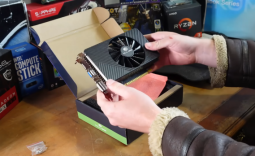 Chinese GTX 750 'Ti' with 8GB of GDDR5 runs Cyberpunk at over 30 FPS
 Anthropic ordered to pay $1.5 billion to authors in landmark AI copyright case
 PS5 emulator for PC takes major step as Demon Souls hits character creation screen
 OpenAI admits an advanced AI model escaped testing into the internet
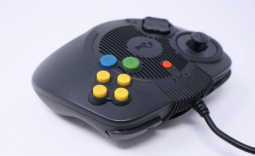 Nintendo shrunk a 64 console down into a controller to break into the Chinese market
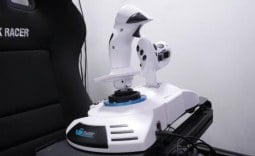 Thrustmaster T.Flight HOTAS 5 MSFS Edition Review
 SteelSeries Arctis Nova Pro Omni Wireless Headset Review - One Headset to Rule Them All
 SteelSeries Arctis Nova 7 Wireless Gen 2 Headset Review - New and Improved, But Is It Enough?
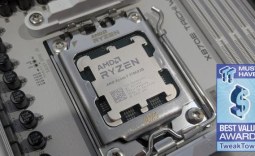 AMD Ryzen 7 7700X3D Review - Days of Future Past
 Samsung 990 2TB SSD Review - Ninth Gen QLC at PCIe Gen4 Speeds
 ASUS ExpertBook Ultra (Panther Lake) 14" Business Laptop Review
 ASUS ROG Raikiri II Xbox Wireless Controller Review - Ready to Take Control
 MOZA FMP18 Panel Bundle Review: authentic F/A-18 Hornet cockpit controls for flight sims
 Micron 6600 ION 245.76TB Enterprise SSD Review - Best in Class Programming Speeds
 MOZA MA3F EFCM Flight Control Module Review: authentic Airbus A320 autopilot panel for simulators
 I capped Windows Update's bandwidth with Delivery Optimization, and my downloads stopped choking
 I use this decade-old free tool that finds files faster than Windows Search does
 I install and update most of my apps with this Windows command now, and I stopped downloading sketchy installers
 Hisense U6SF 65-inch MiniLED TV: High Performance Meets Leisurely Convenience
 I stopped digging through Windows menus after I set up this one folder
 Don't sell your Windows laptop until you do these things
 6 PC cleaning mistakes to avoid for safer hardware maintenance
 Phison and Intel Take Aim at Local AI's Memory Wall with aiDAPTIV
 How to Remap Keyboard Keys in Windows using Microsoft PowerToys
 7 tips to organize your Windows files for faster, easier access