







Science, Space, & Robotics - Page 88
Explore the latest Science, Space, Health, and Robotics news from TweakTown. Coverage includes space launches, medical tech, discoveries, and rockets. - Page 88
Stay Updated
Follow TweakTown for breaking tech news, reviews, and daily updates.


As an Amazon Associate, we earn from qualifying purchases. TweakTown may also earn commissions from other affiliate partners at no extra cost to you.
New 'socially aware' robot can predict what people will do
A study on the socially aware robot titled "High-efficiency cooling via the monolithic integration of copper on electronic devices" is available on the pre-print server arXiv.

Researchers from the University of Toronto (U of T) have devised a new method for robots to move through the world without colliding with people. Their robot uses Spatiotemporal Occupancy Grid Maps (SOGM) to predict where dynamic obstacles like people will move to with time. This video shows a real-life perspective of the robot moving paired with its internal digital representation.
In addition to the 3D SOGM maps, the robot is equipped with light detection and ranging, or LIDAR. LIDAR works similarly to radar but uses light waves instead of radio waves. The SOGM network can then distinguish between four categories of LIDAR signals; those from the ground, permanent fixtures like walls, moveable but motionless objects like furniture, and dynamic objects like people.
Continue reading: New 'socially aware' robot can predict what people will do (full post)
New breakthrough in cooling computers offers up to 740% more power
A study on the new cooling method titled "High-efficiency cooling via the monolithic integration of copper on electronic devices" has been published in the journal Nature Electronics.

Researchers from the University of Illinois at Urbana-Champaign (UIUC) and the University of California, Berkeley (UC Berkeley) have invented a new cooling solution for electronic devices, dramatically increasing space efficiency and the power per unit volume of the devices. The team sought to address three shortcomings they identified in current cooling solutions.
The first is that they "can be expensive and difficult to scale up." Secondly, conventional heat spreaders or heat sinks are attached to the top of a device, while most of the heat is typically generated underneath the electronic device, so the cooling solution is less efficient. Thirdly, thermal interface materials (TIMs) like thermal paste or pads are necessary to connect such cooling solutions to electronic devices and have their own inherent inefficiencies.
Continue reading: New breakthrough in cooling computers offers up to 740% more power (full post)
This spacecraft caught a wonderfully unique view of the lunar eclipse
NASA's Lucy space probe had a unique perspective of the recent total lunar eclipse on the night of May 15th.

Here on Earth, during a total lunar eclipse, the Moon takes on a reddish appearance due to the remaining red wavelengths of sunlight that make their way around Earth and onto the surface of the Moon. However, the Lucy probe operated by the Southwest Research Institute (SwRI) was able to observe the Moon and Earth while about 100 million kilometers (65 million miles) from the latter.
Lucy used its black-and-white L'LORRI instrument to capture 86 high-resolution images, each with an exposure time of 1 millisecond. The team on Earth received the images and stitched them together to make a timelapse, and the resultant video shows the first half of the eclipse. The Moon, initially lit by the out-of-sight Sun and artificially brightened by the team for visibility, disappears behind the Earth's shadow.
Continue reading: This spacecraft caught a wonderfully unique view of the lunar eclipse (full post)
Genetically-modified virus to kill cancer trialed for the first time
The cancer-killing virus has been used in a human patient for the first time in a new clinical trial.

The experimental virus is called CF33-hNIS, otherwise known as Vaxinia, and was developed by Australian biotech-company Imugene and the City of Hope cancer care and research center in Los Angeles. The drug candidate is what's known as an oncolytic virus, meaning a virus that selectively infects and destroys only cancer cells.
Previous research conducted with animals has shown the potential for the drug also to spur the immune system to become more proficient in destroying cancer cells. If clinical trials go well and the drug is safe for use, more trials involving combinations with currently used cancer therapies such as pembrolizumab will be carried out.
Continue reading: Genetically-modified virus to kill cancer trialed for the first time (full post)
SpaceX announces Starlink for RVs: 'can be used anywhere'
SpaceX has just announced its new "Starlink for RVs" internet service, which is available right now -- and better yet - there's no waitlist on dishes.

The company has taken to Twitter, announcing: "Starlink for RVs can be used anywhere Starlink provides service and is ideal for camping and other activities in rural or remote locations where internet access has been unreliable or completely unavailable".
You're looking at $599 up-front for the Starlink dish, and then $135 per month for the internet connection. This isn't too bad, considering the residential service is $110 per month, but a big key difference with the new Starlink for RV service is that you can 'pause' and 'un-pause' your service. This is a big deal for people travelling less, or more often -- being able to tweak your Starlink for RV service before you go, is pretty awesome.
Continue reading: SpaceX announces Starlink for RVs: 'can be used anywhere' (full post)
Earth's most important data needs to be 'off our planet' to be safe
One startup company is proposing that all of Earth's most important data be gathered and transported off-planet to be kept safe.

The cloud storage provider Lonestar Data Holdings is planning that future services for the company will be storing Earth's most important data off-planet on servers located on the moon. Lonestar founder and CEO Christopher Stott explained the company's perspective, "It's inconceivable to me that we are keeping our most precious assets, our knowledge, and our data, on Earth, where we're setting off bombs and burning things. We need to put our assets in place off our planet, where we can keep it safe."
The theory is certainly an interesting one, and it makes sense on multiple levels for humans to have an off-world server that contains as much of humanity's achievements and failures as possible. However, storing a server on the moon that is accessible on Earth comes with its own challenges that will need to be overcome. For example, the moon has harsh temperatures that vary from -298 degrees Fahrenheit at night, to 224 degrees Fahrenheit during the day.
Continue reading: Earth's most important data needs to be 'off our planet' to be safe (full post)
Walmart adding Symbotic robots in ALL of its warehouses across the US
Walmart has announced it has expanded its commercial agreement with Symbotic -- a "revolutionary A.I.-powered supply chain technology company" -- to install warehouse robots at all of Walmart's distribution facilities across the US.

Until now, there were 25 distribution plants by Walmart using Symbotic warehouse robotics... but now they'll be pushed to every single facility. It's not just robotics but Symbotic's software automation platform.
The end-to-end software-enabled high-density robotics platform "plays a strategic role in supporting the retailer's goal of modernizing its vast supply chain network and allows Walmart to transform its regional distribution centers to provide faster responsiveness to store orders, increased inventory accuracy and higher capacity for receiving and shipping freight to stores".
Continue reading: Walmart adding Symbotic robots in ALL of its warehouses across the US (full post)
Starliner docking with the International Space Station caught on video
NASA has confirmed that Boeing's CST-100 Starliner spacecraft has successfully docked to the International Space Station.

NASA has taken to its blog and social channels to announce that Boeing's Starliner successfully attached itself to the Harmony module aboard the ISS on May 20 at 8:23 pm EDT. Starliner launched on the back of a United Launch Alliance Atlas V rocket from Cape Canaveral Space Force Station in Florida on May 19.
NASA writes that Starliner will only be aboard the ISS for a few days, with it being scheduled to disconnect on May 25 to return back down to Earth, carrying back more than 600 pounds of cargo where it's expected to land in a western US desert. Additionally, NASA has reported that the hatch to Starliner was opened on May 21, marking the first time ISS astronauts have opened a hatch to Boeing's CST-100 Starliner.
Continue reading: Starliner docking with the International Space Station caught on video (full post)
Two galaxies colliding 130 million light years away goes viral
An amateur astrophotographer named Brendan O'Meal from New York has recently gone viral after taking an incredible photograph of two galaxies colliding.

O'Meal took to his TikTok and Instagram account to share an awesome image of ARP271, a pair of similarly sized interacting spiral galaxies more specifically named NGC 5426 and NGC 5427. The two colliding spiral galaxies reside in the constellation Virgo and are located about 130 million light years away from Earth. Notably, the ARP271 pair has a diameter of 130 million light years across, and judging by the comment section of the viral TikTok video, many people have just realized what a light-year actually means.
The TikTok video has, at the time of writing, been liked 1.8 million times and viewed 9.7 million times, with many commenters realizing that the image captured by telescope is of events that happened 130 million years ago. One commenter realized the same principles apply to viewing planets in search of life. If we observe a planet that's 100 million light years away, and see an alien civilization, it means that what we are seeing happened 100 million years ago.
Continue reading: Two galaxies colliding 130 million light years away goes viral (full post)
NASA confirms largest asteroid of 2022 is approaching Earth right now
An asteroid that is estimated to be around four times the size of the Empire State Building in diameter is approaching Earth.

According to NASA's Center for Near Earth Object Studies (CNEOS), the asteroid named 7335 (1989 JA) is scheduled to make its closest approach to Earth on May 27, which means the giant space rock is currently hurtling toward Earth right now. The CNEOS database indicates that the asteroid will safely pass by Earth at a distance of about 2.5 million miles, or about 10 times the distance between Earth and the Moon, which is approximately 250,000 miles.
Furthermore, estimates put the diameter of the asteroid at an extremely large 1.1 miles, and due to its proximity to Earth and its enormous size NASA has classified 7335 as "potentially hazardous (PH)". The PH classification means that if the orbit of the asteroid were changed and put on track to hit Earth, it would cause severe impact damage.
Continue reading: NASA confirms largest asteroid of 2022 is approaching Earth right now (full post)
UK Monkeypox cases double, new cases in US, Australia, France, & more
New cases of the rare monkeypox virus first resurfaced in England, Spain, and Portugal from May 17th.

Outbreaks of the virus were first recorded in England, with officials warning of potential spread given the unknown origin and chains of transmission. Since then, cases have doubled in England to 20, and following cases appearing in Spain and Portugal, cases have also appeared in more European countries, including France, Germany, Belgium, Italy, and Sweden.
Cases have also been reported in the United States, Canada, and Australia. The monkeypox virus is endemic to Africa, and cases are seldom seen outside of the region, though currently, at least 11 non-African countries have reported a combined 120+ confirmed and suspected cases of it.
Continue reading: UK Monkeypox cases double, new cases in US, Australia, France, & more (full post)
Voyager 1 has sent back peculiar signals to NASA, puzzling scientists
NASA's Voyager 1 spacecraft appears to be operating normally; however, it's sent back data that says otherwise.

Voyager 1 is continuing to execute commands it receives from Earth as expected and gathering and returning science data. However, Voyager 1's attitude articulation and control system (AACS), which controls the spacecraft's orientation, is sending back invalid telemetry data that appears either randomly generated or reflects an impossible state for the AACS.
Voyager 1 hasn't been triggered to put itself into safe mode due to the issue, a state in which only essential functions remain active to give engineers time to diagnose and fix any problems. The team is continuing to monitor the signal closely to determine the nature of the issue. However, Voyager 1 is currently 14.5 billion miles (23.3 billion kilometers) from Earth. This means it takes about two days to send a message to the spacecraft and receive a response, though the mission team has become well adjusted to that delay.
Continue reading: Voyager 1 has sent back peculiar signals to NASA, puzzling scientists (full post)
Dept. of Defense will launch two nuclear-powered spacecraft in 2027
The Department of Defense's (DoD) Defense Innovation Unit (DIU) has awarded two Prototype Other Transaction (OT) contracts to develop nuclear-propelled spacecraft, with launches expected in 2027.

The DIU has awarded one contract to the Ultra Safe Nuclear Corporation (USNC) and the other to Avalanche Energy Designs, "to demonstrate the next generation of nuclear propulsion and power capability for spacecraft." The companies' will be testing nuclear-powered prototypes that allow small spacecraft to "maneuver at-will in cislunar space" and "enable high-power payloads."
Ultra Safe Nuclear is developing a device called Embercore; a chargeable, 'next-gen' nuclear radioisotope battery. Scaling up the system will allow it to achieve ten times higher power levels than plutonium systems, making it capable of providing over a million kilowatt-hours (kWh) of energy from a few kilograms of fuel.
Continue reading: Dept. of Defense will launch two nuclear-powered spacecraft in 2027 (full post)
Record-breaking new solar cell has the highest efficiency yet
A study on the new solar cell titled "Triple-junction solar cells with 39.5% terrestrial and 34.2% space efficiency enabled by thick quantum well superlattices" has been published in the journal Joule.

Researchers from the United States Department of Energy's National Renewable Energy Laboratory (NREL) have created a solar cell with the highest efficiency under 1-sun global illumination conditions. The new cell has an efficiency of 39.5%, up from the previous record of 39.2% efficiency, which was previously set by NREL researchers as well in 2020.
The NREL invented the inverted metamorphic multijunction (IMM) architecture upon which many of the best recent solar cells have been made, including both this latest cell and the previous most efficient. The cell is made from III-V materials, referring to the periodic table group they belong to, and such cells are known for their high efficiency, but traditionally high cost manufacturing process. Consequently, the NREL is working to dramatically reduce manufacturing costs, increasing the economic viability of these cells.
Continue reading: Record-breaking new solar cell has the highest efficiency yet (full post)
NASA unveils Hubble's 'magnum opus,' most precise measures yet
A study on the updated Hubble constant titled "A Comprehensive Measurement of the Local Value of the Hubble Constant with 1 km s−1 Mpc−1 Uncertainty from the Hubble Space Telescope and the SH0ES Team" has been accepted for publication into The Astrophysical Journal.

Data from the Hubble Space Telescope has been used since it was launched to measure the rate of the universe's expansion. However, there is a discrepancy between the rate derived from Hubble's observations and what other independent observations predict. The SH0ES team (standing for Supernova, H0, for the Equation of State of Dark Energy) and others have been working to refine the universe's rate of expansion, known as the Hubble Constant.
Over 30 years, Hubble has examined over forty "milepost markers" to measure the universe's expansion rate. Using Hubble's data, several teams of astronomers, including SH0ES, have converged on a Hubble constant of 73 plus or minus 1 kilometer per second per megaparsec. Other estimations have predicted a Hubble constant of 67.5 plus or minus 0.5 kilometers per second per megaparsec.
Continue reading: NASA unveils Hubble's 'magnum opus,' most precise measures yet (full post)
'Infinite wi-fi' achieved in off-grid setup with Starlink and solar
Starlink customer Steve Birch has posted a photo of his off-grid Starlink setup powered exclusively by solar energy.

Birch took to Reddit to post about his "remote fully off-grid Starlink station installed in the Sawtooth mountains of Idaho." The three solar panels produce a combined 300 watts of solar power and are supported by a 450 amp hour (Ah) battery bank for when the panels can't produce enough power. According to Birch, the system has "been running like a champ 24/7 for the last week."
The campsite where Birch set up the system has a diesel generator that provides power during the day, which Birch sought to bypass for his Starlink setup. Birch calculated that he would need roughly 200 Ah for 24 hours of operation and opted to use four 6V lead acid batteries for his battery bank because lithium wouldn't be viable due to charging issues in the cold.
Continue reading: 'Infinite wi-fi' achieved in off-grid setup with Starlink and solar (full post)
Origin of famous alien signal pinpointed to potentially habitable star
A study on the Wow! signal titled "An approximation to determine the source of the WOW! Signal" has been published in the International Journal of Astrobiology.

The Wow! signal was detected by Jerry Ehman using Ohio State University's Big Ear telescope on August 15th, 1977. It was named as such after Ehman wrote "Wow!" on the printout from the telescope. The Big Ear telescope was conducting a SETI (search for extraterrestrial intelligence) using a frequency of 1420.4056 megahertz, a frequency associated with the element hydrogen.
Subsequent searches for follow-up signals from the same place, however, have turned up nothing similar. The Big Ear telescope was pointed toward the constellation Sagittarius at the time of the Wow! signal, so astronomer Alberto Caballero went looking for a potential origin.
Continue reading: Origin of famous alien signal pinpointed to potentially habitable star (full post)
Elongate: Musk accused of paying $250k to staffer for exposing himself
SpaceX and Tesla CEO Elon Musk has been accused of sexual misconduct by exposing himself to a flight attendant and offering to pay her for sexual favors.

BusinessInsider has learned that a flight attendant that worked at SpaceX as part of Musk's private jet cabin crew was encouraged by the crew to become a licensed masseuse so she could give Musk massages throughout travel. The flight attendant told her story to a friend that has now spoken to Insider, and according to the friend, on a flight to London in 2016, Musk allegedly asked for "a full body massage", and when the flight attendant arrived, she found Musk with just a sheet covering his bottom half.
According to the friend's declaration, Musk "exposed his genitals" and then "touched her and offered to buy her a horse if she would 'do more,' referring to the performance of sex acts." The flight attendant is interested in horses and said to Musk that she "is not for sale," adding, "She is not going to perform sexual favors for money or gifts." Insider interviewed the flight attendant's friend, only speaking on the condition of anonymity, and said that "He whipped out his penis, it was erect."
Continue reading: Elongate: Musk accused of paying $250k to staffer for exposing himself (full post)
NASA explains the mysterious 'portal' it's Mars rover photographed
The Mars Curiosity rover snapped an image of a rock formation on the surface of the Red Planet, and the image has picked up quite a lot of traction online.

The image was posted to the NASA subreddit, where it gained many upvotes, with many people speculating what the "door" was and how it formed. Looking at the image, there are many shadows cast by the rock, which has lent to the theory of the alien "door" being formed, which was quickly shut down by NASA officials.
NASA's Jet Propulsion Laboratory (JPL) spoke to Snopes and said that the rock formation gives the appearance of a "portal" or a "door" due to it being a "very, very, very zoomed in shot of a tiny crevice in a rock." Notably, NASA JPL said to the publication that the "door" is only 11 by 17 inches, and to understand its true size, you can look at the below full-sized image.
Continue reading: NASA explains the mysterious 'portal' it's Mars rover photographed (full post)
Hypersonic missile tested by US Air Force rated for 20x speed of sound
On their fourth attempt, the U.S. Air Force and Lockheed Martin launched a hypersonic missile, the AGM-183A Air-launched Rapid Response Weapon (ARRW).

The Air Force completed the launch on May 14th, 2022, deploying the missile from a B-52H Stratofortress off the coast of Southern California. Hypersonic flight refers to speeds over five times the speed of sound, otherwise known as Mach 5. This allows hypersonic weapons to be deployed further away while flying at lower altitudes, as well as making them more difficult to detect and intercept than conventional missiles.
Though the AGM-183A supposedly has a top speed of Mach 20, extreme temperature and pressure at these speeds would make new materials for its construction and avionics necessary for it to withstand the stresses. The test did not involve assessing the missile's top speed, but its booster rocket managed to accelerate it to above Mach 5. It successfully handled operation at those speeds and the team behind it "made history on this first air-launched hypersonic weapon."
Continue reading: Hypersonic missile tested by US Air Force rated for 20x speed of sound (full post)
 Phantom Blade Zero on PC will launch with DLSS 4.5 and Ray Tracing on day one
 Razer announces its first Artisan Keycap with the Triple-Headed Snake Edition
 ZOTAC's 20th Anniversary Edition GeForce RTX 5080 features a titanium colorway and mirror-like backplate
 GeForce NOW app for Linux leaves beta, while DLSS Frame Generation cloud latency also improves
 Twitch opts streamers into gen AI training by default, faces harsh backlash
 Sean Murray still plays the 2016 launch version of No Man's Sky
 China's YMTC has climbed to third place in global NAND flash shipments
 $100 GTA 6 version makes up 89% of pre-orders, analysts estimate
 HWiNFO's latest update quietly confirms Intel is working on Razor Lake-AX
 Nintendo puts Switch 2 price increase warnings on store demo kiosks ahead of September 1 hike
 Corsair HS35 v3 Wireless Gaming Headset Review - An Affordable Winner
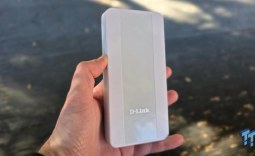 D-Link F518 5G Wi‑Fi 6 AX1800 Mobile Hotspot Review: All-Day Mobile Hotspot
 Bose Lifestyle Ultra Speaker Review - Impressively Detailed Room-Filling Sound
 MSI Z890 Gaming Plus WIFI6E Review - Z890 for under $200
 Mortal Kombat (1995) 4K Ultra HD Blu-ray Review
 CPS PCCOOLER YS1200 ATX 3.1 80 PLUS Gold PSU Review
 ASRock X870E Taichi White Review: a premium AM5 motherboard with 10G LAN and WiFi 7
 Asetek Initium Pedal Modular Upgrades Review
 Thinkware U3000 Pro Review - Smart Dashcam with Wi-Fi quirks
 Montech TG3 Mid-Tower Chassis Review
 I ditched the Windows 11 context menu for this open-source tool, and here's why
 Windows 11 may be encrypting your drive already, and I checked where my recovery key went
 GIGABYTE's 40 Days of INFINITY celebrates 40 Years of Innovation with stunning GeForce RTX graphics cards and rewards
 I swapped File Explorer for this free file manager and finally got the layout I wanted
 How to tell if someone has been using your Windows PC without your permission
 6 Task Manager tips for troubleshooting Windows performance problems
 ASUS ROG's 20th Anniversary Line-up of Premium PC Gaming Gear has Arrived - Here's Everything You Need to Know
 Six File Explorer tips every Windows user should know
 I switched my PC to encrypted DNS in Windows 11, and browsing felt more private
 Printer Not Working in Windows? How to fix detection, print queues and drivers