







Science, Space, & Robotics - Page 62
Explore the latest Science, Space, Health, and Robotics news from TweakTown. Coverage includes space launches, medical tech, discoveries, and rockets. - Page 62
Stay Updated
Follow TweakTown for breaking tech news, reviews, and daily updates.


As an Amazon Associate, we earn from qualifying purchases. TweakTown may also earn commissions from other affiliate partners at no extra cost to you.
Scientists discover ultra-strong diamond created by a dwarf planet
Penned in a new study, researchers claim they have located the largest crystals ever discovered for a mysterious form of a diamond called lonsdaleite.

The new study published in the peer-reviewed journal Proceedings of the National Academy of Sciences (PNAS) details that lonsdaleite features a unique hexagonal structure that makes it about 58% harder than diamonds found on Earth. Notably, lonsdaleite doesn't form on Earth and has, so far, only been discovered in a certain type of meteorite called ureilite meteorites.
Despite it not having an Earth origin, researchers have confirmed via the new study that lonsdaleite "This study proves categorically that lonsdaleite exists in nature," said senior researcher Dougal McCulloch from RMIT. The researcher's findings indicate that the lonsdaleite evidence points to a formation believed to have occurred about 4.5 billion years ago when a meteorite collided with a dwarf planet.
Continue reading: Scientists discover ultra-strong diamond created by a dwarf planet (full post)
Elon Musk announces big news for SpaceX's Starlink internet access
SpaceX is making lots of progress with rolling out its Starlink constellations around Earth, with SpaceX CEO Elon Musk recently announcing connectivity is now available across all continents.

The very first Starlink satellite was launched back in 2019, and since then, it has launched more than 3,000 satellites providing internet access to individuals living in rural areas and even the nation of Ukraine. SpaceX doesn't plan on stopping at just a few thousand Starlink satellites, as the company recently received regulatory approval for 12,000 Starlink satellites, with the possibility of international regulators giving Musk an approval for 30,000 satellites total.
Starlink won't just be for home internet access in rural areas as SpaceX has announced new plans to bring Starlink internet to cruise liners, planes, and even vehicles. Notably, Elon Musk previously stated that plans are currently being drawn up between SpaceX and T-Mobile to bring Starlink connectivity to mobile phones. With many plans for Starlink in the works, Musk has taken to his personal Twitter account to celebrate the recent launch of SpaceX's Falcon 9 workhorse rocket that transported an additional fifty-four Starlink satellites into orbit.
Continue reading: Elon Musk announces big news for SpaceX's Starlink internet access (full post)
AI uses public cameras to find a video of you taking Instagram photos
A Belgian artist has created software that is called The Follower, which is an artificial intelligence that is capable of identifying the location of where you took your last Instagram photo.

The software was created by Belgian artist Dries Depoorter, who began the journey of creating this extremely creepy AI system by recording open public cameras and broadcasting them live on websites such as EarthCam. Depoorter then took all of the Instagram photos he could find with a location tag close to the location of the public cameras, then trained the artificial intelligence system to cross-reference the Instagram photo with the footage recorded by public cameras.
The AI was trained to scrap the footage for the moment the Instagram photo was taken, capture it as a GIF and place it side-by-side next to the posted Instagram photo. The results are nothing less than extremely impressive, as Depoorter has posted several of these behind-the-scenes Instagram photos to his personal Twitter account showcasing the location, individuals, and open cameras used to capture the moment.
Continue reading: AI uses public cameras to find a video of you taking Instagram photos (full post)
US Navy confirms it has multiple videos of UFOs they can't show you
The US Navy has in its possession UFO videos that it cannot release to the public as the information would "harm national security".

The surfacing of the undisclosed UFO videos comes after a Freedom of Information Act (FOIA) request was filed by the government transparency website The Black Vault was denied by US officials. The initial filing dates back to April 2020, which, according to reports, was only one day before the infamous three confirmed-to-be-UFOs videos released, which showed US Navy pilots filming an object that moved in ways impossible to humans. Per the FOIA request, The Black Vault requested that the Navy reveal any and all videos it has on UFOs.
As you can probably imagine, the US Navy didn't just hand over its classified UFO videos because it was kindly asked to. The request was denied, but the denial confirmed there are more videos that have not been seen by the public. Notably, Gregory Cason, deputy director of the Navy's FOIA office, wrote in a response letter to the FOIA request that the release of the requested information "will harm national security" as it may provide adversaries valuable information regarding Department of Defense/Navy operations, vulnerabilities, and/or capabilities.
Continue reading: US Navy confirms it has multiple videos of UFOs they can't show you (full post)
NASA paper reveals rare insights into SpaceX Starship and Moon landing
NASA has quite a bit of work to do before it lands Americans back on the Moon, with the first Artemis mission, Artemis 1, scheduled to launch on September 27.

Before Americans can once again step foot on the lunar surface as a part of NASA's Artemis 3 mission, NASA will need to successfully complete Artemis 1 and Artemis 2. Unfortunately, the launch of NASA's Space Launch System (SLS) rocket was postponed over a fuel leak that was unable to be remedied before the launch window closed. The first Artemis mission is essentially a reconnaissance mission for the space agency, as current plans indicate that the SLS rocket, along with the Orion capsule, will go on a long journey around the Moon and back to Earth.
Along the way, the Orion capsule, and the sensor-equipped mannequins inside, will record vital information on their conditions and relay it back to NASA headquarters. The information that will be gathered throughout the Artemis 1 mission will be used as foundational knowledge to inform NASA on future Artemis missions. Now, a new research paper posted on NASA's technical report server has revealed some details about Artemis III, the mission where a soft landing on the Moon is planned.
Continue reading: NASA paper reveals rare insights into SpaceX Starship and Moon landing (full post)
New cancer drug covers tumors in huge 'eat me' flags for immune system
A study on the cancer breakthrough titled "A covalent inhibitor of K-Ras(G12C) induces MHC class I presentation of haptenated peptide neoepitopes targetable by immunotherapy" has been published in the journal Cancer Cell.

Researchers from the University of California San Francisco (UCSF) have developed a new drug called ARS1620 that can signal cancer cells to the body's immune system so they can be destroyed, where they might normally be able to evade the immune system with various defense mechanisms. A mutated copy of the KRAS protein found in cancer cells is pulled to the surface of the cell, and the complex formed by the protein and the drug serves as an "eat me" flag.
The mutated KRAS protein is found in roughly a quarter of all tumors, making the mutated gene responsible for the protein one of the most common genetic mutations in cancer, and it helps drive the growth of tumor cells. The immune system can already recognize a mutated KRAS protein and act on it but struggles to find it. Therefore, using the new drug helps the immune system recognize and kill cancer cells.
Continue reading: New cancer drug covers tumors in huge 'eat me' flags for immune system (full post)
NASA releases new dates for Artemis I moon rocket launch
NASA has taken to its Artemis blog to announce new dates for the Space Launch System's (SLS) upcoming tests and potential launch windows for the Artemis I mission.

A cryogenic demonstration test is slated for no earlier than Wednesday, September 21st. The first flight of the integrated SLS rocket and Orion spacecraft will occur no earlier than September 27th, with a potential backup date being reviewed for October 2nd. The backup launch window would bring the first flight of NASA's Artemis program within a day of the agency's mission with SpaceX to launch Crew-5 to the International Space Station (ISS).
The Crew-5 mission is targeted for no earlier than 12:45 p.m. EDT (16:45 UTC) on October 3rd and will launch from the Kennedy Space Center in Florida, where Artemis I will also be launching. Teams will therefore be planning and preparing both launches simultaneously if the backup launch window for Artemis I is needed. After Crew-5 makes it to the ISS, Crew-4 will return shortly after that.
Continue reading: NASA releases new dates for Artemis I moon rocket launch (full post)
New IBM 'super-fridge' is the world's largest quantum computer cooler
IBM has built the world's largest dilution refrigerator, or "super-fridge," by experimental volume, for what the company has internally dubbed project Goldeneye.

The super-fridge is a proof-of-concept project for cooling the quantum experiments of the future, as the company had identified several limitations of current dilution refrigerators. Dilution refrigerators are cryogenic devices that use a mixture of Helium-3 and Helium-4 isotopes to achieve extremely low temperatures. However, current devices cannot house larger quantum physics experiments, have limited input/output ports, and cooling power can always be improved.
Goldeneye is not targeted for use with any of IBM's Quantum processors as of yet. Still, it expands the boundaries of what quantum computing experimentation can achieve, with the ability to cool 1.7 cubic meters' worth of experimental volume (about three home kitchen fridges worth of volume) to colder temperatures than outer space. This far exceeds previous dilution fridges, which ranged between 0.4 and 0.7 cubic meter capacities.
Continue reading: New IBM 'super-fridge' is the world's largest quantum computer cooler (full post)
Remains of ancient coral reef found in the middle of a desert
Researchers from Curtin University in Western Australia have uncovered an ancient reef structure on the Nullarbor Plain, a large, barren expanse in the desert of southwestern Australia.

The Nullarbor Plain is the world's largest single exposure of limestone bedrock, spanning about 200,000 square kilometers (77,220 square miles), and emerged from the ocean roughly 14 million years ago. According to the researchers, because large swathes of the area have been relatively unaffected by weathering and erosion processes for millions of years, partly due to the area's dryness, the region's ancient history is well preserved.
Part of the ancient reef is highlighted in the above imagery, taking the shape of a "bullseye" structure spanning more than a kilometer wide and only a few meters high, with a dome in the center of a ring-shaped hill. The German Aerospace Centre provided the researchers with landscape data from its TanDEM-X Digital Elevation Model, which revealed the structure. Analyzing the rock from the area revealed evidence of tiny microbes that held the sediment together, suggesting the structure is part of an ancient reef, slowly degrading after having left the ocean.
Continue reading: Remains of ancient coral reef found in the middle of a desert (full post)
Mysterious, ultra-strong diamonds on Earth came from outer space
A study on the diamonds titled "Sequential Lonsdaleite to Diamond Formation in Ureilite Meteorites via Chemical Fluid/Vapor Deposition" has been published in the journal Proceedings of the National Academy of Sciences.

Australian researchers have confirmed the presence of a rare type of diamond called lonsdaleite in ureilite meteorites from the mantle of a dwarf planet that was destroyed in our inner solar system. The dwarf planet is thought to have collided with a large asteroid roughly 4.5 billion years ago, creating localized high temperatures and pressures that led to the creation of the diamonds.
These diamonds are also found in ureilite on Earth, suggesting the diamonds may have found their way to Earth from this dwarf planet. Lonsdaleite, named after crystallographer Dame Kathleen Lonsdale, has a hexagonal structure to its atoms that theoretically allows it to be up to 58% harder than regular diamonds, which have a cubic structure. This makes it potentially extremely useful for manufacturing other ultra-hard materials, such as those used in mining applications.
Continue reading: Mysterious, ultra-strong diamonds on Earth came from outer space (full post)
New class of exoplanets discovered, half 'water worlds' and half rock
Two studies on the diamonds titled "Density, not radius, separates rocky and water-rich small planets orbiting M dwarf stars" and "Three types of planets around red dwarfs" have been published in the journal Science.

Researchers from the University of Chicago have found that significantly more exoplanets may have more water than first thought, up to as much as half water and half rock. However, much of the water is embedded in the rock instead of flowing on the surface. They found these types of planets were much more common around M-dwarf red dwarf stars, the most common type of star in the universe.
Observing these planets is difficult, as stars are much brighter than their planets. The planets can be detected as they cross in front of a star, casting a shadow and revealing its diameter, while the planet's small, gravitational effect on the star's orbit reveals its mass. Consequently, researchers can determine a planet's density and infer whether it is more similar to a gas giant like Jupiter or a rocky planet like Earth.
Continue reading: New class of exoplanets discovered, half 'water worlds' and half rock (full post)
NASA loses contact with spacecraft, now attempting to recover it
The satellite for NASA's Cislunar Autonomous Positioning System Technology Operations and Navigation Experiment (CAPSTONE) mission experienced communications difficulties on September 8th.

The satellite is owned and operated by Advanced Space, and mission controllers could not receive any telemetry data the satellite was attempting to send for roughly 24 hours. The issue arose around the time the satellite began its third trajectory correction maneuver (TCM-3). Towards the end of the maneuver, it suffered an anomaly that led to uncontrollable changes in the spacecraft's attitude (its pitch, yaw, and roll).
Once the combined operations team re-established communication and received telemetry data, it was clear the satellite was still in an unstable configuration. Its solar panels were also making less power than the spacecraft needs, making it no longer power positive. As such, the teams from NASA Deep Space Network, Terran Orbital, and Advanced Space declared an operational emergency on the evening of September 8th.
Continue reading: NASA loses contact with spacecraft, now attempting to recover it (full post)
New mineral and potential energy source discovered on the moon
A brand new mineral has been discovered on the Moon by Chinese scientists, found inside samples of lunar material collected by the Chang'e 5 lunar probe in 2020.

The name of the mineral was announced to be Changesite-(Y) by Dong Baotong, the vice chairman of the China Atomic Energy Authority, after its confirmation as a new mineral by the International Mineralogical Association's (IMA) Commission on New Minerals, Nomenclature and Classification (CNMNC). It is the sixth new mineral found on the Moon, making China the third country to have found one, following the United States and the former Soviet Union.
The mineral has been named Changesite-(Y) is named as such after the Chinese moon goddess Chang'e. It is a phosphate mineral that forms columnar crystals and was found inside lunar basalt particles or volcanic rock. A single crystal was isolated by Beijing Research Institute of Uranium Geology researchers, with a radius of 10 micrometers. Helium-3 was also found in the samples, which has potential as a fuel source for nuclear fusion.
Continue reading: New mineral and potential energy source discovered on the moon (full post)
Jeff Bezos' Blue Origin rocket suffers crash, under FAA investigation
A rocket flying for the latest mission of Jeff Bezos' space company Blue Origin failed and crashed shortly after lifting off on Monday, September 12th, 2022.

The New Shepard rocket flew for the NS-23 mission and carried no people on board, only an assortment of experiments. The capsule managed to safely separate from the failing rocket as its emergency launch abort system kicked in about a minute into the flight when flames engulfed the single engine at the bottom of the rocket. The capsule parachuted to the ground below in the desert minutes later, while the rocket crashed down.
The rocket used for the mission is the same that Blue Origin uses to take customers to the edge of space, the most recent flight being last month, bringing the total passenger count to 31 people. Following the incident, the Federal Aviation Administration (FAA) is grounding New Shepard rockets until it concludes an investigation into the event. No one was injured, and no damage was caused by the crashing rocket, and Blue Origin later took to Twitter to write, "Booster failure on today's uncrewed flight. Escape system performed as designed."
Continue reading: Jeff Bezos' Blue Origin rocket suffers crash, under FAA investigation (full post)
Uber will be using Nuro's driverless delivery robots to bring you food
Uber Eats has announced that it has partnered with autonomous tech developer Nuro, with a new 10-year contract signed in the last few days that will see a bigger rollout of Nuro's driverless delivery robots.

The companies will begin a slow rollout of Nuro's newest driverless delivery robots, where they'll make deliveries in Houston and Mountain View, California, and then extend out to the Bay Area in the months after. Nuro was the first company to get an autonomous deployment permit from the state of California, and they were also the first to introduce autonomous vehicle operations in Arizona, California, and Texas.
But the bigger issue here is that Uber will eventually not have to pay human drivers to deliver food and other goods to customers through its Uber Eats service, something the company has been aiming at and working towards for a while now. Autonomous vehicle technology hasn't been as fast as the company hoped, and this new 10-year contract doesn't mean we'll see Uber Eats rolling out autonomous delivery robots immediately.
Continue reading: Uber will be using Nuro's driverless delivery robots to bring you food (full post)
Astronomers find massive stars stealing Jupiter-sized planets
A study on the planetary heists titled "Making BEASTies: dynamical formation of planetary systems around massive stars" has been published in the journal Monthly Notices of the Royal Astronomical Society: Letters.

Researchers from the University of Sheffield have provided a novel explanation for how planets discovered as part of the B-star Exoplanet Abundance STudy (BEAST) came to be. These Jupiter-sized planets are found hundreds of times the distance between the Earth and our Sun away from their massive host stars. Such large stars typically stunt the growth of planets before they reach Jupiter-like, or Jovian, size, owing to large amounts of ultraviolet radiation.
Previous work by the researchers has shown stars in densely populated stellar nurseries, where stars are born, can steal planets from other stars or capture free-floating planets without a host star. In these nurseries, they found that massive stars were more influential than Sun-like stars and could capture planets more readily, including larger planets, referring to them as BEASTies.
Continue reading: Astronomers find massive stars stealing Jupiter-sized planets (full post)
Humans found to generate a 'field' of reactive chemicals around them
A study on the reactive field titled "The human oxidation field" has been published in the journal Science.

An international team of researchers has found that while indoors, people are exposed to various chemicals from the atmosphere, including reactive chemicals emitted directly from human skin and breath. These reactive chemicals, known as hydroxyl (OH) radicals, are found in high concentrations outdoors due to UV light from the sun interacting with ozone and water vapor in the atmosphere to produce them.
People spend roughly 90% of their lives indoors, constituting time at home, work, or in vehicles. The air indoors, where glass windows mostly filter out UV light, has been thought to have a much lower concentration of OH radicals, with ozone leaking in from outdoors comprising the primary source of OH radicals. These radicals then oxidize chemical pollutants that also come from outside, from indoor materials and furnishings, or from cooking and cleaning.
Continue reading: Humans found to generate a 'field' of reactive chemicals around them (full post)
Incredible photos of Sun's surface capture it in unprecedented detail
The US National Science Foundation (NSF) is celebrating the first year of the Operations Commissioning Phase (OCP) of its new Daniel K. Inouye Solar Telescope, which they describe as the world's most powerful solar telescope.

The Inouye Solar Telescope is the largest solar telescope in the world, located on culturally and spiritually significant land in Hawaii. The has released two new images to commemorate the telescope's inauguration, which represents the final stages of an investment by the NSF starting over 25 years ago to create a cutting-edge, ground-based solar observatory.
The telescope's OCP began in February 2022, and it has since worked alongside NASA's Parker Solar Probe and ESA/NASA's Solar Orbiter to make coordinated observations of the Sun. It has already gathered data for over 20 scientific proposals and is primed to continue studying the Sun for an expected 50 years at least.
Continue reading: Incredible photos of Sun's surface capture it in unprecedented detail (full post)
New study of brain evolution shows we don't have a 'lizard brain'
A study on the brain titled "Molecular diversity and evolution of neuron types in the amniote brain" has been published in the journal Science.

Researchers from the Max Planck Institute for Brain Research have studied the brains of Australian bearded dragons, Pogona vitticeps, to gain insight into how the brains of vertebrates evolved. Early tetrapods, or four-limbed animals, eventually deviated into reptiles, birds, and mammals after they transitioned onto land from the water about 320 million years ago. The shared ancestry of these three clades means their brains share similar basal architecture.
When neuroscientist Paul MacLean found similarities in the mammalian brain to the reptilian brain in the 1960s, he developed the triune brain concept. The concept refers to the human brain evolving in three stages, beginning with the reptilian complex, the so-called lizard brain, followed by the limbic system, and lastly, the neocortex, each responsible for isolated functions. Since its inception, the model has received criticism and has also been described as "one of the most successful and widespread errors in all of science."
Continue reading: New study of brain evolution shows we don't have a 'lizard brain' (full post)
Europe's biggest nuclear power plant at risk of 'unlimited release'
The United Nations (UN) International Atomic Energy Agency (IAEA) has released a new report regarding Ukraine's nuclear safety, security, and safeguards.

The second summary report by the Director General of the IAEA, Rafael Mariano Grossi, primarily covers events between April 28th, 2022, and September 5th, 2022, following the first summary report that covered February 24th, 2022 to April 28th, 2022, with February 24th being the first day of Russia's invasion of Ukraine. Since the invasion began, much fighting has involved Ukraine's Zaporizhzhia nuclear power plant (NPP), the largest NPP in Europe.
The Zaporizhzhia NPP was captured by Russian forces on March 4th, nine days into their invasion, but Ukrainian workers have been allowed to continue operating the facilities since then. Battles at the site have continued since its capture, with shelling damaging its exterior and both sides accusing the other of being responsible. The report notes that continued shelling may potentially damage the plant's systems and equipment, leading to severe consequences such as the "unlimited release of radioactive materials to the environment."
Continue reading: Europe's biggest nuclear power plant at risk of 'unlimited release' (full post)
 The Witcher multiplayer project dubbed 'Sirius' hit with a new round of layoffs
 Xbox Elite Series 3 controller gets leaked with a built-in screen, quickly gets taken down
 Redditor improves his gaming laptop temps by 15C simply by changing the table
 Phantom Blade Zero on PC will launch with DLSS 4.5 and Ray Tracing on day one
 Razer announces its first Artisan Keycap with the Triple-Headed Snake Edition
 ZOTAC's 20th Anniversary Edition GeForce RTX 5080 features a titanium colorway and mirror-like backplate
 GeForce NOW app for Linux leaves beta, while DLSS Frame Generation cloud latency also improves
 Twitch opts streamers into gen AI training by default, faces harsh backlash
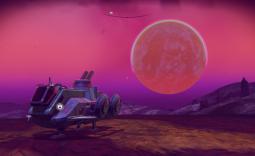 Sean Murray still plays the 2016 launch version of No Man's Sky
 China's YMTC has climbed to third place in global NAND flash shipments
 Corsair HS35 v3 Wireless Gaming Headset Review - An Affordable Winner
 D-Link F518 5G Wi‑Fi 6 AX1800 Mobile Hotspot Review: All-Day Mobile Hotspot
 Bose Lifestyle Ultra Speaker Review - Impressively Detailed Room-Filling Sound
 MSI Z890 Gaming Plus WIFI6E Review - Z890 for under $200
 Mortal Kombat (1995) 4K Ultra HD Blu-ray Review
 CPS PCCOOLER YS1200 ATX 3.1 80 PLUS Gold PSU Review
 ASRock X870E Taichi White Review: a premium AM5 motherboard with 10G LAN and WiFi 7
 Asetek Initium Pedal Modular Upgrades Review
 Thinkware U3000 Pro Review - Smart Dashcam with Wi-Fi quirks
 Montech TG3 Mid-Tower Chassis Review
 I ditched the Windows 11 context menu for this open-source tool, and here's why
 Windows 11 may be encrypting your drive already, and I checked where my recovery key went
 GIGABYTE's 40 Days of INFINITY celebrates 40 Years of Innovation with stunning GeForce RTX graphics cards and rewards
 I swapped File Explorer for this free file manager and finally got the layout I wanted
 How to tell if someone has been using your Windows PC without your permission
 6 Task Manager tips for troubleshooting Windows performance problems
 ASUS ROG's 20th Anniversary Line-up of Premium PC Gaming Gear has Arrived - Here's Everything You Need to Know
 Six File Explorer tips every Windows user should know
 I switched my PC to encrypted DNS in Windows 11, and browsing felt more private
 Printer Not Working in Windows? How to fix detection, print queues and drivers