



Two studies on the diamonds titled "Density, not radius, separates rocky and water-rich small planets orbiting M dwarf stars" and "Three types of planets around red dwarfs" have been published in the journal Science.
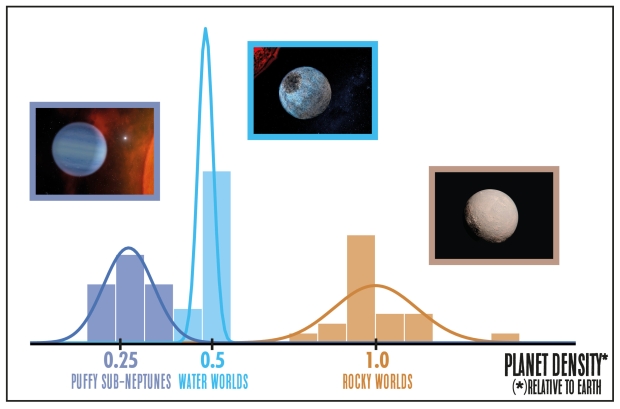
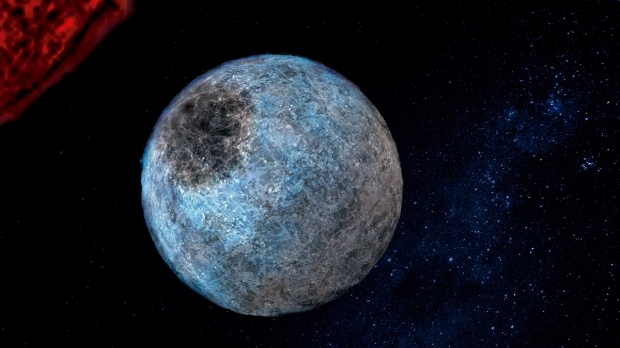
Researchers from the University of Chicago have found that significantly more exoplanets may have more water than first thought, up to as much as half water and half rock. However, much of the water is embedded in the rock instead of flowing on the surface. They found these types of planets were much more common around M-dwarf red dwarf stars, the most common type of star in the universe.
"It was a surprise to see evidence for so many water worlds orbiting the most common type of star in the galaxy. It has enormous consequences for the search for habitable planets," said study first author Rafael Luque at the University of Chicago.
Observing these planets is difficult, as stars are much brighter than their planets. The planets can be detected as they cross in front of a star, casting a shadow and revealing its diameter, while the planet's small, gravitational effect on the star's orbit reveals its mass. Consequently, researchers can determine a planet's density and infer whether it is more similar to a gas giant like Jupiter or a rocky planet like Earth.
Analyzing forty-three planets in total from throughout the Milky Way galaxy, the researchers found a large percentage of the exoplanets they studied were not dense enough to be made of pure rock, suggesting they contain water or some other lighter molecules. However, their water cannot be surface level, as the planets are close enough to their stars that it would evaporate, and the planet's radius would appear larger.
"I was shocked when I saw this analysis - I and a lot of people in the field assumed these were all dry, rocky planets," said exoplanet scientist Jacob Bean of the University of Chicago.