




A study on the reactive field titled "The human oxidation field" has been published in the journal Science.
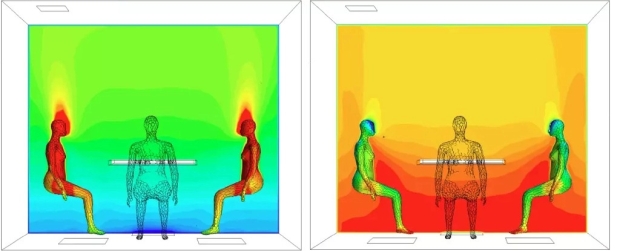
An international team of researchers has found that while indoors, people are exposed to various chemicals from the atmosphere, including reactive chemicals emitted directly from human skin and breath. These reactive chemicals, known as hydroxyl (OH) radicals, are found in high concentrations outdoors due to UV light from the sun interacting with ozone and water vapor in the atmosphere to produce them.
People spend roughly 90% of their lives indoors, constituting time at home, work, or in vehicles. The air indoors, where glass windows mostly filter out UV light, has been thought to have a much lower concentration of OH radicals, with ozone leaking in from outdoors comprising the primary source of OH radicals. These radicals then oxidize chemical pollutants that also come from outside, from indoor materials and furnishings, or from cooking and cleaning.
However, we now know that humans generate an oxidation field around them from the reaction between ozone with oils and fats on our skin. This reaction produces various gaseous chemicals that react further with ozone in the air, creating significant amounts of OH radicals. These OH radicals can react with other chemicals in the air to create potentially harmful products. This indicates that products with chemical emissions that are tested in isolation to be approved for sale should be tested in the presence of humans and ozone to reflect real-world conditions.
"The discovery that we humans are not only a source of reactive chemicals, but we are also able to transform these chemicals ourselves was very surprising to us," said study first author Nora Zannoni, who is now at the Institute of Atmospheric Sciences and Climate in Bologna, Italy.
"We need to rethink indoor chemistry in occupied spaces because the oxidation field we create will transform many of the chemicals in our immediate vicinity. OH can oxidize many more species than ozone, creating a multitude of products directly in our breathing zone with as yet unknown health impacts," said project leader Jonathan Williams.
You can read more from the study here.