







Science, Space, & Robotics - Page 108
Explore the latest Science, Space, Health, and Robotics news from TweakTown. Coverage includes space launches, medical tech, discoveries, and rockets. - Page 108
Stay Updated
Follow TweakTown for breaking tech news, reviews, and daily updates.


As an Amazon Associate, we earn from qualifying purchases. TweakTown may also earn commissions from other affiliate partners at no extra cost to you.
Chernobyl reactor captured by Russia, fear of radiation spread to EU
The Russian military has captured the area after beginning its invasion into Ukraine.

After battling with Ukrainian forces on three sides, the Russian military has gained control of part of the Chernobyl Exclusion Zone, including the Chernobyl Nuclear Power Plant and the abandoned city of Pripyat. According to Reuters, a Russian security source says the Russian military amassed in the exclusion zone before crossing into Ukraine, and wants to control the nuclear reactor to signal to NATO to not interfere militarily.
Anton Gerashchenko, an advisor and former deputy minister at the Ukrainian Ministry of Internal Affairs, warned that fighting the vicinity of the power plant runs the risk of disturbing nuclear waste and spreading dangerous radioactive material across Europe. If artillery strikes were to destroy the nuclear waste storage facilities, radioactive dust would threaten Ukraine, Belarus, and other countries in the European Union.
Continue reading: Chernobyl reactor captured by Russia, fear of radiation spread to EU (full post)
NASA says there's a 4,000 foot-wide asteroid approaching Earth soon
Astronomers will be able to watch a nearly 4,000 foot-wide asteroid pass by Earth next week, according to data provided by NASA's Center for Near-Earth Object Studies (CNEOS).

The asteroid is 2001 CB21, and according to the NASA database, it is estimated to be up to 3,940 feet in diameter and will make its closest approach with Earth on March 4 at 2:59 am Eastern Time. During its safe but close approach with Earth, the asteroid is estimated to be traveling at 26,800 miles per hour and will be about 3 million miles from Earth, or about 12 times the distance between the moon and Earth.
As the asteroid makes its approach Gianluca Masi, an astronomer at the Virtual Telescope Project located in Italy, photographed the space rock on February 23, when it was around 6.2 million miles from Earth. The image can be seen above. Masi spoke to Newsweek and said that due to the ever-increasing technological upgrades that come to space telescopes, astronomers are able to locate smaller and smaller objects, which is why the number of "near-Earth objects" is increasing.
Continue reading: NASA says there's a 4,000 foot-wide asteroid approaching Earth soon (full post)
NASA comments on US astronauts working with Russian cosmonauts on ISS
Russia has officially begun its invasion into Ukraine, and amid the explosions caused by the missiles launched, NASA has commented on the work-life balance of US astronauts and Russian cosmonauts aboard the International Space Station (ISS).

Russia only recently began its move into Ukraine, with reports now saying that Russian troops are now moving into Kyiv, the capital of Ukraine. The Independent has reported that NASA has said that despite the actions taken by Russia, US astronauts aboard the ISS will continue to work alongside Russian cosmonauts in order to ensure research in space remains the same.
Backing up the statement from NASA was the head of Russia's space program, Dmitry Rogozin, who said that sometimes he is completely unhappy with the "sometimes openly hostile US policy towards my country", but "regardless of disagreements between our countries," Roscosmos "will make every effort to continue as before." If you are interested in reading more about this story, check out this link here.
Continue reading: NASA comments on US astronauts working with Russian cosmonauts on ISS (full post)
We now know exactly when the dinosaurs went extinct
A study on the extinction event titled "The Mesozoic terminated in boreal spring" has been published in the journal Nature.

An international team of researchers has determined that the meteorite that crashed into Earth and wiped out the dinosaurs struck during the boreal (relating to the northern hemisphere) springtime. Around 66 million years ago, the meteorite crashed into Earth, creating the Chicxulub crater on what is now known as the Yucatan peninsula in Mexico, wiping out all non-avian dinosaurs, pterosaurs, ammonites, and most marine reptiles but allowing mammals, birds, crocodiles, and turtles to survive.
The team was able to study fossilized fish, which were buried by enormous waves resulting from the meteorite impact. The fossils were remarkably well preserved, with almost no geochemical degradation of their bones observed. Using the particle accelerator at the European Synchrotron Radiation Facility (ESRF), the team analyzed the bones of the fish.
Continue reading: We now know exactly when the dinosaurs went extinct (full post)
'Tatooine-like' planet would have two sunsets for anyone on it
A study on the latest observations of the planet titled "BEBOP III. Observations and an independent mass measurement of Kepler-16 (AB) b - the first circumbinary planet detected with radial velocities" has been published in the journal Monthly Notices of the Royal Astronomical Society.

A team of researchers led by the University of Birmingham have used the 193-centimeter telescope at the Observatoire de Haute-Provence in France to observe the rare exoplanet. The planet is called Kepler-16b and previously had only been observed by the Kepler space telescope. It is located roughly 245 light-years away from Earth and orbits around two stars, which both orbit each other to create a binary star system.
Existing in such a system means that any observer on the surface of Kepler-16b would witness two sunsets (and sunrises), as you would on the planet Tatooine in the Star Wars universe. Kepler-16b was the fourth confirmed circumbinary planet (orbiting two stars) found at the time of discovery in 2011, with nine currently known at the time of writing.
Continue reading: 'Tatooine-like' planet would have two sunsets for anyone on it (full post)
These two enormous black holes are doomed to collide
A study of the black holes titled "The Unanticipated Phenomenology of the Blazar PKS 2131-021: A Unique Supermassive Black Hole Binary Candidate" has been published in the journal The Astrophysical Journal Letters.

Researchers from the California Institute of Technology (Caltech) have observed two supermassive black holes orbiting one another every two years, nine billion light-years away. Both are hundreds of millions of times greater in mass than our Sun and are separated by about fifty times the distance between our Sun and Pluto. They are predicted to merge in approximately ten thousand years, which will send massive gravitational waves across the universe.
The black holes are found within a blazar dubbed PKS 2131-021, a type of quasar. Quasars are a type of active galactic nuclei (AGN) where the supermassive black hole(s) within siphons material from the accretion disc encircling it and shoots out massive jets. PKS 2131-021 marks the second known candidate for a pair of supermassive black holes caught merging, with the first candidate pair being the quasar OJ 287, whose black holes orbit one another every nine years instead of two.
Continue reading: These two enormous black holes are doomed to collide (full post)
First artwork to be put on the Moon unveiled, see it here
The artwork was made by Sacha Jafri, who made the world's largest painting on canvas over seven months during the COVID-19 pandemic.

The artwork to be placed on the Moon was revealed at The USA Pavilion at Expo 2020 Dubai, the United Arab Emirates, on February 23rd, 2022. It will make its way to the lunar surface as part of NASA's Commercial Lunar Payload Services (CLPS) initiative, marking the first commercial lunar mission under the initiative.
The mission has been brought together by Selenian, a company specializing in the curation of art in space. Selenian is working with Spacebit, a company developing space exploration technology, and Astrobotic Technology Inc., which provides end-to-end delivery services for Moon-bound payloads, to put the artwork on the Moon. The landing site for Jafri's artwork will become a world heritage landmark, to be preserved forever.
Continue reading: First artwork to be put on the Moon unveiled, see it here (full post)
Breakthrough quantum sensor allows high-res mapping of the underground
A study on the new technology titled "Quantum sensing for gravity cartography" has been published in the journal Nature.

Researchers from the University of Birmingham have made a breakthrough in mapping the underground using a quantum gravity gradiometer. The technology was developed under contract for the Ministry of Defense as part of the UKRI-funded Gravity Pioneer project and was used to locate a tunnel buried a meter below ground in real-world conditions.
The sensor detects variations in microgravity using the principles of quantum physics and has profound implications for several fields, including national security. The technology opens the commercial pathways to reduce costs and delays associated with construction projects, assist in studying and predicting natural phenomena such as volcanoes, and uncover hidden resources and structures such as precious archaeological finds without risking damage through excavation.
Continue reading: Breakthrough quantum sensor allows high-res mapping of the underground (full post)
Satellites photograph Russia's military activity, sparking concern
Russia's recent military actions have sparked global concern as the President of Russia Vladimir Putin says that he has sent troops into Ukraine under the banner of "peacekeeping".

As nation's around the world watch the moves made by Russia and the seemingly contradictory statements coming from the country's leader, satellites orbiting the planet are photographing the region in question. Satellites operated by Maxar Technologies snapped images of military activity across several locations such as Belarus, Crimea and western Russia.
Russia began its movement into Ukraine on Monday, February 22 and in response to the movement President Joe Biden issued a statement that describes the situation as "the beginning of a Russian invasion of Ukraine," and went on to authorize new sanctions on Russia as well as sending US troops to the Baltics. The images showcase several helicopters, ground attack aircrafts, air defense units, and vehicles.
Continue reading: Satellites photograph Russia's military activity, sparking concern (full post)
Student tries making rocket fuel on dorm stovetop, explodes kitchen
The BYU Police Department shared a story on its Facebook page that detailed a DIY rocket fuel project that went up in flames in a dorm kitchen.

The BYU Police Department begins by dubbing the story "Rocket Man", and then states that officers and firefighters were called to respond to a fire alarm that was triggered at Heritage Halls Building 4. When the emergency responders arrived at the scene, they saw that the fire sprinklers had been activated and that the walls and stovetop were covered in flames.
It was later discovered that the resident of the room was attempted to create his own rocket fuel on the stovetop, and the extremely flammable mixture exploded. The police report that no one was injured from the incident, but some residents will be "displaced due to the flooding caused by this kitchen chemist". The police gave a public reminder to keep the experiments in the laboratory and make sure that trained professionals observe them.
Continue reading: Student tries making rocket fuel on dorm stovetop, explodes kitchen (full post)
ISS astronaut uses robotic arm to catch incoming an spacecraft
The International Space Station (ISS) recently docked a spacecraft with the help of a robotic arm controlled by a NASA astronaut.

In a new video posted to the International Space Station Twitter account, the Northrop Grumman Cygnus cargo spacecraft that launched on Saturday from NASA's Wallops Flight Facility on Wallops Island, Virginia, arrived at the ISS on Monday and was met with the Canadian Space Agency's (CSA) Canadarm2.
The above video showcases the Canadarm2 slowly moving out to be connected with the cargo ship. NASA astronaut Raja Chari is operating the arm from within the ISS, and once the cargo ship was connected to the arm, Chari proceeded to rotate and dock the spacecraft on the station's Unity module. At the moment, the ISS has five spacecrafts docked at its port, and they are as follows; Cygnus-17, SpaceX Crew Dragon, Russia's Soyuz MS-19, Progress 79, and Progress 80.
Continue reading: ISS astronaut uses robotic arm to catch incoming an spacecraft (full post)
World's tiniest battery could power computers the size of a dust speck
A study on the battery titled "On-Chip Batteries for Dust-Sized Computers" has been published in the journal Advanced Energy Materials.

Researchers from the Chemnitz University of Technology have developed the world's smallest battery, inspired by the Swiss roll dessert. They layered current collectors and electrode strips onto a tensioned water surface, which could then self-assemble through a "micro-origami" process into what they describe as a "self-wound cylinder micro-battery."
The battery is one square millimeter in size, roughly the size of a speck of dust. With a minimum energy density of 100 microwatt hours per square centimeter, the researchers say the battery could be used to power tiny computer chips used in biosensors in the human body. They claim their battery could power the world's smallest computer chips for around ten hours, expanding the applications of biosensors that typically rely on harvesting energy through other means.
Continue reading: World's tiniest battery could power computers the size of a dust speck (full post)
New study finds Ivermectin ineffective in treating severe COVID
The study is titled "Efficacy of Ivermectin Treatment on Disease Progression Among Adults With Mild to Moderate COVID-19 and Comorbidities" and has been published in the journal JAMA Internal Medicine.

Malaysian researchers conducted a randomized clinical trial to assess the efficacy of ivermectin treatment across twenty public hospitals and a COVID-19 quarantine center in Malaysia between May 31st and October 25th, 2021. Of 241 patients that received ivermectin, 52 developed severe COVID-19, compared to 43 developing severe COVID-19 out of 249 patients that did not receive ivermectin.
Just over half (51.8 percent) of the participants had received two doses of COVID-19 vaccines. Among the vaccinated patients, 17.7% were treated with ivermectin and developed severe disease, compared to 9.2% in the control group. The FDA has not approved ivermectin for the treatment of COVID-19, and has even warned against its use.
Continue reading: New study finds Ivermectin ineffective in treating severe COVID (full post)
Gaming and internet addiction successfully treated with new CBT method
A study on the treatment titled "Effectiveness of Cognitive Behavioral Therapy-Based Intervention in Preventing Gaming Disorder and Unspecified Internet Use Disorder in Adolescents" has been published in the journal JAMA Network Open.

The World Health Organization (WHO) currently recognizes an unhealthy addiction to video games or the internet on its International Classification of Diseases. Such addictions are associated with mental health problems and decreased academic performance. Researchers have developed a new cognitive-behavioral therapy (CBT) approach called PROTECT (Professional Use of Technical Media) to address the issue.
The study was conducted with 422 high school students aged between 12 and 18 from 33 different schools. One hundred sixty-seven of the students were enrolled in a PROTECT course, while the remaining 255 were used as a control group and did not receive PROTECT training. Trained psychologists delivered the PROTECT course across four 90-minute sessions, addressing negative behavioral patterns associated with boredom, motivation, and social anxiety.
Continue reading: Gaming and internet addiction successfully treated with new CBT method (full post)
Scientists have studied how our brain waves change while we die
A study on the incident titled "Enhanced Interplay of Neuronal Coherence and Coupling in the Dying Human Brain" has been published in the journal Frontiers in Aging Neuroscience.

Researchers from the University of Tartu, Estonia, studied the brain waves of an 87-year old epilepsy patient using an electroencephalography (EEG) device. Unfortunately, the patient had a heart attack and passed away during the experiment while still connected to the EEG device. From this, the researchers were afforded the unique opportunity to study the brainwaves of a dying individual.
The researchers observed an increase in brain waves known as gamma oscillations, which are associated with dreaming and memory retrieval. The researchers suggested this may mean a person dying experiences memories from their life appearing before their eyes. A caveat of the study is that it examined only one patient who also had a history of seizures and brain swelling. Still, past research has shown similar brain activity in rats, potentially indicating a universal experience across many species.
Continue reading: Scientists have studied how our brain waves change while we die (full post)
World's largest laser sets huge fusion record with 'burning' plasma
Two studies on the fusion experiment titled "Design of inertial fusion implosions reaching the burning plasma regime" and "Burning plasma achieved in inertial fusion," have been published in the journal Nature Physics.

Scientists from the Lawrence Livermore National Laboratory (LLNL) in Northern California announced a record-breaking energy release during a nuclear fusion experiment at the National Ignition Facility (NIF) last year, the world's largest laser. The experiment released 1.3 megajoules of energy in 100 trillionths of a second, equating to 10 quadrillion watts of power.
The experiment used a small pellet of hydrogen fuel encased in a spherical polycarbonate diamond shell, contained in a hohlraum, a small cylinder made of depleted uranium lined with gold. The pellet was heated with 192 lasers, resulting in high enough temperatures that the pellet "imploded" and created a "burning" plasma.
Continue reading: World's largest laser sets huge fusion record with 'burning' plasma (full post)
Sound waves can now be used to help regrow bones
A new study published in the journal Small describes the treatment.

Researchers from the Royal Melbourne Institute of Technology (RMIT University) have used high-frequency sound waves to turn stem cells into bone cells. Considerable bone cells are needed to help regrow bone, which typically requires complicated and expensive equipment to enable mass production.
The majority of clinical trials focusing on bone regrowth have extracted the stem cells for the treatment from a patient's bone marrow, a highly painful process. Now, the RMIT research team has demonstrated their stem cell conversion method to be effective for multiple types of stem cells, such as fat-derived stem cells, which are much less painful to source from a patient.
Continue reading: Sound waves can now be used to help regrow bones (full post)
Moderna is making three new mRNA vaccines, including one for cancer
Moderna is expanding its mRNA pipeline with three new vaccine development programs.

The latest press release by Moderna includes announcements for three different vaccine candidates: mRNA-1608, a vaccine candidate against Herpes simplex virus (HSV), mRNA-1468, a vaccine candidate against varicella-zoster virus (VZV) to reduce the rate of herpes zoster (shingles), and mRNA-4359, a new checkpoint cancer vaccine.
HSV and VZV are latent viruses, meaning viruses remain that the body for life after infection and can lead to life-long medical conditions. Moderna is currently developing five vaccine candidates against latent viruses, those for HSV and VZV, and one for cytomegalovirus (CMV), Epstein-Barr virus (EBV), and Human immunodeficiency virus (HIV).
Continue reading: Moderna is making three new mRNA vaccines, including one for cancer (full post)
Bioengineered bacteria convert carbon dioxide into valuable chemicals
A new study on the conversion process has been published in the journal Nature Biotechnology.

Researchers from Northwestern University and LanzaTech have engineered and optimized a strain of bacteria to convert carbon dioxide into the more valuable industrial chemicals acetone and isopropanol (IPA). The benefits of the new gas fermentation process are two-fold; removing carbon dioxide from the atmosphere directly and bypassing the use of fossil fuels that would normally occur in generating acetone and IPA.
The combined global market for acetone and IPA is around $10 billion. IPA is the basis for one of the two World Health Organization's (WHO) recommended sanitizer formulas, while acetone is a widely used solvent. Starting with the anaerobic bacterium Clostridium autoethanogenum, researchers reprogrammed the bacteria at LanzaTech to ferment carbon dioxide to make acetone and IPA.
Continue reading: Bioengineered bacteria convert carbon dioxide into valuable chemicals (full post)
Wild exoplanet rains 'liquid gems' and has 'metal clouds'
The exoplanet is named WASP-121b and is the focus of a new study published in the journal Nature Astronomy.

WASP-121b is a type of gas giant exoplanet known as a "hot Jupiter" and is almost double the size of Jupiter. It was found in 2015, orbiting a star about 850 light-years from Earth. The planet is "tidally-locked" to its host star, resulting in a "day" side that permanently faces it and a "night" side that always faces away.
Astronomers from the Massachusetts Institute of Technology (MIT) have observed the perpetually dark side of the exoplanet with the most clarity yet, which, combined with their observations of the permanent dayside, have allowed them to study the atmosphere as a whole.
Continue reading: Wild exoplanet rains 'liquid gems' and has 'metal clouds' (full post)
 Phantom Blade Zero on PC will launch with DLSS 4.5 and Ray Tracing on day one
 Razer announces its first Artisan Keycap with the Triple-Headed Snake Edition
 ZOTAC's 20th Anniversary Edition GeForce RTX 5080 features a titanium colorway and mirror-like backplate
 GeForce NOW app for Linux leaves beta, while DLSS Frame Generation cloud latency also improves
 Twitch opts streamers into gen AI training by default, faces harsh backlash
 Sean Murray still plays the 2016 launch version of No Man's Sky
 China's YMTC has climbed to third place in global NAND flash shipments
 $100 GTA 6 version makes up 89% of pre-orders, analysts estimate
 HWiNFO's latest update quietly confirms Intel is working on Razor Lake-AX
 Nintendo puts Switch 2 price increase warnings on store demo kiosks ahead of September 1 hike
 D-Link F518 5G Wi‑Fi 6 AX1800 Mobile Hotspot Review: All-Day Mobile Hotspot
 Bose Lifestyle Ultra Speaker Review - Impressively Detailed Room-Filling Sound
 MSI Z890 Gaming Plus WIFI6E Review - Z890 for under $200
 Mortal Kombat (1995) 4K Ultra HD Blu-ray Review
 CPS PCCOOLER YS1200 ATX 3.1 80 PLUS Gold PSU Review
 ASRock X870E Taichi White Review: a premium AM5 motherboard with 10G LAN and WiFi 7
 Asetek Initium Pedal Modular Upgrades Review
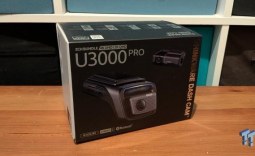 Thinkware U3000 Pro Review - Smart Dashcam with Wi-Fi quirks
 Montech TG3 Mid-Tower Chassis Review
 ASUS ROG Strix X870E-A Gaming WiFI7 Neo Review - A New Enticing Option
 I ditched the Windows 11 context menu for this open-source tool, and here's why
 Windows 11 may be encrypting your drive already, and I checked where my recovery key went
 GIGABYTE's 40 Days of INFINITY celebrates 40 Years of Innovation with stunning GeForce RTX graphics cards and rewards
 I swapped File Explorer for this free file manager and finally got the layout I wanted
 How to tell if someone has been using your Windows PC without your permission
 6 Task Manager tips for troubleshooting Windows performance problems
 ASUS ROG's 20th Anniversary Line-up of Premium PC Gaming Gear has Arrived - Here's Everything You Need to Know
 Six File Explorer tips every Windows user should know
 I switched my PC to encrypted DNS in Windows 11, and browsing felt more private
 Printer Not Working in Windows? How to fix detection, print queues and drivers