







Science, Space, & Robotics - Page 246
Explore the latest Science, Space, Health, and Robotics news from TweakTown. Coverage includes space launches, medical tech, discoveries, and rockets. - Page 246
Stay Updated
Follow TweakTown for breaking tech news, reviews, and daily updates.


As an Amazon Associate, we earn from qualifying purchases. TweakTown may also earn commissions from other affiliate partners at no extra cost to you.
SpaceX considering a new 'Commercial Cape Canaveral' in Texas
It appears to be all good news for space enthusiasts today especially for those who want to go into space eventually. SpaceX has filed a notice of intent with the FAA regarding building a new spaceport in Cameron County, Texas. Cameron County, Texas is very close to the Mexican border and is right on the Gulf of Mexico.
The filing reads:
SpaceX currently uses NASA's Launch Complex 40 at Cape Canaveral for its Falcon 9 rocket. They have also been interested in gaining access to NASA's Complex 39A for heavy loads, although it's unclear whether or not they are still interested in that.
Continue reading: SpaceX considering a new 'Commercial Cape Canaveral' in Texas (full post)
Carbon nanotube circuits could outsource their heat to a separate device
Most people know that when you flow an electric current through a wire, the wire heats up. Most of our readers will also know that heat is the killer of many of our favorite electronic devices. That's why this new discovery by the University of Maryland is very pertinent to our cause. It's uses could allow for more efficient heat dissipation.
Kamal H. Baloch, Norvik Voskanian, Merijntje Bronsgeest, and John Cumings found that they could outsmart the traditional "Joule heating" and have the heat dissipate into the substrate rather than into the wire. This is due to a process they have dubbed "remote Joule heating." When an electric current flows through a carbon nanotube, the heat will go into the material that the nanotube is sitting upon.
The researchers determined that as much as 84 percent of the power in the nanotube was transferred to the substrate. In the nanoscale that they were working on, it was a bit hard to determine just where the heat was going. They had to use electron thermal microscopy (EThM) in order to figure it out.
Do-it-yourself sentry gun turret--Who doesn't need one?
I think I found a project that's going to consume my spring break. Well, that is if I didn't already have about 50 things to do over it, none of which are particularly fun. But, even though I can't do it, I think I should share it with you guys, just in case you want to make one. And if you do, you better send me a video.
This incredibly awesome turret is the brainchild of Rudolph Labs and requires a sturdy tripod, an airsoft or paintball gun, and a PC. The PC uses a webcam to scan the scene and watch for movement. Once it locates a target, it can stick to it and fire at will! The software includes the ability to anticipate where the target is going to move.
The bill of materials (excluding PC) is about $110. The designers of the project warn that it could consume a weekend, or three:
Continue reading: Do-it-yourself sentry gun turret--Who doesn't need one? (full post)
Our Sun is experiencing solar tornadoes roughly 5 times the size of our entire Earth
Our Solar System is an absolutely mind-blowing thing, and I personally believe we haven't even scraped the surface in terms of our knowledge base on it. There are things that we (the normal people, not NASA high-ups or anything) couldn't even begin to comprehend, let alone know the ins and outs of things we have no idea about.
The latest dance our closest star is doing is letting out solar tornadoes that are several times as wide as the Earth, and are generated in the solar atmosphere. The new data was discovered using the Atmospheric Imaging Assembly telescope that is onboard the Solar Dynamic Observatory (SDO) satellite.
Dr. Xing Li, of Aberystwyth University says:
Army testing robots inspired by sand fleas, roaches
The US Army shows no signs in stopping its demand for robots, even in the 10-year old conflict. The two new robots that the Army are currently testing will join the over 2,000 robots that are already employed by the Army for bomb disposal, classified ops, and for security checkpoints. Boston Dynamics, creator of the cool BigDog bot and others, is the creator for these two new robots.
Both were developed with funding from the Army's Rapid Equipping Force. They are now undergoing testing at the Army Test and Evaluation Command to pass safety and reliability assessments. The first type is the RHex which is a six-legged, 30-pound crawling bot inspired by cockroaches. It wiggles around through mud, streams, and rocky terrain, going up to six hours on a battery charge. The bot can be controlled by remote up to 650 yards away and can manage stairs, slopes, and even swim underwater.
The Sand Flea is the other bot being developed, and it is capable of jumping up to 30 feet into the air. It weighs 11 pounds and is able to jump 25 times on a single charge of its carbon dioxide bottle. This allows it to jump over walls or onto roofs of buildings. In flight, it's able to stay stable due to a gyro stabilization system.
Continue reading: Army testing robots inspired by sand fleas, roaches (full post)
3D solar panels can produce up to 20 times more energy
Personally, I'm getting a little sick of the 3D trend that is visible everywhere. I mean, 3D printers, movies, and game consoles, it's all starting to become a bit ridiculous. Finally, there's a piece of 3D that I can get behind. Researchers at Massachusetts Institute of Technology have recently discovered that a 3D inspired solar panel could produce 20 times more energy than its traditional flat brethren.
Traditional solar panels lay on a roof facing the sun to produce energy. MIT researchers decided to test the hypothesis set forth by 13-year-old Adiean Dywer. He hypothesized that a design based on trees would produce more energy. His testing failed, but MIT's didn't. MIT tried various 3D shapes such as a cube, tall cube, and tower to see which produced the most energy. All three outpaced the traditional panel and the accordion-style tower drew in 20 times more power per square foot.
"I think this concept could become an important part of the future of photovoltaics," said Jeffrey Grossman, one of the project leaders. The accordion-style worked so well because it could absorb energy from all angles. It also reduces the foot print of the installation by standing vertically. While MIT is confident with the tower design, they haven't figured out the best distribution for them yet. Since one tower may shade another, they are best used in a urban environment...at least for now.
Continue reading: 3D solar panels can produce up to 20 times more energy (full post)
Scientists use technology to hide objects from heat-sensing devices
Harry Potter's invisibility cloak is pretty cool. But it's just fantasy, isn't it? Well, by applying some technology, scientists have been able to make a breakthrough in cloaking objects from heat-sensing cameras and the like. This is done by controlling the flow of heat, either focusing it into a small point, or spreading it outside of an invisibility zone.
the technology will most likely go to the military, where something similar has been proven to hide a tank. This technology also has applications in computers, because it is fundamentally shuffling heat around at will. In computers, heat is still a major challenge for engineers. "We can design a cloak so that heat diffuses around an invisibility region, which is then protected from heat," Dr Guenneau explained. "Or we can force heat to concentrate in a small volume, which will then heat up very rapidly."
It could also be used by thieves, provided they can steal it from the military in the first place. They would be able to hide from police helicopters at night, or from thermal imaging alarm systems. Harry Potter's cloak is becoming reality. It will just take more time and research.
Continue reading: Scientists use technology to hide objects from heat-sensing devices (full post)
Red Bull Stratos: gives man wings, will send him 120,000 feet into the stratosphere
OK, I'll admit it: I'm scared of heights. I live in a two-storey house and can barely look over my balcony without feeling scared. But this, this is just absolutely insane! Enter "Fearless Felix" Baumgartner, who has jumped 2,500 times from planes, and helicopters as well as some of the world's highest landmarks and skyscrapers, such as the Christ the Redeemer statue overlooking Rio de Janeiro, the Millau Viaduct in southern France, and the 101-story Taipei 101 tower in Taiwan.
This summer, Baumgartner hopes to fly toward the Earth at supersonic speeds from a record 23 miles above the Earth, breaking the sound barrier... with only his body. During a dress rehearsal last Thursday, he made it more than half-way, ascending from the New Mexico desert in a helium balloon, and jumping from more than 13 miles up. It's said that he is one of only three people who have jumped from such a height and free-fall to a safe landing. He's also the first to do so in 50 years.
He's even caught the attention of NASA, where engineers working on astronaut escape systems for future spacecraft keeping an eye on the skydiver. Here's where things get insane: Baumgartner took a 100-foot helium balloon and pressurized capsule which lifted from Roswell, New Mexico last Thursday morning. He then jumped at 71,581 feet - 13.6 miles - and landed safely just 8 minutes and 8 seconds later.
Lake Vostok, Antartica: Russian scientists have been radio silent for 5 days
First off, some back story. This will end up as a mini-editorial, but some of you will find this very interesting. Lake Vostok is a large (10,000km2), presumably fresh water body located under some 4km of ice in East Antarctica. The lake is not some little pool of water, its a gigantic, 250km long and 50km wide.
Because the lake is under kilometres of frozen ice, it has been untouched by todays technology and hence, the hands of man. The contents of this secret under-the-ice lake, have not seen the light of day for more than 20 million years. Because of this long period of pure isolation, it is believed that the water inside Lake Vostok could contain new, never-before-seen lifeforms, and unique geochemical processes.
For the past five-plus years, Russia and the United States have been seeking to probe Vostok in order to discover its underlying secrets from this pure, pristine body of water. The problem associated with such an untouched body of water is that as soon as it is discovered, tested and exposed, we would have contaminated it in multiple ways. Because of its long period of isolation, it cannot be explored without the introduction of the outside world, i.e. us.
Biggest solar flare since 2005 is happening right now
We're not even finished with the first month of 2012 and we are already experiencing some seriously powerful stuff happening to us because of one of the most important things we, humans, require to live: our Sun, our Star. The Sun, at around 0359 UT on January 23, from sunspot 1402 erupted and produced a long-duration M9-class solar flare.
The explosion's M9-ranking puts it on the threshold of being classed an X-flare, the most powerful there can be. NASA's Solar Dynamics Observatory captured the flare's most extreme ultraviolet flare, below:
The resulting coronal mass ejection (CME) hit Earth's magnetic field at 0617 UT on January 22 and according to analysts at the Goddard Space Weather Lab, the CME strongly compressed Earth's magnetic field and briefly exposed satellites in geosynchronous orbit to solar wind plasma. The effects of this will last roughly 24 hours, where Earth's magnetic field reverberates from the impact. This causes bright auroras to be seen around the arctic circle. Bjørn Jørgensen observed this display from Tromsø, Norway:
Continue reading: Biggest solar flare since 2005 is happening right now (full post)
Qualcomm offer $10 million for whoever makes the first working Tricorder, Star Trek fans beam up
Qualcomm have an interesting new competition, named the Tricorder X PRIZE. It is jointly organised with the X PRIZE Foundation, who is famous for its Ansari X PRIZE award of $10 million for its first private suborbital space flight. Qualcomm is offering up $10 million to those who could take the concept of a highly-portable health-monitoring device, the Star Trek Tricorder, and make it real.
Peter Diamandis, chair and chief executive of the X PRIZE Foundation says:
Want to get in on the $10 million prize? All you have to do is be the team that most accurately diagnoses a set of 15 diseases across a sample of 30 consumers in three days. Bonus points are award for providing the information in a useful manner alongside logging of health metrics including blood pressure, respiratory rate and temperature. Qualcomm have big plans for the future device, where they would make it available for untrained personnel to self-diagnose ailments.
FDA approves self-sanitizing keyboard for healthcare use
If only this was approved to grubby gamers across the world. Well, it's starting with a company called Vioguard, which was started by two Microsoft Hardware veterans and their business partners. Vioguard have received U.S. Food & Drug Administration approval for use of its self-sanitizing computer keyboard in both hospitals and other healthcare settings.
Where this is different to the old "pick it up and shake it all about", Vioguard's keyboard can be retracted automatically into an enclosure to be bathed in germicidal ultraviolet light from two 25-watt fluorescent lamps. The enclosure also doubles as a monitor stand (how convenient), and the mechanism for retracting and ejecting the keyboard works hands-free via sensors.
Vioguard states that the technique has been proven effective in killing a minimum of 99.99-percent of harmful bacteria and viruses, inclusive of the flu, MRSA and other nasty bugs that can spread through hospitals. The intent of this new keyboard is to provide healthcare facilities an alternative to manually cleaning a keyboard.
Continue reading: FDA approves self-sanitizing keyboard for healthcare use (full post)
Is it a bird? Is it a plane? No, it's Microsoft co-founder Paul Allen who has plans to create a business for commercial space travel
Space Travel. Microsoft. Skynet. The steps are there, and we're hitting them at a nice pace. Microsoft co-founder Paul Allen has announced new plans to create a business for commercial space travel. It should take roughly five years to develop.
With the U.S. government slicing space flight, Allen has sensed a gap in the market for investment. Yesterday, Allen showcased designs for a new craft that would eventually have the ability of taking human passengers into the vast space that is, well, space.
Allen has previously funded spaceflight, as he was behind SpaceShipOne, which was the first manned private journey. Stratolaunch System are the ones behind the building of the new craft, which is a company founded by Paul Allen.
2005 YU55, a 400m-wide Asteroid that will fly past Earth on November 9 at just 324,600km
For those of you who don't know, there is a 400m-wide asteroid called "2005 YU55" that will fly past us (and in-between the Moon) on November 9. It will fly past at just 324,600km away, which is 0.85 the distance of the Moon itself, it won't kill us; but it is close enough to be news-worthy.
According to NASA, the "trajectory of asteroid 2005 YU55 is well understood", so there's no dangers whatsoever. The asteroid won't have any gravitational influence on Earth, so it won't make volcanoes go off or cause Earthquakes, etc. But, our gravitational pull might re-direct 2005 YU55. This is something NASA don't really cover, because it will [of course] most likely cause panic.
Also remember, that on the same day, FEMA (the Federal Emergency Management Agency) along with the FCC (Federal Communications Commission) and the NOAA (National Oceanic and Atmospheric Administration will be running a nationwide event coordinated by those agencies and administrations. Come November 9, there will be a test of the Emergency Alert System (EAS) in which the test will be heard on the radio and seen on local, cable and satellite TV.
iPod fathers new startup "Nest Labs" builds Learning Thermostat
Fathers of the iPod, Ton Fadell who created the first 18 generations of the iPod and the first three versions of the iPhone, and Matt Rogers who was responsible for iPod software development at Apple, have a new startup: Nest Labs. Their first product? The Nest Learning Thermostat, which is designed to intelligently "learn" the behaviors of the user and adjust accordingly.
During the first seven days of use, the customer will set base temperatures using a single dial which is like a big click wheel. Click the wheel right for the temperature to increase and the display to turn orange, or to the left, to bring it down and the display turns blue. The Nest then records your initial settings and starts to take over after the first week or so. As usage continues, Nest will fine-tune settings using sensors, algorithms and cloud computing.
As an example, Nest is able to detect when users have left the house using a motion sensor and it will throttle back heating or cooling accordingly. The thermostat also includes an ambient light sensor and will adjust the brightness of the display relative to the surrounding light in the room to not cause eye strain.
Continue reading: iPod fathers new startup "Nest Labs" builds Learning Thermostat (full post)
Temporary Surgical Implant Allows Patient To Operate Computer With Mind, Order Take-Out
From the people that brought you the crops that farm you, scientists in Russia were able to surgically implant a temporary device that allowed a patient to operate a computer- with the mind. This news comes to us from the aptly-named Singularity Hub, reminding us that one day, whether we like it or not, robots will take over the world. Also, something's telling me they're going to be able to override the Prime Directive.
Reprogrammable chip - upgradeable over time
This could well be the future folks, reprogrammable chips. Startup company, Tabula, is trying to create the hardware equivalent of software - a chip that over time, can have hardware improvements without completely replacing the device. If a programmable chip like this makes it to the market, it would replace the current mantra of replacing the entire device when a new, faster device comes out.
Continue reading: Reprogrammable chip - upgradeable over time (full post)
1950 FBI memo confirms flying saucers crashing in New Mexico, disclosure FTW
For years people have wondered, talked about, made movies about, created successful businesses locally and internationally, sold goods and accessories, all around the Roswell incident involving UFOs that crashed. Files have now appeared on the FBI's "vault" website that was once devoted to classified documents have now become public.
The memo is brief but it's from an Air Force informant about "flying saucers". The memo has FBI agent Guy Hottel saying what an "investigator for the Air Forces" told him about what is called "the Roswell incident", Hottel says:
MIT Labs Develops Kinect-Based Teleconference Interface
Continue reading: MIT Labs Develops Kinect-Based Teleconference Interface (full post)
Hospitals set to receive 'real-time' waiting times
In a radical move, patients will finally be able to see just how long the list of people are in hospital emergency departments ahead of time before they arrive. The overhaul of the health system is being lead by Health Minister Jillian Skinner who as her first move is also giving power back to the doctors and nurses to run their hospitals.
Continue reading: Hospitals set to receive 'real-time' waiting times (full post)
 The Witcher multiplayer project dubbed 'Sirius' hit with a new round of layoffs
 Xbox Elite Series 3 controller gets leaked with a built-in screen, quickly gets taken down
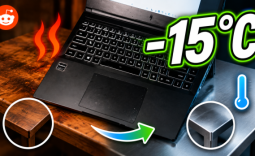 Redditor improves his gaming laptop temps by 15C simply by changing the table
 Phantom Blade Zero on PC will launch with DLSS 4.5 and Ray Tracing on day one
 Razer announces its first Artisan Keycap with the Triple-Headed Snake Edition
 ZOTAC's 20th Anniversary Edition GeForce RTX 5080 features a titanium colorway and mirror-like backplate
 GeForce NOW app for Linux leaves beta, while DLSS Frame Generation cloud latency also improves
 Twitch opts streamers into gen AI training by default, faces harsh backlash
 Sean Murray still plays the 2016 launch version of No Man's Sky
 China's YMTC has climbed to third place in global NAND flash shipments
 Corsair HS35 v3 Wireless Gaming Headset Review - An Affordable Winner
 D-Link F518 5G Wi‑Fi 6 AX1800 Mobile Hotspot Review: All-Day Mobile Hotspot
 Bose Lifestyle Ultra Speaker Review - Impressively Detailed Room-Filling Sound
 MSI Z890 Gaming Plus WIFI6E Review - Z890 for under $200
 Mortal Kombat (1995) 4K Ultra HD Blu-ray Review
 CPS PCCOOLER YS1200 ATX 3.1 80 PLUS Gold PSU Review
 ASRock X870E Taichi White Review: a premium AM5 motherboard with 10G LAN and WiFi 7
 Asetek Initium Pedal Modular Upgrades Review
 Thinkware U3000 Pro Review - Smart Dashcam with Wi-Fi quirks
 Montech TG3 Mid-Tower Chassis Review
 I ditched the Windows 11 context menu for this open-source tool, and here's why
 Windows 11 may be encrypting your drive already, and I checked where my recovery key went
 GIGABYTE's 40 Days of INFINITY celebrates 40 Years of Innovation with stunning GeForce RTX graphics cards and rewards
 I swapped File Explorer for this free file manager and finally got the layout I wanted
 How to tell if someone has been using your Windows PC without your permission
 6 Task Manager tips for troubleshooting Windows performance problems
 ASUS ROG's 20th Anniversary Line-up of Premium PC Gaming Gear has Arrived - Here's Everything You Need to Know
 Six File Explorer tips every Windows user should know
 I switched my PC to encrypted DNS in Windows 11, and browsing felt more private
 Printer Not Working in Windows? How to fix detection, print queues and drivers