







RAM - Page 4
Stay updated on RAM news, including DDR5, CAMM2, LPDDR6, overclocking trends, and next-gen memory developments. - Page 4
Stay Updated
Follow TweakTown for breaking tech news, reviews, and daily updates.


As an Amazon Associate, we earn from qualifying purchases. TweakTown may also earn commissions from other affiliate partners at no extra cost to you.
ASRock's HUDIMM DDR5 memory with just one sub-channel could help lower memory prices on Intel boards
If you ever want to gauge how bad the market situation for a product is, look for companies introducing cost-efficient alternatives. That is exactly what ASRock is doing to fight against sky-high memory prices. The motherboard manufacturer is teaming up with Intel and TeamGroup to develop a solution that could pave the way for more affordable DDR5 modules.

That solution is a new DDR5 module type called HUDIMM, short for half-unbuffered DIMM, or a single-sub-channel DRAM. It targets entry-level builds and business desktops that need a modern platform for everyday tasks and something to tide them over during the DDR5 memory crunch.
The tech behind HUDIMM is straightforward. Regular DDR5 UDIMM modules have two independent 32-bit sub-channels, allowing for higher bandwidth and density at the same memory clock rate as part of the standard DDR5 design. In contrast, HUDIMM modules use only one 32-bit sub-channel, resulting in half the bandwidth and density, but also notably lower production costs.
DDR5 memory and SSDs sit on retail shelves as 128GB memory kit prices hit $4,200
The current memory and storage crisis affecting the consumer technology industry has seen the prices for things like DDR5 memory kits and SSD storage steadily and even exponentially increase in recent months. Naturally, it's affected how everyday consumers, PC gamers, and enthusiasts are approaching upgrades and new builds, adjusting budgets and hardware options to adapt to the situation.

For those living in the US, Micro Center is one of the best-known retailers of PC hardware, with all major components in stock at large retail stores across the country. As the current DRAM and flash memory (storage) crisis is born from the AI industry and data centers buying up all stock and manufacturing capacity shifting to more advanced technologies like high-bandwidth memory (HBM), you'd think there would be mass shortages everywhere, with the limited available stock being sold at inflated prices.
Although anecdotal, a new post in the PCMasterRace thread on Reddit from Hell-Diver 7 shows that at least one Micro Center appears to be fully stocked with cabinets, shelves, and rows of DDR5 memory kits and SSDs on hand. Unfortunately, with this hardware readily available for purchase, prices are 200+ percent higher than before the current mess.
DRAM prices to increase by up to 63% in Q2, NAND Flash by up to 75%, new report says
Although DDR5 memory pricing has recently dropped in the U.S. and China, a new report by TrendForce analysts says DRAM contract prices are set to increase in Q2 2026 as "high-capacity RDIMMs have become the primary procurement target" for AI deployment. And with supply still tight even after DRAM production and capacity have been reallocated to HBM and data center-first applications, contract pricing is set to increase by 58-63% compared to Q1 2026.

It's a notable increase in an industry where memory prices have continued to rise month after month. The report states that, even though DDR5 memory prices have recently trended downward due to lower demand, prices in the PC market will also rise as suppliers reduce shipments, forcing memory makers in the consumer space to procure what they need at higher prices.
And this extends to the GPU market, as GDDR6 and GDDR7 memory for PC gaming graphics cards are only being allocated "limited capacity," which means higher prices and scarcity in the months ahead. The AI arms race won't only affect DRAM pricing in Q2 2026; the report also states that NAND Flash contract prices will increase by up to 75% quarter over quarter, adversely affecting SSD pricing and availability.
ROG X870E APEX pushes low latency DDR5-8800 OC with new Ryzen 9 9950X3D2
ASUS's ROG X870E APEX motherboard is the company's AM5 flagship for the current generation of Ryzen desktop processors. It's built for extreme CPU and memory overclocking thanks to premium power delivery, advanced memory technology, and a ROG Memory Fan Kit cooler to support OC action.

According to new screenshots showcasing the Ryzen 9 9950X3D2 Dual Edition CPU in a system with the ROG Crosshair X870E APEX motherboard and 32GB of G.Skill Trident Z5 NEO DDR5 memory, ASUS's engineers were able to push DDR5-8800 memory speeds with low-latency CL32 timings. That last bit is particularly impressive because DDR5-8000+ speeds with Ryzen 9000 Series CPUs often come with much higher latency.
According to the source of the screenshot of ASUS's testing (Wccftech), the G.Skill memory appears to be a low-latency model with DDR5-6000 (6,000 MT/s) speeds. This means DDR8800 is effectively a 46.6% memory frequency overclock while maintaining similarly tight timings.
An autonomous car could use 300GB of RAM, Micron CEO predicts, with 'robust long-term growth in automotive memory demand'
As if the current RAM crisis wasn't bad enough - with supply being consumed by AI needs and data centers therein - the future of cars is going to be an additional burden on memory production.

Fully autonomous cars could demand hundreds of Gigabytes of on-board memory, according to Micron's CEO Sanjay Mehrotra, who provided his thoughts as part of the latest fiscal report, after the firm had a booming quarter.
The Register reports that Mehrotra envisages "robust long-term growth in automotive memory demand", and that the amount of RAM used in a vehicle will go from 16GB currently to over 300GB with the advent of L4 autonomous cars.
Sound the alarm, DRAM shortage and memory crisis could last until 2030
SK Group chairman Chey Tae-won, the South Korean conglomerate that owns semiconductor manufacturer SK Hynix, has said that the DRAM memory shortage and crisis will "persist" through 2030. As reported by The Korean Times, these comments were made at the recent NVIDIA GTC 2026 event in San Jose, California.

"The shortage stems from a lack of wafer capacity, and securing additional wafers takes at least four to five years," Chey Tae-won said. Adding, "We expect the industry-wide supply shortfall to persist at over 20 percent through 2030." However, on the plus side, it sounds like SK Hynix plans to unveil new measures in the "near future" to stabilize DRAM prices.
In addition to this, SK Group chairman Chey Tae-won reportedly said that even though SK Hynix is one of the dominant players in the HBM (high-bandwidth memory) market for data center and AI-focused GPUs, he and SK Hynix are keenly aware that purely focusing on the lucrative HBM market will adversely affect the consumer technology market that includes everything from smartphones to PCs.
Continue reading: Sound the alarm, DRAM shortage and memory crisis could last until 2030 (full post)
Micron confirms HBM4 memory and PCIe Gen6 SSDs are in 'high-volume' production
At NVIDIA GTC 2026 in San Jose, California, Micron has announced that new AI-optimized memory and storage technologies for the upcoming NVIDIA Vera Rubin platform and other AI systems are now in "high-volume" production. This includes HBM4 36GB 12H memory, which Micron says achieves over 11 Gb/s per pin, opening the door to over 2.8 TB/s of memory bandwidth.

According to the company, this is a 2.3X increase in memory bandwidth and a 20% improvement in power efficiency over HBM3E, which is still one of the fastest, highest-capacity high-bandwidth memory solutions for AI available today. And with advanced packaging, Micron is already shipping HBM4 48GB 16H samples to customers.
HBM4 is built for NVIDIA Vera Rubin and the immediate future of cutting-edge AI, but Micron has also announced solutions designed for NVIDIA Vera Rubin NVL72 and standalone NVIDIA Vera CPU systems with Micron SOCAMM2, offering up to 2TB of memory and 1.2 TB/s of bandwidth per CPU, with capacities ranging from 48GB to 256GB.
V-COLOR's new 1+1 Value Pack DDR5 memory includes one working module and one 'RGB Filler'
It's no secret that the unprecedented memory crisis and supply constraints affecting the consumer market have made building a new gaming PC or upgrading an existing rig much more expensive than before. And that's putting it mildly, as we've all watched the price of 32GB DDR5 memory kits increase dramatically in recent months.

And with that, V-COLOR is launching a new line of DDR5 memory specifically for gamers seeking a flexible, affordable solution for upgrading an existing rig or building a new gaming PC. And it's doing so by introducing new DDR5 memory kits with "one active DDR5 memory module" and one matching "RGB Filler module." This allows gamers to achieve a dual-DIMM look with RGB, albeit with only one of the two modules containing actual working memory.
This "1+1 DDR5 Memory and RGB Filler NON-DRAM Solution" is an interesting approach to the rising costs of DDR5 memory. V-COLOR is set to offer 24GB and 16GB DDR5 memory plus RGB Filler kits, with the company stating that they're "well suited for AMD Ryzen" systems powered by PC gaming champs like the Ryzen 7 7800X3D and Ryzen 7 9800X3D, where a single DDR5 module is a practical solution for most gaming workloads.
SK hynix unveils world's first 1c LPDDR6 DRAM for mobile devices
SK hynix has announced that it has developed and validated the world's first 1c LPDDR6 memory, with 16Gb LPDDR6 DRAM that is reportedly 33% faster and 20% more power efficient than LPDDR5X. Built on sixth-generation 10nm-class (1c) process technology, mass production is on track for the first half of the year with supply expected shortly thereafter.

SK hynix notes that LPDDR6, like LPDDR5X before it, is designed for mobile devices such as smartphones, tablets, and even PC gaming handhelds. And as we're in the age of generative AI, it's memory purpose-built for on-device AI where speed and efficiency are key. Plus, with speed improvements, odds are it will also end up in data centers.
This new 16Gb LPDDR6 DRAM will deliver speeds over 10.7 gigabits per second, which, right off the bat, makes it faster than all existing LPDDR5X devices on the market. And when it comes to the improved power efficiency, SK hynix chalks this up to DVFS (Dynamic Voltage and Frequency Scaling) technology.
Continue reading: SK hynix unveils world's first 1c LPDDR6 DRAM for mobile devices (full post)
Micron ships world's first 256GB LPDRAM SOCAMM2 memory module
With one-third of the power consumption and a smaller footprint, Micron has unveiled a memory world first, a monolithic 32Gb LPDDR5X die powering a high-capacity 256GB LPDRAM SOCAMM2 module. And with 2TB of LPDRAM per 8-channel CPU, Micron says you're looking at a 2.3x speed increase in the all-important 'time to first token' metric.

Yes, this impressive memory module is designed to serve the AI and Data Center markets, targeting LLM inference and workloads where memory capacity, bandwidth, efficiency, and latency influence performance and scalability. SOCAMM2 presents an ideal solution, as its smaller footprint and lower power consumption make it more attractive than traditional server memory like RDIMMs.
Micron says that it has been collaborating with NVIDIA in the development of sophisticated memory for AI, which has led to the world's first 256GB LPDRAM SOCAMM2 module. Although GPU VRAM is critical for AI, fast system or server memory is right there, as KV cache offloading moves key/value data from GPU memory to lower-cost solutions like this.
Continue reading: Micron ships world's first 256GB LPDRAM SOCAMM2 memory module (full post)
Micron announces its new GDDR7 memory in the most tone deaf way possible
Micron has announced its new GDDR7 memory with 24Gb or 3GB density and bandwidth of 36 Gbps. Faster GDDR7 memory with 3GB modules has been on the cards for a while, opening the door to graphics cards with more VRAM capacity delivering cutting-edge speeds. At one point, these Micron 3GB modules were expected to arrive with the GeForce RTX 50 SUPER Series refresh, which would have seen most cards in the lineup get 50% more VRAM.

The reason why we're bringing up the delayed and potentially canceled RTX 50 SUPER Series is that Micron decided to make the GDDR7 announcement in a blog post titled 'The new performance bottleneck: How more GPU memory unlocks next-gen gaming and AI PCs.' The post, from Micron's Alejandro Breton Garcia, goes to great lengths to talk about how this new 'evolution of GDDR7' will improve PC gaming.
More capacity and bandwidth will make 4K and even 8K gaming more viable, the post claims, while also enabling game engines to render larger, more detailed worlds. The only problem is that with the current memory crisis leading to shortages and price increases that could last the entire year, and Micron's exit from the consumer market by shutting down its Crucial business to focus on data centers, it comes across as tone-deaf.
Some good news, DDR5 memory pricing is actually dropping in Europe
Retail prices for desktop-class DDR5 memory for new PC builds or upgrades have increased dramatically in recent months due to the ongoing memory crunch affecting the entire consumer technology market. The situation is pretty dire, so even if what we're seeing here is simply a short-term course correction, it's still some good news in what has been a couple of months of bleak reporting on the state of PC hardware.

Tracking the average and lowest prices of memory kits, it looks like prices have dropped across Europe in recent weeks. As reported by a group of enthusiasts on Reddit, with Tom's Hardware also confirming the price changes with some of Germany's largest suppliers of PC hardware. Tracking 32GB DDR5 memory kits from companies like Corsair and Kingston, the outlet has confirmed the downward trend.
However, even though it's technically a steep decline when pricing drops from €550 for a Corsair kit in January to €463, it's still a lot more expensive than the average price of around €100 back in October of last year. It will be interesting to see whether this downward trend continues, if prices increase, or if they settle at a new average for the remainder of 2026.
Continue reading: Some good news, DDR5 memory pricing is actually dropping in Europe (full post)
Corsair revenue soars at it secures supply for the 'robust global demand' for its DRAM products
Corsair has posted its latest financial results for the fourth quarter of 2025 and the full calendar year, reporting strong double-digit revenue growth of 12% and a 30% increase in profit. With Corsair and Elgato's strong lineup of products covering all aspects of hardware for PC gamers, creators, and streamers, the company has highlighted "growth in memory and components" as a key component of its success in its Gaming Components and Systems segment.

And when it comes to PC hardware, Corsair reports it's now the market leader in the US for DRAM (covering its DDR4 and DDR5 memory), PSUs, and cooling. On the memory front, Corsair reports 24% year-over-year growth in its memory business and has secured sufficient supply to meet the "robust global demand" for its memory lineup.
"The Corsair team was able to successfully navigate a constrained global semiconductor market to secure supply for the robust global demand we saw for our memory products during the quarter, underlining our leadership position in the performance memory market," the financial report says. And it's expecting to continue this momentum in 2026, with "strategic inventory investment."
Here's what 96GB of LPCAMM2 memory with LPDDR5X-9600 modules looks like, production coming soon
LPCAMM2 LPDDR5X memory is on the way, with a recent 96GB kit at 9600 MT/s transfer speeds entering mass production in the near future.

The new LPCAMM2 memory form factory has been designed to save PCB space on mobile and laptop form factors, but until now, LPCAMM2 memory has used LPDDR5 memory modules, but it also supports faster LPDDR5X memory. Samsung looks to be close to starting mass production of its faster LPCAMM2 memory modules.
Lenovo's China manager has posted a picture of Samsung's upcoming LPCAMM2 "LPDDR5X" memory module, with the module listed with a huge 96GB of capacity in a "2D8Rx8 PC5" configuration, with speeds of up to 9600 MT/s. However, the only platform on the market that takes the new specifications and speeds is Intel's just-launched Core Ultra Series 3 "Panther Lake" CPUs, which support up to 9600 MT/s speeds.
G.SKILL OC World Cup 2026 memory overclocking competition kicks off with $40,000 USD prize pool
Although the price of DDR5 memory has skyrocketed in recent months, with the supply situation likely to get worse before it improves, it's still good to see that some things remain the same. The annual G.SKILL OC World Cup 2026 overclocking competition for extreme DDR5 memory overclocking kicks off this week, with the Grand Final once again set to take place live on stage at Computex 2026 in Taipei, Taiwan.

The G.SKILL OC World Cup 2026 is the competition's tenth annual extreme overclocking event, with the Online Qualifier set to run from February 15, 2026, to March 23, 2026. Eligible competitors must pair G.SKILL DDR5 memory with an Intel Z790/Z890 motherboard and complete five demanding overclocking trials. The Top 9 will then move on to the Live Qualifiers stage at Computex 2026, which will culminate with the Grand Final on June 5, 2026.
With a $40,000 USD Total Prize Pool, the OC Champion and winner will walk away with $10,000 USD. Each of the Top 9 finalists participating in the Live Qualifier round at Computex 2026 will also receive a G.SKILL DDR5-8000 32GB (2x16GB) memory kit, which, in today's market, is worth a lot of money.
Intel teams with SoftBank on next-gen ZAM memory, prototypes to compete against HBM in 2028
Intel is re-entering the memory business, teaming with Japan's SoftBank on a next-generation DRAM bonding technology.

Intel's Next-Generation DRAM Bonding (NGDB) initiative was completed under the Advanced Memory Technology (AMT) program that was managed by the U.S. Department of Energy and National Nuclear Security Administration through the Sandia National Laboratory, Lawrence Livermore National Laboratory and Los Alamos National Laboratory... some advanced tech then, eh?
The use of ZAM next-generation memory technology allows SoftBank's subsidiary, SAIMEMORY, to sign a collaborative agreement with Intel to advance the commercialization of Z-Angle Memory (ZAM), a next-generation memory technology.
Analysts say PC DRAM pricing for Q1 2026 will hit record highs, doubling the previous estimate
As the old saying goes, things are going to get worse before they get better. When it comes to the DRAM and NAND Flash crisis affecting all corners of the consumer technology space, including PC hardware, the analysts at TrendForce have "significantly raised" their pricing forecasts for memory (DRAM) and storage (NAND) due to the unprecedented global supply and demand constraints caused by "persistent AI and data center demands."

Translation: things are looking worse than what was previously forecasted, and that right now, it's a seller's market. TrendForce's previous estimate of a 55-60% increase in DRAM pricing for Q1 2026 has been raised to 90-95%. On top of this, NAND Flash contract prices are now expected to increase by 55-60%, up from the previous estimate of 33-38%.
One reason for the change is that PC shipments in Q4 2025 were much higher than expected. And with that, it has escalated the DRAM shortage and crisis. TrendForce notes that Tier-1 PC OEMs, which include companies like Dell, HP, and Lenovo, are now "experiencing declining inventory levels." And with that, an almost 100% increase in DRAM contract pricing will set a "new record for a quarterly surge."
Memory will be 30% of the total cost of the product that uses it following incoming price hikes
DRAM memory prices have skyrocketed since the beginning of 2025, with estimates now estimating that prices have increased by nearly 300%. In addition to DRAM, NAND flash prices have already increased, and these hikes can be attributed to AI companies pulling manufacturing supply away from the consumer market.

The thirst for more memory from AI companies isn't expected to be quenched for some time, as billions of dollars have been thrown into the global race to create the most sophisticated AI model possible, and no company participating is expected to just stop building and upgrading the data centers that provide more power to their infrastructure.
Counterpoint Research, a global technology market research firm in the TMT industry, was recently cited by The Wall Street Journal, and explained that AI firms are crowding out other buyers of memory, and the disproportionate supply allocation is due to builders of data centers who are happy paying a premium. MS Hwang, a research director at Counterpoint Research, who has been in the industry for more than 30 years, stated prices are expected to continue increasing, with supply already being allocated to companies for 2026, 2027, and 2028.
80% price hike for Samsung RAM rumor is debunked - memory situation is bad, but not that dire
Is Samsung jacking up the price of its RAM by an earth-shattering 80%? No, thankfully, this rumor has been clearly shot down as untrue.

Tom's Hardware reports that there was a buzz of speculation around the idea that an 80% hike was in the cards for Samsung's entire catalog of memory products, but this isn't the case. The rumor came from a Samsung distributor which supposedly penned a memo claiming the hike was incoming thanks to "significant changes in the global semiconductor market" (see the above post on X).
United Daily News, a newspaper in Taiwan, said that Samsung, as well as its memory making partners, are saying that this 80% price increase claim is a complete fabrication.
Micron secures more DRAM manufacturing with a $1.8 billion purchase
The emergence of AI and its demand for as much DRAM as possible has put a global strain on the market, but Micron, one of the three big memory makers, has now secured a way to add more manufacturing capacity to its portfolio.

Micron and Powerchip Semiconductor Manufacturing Corporation (PSMC), a Taiwanese company, have announced a deal that transfers ownership of Powerchip's P5 site located in Tongluo, Taiwan, for $1.8 billion. Micron announced it signed a letter of intent to carry out the purchase, which includes an existing 300 mm fab cleanroom of 300,000 square feet.
According to Micron's statement, the purchase of the fab will assist in satisfying the demand for DRAM, and it expects the fab to begin contributing with meaningful output in the second half of 2027.
Continue reading: Micron secures more DRAM manufacturing with a $1.8 billion purchase (full post)
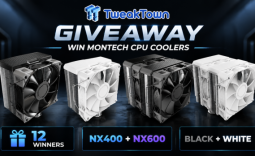 Giveaway: 12 Winners Will Score MONTECH NX400 and NX600 CPU Coolers
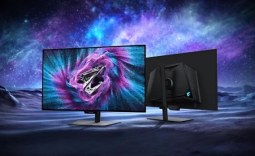 GIGABYTE's next-gen 4K 32-inch AORUS ELITE gaming monitor with Tandem WOLED panel delivers 1,500 nits of HDR peak brightness
 Sony reminds players they don't actually own digital PlayStation games amid disc-production backlash
 GTA 6 'build' that's 113GB in size is currently circulating online, and it's fake
 Windows 11 update has broken some PC games, and RGB lighting could be the issue
 Assassin's Creed Odyssey becomes the highest-rated entry in the franchise, thanks to Nolan's 'The Odyssey'
 PlayStation gamers' planned week-long 'PS Blackout' begins today
 Nintendo Switch 2 will rise to £419.99 in the UK, starting September 1
 One retailer says 91% of attempts to buy DDR5 memory are coming from bots
 Jensen Huang signed NVIDIA RTX Pro 6000 graphics card sells for $57,450 at auction
 GTA 6 leaks have reportedly led to a morale drop at Rockstar, with Netflix frustrated as well
 Cooler Master MasterFan A120 Fan Review
 GIGABYTE MO27Q2A Gaming Monitor Review: 1440p, 280Hz, and QD-OLED is a winning combination
 Cooler Master V8 ACE 3DHP BLACK CPU Cooler Review
 ASUS ROG Strix XG129C Review: A $199 Gaming Monitor You Don't Play Games On
 Cooler Master HAF II 500 Mid-Tower Chassis Review
 Corsair HS35 v3 Wireless Gaming Headset Review - An Affordable Winner
 D-Link F518 5G Wi‑Fi 6 AX1800 Mobile Hotspot Review: All-Day Mobile Hotspot
 Bose Lifestyle Ultra Speaker Review - Impressively Detailed Room-Filling Sound
 MSI Z890 Gaming Plus WIFI6E Review - Z890 for under $200
 Mortal Kombat (1995) 4K Ultra HD Blu-ray Review
 Using Multiple Monitors? Change these Windows settings for a Better Experience
 Windows Sandbox is The Windows Security Feature Most People Never Use
 I ditched the Windows 11 context menu for this open-source tool, and here's why
 Windows 11 may be encrypting your drive already, and I checked where my recovery key went
 GIGABYTE's 40 Days of INFINITY celebrates 40 Years of Innovation with stunning GeForce RTX graphics cards and rewards
 I swapped File Explorer for this free file manager and finally got the layout I wanted
 How to tell if someone has been using your Windows PC without your permission
 6 Task Manager tips for troubleshooting Windows performance problems
 ASUS ROG's 20th Anniversary Line-up of Premium PC Gaming Gear has Arrived - Here's Everything You Need to Know
 Six File Explorer tips every Windows user should know