







Business, Financial & Legal - Page 108
Catch up on business, finance, and legal news shaping tech, gaming, and science - mergers, lawsuits, antitrust, IPOs, Big Tech earnings, and market trends. - Page 108
Stay Updated
Follow TweakTown for breaking tech news, reviews, and daily updates.


As an Amazon Associate, we earn from qualifying purchases. TweakTown may also earn commissions from other affiliate partners at no extra cost to you.
IDC: PC outlook for 2015 dips, but long-term potential is there
Worldwide PC shipments could fall by 4.9 percent in 2015, a higher slowdown than previous estimates of 3.3 percent, according to the IDC research group. The group predicts 293.1 million PCs will ship by the end of the year, as consumers rely on aging hardware and mobile products.
Growth projections for 2016 and 2017 saw slight increases, while the release of Microsoft Windows 10 will hopefully generate additional buzz.
On the bright side for the PC industry, tablet growth has also slowed down - even with consumers spending more money on smartphones and mobile devices. However, consumers in the emerging market are expected to purchase smartphones instead of laptops and PCs - a trend that the PC industry must find a way to address.
Continue reading: IDC: PC outlook for 2015 dips, but long-term potential is there (full post)
HP Australia 500 million AUD in the red over three years
Reporting almost half a billion dollars (AUD) in losses over the past three years, iTnews has told us that "with its latest financial results revealing the company does not expect things to look up any time soon."
With a $152 million AU loss in its 2014 financial year ending October 2014, this follows a greater $270 million loss in fiscal 2013 and a $58 million loss in 2012. If you're wondering if things were ever looking up for HP, they did post a $134 million profit in 2011 - but this has now all been blown away.
After writing off $161 million in deferred tax assets in 2014, they were hit with a $165.9 million tax bill. As explained to us, a company will generally undergo this process when they don't expect to make a profit in the next few years.
Continue reading: HP Australia 500 million AUD in the red over three years (full post)
Hewlett Packard is securing Wi-Fi network device maker Aruba Networks
Hewlett Packard (HP) is about to spend $2.7 billion on an acquisition of Wi-Fi specialist company Aruba networks, reportedly "in an effort to help boost its share in the wireless local area network market" as claimed by iTNews.
In a bid to catch up to Cisco Systems, HP is hoping this purchase will bring them a little closer and help them with the development of bring your own device (BYOD) structures worldwide. This market is expected to grow by 40 percent to $13 billion by 2019 as according to Dell'Oro Group and HP wants a larger portion of this to be theirs.
Aruba currently services large-scale clients such as California State University and the Dalian Wanda Group, who are responsible for controlling China's largest property developer and cinema chain.
Continue reading: Hewlett Packard is securing Wi-Fi network device maker Aruba Networks (full post)
Round 2 - Smartflash is suing Apple after their previous $533m win
In more extremely ironic news and fresh off their $533 million lawsuit win against the tech giant, Texas-based company Smartflash is taking Apple into round two of hearings with attorney Bradley W. Caldwell stating "Apple has released new products that came out too late for inclusion in Smartflash's previous action against Apple."
This new case is based around allegations that Apple has infringed on seven of Smartflash's patents through their release of the "iPhone 6, iPhone 6 Plus, iPad mini 3, and iPad Air 2 devices containing any version of iTunes that can access the iTunes Store or any version of the App Store app," as reported by PC World.
Smartflash also alleges that Apple has infringed on their patents titled "Data Storage and Access Systems." We haven't been told exactly how much Smartflash are chasing with this lawsuit, but expect it to be in the hundreds of millions yet again.
Continue reading: Round 2 - Smartflash is suing Apple after their previous $533m win (full post)
Barnes & Noble is keeping the NOOK Media digital business, for now
Bookstore chain Barnes & Noble won't separate its retail business from its NOOK Digital Business, though said the company's college business will be spun off. It was previously believed the NOOK and college book store businesses would become a single entity independent of the retail operation.
"Retail and the NOOK Digital Business will be able to leverage a more integrated technology infrastructure for improved efficiency and to better serve digital customers," said Michael Huseby, CEO of Barnes & Noble. B&N invested more resources into its NOOK reader and e-book library, but has fought for profitability.
B&N has faced increased pressure from online businesses, and is looking for ways to improve retail and online sales. The company still has 649 retail stores, but needs new methods to keep up with Amazon, while also adapting as more consumers read content on mobile devices.
Continue reading: Barnes & Noble is keeping the NOOK Media digital business, for now (full post)
Apple to pay $533 million due to iTunes patent infringements
Apple has just been ordered to pay $532.9 million by the US District Court for the Eastern District of Texas due to their iTunes service infringing on three different patents owned by Smartflash.
This Texas-based company holds patents "relating to digital rights management, data storage and managing access through payment systems," as reported by Gizmodo. Claiming that they were used without permission, Smartflash first took Apple to court in May 2013 claiming that the tech giant was infringing on their patents related to Apple's song, video and game download services.
Apple claimed that these patents are too basic and general to be legally enforced, however US District Judge Rodney Gilstrap and the jury disagree. Smartflash started the claim by asking for $582 million in damages, however the final figure has molded to a slightly-smaller $532.9 million total.
Continue reading: Apple to pay $533 million due to iTunes patent infringements (full post)
Woolworths now allowing eBay parcel pickup, Australia Post unfazed
I certainly didn't see this coming - popular online auction service eBay has partnered with the Australian supermarket Woolworths for the power of good, allowing users to pick up their online purchases from a store closest to them.
Announced yesterday, Australian residents in the states of New South Wales and Tasmania can have their precious goods sent to a collection of 90 Woolworths and Big W shopfronts where they can drop in and pick up their orders. eBay isn't looking to stop here, with plans set in place to expand to 250 merchants within the next two months alongside Woolworths claiming to be researching up to 12,000 web retailers for future possible partnerships.
Australia Post is reportedly not worried about this partnership, although it is already "facing its first full-year loss in its 30 year history as a statutory business" as reported by iTnews. A spokeswoman has informed media that this company will play "an integral part of the new eBay/Woolworths partnership," adding that "we will still pick up the parcels from the different eBay merchants and deliver the articles as addressed to Woolworths collection sites."
Continue reading: Woolworths now allowing eBay parcel pickup, Australia Post unfazed (full post)
Chinese government relying more on home grown hardware, technology
China has turned its back on Cisco, Apple, McAfee, and other major US technology companies, dropping the companies from its approved purchase lists. Instead, Beijing has approved thousands of Chinese-made hardware and software vendors, in an effort to boost the Chinese technology industry.
One-third of foreign tech brands were cut from China's approved list, as domestic brands increased to almost 5,000.
"The Snowden incident, it's become a real concern, especially for top leaders," said Tu Xinquan, associate director for the China Institute of WTO Studies at the University of International Business and Economics, in a statement to Reuters. "In some sense the American government has some responsibility for that; (China's) concerns have some legitimacy."
Continue reading: Chinese government relying more on home grown hardware, technology (full post)
Apple spending big dollars investing in two new Euro data centres
Ireland and Denmark are in Apple's sights, with the tech giant announcing that we will see an environmentally sustainable data center constructed in each which country - set to cost them €1.7 billion ($1.93 billion US).
These centers will be 166,000 square meters in size each and used for Apple online and cloud services for European customers. These fully renewable energy supplied facilities will be supporting Apple's iTunes, App store, iMessage, Maps and Siri applications.
No details have been provided just yet of exactly how this renewable energy will be generated and when asked by iTnews "on the design for power usage efficiency, total rack space capacity and server hardware choice for the data centers" no answer was given.
Continue reading: Apple spending big dollars investing in two new Euro data centres (full post)
Apple Pay taking over mobile payments as rivals struggle to compete
Since its public launch in October, Apple Pay continues its march towards becoming the mobile payments leader - with consumers testing the service, and more businesses willing to give it a try. Apple Pay now has two-thirds control of the surging mobile payments market, according to the Robert Baird's analyst group.
Whole Foods embraced Apple Pay and mobile payments have increased 400 percent, the company said. Meanwhile, Apple Pay is responsible for 80 percent of mobile payments, with that number rising even higher.
"There are still a limited number of vendors that are supporting it, but our expectation is that's going to continue to grow just given the early success the early vendors are having with it," said Will Power, senior research analyst of Robert Baird, told CNBC. "Right now, the Apple iPhone - hard to believe - seven years later or so is as well positioned competitively really as it's ever been."
Continue reading: Apple Pay taking over mobile payments as rivals struggle to compete (full post)
AMD is hiring a CPU performance engineer to optimize its GPU drivers
AMD has been spending considerable time on the software side of its hardware game with technologies like HSA, Mantle, and the still fresh Omega drivers.
But now it looks like it's time the company really spreads its wings when it comes to its Catalyst driver suite, with AMD hiring a CPU performance engineer to help them optimize their graphics drivers in CPU heavy gaming workloads. AMD has a few specific requirements for this engineer to join the team, where it has listed on his job description: "The responsibilities include analyzing CPU bound benchmarks and games to identify a variety of CPU bottlenecks in drivers, optimizing the drivers, and providing optimization actions to ISVs".
The job description continues: "The candidate will analyze new CPU architecture impact on driver performance and translate into actionable tasks. This position requires the candidate to collaborate with graphics and CPU architects at multi-sites across multiple graphics driver components".
Continue reading: AMD is hiring a CPU performance engineer to optimize its GPU drivers (full post)
Sony to more than double down on its investment into PlayStation
It's kind of an end of an era for Sony, with the Japanese giant falling on its sword in multiple of its failing divisions. We've seen the company sell of its VAIO laptop business, which is now making a comeback, but there's some more news that many will be sad over.
Sony wants to make a 25-fold increase in its profits, by concentrating on products that actually make the company money. Considering the company has just recorded its sixth net loss in seven years, many can see why. Sony's stock on the other hand has actually grown by 80% in the last 12 months, as its CEO, Kaz Hirai, has been restructuring the core of Sony's business.
Hirai has been able to do this by focusing on making less products, to ensure they're making the right products, that sell well. This effort of restructuring will continue, but now the company has announced it will be pulling out of more markets. In the end, Sony will be making the PlayStation its near sole purpose, as well as making Sony camera sensors for companies like Apple. The company has thought of pulling out of the TV market with its Bravia brand, as LG and Samsung have been making serious inroads in the TV business over the years.
Continue reading: Sony to more than double down on its investment into PlayStation (full post)
Supporters concerned mainstream bitcoin interest now stalling
The number of stores and services now accepting bitcoins may top 100,000 worldwide, but it appears actual purchases using the volatile cryptocurrency remains low. There also is increased skepticism because of a continued drop in bitcoin value in recent months, frightening away potential investors and customers.
Bitcoin supporters say the cryptocurrency is far from dead - and urge owners to show patience during a rough time - especially as there are potential uses for bitcoin technology besides just finance.
"There are some breakthroughs in technology that are going to endure whether bitcoin survives or not," said David Yermack, professor of finance at the New York University Stern School of Business, in a statement published by the Boston Globe.
Continue reading: Supporters concerned mainstream bitcoin interest now stalling (full post)
Could Apple surprise the world and acquire Tesla for $75 billion?
There was an interesting post that I read yesterday somewhere in the world of Reddit, but it was late and I was laying in bed. I awoke today to the news being spread throughout the Internet, that Apple could purchase Tesla Motors sometime in the next 18 months for an absolutely gigantic $75 billion.
The rumors are coming from Interent entrepreneur and angel investor Jason Calacanis, who is saying that all the dominoes are lining up for Apple to acquire Tesla. Calacanis said that he has no insider information, but he has said that Apple's all of the sudden interest in building cars, and Tim Cook's "obsession" with renewable energy are giant hints. Calacanis wrote: "No one else in the world could actually make a run at Tesla, because they either don't have the cash and, most importantly, they don't have the ability to give assurances to Elon that they won't f- it up. Apple's design team, software, and global distribution would actually LEVEL Tesla up".
Remember, this probably won't happen - I would dare say it will not happen, but the rumor is interesting nonetheless. Maybe Apple is testing the waters by pushing this rumor out into the world?
Continue reading: Could Apple surprise the world and acquire Tesla for $75 billion? (full post)
H1Z1 developer, previously known as SOE, announces layoffs
It was only a couple of weeks ago that investment firm Columbus Nova purchased Sony Online Entertainment, which renamed to Daybreak Game Company, but now we're seeing layoffs from within the company.
Development of games will still happen for Daybreak Game Company, including the ongoing work for H1Z1, with the company explaining: "To better position our newly independent studio for future growth opportunities and to deliver on our legacy of making top online games, we have had to make some tough choices including realignment of resources".
Daybreak Game Company continued: "Unfortunately, this realignment means adjusting staffing as well. We announced today that we will eliminate positions in our San Diego and Austin studios. Many of us are saying goodbye to close friends and colleagues who we've worked with over the years, and we are grateful for the memories and all that they've contributed. They will be greatly missed, and we wish them nothing but the best for the future". The developer says that the layoffs will not have an effect on its current development operations.
Continue reading: H1Z1 developer, previously known as SOE, announces layoffs (full post)
NVIDIA posts record financial results, riding the Maxwell wave in 2014
NVIDIA had a huge year last year, ending the second half of the year launching its new Maxwell architecture, giving birth to the great GeForce GTX 970 and GTX 980 cards. Well, the company has just posted its Q4 FY 2015 results, with revenues of $4.68 billion, up 13% from 2014.
The last three-month period was also a record for the company, with revenues of $1.25 billion, up 9% from the previous year. Gross margin for Q4 2015 was $699 million, or 55.9% which is up 1.8% over Q4 2014, and 0.7% up from Q3 2015. When it comes to the GPU business of NVIDIA, Q4 saw the company launch multiple GPUs in its GTX 900 series, with GPU revenue reaching $1.073 billion for Q4 alone, a nice 8% increase over Q3 2015, and a year-over-year gain of 13%.
The mobile sector of NVIDIA didn't do too well, with Tegra sales falling over the quarter, after multiple quarters of increasing amounts of shipments. Tegra revenue was just $112 million for Q4 2015, down from $168 million in Q3, and $131 million from a year ago. This is a 33% drop in revenue quarter-over-quarter, and 15% year-over-year. Strong GPU sales were able to offset the slump in smartphone and tablet SoC sales, but the automotive sector for Tegra is doing well for the company. For Q1 FY 2016 (doesn't this get confusing, fast?) has the company expecting revenues of $1.16 billion, or so.
Continue reading: NVIDIA posts record financial results, riding the Maxwell wave in 2014 (full post)
TSMC is investing $16 billion in a new advanced chip factory
Some interesting news has just appeared online, but first we'll tackle the business side of things. TSMC has said that it is investing a hefty $16 billion on creating a new chip factory, but there was some more interesting news that didn't seem to make the headlines.
TSMC will never make a 20nm GPU, with the reasoning behind this is that there are very low yields associated with the big cores and high performance requirements. Starting next year the Taiwanese giant will switch over to 16nm FinFET, but it wants to shift into 10nm as early as late 2016.
Intel is another player in the 10nm business, where it has invested $6 billion in fabrication facilities over in Israel. The chipmaker has already invested into the R&D of 7nm, which should happen before 2020. TSMC shifting to 16nm and then 10nm so quickly is a pre-emptive move against Samsung and Globalfoundaries, which have just joined forces in the R&D side of things.
Continue reading: TSMC is investing $16 billion in a new advanced chip factory (full post)
Microsoft scoops up calender app maker Sunrise for $100 million
Microsoft has reportedly acquire Sunrise, which is a calendar app maker for a swift $100 million. Both sides haven't confirmed the deal, but sources close to TechCrunch have said that the deal is wrapped up for over $100 million.
Sunrise was founded in 2012, where it has since raised $8.2 million from investors like Balderton Capital, SV Angel and BoxGroup. But what can make it an attractive acquisition target for Microsoft? Well, Sunrise consolidates calendars from various providers, making them available on different platforms like iOS, Android and the web.
The acquisition of Sunrise by Microsoft is an interesting one, as it shows that Microsoft is happy to support other, competing operating systems. If Microsoft does indeed acquire Sunrise and continues development of the application for iOS and Android like it does for Office, it could eventually lead to great things.
Continue reading: Microsoft scoops up calender app maker Sunrise for $100 million (full post)
Samsung will reportedly make 14nm chips for NVIDIA, Qualcomm and Apple
There are going to be big shifts in manufacturing nodes this year, with Samsung reportedly making 14nm FinFET chips for the three biggest players in the industry: NVIDIA, Apple and Qualcomm.
Samsung will be capable of doing this as the company only reached an important breakthrough recently, which has allowed the South Korean giant to increase yields, and reduce costs. On top of this, TSMC has been experiencing various delays which have seen big companies having to shift over from TSMC to Samsung. Qualcomm also reportedly stopped their production of 16nm FinFET chips at TSMC just three weeks ago, jumping over to Samsung and its next-gen 14nm FinFET processors.
Apple's upcoming A9 processor will be based on its main competitors technology, with Samsung making the 14nm FinFET A9 processor. NVIDIA had originally partnered up with TSMC to make 16FF+ GPUs, but then we have the legal battle between Samsung and NVIDIA stepping in the way. We don't know if Samsung will choose to make its discrete GPUs using Samsung's next-gen 14nm node, but right now NVIDIA will be making its next-gen GPUs with TSMC on its 16FF+ process. NVIDIA will be having its Tegra processors made over at Samsung, however.
Continue reading: Samsung will reportedly make 14nm chips for NVIDIA, Qualcomm and Apple (full post)
Samsung's marketing boss quits, before the launch of the Galaxy S6
It looks like Samsung is about to hit a bump in the road, with Kim Seok-pil resigning from his position as the executive in charge of the company's upcoming Galaxy S6 smartphone.
Seok-pil only joined the company in December, and was goign to take the company through the launch of the Galaxy S6, which should be unveiled on March 1. The launch of the upcoming flagship handset is being watched by many, after not-so-great things came from the Galaxy S5. December was a bad month for Samsung as it is, with multiple executives being laid off due to a planned restructuring process.
D.K. Lee left the company, with Seok-pil replacing him, but with Seok-pil now leaving the company, what happens now? For the meantime, Samsung Russia's boss, Lee Sang-chul will take over, until the South Korean giant can find a replacement.
Continue reading: Samsung's marketing boss quits, before the launch of the Galaxy S6 (full post)
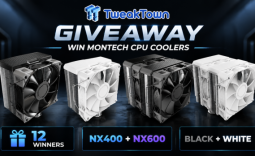 Giveaway: 12 Winners Will Score MONTECH NX400 and NX600 CPU Coolers
 GTA 6 leaks have reportedly led to a morale drop at Rockstar, with Netflix frustrated as well
 The Blood of Dawnwalker won't hit 60 FPS on any console, PS5 Pro tops out at 40 FPS
 AMD claws back ground against Intel in the CPU market, climbs to 35% share in desktop CPUs
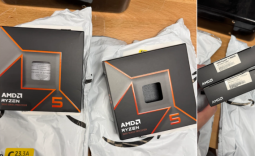 Redditor receives not one but TWO empty boxes of Ryzen 5 9600X from Amazon
 Xbox Series X25 Limited Edition Console is priced at $900, arrives November 2026
 Dave Bautista officially cast as Kratos in Amazon's 'God of War' TV Series, replaces Ryan Hurst
 Take-Two begins the hunt for GTA 6 leaker CyberLeek, subpoenas Microsoft and Discord
 PlayStation 6 handheld not expected to stay under $600, warns leaker
 AMD confirms the Radeon RX 9050 4GB will have a tiny 64-bit bus and just 16MB Infinity Cache
 Intel 'Nova-Lake-S' 28-core CPU with bLLC reportedly draws 296W at PL2
 Cooler Master MasterFan A120 Fan Review
 GIGABYTE MO27Q2A Gaming Monitor Review: 1440p, 280Hz, and QD-OLED is a winning combination
 Cooler Master V8 ACE 3DHP BLACK CPU Cooler Review
 ASUS ROG Strix XG129C Review: A $199 Gaming Monitor You Don't Play Games On
 Cooler Master HAF II 500 Mid-Tower Chassis Review
 Corsair HS35 v3 Wireless Gaming Headset Review - An Affordable Winner
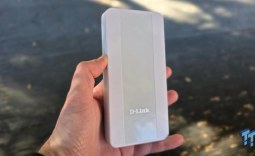 D-Link F518 5G Wi‑Fi 6 AX1800 Mobile Hotspot Review: All-Day Mobile Hotspot
 Bose Lifestyle Ultra Speaker Review - Impressively Detailed Room-Filling Sound
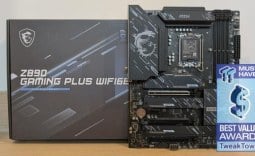 MSI Z890 Gaming Plus WIFI6E Review - Z890 for under $200
 Mortal Kombat (1995) 4K Ultra HD Blu-ray Review
 Using Multiple Monitors? Change these Windows settings for a Better Experience
 Windows Sandbox is The Windows Security Feature Most People Never Use
 I ditched the Windows 11 context menu for this open-source tool, and here's why
 Windows 11 may be encrypting your drive already, and I checked where my recovery key went
 GIGABYTE's 40 Days of INFINITY celebrates 40 Years of Innovation with stunning GeForce RTX graphics cards and rewards
 I swapped File Explorer for this free file manager and finally got the layout I wanted
 How to tell if someone has been using your Windows PC without your permission
 6 Task Manager tips for troubleshooting Windows performance problems
 ASUS ROG's 20th Anniversary Line-up of Premium PC Gaming Gear has Arrived - Here's Everything You Need to Know
 Six File Explorer tips every Windows user should know