






Processors - Page 31
CPU and SoC news from Intel, AMD, Apple Silicon, ARM, and Qualcomm - launches, benchmarks, and architecture updates from TweakTown. - Page 31
Stay Updated
Follow TweakTown for breaking tech news, reviews, and daily updates.


As an Amazon Associate, we earn from qualifying purchases. TweakTown may also earn commissions from other affiliate partners at no extra cost to you.
Intel's new Core Ultra 7 268V 'Lunar Lake' CPU leaks through new Geekbench results
Intel's next-generation Core Ultra 7 268V "Lunar Lake" CPU has been putting in some hours on Geekbench, with a new chip pushing even higher results than the last time we saw the Core Ultra 7 268V on Geekbench.

In the new results, the Core Ultra 7 268V "Lunar Lake" CPU scores 2915 points in the single-core run of Geekbench 6, and 11448 points in the multi-core run. This is compared to 2739 points and 9907 points for single- and multi-core, respectively, with the previous leak on the Core Ultra 7 268V processor being benched on Geekbench.
That's a decent 7.4% improvement in single-core performance, and a 14% increase in multi-core performance between the new, and older Core Ultra 7 268V processor. We should expect slightly better performance as we get closer to the retail Lunar Lake processors, and their launch in early September.
AMD Ryzen 9000X3D CPUs could be delayed to CES 2025, leaving the door open for Intel Arrow Lake
AMD's Ryzen 9000X3D processors won't be with us until early 2025, with a reveal planned for the next-gen 3D V-Cache CPUs at CES 2025 - or that's the latest rumor.

The news comes from HXL, a regular leaker on X, who offers up a very short and simple post as you can see above. The tweet was spotted by Wccftech, which backs up the notion of a CES 2025 launch for Ryzen 9000X3D in the thread on X, and shares in a separate report that AMD has told its motherboard partners that the release timeframe has indeed been pushed back.
Previously, those motherboard vendors had been informed by AMD that Ryzen 9000X3D chips were going to launch later in 2024 (as ASUS recently leaked, in fact), but apparently that isn't the case any longer.
AMD says Windows 11 patch will boost Zen 5, Zen 4, Zen 3 CPU gaming performance
AMD has just published a new blog explaining that a new Windows update will boost gaming performance on its Zen 5 processors, and talks about the discrepancy in performance between its internal gaming benchmarks, and reviewers' data.

In the blog post, AMD kinda dodges the entire thing... but it tries to explain why its new Zen 5-based Ryzen 9000 series "Granite Ridge" CPUs aren't performing as well with tech reviewers and gamers compared to its internal benchmarks.
Some of the reasons that AMD said including the different test configurations of reviewers, which definitely makes sense, but we didn't have these defensive blog posts when Zen 4 launched, or Zen 3, or Zen 2, or Zen 1. AMD also said it's using a specific configuration of hardware for its Intel system that it uses in-house for benchmarking comparison, with DDR5-6000 memory and Intel's new Default Settings (Baseline) which wouldn't align with how most reviewers have their Intel setups configured.
Intel's next-gen Arrow Lake CPUs launching alongside new Z890 motherboards on October 17
Intel's next-gen Core Ultra 200 series "Arrow Lake-S" desktop CPUs were rumored for an October 10 release, but new information points to a retail launch on October 17.

The company has been struggling big time over the last couple of months especially, but its next-gen Arrow Lake CPU is nearly here, with Chinese social media site QQ had a poster called "ChannelGate" explain (machine translated):
"The sales of AMD platform solutions have been relatively active recently, and there are more and more inquiries from consumers. Unfortunately, the supply of AMD 9000 CPU is insufficient. INTEL has no choice but to work hard to deal with the problems of I7I9. The upstream end is still solving the problem. The CPU warranty is extended for 2 to 5 years, and it is negotiating with motherboard manufacturers to jointly solve the instability problem of 13th and 14th generation CPUs".
ASUS says its new X870E & X870 motherboards are ready for AMD Ryzen 9000X3D CPUs
It's no surprise AMD is cooking up its upcoming Ryzen 9000X3D processors, but ASUS has provided some spoilers on its own website, teasing the new 3D V-Cache powered CPUs.

A post from leaker "momomo_us" on X teased the ASUS website covering its new motherboard releases and new chipsets: with AMD's new X870E, X870, B850, and B840 chipsets. The website doesn't directly mention the Ryzen 9000X3D processors by name, but the microsite's source code is chock full of references to Zen 5-based X3D processors.
We don't know the specifications of AMD's upcoming Zen 5-based Ryzen 9000X3D processors, but we should expect the following 3 processors at first: the Ryzen 9 9950X3D, Ryzen 9 9900X3D, and Ryzen 7 9800X3D to succeed the Zen 4-based Ryzen 9 7950X3D, Ryzen 9 7900X3D, and Ryzen 7 7800X3D processors.
Analyst predicts: x86-based AI PC laptop shipments to skyrocket 17,000% in 2025, Arm just 553%
We are in the Copilot+ AI PC era whether we like it or not, but x86-based AI PC processors from AMD and Intel will crush Arm-based Copilot+ AI PC laptop sales now, in 2025, and into the future.

In the coming months we'll see more and more Arm-based Copilot+ AI PC laptops launch, with analyst firm Omdia's new AI notebook PC shipment forecast expecting to see Arm-based Copilot+ AI PCs go from 800,000 units sold in 2024, to 5.2 million in 2025: an increase of over 533%.
We keep hearing about Arm breaking into the mainstream Windows market, but the hype of the Copilot+ AI PC laptop era is here and Qualcomm was first with Microsoft to launch the first waves of Copilot+ laptops being powered by company's Arm-based Snapdragon X series processor.
AMD could be about to spring a surprise new 3D V-Cache CPU on us - a budget Ryzen 7000X3D model
AMD is supposedly launching a new 3D V-Cache processor from what's now the last-gen of its CPU line-up (namely Ryzen 7000).

According to a leaker on X, Hoang Anh Phu - admittedly not one of the more common names that crops up - AMD has a Ryzen 5 7600X3D in the works. This will apparently be a 6-core processor that is said to be arriving in early September, which means we should see this chip within two to three weeks, in theory.
Unfortunately, we don't get any info on the exact specs, or any other details at all in fact. We can, however, guess that the broad spec will be in line with the other chips in the 7000X3D range - VideoCardz (which spotted the above tweet) theorizes that it might run with 102MB of total cache, of which 64MB would be 3D V-Cache - and pricing has to make sense in that respect, too.
Intel rumored to launch Core Ultra 200 'Arrow Lake-S' processors on October 10
Intel is reportedly gearing up to release its next-gen Core Ultra 200 series "Arrow Lake-S" desktop CPUs on October 10, according to the latest rumors.

Benchlife explained: "Although the Intel Innovation 2024 event has been postponed, the Arrow Lake-S for desktop computers, also known as Intel Core Ultra 2 series processors, according to the information we have obtained, Intel currently plans to release it on October 10".
We don't know if this purported October 10 event would be a hard launch or just a paper launch, but Intel did say its Arrow Lake-S desktop processors were on track for a Q4 2024 launch when it delayed its original Arrow Lake-S launch event, Intel Innovation 2024, from September 2024 to "sometime" in 2025.
Get a FREE kit of RAM you purchase an AMD Ryzen 9000 series CPU from Microcenter
Microcenter has stepped up to be the first retailer bundling free RAM kits with select AMD Ryzen 9000 series CPUs.

First up, Microcenter is offering AMD's new Ryzen 7 9700X processor with a free 32GB kit of G.SKILL Flare X5 series DDR5-6000 memory (you can check it out here), with the RAM alone worth $100+ and the Ryzen 7 9700X processor costing $360 on its own, means you're in reality, paying just $260 for the 9700X processor. Damn good stuff.
Moving onto the AMD Ryzen 5 9600X and Microcenter is bundling in 16GB of the same G.SKILL Flare X5 series DDR5-6000 memory (check out this deal here), for $280. The 16GB kit of DDR5-6000 RAM costs around $50, so you're paying about $230 for the 9600X on its own, a great deal as well, but not as good as the 9700X + 32GB deal.
China's new Hygon C86-7490: based on AMD Zen 1, custom CPU with 64C/128T, DDR5, SP5 socket
Chinese company Hygon has just teased its new C86-7490 CPU, which is based on the Dhyana x86 IP (AMD Zen architecture) in customized form: up to 64 cores and 128 threads, DDR5 memory support, and on the SP5 platform.

There has been a joint venture between AMD, HMC, Hygon, and Global Foundries for a few years now, with custom-designed chips to meet the domestic needs of Chinese companies. Hygon has a CPU family of up to 32 cores, based on the first-gen Zen core IP, but the new family of CPUs are going to offer upgrades across the board.
Hygon is now offering its new C86-7490 and C86-7390, which are CPUs based on the customized Zen 1 core very similar to Zen +. The first-gen Zen core architecture topped out at 32 cores and 64 threads max, but Hygon's new custom Zen 1-based CPU offers up to 64 cores and 128 threads of Zen 1 processing power.
Intel's next-gen Core Ultra 9 285K 'Arrow Lake-S' QS CPU hits 5.7GHz, 5.4GHz on all P-Cores
Intel's new flagship Core Ultra 9 285K "Arrow Lake-S" processor has been teased again, but this time in QS (qualifying sample) form which hit 5.7GHz boost, and 5.4GHz on all P-Cores.

The news is coming from leaker "Jaykhin" on X, who posted that a QS sample of the Intel Core Ultra 9 285K processor with 1-2 cores enabled seeing boost clocks of 5.7GHz, while all P-Cores were hitting 5.4GHz, and all E-Cores were hitting 4.6GHz.
This is compared to the ES (engineering sample) version of the Core Ultra 9 285K processor hitting 4.7GHz boost clock, up to 4.5GHz on all P-Cores, and just 3.9GHz on all E-Cores. This means that Intel is slowly squeezing higher and higher frequencies out of its 24-core Arrow Lake-S processor. Jaykhin didn't say whether this was the Core Ultra 9 285K or Core Ultra 9 275, but I would dare say this is the Core Ultra 9 285K that we're looking at here.
MSI unveils AMD Ryzen 9000 feature that boosts performance by up to 22%
The Ryzen 9 9950X, 9900X, 9700X, and 9600X have officially launched, and recent reviews are putting AMD's generation in a bit of a mixed bag, as raw performance numbers were quite disappointing, while efficiency was impressive.

However, if you are on the side of being disappointed by the raw performance of the Ryzen 9000 series, MSI has your back, as owners of MSI AM5 motherboards will be able to tweak a few settings in their BIOS and get up to 22% more performance in select applications. MSI explains in a blog post that its introducing PBO Enhanced Mode, which builds on AMD's Precision Boost Overdrive (PBO).
According to the company, MSI's PBO was capable of pushing an extra 10% more performance out of the Ryzen 9 9950X in Cinebench R23, versus AMD's standard PBO of just 5%. Furthermore, the setting being enabled on the 9700X resulted in a gain of as much as 15%. Additional features such as Set Thermal Point enable a user to set a thermal max point - 85°C, 75°C, and 65°C. MSI claims setting these thermal points won't impact performance, and cited testing with a 9950X when Set Thermal Point was at 85°C. The temperature lock didn't result in a performance hit.
SiFive intros new SiFive Performance P870-D, a new RISC-V processor with up to 256 cores
SiFive has just announced its new SiFive Performance P870-D, a new RISC-V processor with up to 256 cores, designed for data center applications.

The new SiFive Performance P870-D continues the journey for the company from its regular P870, which had a six-wide out-of-order core with an RVA23 profile of the RISC-V instruction set architecture with vector and vector crypto processing acceleration.
The new P870-D adds an open AMBA CHI bridge for energy-efficient cross-cluster communications (each of the clusters has 1-4 cores with shared L2 cache) as well as cross-cluster reliability, and serviceability (RAS) features that enable building CPUs with up to 256 cores, all aimed at mission-critical applications.
AMD to unveil its beefed-up Strix Halo and Kraken APUs at CES 2025 in January
AMD is expected to unveil its beefed-up Strix Halo APU at CES 2025, which will succeed the just-released Ryzen AI 300 series "Strix Point" APU with a helluva lot more gaming performance.

In a new post on X by leaker @AnhPhuH, we're learning that AMD's new Strix Halo and Kraken silicon will be shown off at CES 2025 in January 2025. This is moving right along with earlier rumors of a CES 2025 release for Strix Halo, which will feature up to a higher 16 cores and 32 threads of Zen 5 processing power, and a massively upgraded RDNA 3.5 GPU system over the current Strix Point APUs that will deliver discrete GPU levels of gaming performance.
There's been some juicy leaked thermal design data for AMD's upcoming Strix Halo APU (links on that below), where we're to expect three different configurations: 55W, 80W, and 120W.
AMD's new Zen 5-based Ryzen 9000 CPU issues: leaker says it needs a 'reboot'
AMD's new Zen 5-based Ryzen 9000 series CPUs are officially here... but it's not the party we expected. There are some glaring issues and questions about Granite Ridge, where in some cases the new Zen 5 chips are SLOWER than Zen 4 chips.

In a new video from leaker Moore's Law is Dead, who compiled a bunch of very good questions I'd like to see answers from AMD on, as well as pulling some quotes from the tech media that have reviewed AMD's new Ryzen 9000 series "Granite Ridge" processors.
The weird 'software issues' that come with Zen 5, with MLID pointing out that Tom's Hardware said: "AMD needs to fix its drivers. The situation with the chipset drivers making irreversible changes to the operating system is nonsensical and problematic for end users and reviewers alike. AMD has known about this issue for 16 months, and despite endless public complaints from end users and the press, it hasn't been addressed".
Google's fully self-designed Tensor G5 chips made on TSMC 3nm node, breaks up with Samsung
Google's next-generation flagship Tensor G5 processor will be made on TSMC's new 3nm process node, seeing the US giant moving away from Samsung, which even made its just-announced Tensor G4 processor that powers the new Pixel 9 and Pixel 9 Pro Fold smartphones.

In a new report from Ctee, we're learning that Google has tapped TSMC for its 3nm process node, of which it'll use for its new Tensor G5 processor. The new Tensor G5 processor is a fully self-designed chip by Google, and will use new InFO-POP advanced packaging, which will provide Google with an edge extending its software to hardware, to compete in the edge AI market.
Google's in-house chips aren't just limited to smartphones, with the TPU tensor processors deployed for a while now, hitting the 7th generation. Ctee's source believes that ANXION is also built with the help of TSMC and produced on its 5nm process node to "achieve excellent power saving effects" adds Ctee.
MSI sets world record with AMD Ryzen 9000 series Zen 5 overclocking
New world records have been set with AMD's Ryzen 9000 series Zen 5 CPUs, as the X670E Ace has been used to push high-end 9000 series CPUs beyond 7 GHz.

New world records were set with the Ryzen 9 9950X 16-Core and Ryzen 9 9900X 12-Core chips, and a little help from our friend LN2, which was used to supercool these chips while voltages were cranked. MSI announced that overclockers managed to identify the limits of the CPUs with the MEG X670E Ace motherboard. Prior to these new benchmarks, AMD's 9000 series chips were spotted at 7 GHz, but on a 6-core chip and 6.6 GHz on a Ryzen 9950X.
But overclockers have now managed to push the limits even further, with the AMD Ryzen 9 9950X hitting 7.45 GHz and the AMD Ryzen 9 9900X hitting 7.40 GHz. If the nearly 7.5 Ghjz wasn't enough, MSI also recorded some of the highest benchmark scores in Cinebench R23, R20, and R15 with both chips, as the 9950X scored 60,185 points in R23, 23,276 points in R20, and 9,341 points in R15. As for the 9900X, this variant scored 46,281 points in R23, 18,057 points in R20, and 7,203 points in R15.
Continue reading: MSI sets world record with AMD Ryzen 9000 series Zen 5 overclocking (full post)
AMD Zen 5 CPUs rumored to receive a performance and TDP boost with next AGESA update
Several reports suggest that AMD plans to raise the TDP and power rating for the Ryzen 7 9700X and Ryzen 5 9600X CPUs from 64W to 105W. The rumor source looks to be hardware leaker Chi11eddog on X, who claims this will arrive as part of a new BIOS and microcode update as part of AGESA 1.2.0.1a Patch A.

We heard about this before AMD's new Zen 5-powered desktop processors launched, with previous rumors hinting at AMD raising the power rating of the Ryzen 7 9700X in time for launch. The single-core performance of Ryzen 7 9700X and Ryzen 5 9600X CPUs is impressive. A TDP increase could lead to more performance across a broader range of workloads, including gaming.
The increase to 105W would put the power rating for the new Zen 5 CPUs on par with the previous generation's Ryzen 7 7700X and Ryzen 5 7600X - both of which are rated at 105W. The Zen 5 launch has not been without controversy, with many believing that due to poor or non-existent gains in gaming performance, it's a step back from Zen 4.
Intel has just sold ALL of its Arm shares, as the CPU behemoth continues to struggle
Intel is feeling the pinch, with the company selling all of its 1.18 million shares in Arm Holdings in Q2 2024, providing the company with around $146.7 million as it continues to struggle in virtually every sector.

Earlier this month, Intel shed over 15% of its global workforce, laying off over 15,000 people as it struggles in the CPU market (servers, consumer) and its problematic 13th Gen Core and 14th Gen Core CPU issues that have been hitting headlines for weeks now.
Benchmark Co analyst Cody Acree told Reuters: "This looks to be consistent with the restructuring plan and the renewed focus on liquidity and efficiency that Gelsinger laid out from the last conference call'.
AMD has its highest server CPU market share in DECADES, slowly kicking Intel's ass in CPUs
AMD has been kicking ass in the CPU market for years now, with another great quarter enjoyed by the company for Q2 2024... recording the highest server CPU market share in DECADES.

In a new report from Market Research picked up by Tom's Hardware, we're learning that while Intel still dominates the client PC market (the CPU inside of your PC) in Q2 2024 with a huge 78.9% market share, AMD holds onto 21.1%. AMD still increased its unit share by 0.5% sequentially, and by 3.8% year-over-year.
But in the server CPU market, AMD's impressive EPYC processors are chomping away at Intel's range of Xeon CPUs, where in Q2 2024, AMD took another 5.6% market share from Intel. If we rewind the clock back to Q4 2017, AMD held just 0.8% of the server CPU market share, in Q2 2020 the company had 5.8%, Q2 2022 it increased to 13.9%,and now... AMD has a chunky 24.1% of the server CPU market share. Slowly but surely, AMD is eating away at Intel's massive dominance of the server CPU market.
 AMD plans to increase the price of its graphics cards by 10-15% in the second half of 2026
 Black Myth Wukong mirrors GTA V success with 30 million copies sold in less than 2 years
 Steam Controller supply can't keep up with demand, Valve pushes orders to 2027
 Steam Machine shipments spotted, as Valve is rumored to launch the gaming PC next week
 HDMI 2.2 products are coming in 2027 as chip makers begin sampling FRL2 silicon this year
 Solo dev tries to make his own GTA 6 with AI, as he got tired of waiting for Rockstar
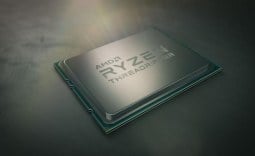 A HandBrake update just gave Threadripper owners up to a 215% performance boost for free
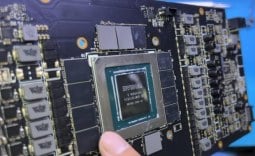 Repair channel buys ASUS RTX 4090 for $222 and finds plastic die with fake NVIDIA markings
 Epic's gen AI use deters partners, Vampire Survivors x Fortnite might get cancelled
 Sony seems to confirm singleplayer first-party PlayStation games will remain console exclusive
 UGREEN FineTrack Mini 2 Air Tracker Tag Review - Long battery life, lesser performance
 Speed Racer (2008) 4K Ultra HD Blu-ray Review: a stunning remaster of the cult classic
 MOAIPLAY ORA PRO G1 850W ATX 3.1 PSU Review: high efficiency and 10-year warranty for $119.99
 Navman MiVue Smart True 4K Surround Dashcam Review - Seeing In All Directions At Once
 IQUNIX Magi96 Pro Aluminum Low Profile Mechanical Keyboard Review - Premium Build, Satisfying Sound
 Asetek Forte S-Series Racing Simulator Bundle Review
 Razer Pro Type Ergo Wireless Split Ergonomic Keyboard Review - Built for Comfort and Support
 ASUS ROG Strix Morph 96 Wireless Gaming Keyboard Review - Great Performance, More Affordable
 SAPPHIRE Radeon RX 9070 GRE PULSE OC Review - A New 1440p Challenger Has Arrived
 NZXT H6 RGB+ Compact Dual-Chamber Chassis Review
 7 ways to transfer data from Android to Windows PC quickly and easily
 I read the Windows Backup app screen carefully, and it does not back up what most people think
 Low Sound Volume on Windows 11? How to fix audio issues and restore normal volume
 8 Critical Warning Signs You Should Never Ignore in Windows 11
 This Windows security feature protects Documents from ransomware, but it is off by default
 Windows 11 already has a voice typing tool, and it is the one most people are not using
 Quick Assist is the only remote-support tool I open when a relative calls about their PC
 The PowerToys utilities I keep enabled on every Windows 11 PC, and the ones I turned off within a week
 TweakTown's Best of Computex 2026 Awards - The Best Hardware, Gaming Gear, and AI
 Phison E37T SSD Controller Exclusive Preview - The Fastest DRAMless SSD Platform Yet