







Learn about how TweakTown tests and reviews hardware. As an Amazon Associate, we earn from qualifying purchases. TweakTown may also earn commissions from other affiliate partners at no extra cost to you.
Stay Updated
Follow TweakTown for breaking tech news, reviews, and daily updates.


Easy Anti-Cheat responds to Apex Legends pro players being hacked mid-game
In what seems like a first, Apex Legends professional players were hijacked by a hacker during the Apex Legends Global Series to be given cheats, resulting in the NA finals being postponed.

The Apex Legends North American finals were infiltrated by at least two hackers named "Destroyer2009" and "R4andom", who managed to somehow gain access to at least two professional players' PCs during a match. As the match was being streamed to thousands of fans around the world, a message box briefly popped up and then disappeared, which was followed by the player realizing that they had aimbot, wallhacks, and other cheats. Shortly after the discovery, the match was promptly ended.
Following the shutdown of the match Anti-Cheat Police Department, a group of volunteers that specialize in gathering intelligence on cheats to detect and disrupt cheating vendors, took to its X account to provide a public service announcement, stating that an RCE exploit was used to gain access to the players' PCs. For those that don't know, an RCE exploit is a "remote code execution", which means the hackers were able to execute codes on the target machines remotely.
OpenAI, Microsoft, Amazon, Meta, Google, Tesla, and more are all on the NVIDIA Blackwell train
NVIDIA has unveiled its next-gen Blackwell AI GPU, which features 208 billion transistors, 192GB of super-fast HBM3E memory, a cutting-edge custom TSMC 4NP process, and groundbreaking new networking that sees NVIDIA NVLink deliver 1.8TB/s bidirectional throughput per GPU.

The company also announced its new NVIDIA GB200 Grace Blackwell Superchip, which connects two NVIDIA B200 Tensor Core GPUs to the NVIDIA Grace CPU "over a 900GB/s ultra-low-power NVLink chip-to-chip interconnect." With serious AI horsepower, NVIDIA's powerful next-gen AI hardware arrives during the AI boom, so, unsurprisingly, it announced its long list of Blackwell partners.
NVIDIA writes, "Among the many organizations expected to adopt Blackwell are Amazon Web Services, Dell Technologies, Google, Meta, Microsoft, OpenAI, Oracle, Tesla, and xAI." Even though most, if not all, of these companies are investing in creating their own AI chips and hardware for generative AI-which is used in everything from scientific research to medicine and chatbots-Blackwell will drive many of the advances over the next few years.
Microsoft and NVIDIA to integrate generative AI and Omniverse tech in Azure and Microsoft 365
It's been a massive day for AI news, with NVIDIA's premiere GTC 2024 AI conference underway. Earlier today, the company unveiled its next-gen Blackwell AI GPU - an unprecedented AI monster with 208 billion transistors and 192GB of super-fast HBM3E memory.

NVIDIA's first multi-GPU die is built on a cutting-edge TSMC 4NP process. It allows organizations to run real-time generative AI on "trillion-parameter large language models" at up to 25X less cost and energy consumption than its Hopper predecessor. Throw in the latest version of NVIDIA NVLink that delivers 1.8TB/s bidirectional throughput per GPU, and it's no wonder everyone is signing up to join the Blackwell family - including Microsoft.
Alongside the big Blackwell reveal, NVIDIA and Microsoft have announced that Microsoft Azure will adopt NVIDIA Grace Blackwell Superchips to help accelerate customer and first-party (Microsoft's own) AI offerings, Including Microsoft 365, aka the online versions of Microsoft Word, PowerPoint, Excel, and OneNote. NVIDIA GPUs and NVIDIA Triton Inference Server will help power Microsoft Copilot for Microsoft 365.
NVIDIA Audio2Face uses AI to generate lip synching and facial animation, showcased in two games
Localization is a big thing in gaming, where a game's dialogue and presentation are recorded in various languages to reach a global audience. Like how Netflix dubs all of its original programming into multiple languages, localization for games is a complex process that requires accurately translating dialogue and text, maintaining dramatic or comedic tones, and then re-recording dialogue with voice actors from different countries.

Where games differ from movies or television drama is that all performances are digital and completely malleable, which is why you've got a situation where Sony's PlayStation-exclusive Ghost of Tsushima (which is coming soon to PC) offers both English and native Japanese language options with full lip-syncing and correct facial animation.
Although it's possible to do this for dozens of languages, Ghost of Tsushima limits full lip-synching to two language options due to the task's complexity and the animation involved. This is where generative AI, specifically NVIDIA's Audio2Face technology, will step in.
NVIDIA's Covert Protocol tech demo has you become a detective investigating AI Digital Humans
At GDC 2024, NVIDIA presented a new tech demo for a theoretical detective game, Covert Protocol, created in collaboration with Inworld. If you recall NVIDIA's recent AI collabs, which created cyberpunk-style tech demos featuring AI avatars you can interact with, this takes it all one step further. It presents an old-school adventure game where you're talking to characters to solve a mystery in a brand-new way.

In Covert Protocol, you play a private detective and explore a realistic environment, speaking to 'digital humans' as you piece together critical and key information. The game is powered by the Inworld AI Engine, which fully uses NVIDIA ACE (the technology we've been following over the past year) services to ensure that no two playthroughs are the same.
"This level of AI-driven interactivity and player agency opens up new possibilities for emergent gameplay," NVIDIA writes. "Players must think on their feet and adapt their strategies in real-time to navigate the intricacies of the game world."
NVIDIA creates Earth-2 digital twin: generative AI to simulate, visualize weather and climate
NVIDIA isn't just changing up the GPU and AI GPU game with its Blackwell AI GPU chips, announcing Earth-2 today during the GPU Technology Conference (GTC).

NVIDIA announced its new Earth-2 climate digital twin cloud platform so people could simulate and visualize weather and climate at scales never seen before. Earth-2's new cloud APIs are available on NVIDIA DGX Cloud, allowing virtually anyone to create AI-powered emulations to make interactive, high-resolution simulations ranging from the global atmosphere to localized cloud cover all the way through to typhoons and mega-storms.
The new Earth-2 APIs offer AI models that use new NVIDIA generative AI model technology called CorrDiff, using state-of-the-art diffusion modeling, capable of generating 12.5x higher resolution images than current numerical models that are 1000x faster and 3000x more energy efficient.
Honor reveals the first laptop with 24GB RAM, also packs Intel Core Ultra 'Meteor Lake' CPU
It looks like Honor is the first to market with a new laptop featuring 24GB of DDR5 memory, with its new MagicBook Pro 16 AI laptop teased on Geekbench. Check it out:

The new Honor MagicBook Pro 16 AI laptop features 24GB of LPDDR5X memory, versus the usual SO-DIMM memory modules. Inside, there are 8 individual memory chips, each packing 3GB for a total of 24GB of LPDDR5X-6400 memory. This is great to see, as 24GB of RAM is a fantastic step up from 16GB, and while it's not quite 32GB, it's once again, not 16GB. Great stuff.
We should see 12GB SO-DIMM memory modules in the near future, which will allow for up to 48GB of DDR5 memory as long as the laptop of choice has four DIMM slots, of course.
GIGABYTE teases DGX, Superchips, PCIe cards based on NVIDIA's new Blackwell B200 AI GPUs
GIGABYTE is showing off its next-gen compact GPU cluster scalable unit: a new rack with GIGABYTE G593-SD2 servers, which have NVIDIA HGX H100 8-GPU designs and Intel 5th Gen Xeon Scalable processors inside.

The company has said it will support NVIDIA's new Blackwell GPU that succeeds Hopper, with enterprise servers "ready for the market according to NVIDIA's production schedule". The new NVIDIA B200 Tensor Core GPU for generative AI and accelerated computing will have "significant benefits," says GIGABYTE, especially in LLM inference workloads.
GIGABYTE will have products for HGX baseboards, Superchips, and PCIe cards with more details to be provided "later this year," adds the company.
Sony's next-gen PlayStation 6 should hit 4K 120FPS or 8K 60FPS thanks to PSSR upscaling tech
Sony reportedly awarded AMD with the contract to build a next-generation SoC for its next-generation PlayStation 6 console... which could be capable of 4K 120FPS or 8K 60FPS gaming.

We've had plenty of leaks and rumors about the beefed-up PlayStation 5 Pro console coming later this year, as well as Sony's new PlayStation Spatial Super Resolution (PSSR) technology, which is "currently aiming" for 4K 60FPS and 8K 30FPS gaming, with leaker Tom Henderson reporting "but it's unclear if those internal milestones can be passed".
The upgraded PlayStation 5 Pro playing games at 4K 60FPS and 8K 30FPS will most likely be driven with PSSR upscaling, and that makes sense: 45% more rendering power, with 2-3x the ray tracing performance in PS5 Pro-powered games at 4K 60FPS... and some, not all, at 8K 30FPS would be huge for Sony.
TSMC rumored to build new CoWoS advanced packaging facility in Japan, only place outside Taiwan
TSMC is reportedly considering building advanced packaging capacity in Japan, which would fuel Japan's efforts to reboot its semiconductor industry.

In a new report from Reuters, "two sources familiar with the matter" report that the Taiwanese giant is in the early stages, with the sources "declining to be identified as the information was not public." According to one of the sources who was briefed on the matter, TSMC is considering building a chip-on-wafer-on-substrate (CoWoS) packaging technology in Japan.
All of TSMC's new CoWoS capacity is located in Taiwan, so this would be a significant move for Taiwan Semiconductor Manufacturing Company. TSMC recently built a new fab in Japan in just two hours, with workers working 24-hour days around the clock, which has earned the site the nickname "Nightless Castle." I'm sure there will be many more sleepless nights if TSMC does indeed build new CoWoS packaging technology in Japan.
NVIDIA's new Project GROOT: fully humanoid robot to compete against Tesla Optimus AI robot
NVIDIA had plenty to announce during its GPU Technology Conference (GTC) event, with the launch of Project GROOT: a new foundational model that helps in the development of robots for industrial use (and more).

The new Project GROOT stands for "Generalist Robot 00 Technology," with NVIDIA CEO and founder Jensen Huang teasing robots powered by Project GROOT during GTC 2024, which have been designed to understand natural language and emulate movements made by humans by watching them.
Huang said: "Building foundation models for general humanoid robots is one of the most exciting problems to solve in AI today. The enabling technologies are coming together for leading roboticists around the world to take giant leaps towards artificial general robotics".
NVIDIA's new Blackwell-based DGX SuperPOD: ready for trillion-parameter scale for generative AI
NVIDIA has just revealed its new Blackwell B200 GPU, with its new DGX B200 systems ready for the future of AI supercomputing platforms for AI model training, fine-tuning, and inference.

The new NVIDIA DGX B200 is a sixth-generation system that's air-cooled in a traditional rack-mounted DGX design used worldwide. Inside, the new Blackwell GPU architecture powers the DGX B200 system using 8 x NVIDIA Blackwell GPUs and 2 x Intel 5th Gen Xeon CPUs.
Each DGX B200 system features up to 144 petaFLOPS of AI performance, an insane 1.4TB/sec of GPU memory (HBM3E) with a bonkers 64TB/sec of memory bandwidth, driving 15x faster real-time inference for trillion-parameter models over the previous-gen Hopper GPU architecture.
NVIDIA GB200 Grace Blackwell Superchip: 864GB HBM3E memory, 16TB/sec memory bandwidth
NVIDIA has finally announced its new Blackwell GPU, DGX system, and Superchip platforms all powered by Blackwell B200 AI GPU and Grace CPU.

The new NVIDIA GB200 Grace Blackwell Superchip is a processor for trillion-parameter-scale generative AI, with 40 petaFLOPS of AI performance, a whopping 864GB of ultra-fast HBM3E memory with an even more incredible 16TB/sec of memory bandwidth.
Each of the new GB200 Grace Blackwell Superchips will feature 2 x B200 AI GPUs and a single Grace CPU with 72 Arm-based Neoverse V2 cores. Alongside the 864GB HBM3E memory pool, 16TB/sec memory bandwidth is joined by a super-fast 3.6TB/sec NVLink connection.
Winxvideo AI - Complete AI toolkit to convert, record, edit & enhance videos and images
Winxvideo AI is a powerful suite that includes AI tools for enhancing images and video quality, a versatile video converter and compressor, a screen recorder, a video editor, and even a downloader that can download media from various streaming sources. It does all of this while leveraging the power of graphics cards with full hardware acceleration for AMD, Intel, and NVIDIA GPUs.

At the heart of Winxvideo AI is the AI video enhancer, which offers three AI tools to enhance video quality. The first is AI Upscaling, which can take a low-quality or low-resolution source and upscale it to 720p, 1080p, and even 4K. This is great for improving the quality of older videos, removing unwanted noise, and enhancing image fidelity.
The second is AI Frame Interpolation, similar to what DLSS 3 and Frame Generation bring to games; it increases the frame rate by a factor of 2X, 3X, 4X, or even 5X. With a one-click 'slow-motion' option, it is perfect for creating smooth videos similar to what you might see in a sports broadcast replay.
NVIDIA's next-gen Blackwell AI GPU: multi-chip GPU die, 208 billion transistors, 192GB HBM3E
NVIDIA has just revealed its next-gen Blackwell GPU with a few new announcements: B100, B200, and GH200 Superchip, and they're all mega-exciting.

The new NVIDIA B200 AI GPU features a whopping 208 billion transistors made on TSMC's new N4P process node. It also has 192GB of ultra-fast HBM3E memory with 8TB/sec of memory bandwidth. NVIDIA is not using a single GPU die here, but a multi-GPU die with a small line between the dies differentiating the two dies, a first for NVIDIA.
The two chips think they're a single chip, with 10TB/sec of bandwidth between the GPU dies, which have no idea they're separate. The two B100 GPU dies think they're a single chip, with no memory locality issues and no cache issues... it just thinks it's a single GPU and does its (AI) thing at blistering speeds, which is thanks to NV-HBI (NVIDIA High Bandwidth Interface).
Poker-based roguelike deckbuilder Balatro is another big hit from out of nowhere for 2024
Balatro emerged a month ago on Steam and is the latest game on Valve's service to swiftly build up an immense amount of traction from out of nowhere, really grabbing the attention of PC gamers.

The big announcement for Balatro (which is also out on consoles: PlayStation, Switch and Xbox) is that the game has just sold a million copies.
It's a compact and streamlined game, a deckbuilder based on poker - although the mention of the traditional card game might well put you off. However, all the critics and reviews say don't worry about the poker influence, you don't need to know, or like, poker to enjoy Balatro.
Two Apple AirPods 4 models now expected to arrive in September or October this year
If you're in the market for a new pair of wireless earbuds but have been waiting to see what Apple's plans are, you might have to wait until September or October. That's according to a new report by Bloomberg's Mark Gurman.

Gurman was writing in the weekly Power On newsletter when he said that Apple is expected to put two new fourth-generation AirPods into mass production in or around May, and based on that he then expects them to be ready for market in September or October.
The new AirPods 4 are expected to feature a new design to aid an improved fit in the ear while improving sound quality is also thought to be a key feature. There will also be an update to the existing charging case as well, adding a USB-C port and removing the Lightning port that has been there for years.
Apple's iOS 17.4.1 iPhone software update is coming soon, report claims
If you're an iPhone owner you can perhaps start looking forward to a new software update to take a look at, but it's unlikely to rock your world too much - unless it fixes a bug that you've been dealing with, that is.

Apple might have only just released iOS 17.4 to the public and there are rumors that the iOS 17.5 software is already being tested internally, but a new report now claims that the iOS 17.4.1 software will be released to the public within the next few days. That's for the iPhone of course, and we can also expect Apple to release the iPadOS 17.4.1 software for the iPad as well.
That's according to a MacRumors report which cites an unnamed source with a proven track record. The update is expected to be one that fixes security issues and deals with specific bugs that might have been troubling iPhone owners of late. However, it isn't yet known what we can expect in terms of features - although it isn't thought that we should expect too many if any at all. It also isn't yet clear what we should expect in terms of which bugs will be fixed.
Leaker casts doubt on imminent 12.9-inch iPad Air claims
Apple is largely expected to unveil a number of new iPads within the next few weeks including a pair of iPad Pro tablets as well as at least one new iPad Air. We thought that recent rumors had cemented what we could expect from the new tablets, but a new report has thrown cold water on one particularly interesting aspect of those previous rumors.

We've been hearing all kinds of rumors but the key one was that the existing 11.9-inch model will be joined by a whole new 12.9-inch version for the first time. The move would give the iPad Air a new option for people who want a big display but don't want to pay for the iPad Pro, but a new leak suggests that it might not happen after all.
That leak comes via the X leaker @ShrimpApplePro, with the suggestion being that while their source has seen the smaller 11-inch model, the larger one has so far been AWOl. It's that that might mean that the 12.9-inch iPad Pro is not in the works after all.
Continue reading: Leaker casts doubt on imminent 12.9-inch iPad Air claims (full post)
2024 iPad Air again tipped for a FaceTime camera rejig for those who use a keyboard
If everything goes the way that we have been told to expect it to, Apple will announce a slew of new iPads as soon as the end of this month. But what will they be and what will they have in terms of features? Those are questions that are currently up in the air, but one leaker has thrown a new tidbit into the mix that appears to back up an old one - the new iPad Airs will feature a rejigged camera situation.

The current iPad Air has the FaceTime camera at the top of the display as is the case with all iPads except the base model 10th-gen iPad. However, leaker ShrimpApplePro has now added further fuel to the fire that suggests Apple is getting ready to switch things up a bit with the 6th-gen iPad Air, and it could be good news for people who spend their time using an iPad docked to a keyboard and trackpad.
According to the leaker Apple intends to move the FaceTime camera from the top of the iPad Air to the side, a move that will be a big deal for those who make video calls with the iPad in the landscape orientation - like when docked to a keyboard. The current camera location makes it appear as if the iPad owner is looking off to the side, but that will all change if the camera moves to the side of the iPad - or the top during docked calls. The move would put the FaceTime camera in the same place as laptops, including Apple's own MacBook Air and MacBook Pro.
 Gears of War: E-Day has a 'Ludicrous' graphics setting, and it brings the mighty GeForce RTX 5090 to its knees
 NVIDIA is selling GeForce RTX 50 Series Founders Edition GPUs at MSRP prices at QuakeCon 2026
 Arctic reduces PC hardware prices after US tariff refunds, while also investing in community initiatives
 Samsung leads the DRAM market in 2026 as China's CXMT gains ground
 Microsoft removes 32GB of RAM recommendation for Windows 11
 EA will be considering 'mass layoffs' soon after going private
 Redditor manages to buy a working RTX 3050 for just $3 from a thrift store
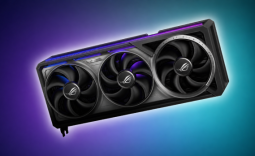 ASUS cancels buyer's RTX 5090 order even after he paid $4607, wants more money
 AMD confirms it'll deliver opening keynote for IFA 2026 on the 'Era of Personal AI'
 Samsung reveals zHBM: future RAM is stacked above AI accelerator, boasts 8x performance of HBM5 and 3x energy efficiency
 Asetek Initium Pedal Modular Upgrades Review
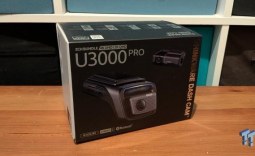 Thinkware U3000 Pro Review - Smart Dashcam with Wi-Fi quirks
 Montech TG3 Mid-Tower Chassis Review
 ASUS ROG Strix X870E-A Gaming WiFI7 Neo Review - A New Enticing Option
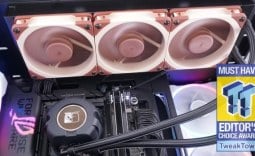 Noctua NL-LC1-36 Liquid CPU Cooler Review
 Logitech G316 X 98 Wired Gaming Keyboard Review - Retro-Inspired Board that Falls a Little Short
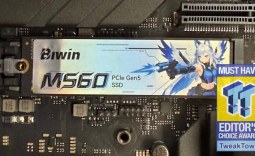 Biwin M560 2TB SSD Review - Best Overall Retail-Ready DRAMless SSD
 Logitech G512 X 98 Analog Mechanical Gaming Keyboard Review - An Innovative Two-in-One
 Thrustmaster T.Flight HOTAS 5 MSFS Edition Review
 SteelSeries Arctis Nova Pro Omni Wireless Headset Review - One Headset to Rule Them All
 GIGABYTE's 40 Days of INFINITY celebrates 40 Years of Innovation with stunning GeForce RTX graphics cards and rewards
 I swapped File Explorer for this free file manager and finally got the layout I wanted
 How to tell if someone has been using your Windows PC without your permission
 6 Task Manager tips for troubleshooting Windows performance problems
 ASUS ROG's 20th Anniversary Line-up of Premium PC Gaming Gear has Arrived - Here's Everything You Need to Know
 Six File Explorer tips every Windows user should know
 I switched my PC to encrypted DNS in Windows 11, and browsing felt more private
 Printer Not Working in Windows? How to fix detection, print queues and drivers
 The Ultimate Guide to Personalizing Your Windows 11 Taskbar
 How to Turn Your Windows Laptop Into a Second Monitor with Miracast and Wireless Display in Minutes