







Gaming - Page 44
Get the latest gaming news on Switch 2, PS5, next-gen PlayStation, Xbox Series X|S, PC games, trailers, reviews, and more from TweakTown. - Page 44
Stay Updated
Follow TweakTown for breaking tech news, reviews, and daily updates.


As an Amazon Associate, we earn from qualifying purchases. TweakTown may also earn commissions from other affiliate partners at no extra cost to you.
Want GeForce Now with more privacy and 'power-user features' like 'Anti-AFK'? OpenNow is an open-source alternative client
If one of the reasons that you're not so keen on the idea of streaming your games via GeForce Now is some of the downsides to NVIDIA's service in terms of privacy, then you might want to check out a new open-source project.

Tom's Hardware spotted OpenNow, which is a project on GitHub that provides a different version of the GeForce Now client - and it is, in fact, entirely different.
As the developer of the app made clear on Reddit: "I built OpenNow, a fully reverse-engineered open-source GeForce Now client. It is not a wrapper around the official client. It directly implements the required protocols and streaming logic."
Sony to put fans in first-party PlayStation games as part of new Playerbase program
Sony will scan gamers and put them into PlayStation games as part of a new initiative, The Playerbase.

PlayStation fans will soon have the chance to appear in actual games. It's part of Sony's new program, The Playerbase, which uses advanced Sony capture technology to take the likenesses of real-life fans and put them into digital games. How this works will be different for each game, and the first title to use it, Gran Turismo 7, will have a more limited use of a player's likeness--instead of a full 3D scan, the selected fan will be shown as an in-game portrait with other customization options.
"We're introducing The Playerbase, a unique opportunity for PlayStation's biggest fans to step into some of the biggest game worlds by having their likeness scanned and appear within a PlayStation game," Sony said on the PlayStation Blog.
Lenovo Legion Go 2 handheld prices soar by up to $650 due to the memory crisis
It's no secret that the memory and storage crisis and rising hardware prices are directly affecting the PC gaming hardware market. From Valve delaying the launch of its new Steam Machine and Steam Frame devices, through to smaller boutique gaming hardware brand Ayaneo recently announcing that it was no longer taking orders for its next-gen flagship 'Strix Halo' gaming handheld.

And now, via The Verge, it looks like Lenovo is significantly raising the prices for its flagship Legion Go 2 gaming handhelds. According to the Best Buy listing for the top AMD Ryzen Z2 Extreme model with 32GB of LPDDR5X memory and 1TB of internal storage, it now costs $1,999.99 USD, a massive $650 price increase from its original $1,349 price point.
Even the lower-tier AMD Ryzen Z2 non-Extreme model with 16GB of LPDDR5X memory and 1TB of internal storage now costs $1,499.99 USD at Best Buy, a $400 price increase over its original $1,099 price point. Interestingly, the flagship Ryzen Z2 Extreme-powered ROG Xbox Ally X gaming handheld still costs $999.99, with an ASUS representative telling The Verge there's "no price increase on the horizon" for it.
French consumer watchdog sues Ubisoft over The Crew software discontinuation controversy
Ubisoft is facing down a lawsuit on its home turf for the controversial delisting and discontinuation of The Crew.

In March 2024, Ubisoft pulled The Crew from all stores and announced the game would be going offline for good. As an online-only game, that meant consumers who bought The Crew would effectively no longer be able to play. The game, which sold over 2 million copies in less than a month, was a financial success for Ubisoft, leading to a big-budget sequel.
Ubisoft's actions kicked off a controversy that birthed the growing Stop Killing Games movement. The goal was simple: SKG ultimately wants to ensure games that are bought and paid for can continue being played. SKG wanted to drum up enough attention to bring the matter before European Parliament, leading to an effective signature campaign. Now the movement has caught the attention of French watchdog group UFC-Que Choisir, who has filed a lawsuit against Ubisoft in the hope of changing games industry practices.
New Netflix Playground app offers kid-friendly games without extra purchases or ads
Netflix's recent price hike is starting to make sense now: The company today announced Netflix Playground, a new standalone app that offers games for kids.

Netflix Playground is a new app centered around kid-friendly experiences, bringing eight playable games based on popular kid shows and properties. The wholesome lineup includes games based on Dr. Seuss, Peppa Pig, and Sesame Street.
All of the games hosted on Netflix Playground are completely ad-free and don't require any extra purchases--there are no microtransactions or value-added content. This makes it similar to Netflix's principal video games strategy, which allows subscribers to download select premium mobile games to play for a set period.
Saudi Arabia ups stake in Capcom, now owns $670 million worth of stock or 6% of shares
Saudi Arabia grows its stake in one of gaming's oldest companies--Japanese entertainment giant Capcom.

As per new filings on Japan's EDINET financial platform, Saudi-owned and -operated group Electronic Gaming Development Company (EGDC) has upped its stake in Capcom, from 5.03% to 6.04%.
The filings show that the EGDC currently has over 32 million shares in Capcom (32,186,900 to be exact). This treasure trove is worth an estimated 107.5 billion yen, or $673 million. At the time of writing, Capcom has over 533 million outstanding shares (533,011,246).
Super Mario Galaxy movie beats expectations with $370 million in opening week
The Super Mario Galaxy movie has beaten opening ticket sales estimates by tens of millions of dollars, signaling yet another big hit for Nintendo and Illumination.

Super Mario Galaxy proves lightning can strike in the same place twice, as Nintendo has captured another marquee busting release with its new film adaptation. New reports indicate that the Super Mario Galaxy film has made $372 million in combined opening ticket sales so far, overshooting the original $350 million estimate.
The phrasing of this data is a bit confusing; initial box office numbers are reported in "opening week" periods, which typically includes two timelines: 3-day opening weekend sales, and 5-day week ticket sales. The new $372 million figure refers to Super Mario Galaxy's 5-day ticket sales in North America combined with the global 3-day opening weekend ticket sales.
Analyst says Epic Games is in the 'middle of collapse' as Fortnite's immortality slowly starts to crack
If you rewind the clock, one game you would find everyone talking about was Fortnite. While games come and go, Fortnite managed to keep the hype alive, whether through bringing back OG Fortnite or the never-ending stream of item shop collaborations. And it felt like nothing could bring Epic Games down while it had one of the biggest battle royales in gaming in its pocket.

That sense of invincibility is starting to crack. Epic recently cut over 1,000 jobs, citing a downturn in Fortnite engagement, and has raised V-Bucks prices due to tough economic conditions. Reports indicate that Disney is watching for the right moment to acquire Epic Games and Fortnite to gain a significant foothold in gaming. Now, analyst Joost van Dreunen, co-founder of a leading analytics firm, argues the situation is more serious than it appears.
In his latest newsletter, spotted by Wccftech, Van Dreunen writes that the company is in the "middle of collapse." He argues that games like Fortnite, often branded as "forever games," don't last as long as people assume. "Forever games, it turns out, aren't," he wrote, before drawing a comparison to Roblox, which, despite giving users the power to create their own content, remains financially unstable.
MLB The Show 26 tops March PS5 game downloads in North America, beats Pearl Abyss's breakout hit Crimson Desert
Sony takes back control of its PlayStation Store's top downloads with a first-party game in the #1 spot.

Sony recently revealed the top downloaded PlayStation 5 games in March 2026 for North America and Europe, showing some key differences in regional consumer tastes.
MLB The Show 26 took the #1 top spot in the US, but was completely absent from Europe's top downloads. Sony and MLB have seen great success with their annualized sports releases, and these games typically see high rankings even on Xbox. On the US list, Sony had 3 games, beating Microsoft's 2 games, however the top spot goes to Electronic Arts, who had 4 titles on the list. Crimson Desert, Pearl Abyss's breakout hit that has sold 4 million copies in 12 days, is at #2 on the US list.
Intel's Texture Set Neural Compression will also save big on VRAM usage when gaming
All the major players in the PC gaming hardware space, alongside Microsoft with DirectX, are actively investing in neural rendering technologies designed to benefit developers and gamers alike. Intel's Texture Set Neural Compression was demonstrated last year; however, an updated version was shown at the recent GDC event, and Intel noted it plans to make it available later this year.

Like NVIDIA's Neural Texture Compression (NTC), one of the benefits of Intel's Texture Set Neural Compression is its ability to leverage AI and new technologies to significantly reduce the VRAM or memory footprint of traditional textures that use "block compression." AI-powered texture compression offers a fundamentally different approach, which is why Texture Set Neural Compression can compress textures by up to 18X compared to the original format.
Texture Set Neural Compression (TSNC) is planned to be made available as a standalone SDK that takes standard BC1-compressed textures, the industry standard for texture compression in games, and compiles them for modern GPU and even CPU decompression.
Steam Deck 2 will reportedly use an off-the-shelf AMD APU, not custom like the original
Valve has previously expressed its desire to build and release a follow-up to its popular Steam Deck PC gaming handheld, and on more than one occasion has said that it would only release a follow-up if it could deliver a significant increase in performance at the same or similar power as the current Steam Deck's semi-custom AMD SoC.

Earlier this month, industry insider and known leaker of GPU-related information, KeplerL2, said that Valve was targeting a 2028 launch window for the Steam Deck 2 and that it could arrive without a semi-custom SoC. This would mean that, like the ROG Xbox Ally X and Lenovo Legion Go 2, it would arrive with an existing AMD SoC, such as the Ryzen Z2 Extreme. However, if Valve is looking for an SoC with notably more performance than this, there's currently nothing on the market that fits the bill.
Looking ahead, however, the 2028 release window could align with AMD's rumored "Medusa Point" and "Medusa Halo" SoCs, which will feature RDNA 4 (called RDNA 4n) and RDNA 5 architectures. These chips will most likely support AMD's AI-powered FSR 4 Super Resolution and Frame Generation technologies, which could be the secret ingredient in delivering a notably more powerful Steam Deck 2.
NVIDIA's Neural Texture Compression cuts VRAM usage from 6.5GB down to 970MB
Neural Rendering is slowly taking shape in the world of gaming, where new AI technologies will accelerate visual fidelity and push traditional rendering to new heights on modern GPUs and next-gen console hardware. At the recent NVIDIA GTC 2026 event, a lengthy presentation titled 'Introduction to Neural Rendering' was conducted, covering a full range of new neural rendering technologies; however, the stand-out has to be Neural Texture Compression, which could be a game-changer on PC.

As the name suggests, Neural Texture Compression (NTC) offers an alternative to texture streaming and rendering in games. Currently, most games use BCn Texture Compression, or "block compression," which breaks a texture or image into chunks or blocks that are compressed and then decompressed by the GPU. This allows GPUs to decompress parts of images or textures as needed.
Neural Texture Compression (NTC) is very different because it encodes the latent features and data of a texture into a compact format that the neural network on a GPU, i.e., Tensor Cores on a GeForce RTX card, can reconstruct. NVIDIA is clear that this isn't generative AI but deterministic, in which the AI essentially rebuilds and recreates the texture in real time.
NVIDIA's DLSS 5 trailer has been taken down due to 'copyright' infringement
Okay, so NVIDIA's big DLSS 5 reveal trailer from its GTC conference last month has been one of the most talked-about PC gaming-related announcements for all of the wrong reasons. The AI rendering tool, which applies an almost post-processing filter to games like Resident Evil Requiem to deliver 'photorealistic' lighting and visuals, has come under fire from seemingly every corner of the gaming community.

And although the effect on in-game environments is impressive, it's the difference it makes to character faces that has stirred the most controversy. The backlash has been so vocal that NVIDIA CEO Jensen Huang responded to criticisms multiple times in recent weeks, while reiterating that game developers control how DLSS 5 looks and that it's designed to maintain a game's artistic vision or art direction.
And now, here we are in April, and NVIDIA's DLSS 5 announcement trailer is no longer available to watch on YouTube on the company's official GeForce channel. And no, it's not because NVIDIA is responding to the feedback and retooling the technology for a re-reveal or re-announcement; it's now blocked on "copyright grounds."
Estimated FPS data could be coming to Steam soon
We all know how vague official system requirements for games can be. They hardly provide any useful information about what performance level you can expect from a game based on your system specifications. If you're lucky, you may get a hint as to whether you can even run the game on your PC in the first place. Well, it looks like that may be about to change very soon with a new feature that Valve is working on.

Recently, user Dex3108 on the ResetEra forums spotted a line in the Steam Client code that wasn't there before. The line read "Select an App and a PC config to get a chart of estimated frame rates, based on the frame rates of other users." This line suggests that users may be able to use a Steam Store tool to get estimated performance data for each game based on their system specifications.
If that feature becomes publicly available, it will be a huge benefit to PC gamers and even users of the Steam Deck and the upcoming Steam Machine. It will most likely put an end to the "recommended system specifications" that are posted by game developers. Instead, users will be able to get a good idea of the performance level that they can expect in the game that they're looking to buy.
Continue reading: Estimated FPS data could be coming to Steam soon (full post)
Nintendo movie cameos based on fun and 'what feels right' to Mario creator Shigeru Miyamoto
Despite the Star Fox cameo in Super Mario Galaxy, Nintendo says there are no plans to make a kind of inter-connected Nintendo cinematic universe, so-to-speak, with intricate crossover events that evolve over time. It's more about fun and what feels right to Miyamoto.

Super Mario Galaxy is rocketing towards a record-breaking opening, and is expected to make $350 million in global five-day ticket sales. A big draw of the new film is how it uses more of Nintendo's iconic characters, including Star Fox's dashing pilot Fox McCloud.
But fans shouldn't expect a vast webwork of strategically-plotted storylines any time soon--in other words, Nintendo has no plans to make its own take on the Marvel Cinematic Universe.
New Mass Effect show may not get full series order, Prime Video boss requires script rewrites
The new Mass Effect TV show hasn't actually been greenlit just yet, and its fate could hinge on multiple script rewrites.

Hot off two back-to-back successful seasons of the hit new Fallout show, Amazon wants more gaming adaptations. Back in 2025, it was revealed that a live action Mass Effect show had been pitched to Amazon. Now it's been reported that Amazon MGM Studios has yet to actually order the Mass Effect show, and whether or not this actually happens will depend on script approvals from higher management.
Hollywood newsletter The Ankler reports that Amazon MGM Studios head of global TV Peter Friedlander will go through every project script to help weed out undesirable shows and help re-align the content slate. With Amazon having launched its new streaming subscription, the $5/month Prime Video Ultra, the company is now shoring up what kinds of shows it will produce and host on the platform.
Insider shuts down rumors of a new Prototype game, says 'It doesn't exist'
Last year, a series of rumors began circulating, claiming that a new Prototype game was in development. A Reddit user claimed the game would feature Alex Mercer from the original Prototype as its protagonist, introduce new shapeshifting mechanics for infiltrating areas, and take place in New York City.

Some of the speculation was also fueled by changes at Radical Entertainment, which was rebranded as New Radical Games. The studio's updated website featured Prototype alongside The Simpsons: Hit and Run, leading fans to speculate that remasters or new projects could be in the works. Additional rumors were sparked by datamined updates to the original Prototype, which revealed test maps and changes to the credits.
Since then, fans of the hack-and-slash series have hoped for official confirmation. Now, an insider pushes back on those hopes, claiming the narrative about a new Prototype is entirely false and that neither Microsoft nor Activision currently has any plans for a new game.
PlayStation aims to be best place to play and publish games, Sony CEO Hiroki Totoki says
In a profile on Japanese businesses, Sony CEO Hiroki Totoki discusses the company's overall goals for its PlayStation games entertainment division, saying that users are just as important as the content that they consume.

Sony keeps the top spot for two big reasons: Gamers continue buying games, and publishers keep selling them. PlayStation is so big because it can efficiently funnel a vast swath of games into its storefront ecosystem, leading to a veritable market of third-party content to choose from. This size is maintained through carefully-inked deals with publishers and developers that offer favorable terms for both sides.
In a recent interview with Bloomberg, Sony CEO Hiroki Totoki says that the overall focus for PlayStation is bifurcated between these two points--consumers and publishers.
New Crimson Desert update caters to fans by quadrupling storage, but nerfs aerial flight trick
Pearl Abyss continues molding and shaping Crimson Desert based on player feedback, but the latest update also makes an unwelcome change that fans already miss.

Crimson Desert's new update makes a few big changes to the game that are tailored to fan feedback, and one that isn't. Patch 1.02.00 expands in-game storage from 240 slots to 1000, but you'll have to upgrade your camp five times before you unlock the full amount. Pearl Abyss also added a new control scheme, fixed V-Sync issues on Xbox, and put in a new armor set for your pet cat.
"Depending on your progress with the Greymane camp expansion, the capacity of your private storage can now be increased from 240 slots up to a maximum of 1000 slots. Through the expansion of your camp, which consists of 5 stages in total," the patch notes read.
PS3 emulator RPCS3 sees a 7% performance uplift in one of the most SPU-intensive games
RPCS3, an open-source emulator designed to run PlayStation 3 (PS3) games on PC, has reported a performance boost thanks to a new breakthrough in emulating the console's Cell CPU. In a post on X (spotted by VideoCardz), the team explained that the work centers on new SPU usage patterns discovered by contributor Elad, which allow the emulator to generate more optimized code.

The PS3's hardware makes this a "breakthrough." PlayStation 3 uses the Cell Broadband Engine, which, unlike AMD or Intel CPUs, has a main core (PPU) and several smaller co-processors (SPUs). The PPU handles general tasks such as game logic and system operations, while the SPUs handle parallel workloads, including physics, animation, audio processing, decompression, and some graphics-related compute tasks.
This design is exactly what makes PS3 emulation difficult. Simulating SPU behavior on modern CPUs is complex, and communication between PPU and SPU threads has long caused performance bottlenecks. This update helps by recognizing common SPU patterns and translating them into more efficient CPU instructions.
 Twitch opts streamers into gen AI training by default, faces harsh backlash
 Sean Murray still plays the 2016 launch version of No Man's Sky
 China's YMTC has climbed to third place in global NAND flash shipments
 $100 GTA 6 version makes up 89% of pre-orders, analysts estimate
 HWiNFO's latest update quietly confirms Intel is working on Razor Lake-AX
 Nintendo puts Switch 2 price increase warnings on store demo kiosks ahead of September 1 hike
 GIGABYTE launches two new B450 motherboards as demand for AM4 stays high in 2026
 Microsoft finally makes up its mind and unifies Copilot features into one big app
 PS5 suffers from severe overheating after liquid metal eats into the heatsink
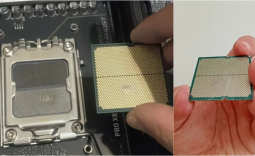 AMD Ryzen 7 7800X3D CPU burns and swells even after using AMD's updated BIOS
 D-Link F518 5G Wi‑Fi 6 AX1800 Mobile Hotspot Review: All-Day Mobile Hotspot
 Bose Lifestyle Ultra Speaker Review - Impressively Detailed Room-Filling Sound
 MSI Z890 Gaming Plus WIFI6E Review - Z890 for under $200
 Mortal Kombat (1995) 4K Ultra HD Blu-ray Review
 CPS PCCOOLER YS1200 ATX 3.1 80 PLUS Gold PSU Review
 ASRock X870E Taichi White Review: a premium AM5 motherboard with 10G LAN and WiFi 7
 Asetek Initium Pedal Modular Upgrades Review
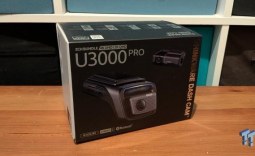 Thinkware U3000 Pro Review - Smart Dashcam with Wi-Fi quirks
 Montech TG3 Mid-Tower Chassis Review
 ASUS ROG Strix X870E-A Gaming WiFI7 Neo Review - A New Enticing Option
 I ditched the Windows 11 context menu for this open-source tool, and here's why
 Windows 11 may be encrypting your drive already, and I checked where my recovery key went
 GIGABYTE's 40 Days of INFINITY celebrates 40 Years of Innovation with stunning GeForce RTX graphics cards and rewards
 I swapped File Explorer for this free file manager and finally got the layout I wanted
 How to tell if someone has been using your Windows PC without your permission
 6 Task Manager tips for troubleshooting Windows performance problems
 ASUS ROG's 20th Anniversary Line-up of Premium PC Gaming Gear has Arrived - Here's Everything You Need to Know
 Six File Explorer tips every Windows user should know
 I switched my PC to encrypted DNS in Windows 11, and browsing felt more private
 Printer Not Working in Windows? How to fix detection, print queues and drivers