







Business, Financial & Legal - Page 23
Catch up on business, finance, and legal news shaping tech, gaming, and science - mergers, lawsuits, antitrust, IPOs, Big Tech earnings, and market trends. - Page 23
Stay Updated
Follow TweakTown for breaking tech news, reviews, and daily updates.


As an Amazon Associate, we earn from qualifying purchases. TweakTown may also earn commissions from other affiliate partners at no extra cost to you.
ASML rumored to charge up to $700 million per next-gen Hyper-NA EUV machine by 2030
ASML leads the semiconductor world with its High-NA EUV lithography machines, which reportedly cost $380 million a pop... but its next-generation Hyper-NA EUV lithography machines will reportedly cost over $700 million when they're unleashed in 2030.

In a new report from Ctee, we're learning that ASML's expensive EUV lithography machine prices are a "huge burden for customers" with conventional EUV machines costing around $181 million each, its next-gen High-NA EUV lithography machines has doubled to nearly $370 million... but now its future-gen Hyper-NA EUV lithography machines are expected to sell for as high as $724 million.
According to Ctee's sources, "relevant people" in the semiconductor industry said that TSMC introduced EUV machines later than Samsung in the past, with TSMC reducing the investment burden caused by the new High-NA EUV lithography machines by using existing equipment, and upgrading to multi-patterning.
SK hynix to spend $74.6 billion on memory business, another $58 billion for AI, semiconductors
SK hynix has announced plans to invest $74.6 billion over the next 3 years to strengthen its dominance of the memory market, which the South Korean memory giant commands 35% of the DRAM market already.

SK hynix has started construction of its massive $90 billion "mega fab complex" in Gyeonggi Province, with Reuters reporting that SK hynix's parent company, SK Group, will spend another $58 billion on top of its $74.6 billion investment, into AI and semiconductors so that it can "improve its competitiveness by focusing on its AI value chain".
The gigantic new investment streams were outlined during a two-day strategy meeting, aiming to revive the group after SK hynix -- its main money maker -- and SK Group's electric vehicle (EV) battery arm after it "suffered heavy losses" reports Reuters.
Intel unveils world's first optical interconnect tech using photonics, 100x distance increased
Intel has just reached a revolutionary milestone in integrated photonics technology for high-speed data transmission, which will be a game-changer for AI.

At the Optical Fiber Communications Conference (OFC) 2024, Intel's Integrated Photonics Solutions (IPS) Group demonstrated the industry's most advanced and first-ever fully integrated optical compute interconnect (OCI) chiplet co-packaged with an Intel CPU and running live data.
Intel's OCI chiplet is a huge jump forward in high-bandwidth interconnect by enabling co-packaged optical input/output (I/O) in emerging AI infrastructure for data centers and high-performance computing (HPC) applications. The new OCI chiplet from Intel has much higher bandwidth speeds through its co-packaged I/O, with support for up to 64 channels at 32Gbps data transmission speeds. Intel's new OCI chiplet features include:
South Korea announces comprehensive support plan to lead the world semiconductor market
The South Korean government has (finally) announced a comprehensive support plan for its semiconductor ecosystem at the Economic Ministers' Meeting on June 26.

In a new report from Business Korea, we're learning that in order to make South Korea's position in the global semiconductor market absolutely dominant (more so than it is) will be super-powered by this new bill passing through the South Korean government.
The new initiative builds on the 26 trillion won (around $18 billion USD) direction outlined in the 2nd Economic Issue Review Meeting, which has a focus on boosting the overall competitiveness of the semiconductor ecosystem in South Korea.
Samsung reportedly ahead of TSMC with next-gen panel-level packaging semiconductor tech
Samsung is reportedly ahead of next-generation panel-level packaging (PLP) in its never-ending semiconductor battle with TSMC.

In a new report from Business Korea, we're hearing that Samsung is making "significant strides" in the semiconductor packaging industry, "positioning itself ahead of TSMC in the Panel Level Packaging (PLP) field". This new development comes after Samsung acquired the PLP business from Samsung Electro-Mechanics back in 2019 for around $581 million.
During Samsung's recent shareholders meeting in March 2024, the former head of Samsung Electronics' semiconductor (DS) division, Kyung Kye-hyun, elaborated on the necessity of PLP technology. He said: "AI semiconductor dies (rectangular pieces with circuits) are typically 600mm x 600mm or 800mm x 800mm in size, necessitating technologies like PLP," he explained, adding, "Samsung Electronics is also developing and collaborating with clients".
TSMC seeks land for new CoWoS advanced packaging plant, struggles to keep up with AI demand
TSMC CoWoS advanced packaging production capacity is in "serious short supply," reports UDN

Just as the new plant located in Nanke Chiayi Park in Taiwan is expanding production, the downstream supply chain broke news that TSMC is eyeing off going to Pingtung to build a new CoWoS advanced packaging plant, and is now looking into appropriate land in Taiwan for the new site.
TSMC hasn't responded to the new CoWoS advanced packaging facility rumors, with a National Science Council source telling UDN: "I have not heard anything about it so far". TSMC has packaging and testing production capacity in Longtan, Zhuke, Zhunan, Zhongke, Nanke, and other places.
NVIDIA drops 10% in just three days after becoming world's most valuable company
It was only a few weeks ago that NVIDIA passed Apple in being the most valuable publicly traded company, and then a week later, NVIDIA received a staggering $3.3 trillion market valuation, making it the most-valuable publicly traded company in the world.

After reaching the top of the company valuation food chain, the green team decided to dilute its shares, bringing its price per share down to $150. However, as the market opened on Monday, NVIDIA's share price took a downward turn, dropping to $118.11 per share and marking the third consecutive day of reducing prices.
Since its peak, NVIDIA's share price has dropped 13%, which is also being felt across many other technology companies that are involved in the mass development of AI-powered products and services. For example, Super Micro Computer, which sells servers outfitted with NVIDIA's AI GPUs, dropped 8.7%, and Dell, which also competes in the same market, fell 5.2%. Furthermore, chip designer Arm dropped 5.8%, and semiconductor giants Qualcomm and Broadcom fell 5.5 and 3.7%, respectively.
NVIDIA price target hiked yet again by analyst after increased Blackwell AI GPU orders
Jefferies analysts are happy right now. In a new note released on Monday, they raised their price target for NVIDIA shares from $135 to $150.

The analysts just enjoyed a recent Asia trip and upcoming meetings with "key players" in the AI space. In its most recent note, Jefferies analysts said that while NVIDIA and Broadcom are big winners, there are "growing concerns" regarding AMD and Marvell, noting that it's "too early to call any losers for 2025".
The analysts at Jefferies calls NVIDIA "both king and kingmaker" within the AI ecosystem, and that their upcoming "AI Bus Tour" will see the analyst firm get some great insights from industry leaders, including management from AI kingmaker NVIDIA.
Julian Assange is FREE: released from maximum security prison, onto a flight back to Australia
Julian Assange is finally free, released from Belmarsh maximum security prison today after 1901 days under 23-hour isolation. The news was announced on the official Wikileaks account on X:

Assange was granted bail by the High Court in London, released to the Stansted airport in the afternoon, and was aboard a plane back to his home country, Australia. Wikileaks says that this is a result of a global campaign that spanned grass-roots organizers, press freedom campaigners, legislators and leaders from across the political spectrum, all the way to the United Nations.
Wikileaks adds that this created space for a long period of negotiations with the US Department of Justice, "leading to a deal that has not yet been formally finalized," and that they will "provide more information as soon as possible".
China customs find $1.5 million worth of Intel Xeon CPUs in car, smuggler faces 7 years in jail
Hong Kong Customs busted a suspected smuggling case using private cars, busting a 51-year-old male driver with 596 smuggled Intel Xeon CPUs worth around $1.5 million.

Customs intercepted an outbound private car at Shenzhen Bay Control Point, where after an X-ray inspection, custom officials discovered that the image they had just taken of the trunk of the car was different. Once opened, Hong Kong Customs officials found the smuggled Intel Xeon CPUs on both sides of the rear of the car, as well as secret compartments in the trunk.
The 51-year-old male driver was arrested, with Hong Kong Customs taking to its official blog to explain: "Smuggling is a serious crime. According to the Import and Export Ordinance, anyone who imports or exports unmanifested goods may be fined up to $2 million and imprisoned for seven years upon conviction".
NVIDIA is a 'little-known brand' after hitting $3.3T market cap, according to consulting firm
NVIDIA is a "little-known brand" even though it's an absolute monster in more ways than one, at least in a new report from CNBC and consulting firm Interbrand.

Last week, NVIDIA hit a record $3.3 trillion market cap, making it the world's biggest company by market cap, passing US tech leaders Apple and Microsoft. Even with that in their back post, NVIDIA "doesn't even cracK' the top 100 most iconic names on Interbrand -- a consulting firm -- and its most recent list, which includes companies like McDonald's, Amazon, Tesla, Google, Starbucks, Disney, Netflix, and others.
AI is everywhere and will continue to penetrate every market on the planet over the years... NVIDIA leads that in the AI GPU department, with an estimated 80%+ of the AI chip market share. Not only that, but NVIDIA's annual revenue growth has been exceeding 200% in the last three quarters and with no signs of slowing down, with fiscal 2025 revenue expected to nearly double from a year ago to over $120 billion.
TSMC exploring 'radically new' semiconductor packaging technique called panel-level packaging
TSMC is exploring a 'radically new' method of semiconductor chip packaging, as the world of AI is simply not slowing down and needs further advancements at every level to keep up.

TSMC Is reportedly working with equipment and material suppliers on its new method, according to "multiple people with direct knowledge of the matter", reports Nikkei Asia. The new approach would use rectangular panel-like substrates, compared to the conventional round wafers of today. This new method is called panel-level packaging, which would allow more chips to be placed on each wafer.
The research into panel-level packaging is still early, and it would be many years before we see chips made on it, but it represents a "significant technical shift by TSMC" reports Nikkei Asia, which the company previously viewed using rectangular substrates as "too challenging".
Analyst increases TSMC price target, riding off major US tech giants making chips on N3 node
Bernstein analysts have just lifted their price targets for TSMC's Taiwan and US-listed shares, with the new price target hitting NT$1080, up from NT$900, while US-listed shares have new price targets of $200, up from $150.

The analysts expect TSMC to surpass its 2024 guidance, which is driven by two factors: high-end smartphone demand and advanced technology nodes used by virtually every major US tech company: Apple, AMD, Intel, NVIDIA, Qualcomm, and more.
TSMC's continued data center AI revenue continues to climb, but an "unexpected boost" reports Investing.com, comes from AI's influence on smartphone upgrades. We've already got Samsung with Galaxy AI on its new Galaxy S24 smartphones, and Apple has ChatGPT-powered "Apple Intelligence" coming later this year.
South Korea lawmaker submits 'All-Out War' strategy in new special semiconductor bill
South Korean lawmaker and former Samsung Electronics president Ko Dong-jim has tabled a special bill to establish and support a government-level semiconductor industry strategy that has been referred to as an "All-Out War" for South Korea and the semiconductor industry.

Ko Dong-jim is a lawmaker from the People Power Party in South Korea, Ko submitted to the National Assembly the "Special Art on Enhancing the Competitiveness of the Semiconductor Industry," which includes an establishment of a "Presidential Semiconductor Industry Competitiveness Enhancement Committee".
The "All-Out War" bill for the semiconductor industry was picked up by Business Korea, which reports that the proposed legislation aims to centralize the semiconductor industry regulations through the future committee, and fast-tracking for expedited permits.
AI proxy war begins with $480 million infringement lawsuit against Micron Technology
Micron Technology, a US semiconductor manufacturing company, is being sued by South Korean company Mimir IP for infringing on its patents.

Mimir IP has filed a complaint with the International Trade Commission (ITC) and the US District Court for the Eastern District of Texas. Notably, Korea Economic Daily (KED) described Mimir IP as a non-practicing entity (NPE), which translates to a patent troll - a company that solely exists to purchase patents, hold them, and then sue companies or any entity that infringes on them.
Mimir purchased approximately 1,500 patents from SK Hynix in May, which it then used to file lawsuits that involve "circuits, voltage measurement devices, and non-volatile memory devices." The lawsuit, if it concludes in Mimir IP's favor, could earn the patent troll up to $480 million, and authorities could even force defendants to sign licensing agreements with Mimir.
US wants allies to stop China's semiconductor sector: next target is HBM memory for AI chips
A senior US official will visit both Japan and the Netherlands to ask the countries to agree to new US restrictions to curb China's semiconductor industry. This time, they want to place bans on HBM memory needed for AI chips.

US Under Secretary of Commerce for Industry and Security, Alan Estevez, will press his counterparts in both Tokyo and the Netherlands to tighten the activities in China by Dutch supplier ASML (the makers of EUV lithography machines to make the best chips on the planet) and Japan's Tokyo Electron Ltd., according to people familiar with the matter, reports Bloomberg.
Estevez's requests are part of an "ongoing dialogue with allies" that will target Chinese chip factories that are developing HBM chips, with ASML and Tokyo Electron machines used to make HBM chips. Chinese companies working on creating HBM chips include Wuhan Xinxin Semiconductor Manufacturing Co., a subsidiary of China's leading memory chipmaker Yangtze Memory Technologies Co., according to China's corporate data provider Qichacha. Huawei Technologies Co. and ChangXin Memory Technologies Inc. are also reportedly developing HBM.
NVIDIA becomes the most valuable company in the world with $3.33 trillion market cap
NVIDIA has hit quite the milestone today, becoming the most valuable company in the world with a market value of $3.33 trillion.

NVIDIA shares rose by 3.5% today which bumped the company up to a market cap of $3.33 trillion. NVIDIA recently announced a 10-for-1 split of stock, making its stock more accessible to smaller investors.
The company crossed the $1 trillion market cap milestone in 2023, and a few months ago, in February 2024, we saw NVIDIA breach the $2 trillion market cap. NVIDIA has been riding an incredibly successful and very dominant ride to the AI GPU champion, fueling its financial growth like rocket fuel.
AMD cyberattack: 'IntelBroker' has stolen data on future products, customer information
AMD has potentially been hit by a cyberattack, after hacker "IntelBroker" allegedly stole data and has it up for sale on a hacking forum. The data includes AMD employee information, financial documents, and confidential information including future AMD products.

AMD told BleepingComputer in a statement: "We are aware of a cybercriminal organization claiming to be in possession of stolen AMD data. We are working closely with law enforcement officials and a third-party hosting partner to investigate the claim and the significance of the data".
The threat actor said in a spot on a hacking forum: "Today, I'm selling the AMD.com data breach. Thanks for reading and enjoy! In June 2024, AMD, a large computing company suffered a data breach. Compromised data: Future AMD products, Spec sheets, employee databases, customer databases, property files, ROMs, source code, firmware and finances".
US government sues Adobe for deceiving and trapping people with subscriptions
The Department of Justice (DOJ) has sued Adobe, alleging the company has deceived consumers by trying to hide ways of canceling subscriptions.

The new lawsuit alleges Adobe has harmed consumers by enrolling them in a subscription plan that doesn't adequately inform consumers of the plans terms, and through this agreement the company then unfairly push customers to the "annual paid monthly" subscription, which if they canceled within the first year would result in them being billed for hundreds of dollars. The particular point the DOJ is concentrating on here is the early termination feeds that Adobe only discloses when a subscriber tries to cancel a subscription.
The lawsuit states Adobe has turned its early-termination free into a "powerful retention tool" that traps consumers. Moreover, the DOJ lawsuit says Adobe has purposely hidden details of the subscription cancellation stipulations behind hyperlinks and option textboxes, which the DOJ alleges proves "that are designed to go unnoticed and that most consumers never see."
TSMC wins Google and Qualcomm 3nm orders away from Samsung Foundry over yield, power issues
TSMC has just secured orders from US tech giants Google and Qualcomm for next-gen 3nm, as Samsung Foundry is having issues with yields and power efficiency, reports South Korean media.

In a new report from Business Korea, we learn that most companies will allocate their orders to TSMC for next-gen 3nm chip designs. As of June 17, there are 7 major companies using TSMC for 3nm designs. This includes NVIDIA, AMD, Intel, Apple, Qualcomm, MediaTek, and Google, which are prioritizing the use of TSMC's 3nm manufacturing process.
We heard rumors of Google moving to TSMC to make its next-gen Tensor G5 processor for its upcoming Pixel 10 smartphones in late-May, but it seems these deals are actually happening now as Samsung Foundry is floundering with trying to catch up (let alone match) the semiconductor dominance that TSMC holds.
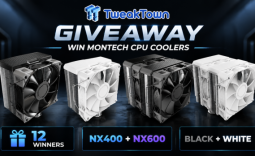 Giveaway: 12 Winners Will Score MONTECH NX400 and NX600 CPU Coolers
 GTA 6 leaks have reportedly led to a morale drop at Rockstar, with Netflix frustrated as well
 The Blood of Dawnwalker won't hit 60 FPS on any console, PS5 Pro tops out at 40 FPS
 AMD claws back ground against Intel in the CPU market, climbs to 35% share in desktop CPUs
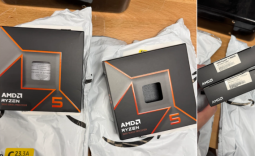 Redditor receives not one but TWO empty boxes of Ryzen 5 9600X from Amazon
 Xbox Series X25 Limited Edition Console is priced at $900, arrives November 2026
 Dave Bautista officially cast as Kratos in Amazon's 'God of War' TV Series, replaces Ryan Hurst
 Take-Two begins the hunt for GTA 6 leaker CyberLeek, subpoenas Microsoft and Discord
 PlayStation 6 handheld not expected to stay under $600, warns leaker
 AMD confirms the Radeon RX 9050 4GB will have a tiny 64-bit bus and just 16MB Infinity Cache
 Intel 'Nova-Lake-S' 28-core CPU with bLLC reportedly draws 296W at PL2
 Cooler Master MasterFan A120 Fan Review
 GIGABYTE MO27Q2A Gaming Monitor Review: 1440p, 280Hz, and QD-OLED is a winning combination
 Cooler Master V8 ACE 3DHP BLACK CPU Cooler Review
 ASUS ROG Strix XG129C Review: A $199 Gaming Monitor You Don't Play Games On
 Cooler Master HAF II 500 Mid-Tower Chassis Review
 Corsair HS35 v3 Wireless Gaming Headset Review - An Affordable Winner
 D-Link F518 5G Wi‑Fi 6 AX1800 Mobile Hotspot Review: All-Day Mobile Hotspot
 Bose Lifestyle Ultra Speaker Review - Impressively Detailed Room-Filling Sound
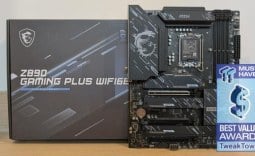 MSI Z890 Gaming Plus WIFI6E Review - Z890 for under $200
 Mortal Kombat (1995) 4K Ultra HD Blu-ray Review
 Using Multiple Monitors? Change these Windows settings for a Better Experience
 Windows Sandbox is The Windows Security Feature Most People Never Use
 I ditched the Windows 11 context menu for this open-source tool, and here's why
 Windows 11 may be encrypting your drive already, and I checked where my recovery key went
 GIGABYTE's 40 Days of INFINITY celebrates 40 Years of Innovation with stunning GeForce RTX graphics cards and rewards
 I swapped File Explorer for this free file manager and finally got the layout I wanted
 How to tell if someone has been using your Windows PC without your permission
 6 Task Manager tips for troubleshooting Windows performance problems
 ASUS ROG's 20th Anniversary Line-up of Premium PC Gaming Gear has Arrived - Here's Everything You Need to Know
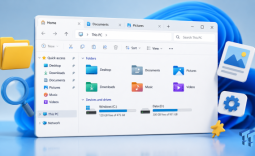 Six File Explorer tips every Windows user should know