







Business, Financial & Legal - Page 139
Catch up on business, finance, and legal news shaping tech, gaming, and science - mergers, lawsuits, antitrust, IPOs, Big Tech earnings, and market trends. - Page 139
Stay Updated
Follow TweakTown for breaking tech news, reviews, and daily updates.


As an Amazon Associate, we earn from qualifying purchases. TweakTown may also earn commissions from other affiliate partners at no extra cost to you.
OCZ served a subpoena by SEC who is conducting an investigation into the company
OCZ, our troubled SSD-making friends, have been served a subpoena requesting documents and information that relate to press releases the company provided on September 5, 2012 and October 10, 2012. They've also been requested to turn over financial reports dealing with customer incentive programs.
OCZ is in a bit of hot water right now after its earnings were delayed and quite a bit lower than expectations. Many investors have filed lawsuits alleging that the company broke the law in financial reporting. Theories as to why they did this run the gamut, but most settle on the idea they were looking to be acquired.
Ralph Schmitt, president and chief executive officer, noted that, "Since we delayed the filing of our second quarter 10-Q, we had proactively contacted the Commission and have been expecting them to conduct an investigation. We intend to cooperate fully regarding this non-public, fact-finding inquiry and are also continuing with our own internal investigation as previously announced."
Samsung counter-sues LG over OLED patents
LG filed a lawsuit against Samsung back in September alleging that Samsung's products infringed upon LG's patents concerning OLED technology, which was featured in televisions by both LG and Samsung back at CES 2012. The new TVs based upon this technology were due out this year, though neither company has released one as of yet.
The technology is used in Samsung devices such as the Galaxy S III and Galaxy Tab 7.7 and LG is looking to get those devices banned. When news of the lawsuit first broke, Samsung had no response, however, they have now responded to the lawsuit and are looking to get LG's patents disavowed.
Samsung is looking for the Seoul court to dismiss seven of LG's patents. Samsung argues that the OLED patents owned by LG don't feature the originality and innovation that a patent in South Korea requires. Both companies are at the forefront of OLED technology, so this is an obvious step to try to slow down the competition. Let's just hope it doesn't slow down those OLED TVs that were promised.
Continue reading: Samsung counter-sues LG over OLED patents (full post)
Apple shares jump over 6% today after getting hammered for several weeks
Apple's (AAPL) stock has jumped by over 6 percent today, bringing it's value up to $561.45 per share. This increase is in stark contrast to the past few weeks in which Apple stock had been in a near-continual state of decline and shed over 20 percent of its per-share value. The decline started shortly after the iPhone 5 announcement.
The value of the stock is still not close to the $700+ value it had reached two months ago, but it's better off than it had been. Stock prices have recovered due to strong sales of mobile devices in China, fresh rumors of a new iPhone 5 successor that is scheduled to be released in the summer of 2013, and Apple having the full catalog of AC/DC music on iTunes.
Several analysts still expect Apple stock to continue to increase, with most pegging the price around $760 in the next 12 months. One analyst, Brian White of Topeka Capital Markets, expects Apple to reach $1,111 a share in that same time period. He released a note saying the recent selling of Apple stock was "insanely insane."
Intel's CEO Paul Otellini retiring in May, board has six months to find replacement
Over Intel's long history of 45 years, they have had just five CEOs. Paul Otellini has led the company for eight years now, but he has been involved in with the company for nearly 40 years, a long time by any measure. He has announced plans to retire in May of 2013, which gives the board of directors 6 months to find a suitable replacement.
"I've been privileged to lead one of the world's greatest companies," Otellini said. "After almost four decades with the company and eight years as CEO, it's time to move on and transfer Intel's helm to a new generation of leadership."
There are many qualified candidates, both inside the company and outside. A new candidate would likely be someone with a focus on mobile as that seems to be where all of the market is heading. Otellini is seen as the driving force behind reinventing the PC market with Intel's current focus on Ultrabooks, but it's not quite a cell phone or tablet.
Cisco acquires Meraki for $1.2 billion
With rumors floating around that cloud-managed network infrastructure company, Meraki, were about to announce their IPO, networking giant Cisco has swooped in and acquired the company for $1.2 billion in cash.
Cisco have said that they plan to use the freshly acquired Meraki's technology to "cloudify" its network management products. Cisco will turn the company into a new Cloud Networking Group. Meraki's CEO, Sanjit Biswas released a memo to employees, announcing the acquisition:
Continue reading: Cisco acquires Meraki for $1.2 billion (full post)
Samsung want the skinny on the Apple, HTC settlement, and they want it now
Apple and Samsung have been at each others throats for what feels like years now, and if you didn't hear, just recently Apple settled with HTC over patents - and now Samsung want the details of this settlement.
On Friday, the South Korean device maker asked a court to force Apple to provide them with a copy of the HTC deal, where they argued that the deal most likely covers some of the patents covered in their own case against Apple. Samsung wrote in their filing with the court:
Samsung already know of at least two patents that Apple used against HTC in their legal battle, and these two patents were also used against Samsung. The company wants to know whether they were Apple's top tier patents, you know, the ones that Apple stated in court they were unwilling to license, especially to competitors. During the testimony of the Apple vs Samsung trial, Apple's Director of Patent Licensing and Strategy, Boris Teksler, said:
ReportTT: Amazon losing $500 million to $1 billion each year offering its streaming service
According to Reed Hastings, CEO of Netflix, Amazon's streaming service that comes with an Amazon Prime membership isn't anywhere near profitable. In fact, he pegs the yearly loss at an amount somewhere between $500 million and $1 billion. That's an incredible price to pay to try and enter a market, but Amazon has the ability to do so.
The way Hastings has determined this estimate is by using the value of content deals that Amazon picked up when Netflix and Amazon were directly competing for them. Netflix is planning on spending over $2 billion on content over the next year, so the fact that Amazon is only losing $1 billion isn't such a big deal.
Both Amazon and Netflix charge the same amount per month for their services, $8, but Amazon also offers free two-day shipping and other benefits for that $8. Amazon spokesman Andrew Herdener, via email to All Things D: "We don't comment on our individual investments but it's correct that Prime Instant Video is an amazing value for customers. Not only do Prime members get unlimited streaming video, but they also get free 2-day shipping and the Kindle Owners' Lending Library as well."
Google, Dish Network could launch their own wireless network
The wireless service here in the U.S. is absolutely abysmal as customers and handset manufacturers are caught in a whirlwind of phone exclusivity, price increases and data throttling across the majority of our wireless networks. Something needs to change soon, and hopefully, that change could be a new wireless service between Google and Dish Network if recent reports turn out to be a true.
According to the WSJ, Google and Dish Network have been in talks over possibly partnering up to create their own wireless service. As of now, the talks are in their very early stages as Google currently isn't the only company Dish Network is in talks with, but seeing as Google has been moving ahead with its Google Fiber, it would be interesting to see the company also deliver a wireless network to its potential customers.
If the plan works out and Google and Dish Network partner up to provide a wireless network, it would be interesting to see what types of devices will be supported within the network. Android devices would certainly be a no-brainer, but I'm curious to see if iOS devices like the iPhone or iPad will be invited into the party or if it will be an Android-only network.
Continue reading: Google, Dish Network could launch their own wireless network (full post)
Google invests $75 million into 50mW wind farm, total renewable energy investment stands at nearly $1 billion
Google have just announced that they're investing $75 million into a 50mW wind farm in Rippey, which is around an hour outside of Des Moines. This latest investment sees the Mountain View-based company's total investment into renewable energy at "more than $990 million", edging close to that magical $1 billion mark.
The Rippey-based project is being done by RPM access, who are estimated to produce enough energy to power over 15,000 Iowa homes thanks to the turbines produced in Nordex USA. Google reiterate that both company's are based in the US, enforcing that Google are also an American company. Google are pushing for renewable energy in Iowa as they have a data center in Council Bluffs, and have been pumping money into the area since they opened the data center five years ago:
Another NASA laptop gets stolen, NASA now enforces all machines receive encryption
One would think this rule would've been enforced on day-one, but another NASA employee's laptop was stolen from a locked car two weeks ago, containing "personally identifiable information". Officials are now concerned that NASA workers are at risk of identity theft.
The laptop's HDD that was stolen wasn't encrypted, and no top of that, neither were the included sensitive documents. The theft is being used as a wake up call for NASA to severely increase security standards on employees' laptops. This isn't the first leak, as in March of 2011 a laptop was stolen which contained - wait for it - control codes for the damn International Space Station and since, the space agency hasn't beefed up security, until now.
NASA Inspector General, Paul Martin, has told Congress that from April 2009 to April 2011 - a two-year period - that an estimated 48 laptops and mobile devices had been lost or stolen, and worse, just 1% of agency devices were encrypted. Associate deputy administrator Richard Keegan Jr. has, effective immediately, required that "no NASA-issued laptops containing sensitive information can be removed from a NASA facility unless whole disk encryption software is enabled".
PC sales may decline "for years to come", analysts begin to worry
This should really come as a surprise to, well, no one. The consumer tech world has changed, and gone are the requirement for desktops for productivity work or surfing the web - you can do all of this on a smartphone, or a notebook. Recent figures have pointed toward a decline for this year in relation to PC sales, a first in 11 years.
More and more consumers are grabbing smart devices, and while some analysts have hopes for Windows 8, Barclays analyst Ben Reitzes, isn't so sure on PC sales. Reitzes says that PC sales could decline "for years to come" and has now reduced his estimates for 2012, all the way up until 2016. Reitzes wrote in a research note that Forbes reported on:
Reitzes estimates a 6% year-over-year decline for the PC industry in Q4, and a 3% year-over-year decline for the entire of 2012. He expects the market to continue to slide in 2013, dropping another 4%,"as the consumer market remains weak and the tablet and smartphone markets continue to cannibalize the PC market; the iPad mini, new iPad and iPhone 5 could continue to take wallet share". The analyst isn't a big fan of Windows 8, noting that "Windows 8 and ultrabooks are creating confusion within the PC ecosystem, which has hampered execution and worsened the downturn".
Continue reading: PC sales may decline "for years to come", analysts begin to worry (full post)
PayPal to launch facial recognition for in-store payments, smile for the... PayPal?
PayPal is about to get to know your face a whole lot better, with the company looking to use facial recognition technology in a trial in Australia for in-store payments. All you'll need to do is finish your shopping, "check-in" at a store on your smartphone, place an order, and have the sales assistant check your photo ID when it pops up on their terminal.
The facial recognition-based tech is said to ramp up over the next three years, as Australians become more and more technology dependant. They're becoming much more comfortable using them to shop, and online payment provider PayPal is jumping at the chance.
Nielsen's latest figures have shown that an estimate of annual purchases of goods and services using smartphones was just $155 million two years ago, that figure has now rocketed up to $5.6 billion. To say that this is a large jump would be a severe understatement. At the end of this week, PayPal's new technology will be unveiled at Sydney fashion outlet Glue Store's Pitt St flagship site, after which it will begin its rollout at other locations across Victoria, NSW and Queensland before the end of the year.
Samsung flips Apple off, increases the price of iPad and iPhone processors by one-fifth
Apple must really be regretting some decisions made in the past, their stock prices are looking like they've been a stock market piñata and now main competitor and the receiving end of their nasty patent lawsuit, Samsung, are increasing the prices on the components that get baked into Apple's bread and butter, the iPad and iPhone.
Chosun Ilbo has said that Samsung have just increased the price of manufacturing Apple's application processors by close to 20%, where they also note that this is the first time that the South Korean Galaxy device maker has increased the pricing on processors to Apple, but with a lack of alternative options, Apple has had to agree.
Apple's A-series of processors are custom-designed by Apple, but they are actually built by Samsung. This relationship, as you can imagine, is beginning to really whither away. Apple have slowly been diversifying away from their reliance on Samsung, but unfortunately no one can match the production volume that Samsung has to offer - leaving Apple stuck for the time being.
Google forced to pay Australian man $208,000 over claims of defamation
A court in Australia has ruled that Google published defamatory content linking Milorad Trkulja with gangsters in Melbourne. The issue in question is whether or not Google publishing links to other sites constitutes publishing defamatory content, if the links point to sites where possibly defamatory content is posted.
In this case, the top links pointed to sites which linked Trkulja with references to Melbourne's gangs. Google of course denied that they published any material--after all, they didn't write these other websites. Google also argued that the material in question did not convey the defamatory implications that Trkulja said they did.
"What the court's said here is that this isn't just innocent architecture, what this is is human-designed software to showcase information in a certain way," Bond University media law expert Mark Pearson told AFP. "The judge has said that because you (Google) have designed (the search results) to appear in this way, you are the publisher of the material."
Continue reading: Google forced to pay Australian man $208,000 over claims of defamation (full post)
SEAL Team Six members reveal secrets with EA for the new Medal of Honor: Warfighter, have been disciplined
Uh oh, a group of US Navy SEALs have been disciplined over leaking out secret practices to Electronic Arts earlier this year. At least seven members of SEAL Team Six, an elite special forces group, have reportedly worked as paid consultants for EA over a two-day period this past spring and summer.
Four members have since left the unit, and are also under investigation. The soldiers reportedly talked to EA and their work in special missions, all as data for Medal of Honor: Warfighter. The report states that the SEAL members used classified information that may have been given to them by the Navy and that they voluntarily violated the understanding that SEALs are silent warriors that don't like the public spotlight.
But, given that SEAL Team Six were involved in the raid that assassinated Osama bin Laden last year, that whole "we don't like the public spotlight" thing, has been kinda hard. Hollywood have two movies locked and loaded, one regarding the rescue of the captain of a container ship that had been kidnapped by Somali pirates, and the other centered on the raid itself on bin Laden.
UK court orders Apple to pay Samsung's legal fees in full - ouch
It looks as though Apple aren't having much luck in court rooms outside the United States, as the Court of Appeal of England and Wales has ordered the Cupertino-based company to pay the legal fees of Samsung on an 'indemnity basis' after the company published a "false and misleading" notice in the aftermath of a patent lawsuit over the iPad.
The judgement looks to embarrass Apple, requires the iPad maker to pay for all expenses associated with Samsung's legal defense, with any disputes over the exact amount likely be to resolved in Samsung's favor - ouch.
After losing an appeal in October, Apple were ordered to publish a notice on their front page of their UK website which has been deemed inaccurate. Apple complied with the court's wishes, but were sly and added some statements which according to the court were "calculated to product huge confusion". Included in these statements were a reference to a separate US verdict that saw Apple awarded more than $1 billion in damages.
Continue reading: UK court orders Apple to pay Samsung's legal fees in full - ouch (full post)
Apple and HTC settle all patent litigation, includes 10 year license agreement
Well, what's going on here you ask? Apple and HTC have come out over the weekend announcing that there's been a settlement agreed to, that resolves all of their existing patent disputes - yes, Apple have settled a patent agreement nicely for once.
The agreement is a "global settlement", dismissing all currently Apple and HTC complaints under a new ten-year license agreement, covering current and future patents held by each company. Both companies have said through a press release that the terms of the settlement are confidential.
HTC rep Jeff Gordon told The Verge that the company "does not expect this license agreement to have any adverse material impact on the financials of the company", this means that it won't cost HTC an arm and a leg. We're seeing HTC have some wins here, as they can now use some features that Samsung can't, such as slide-to-unlock, universal search and other disputed features.
Lenovo announces plans to share its battery technology with the PC industry
Lenovo has announced today that they are planning on sharing their proprietary battery design technology with the PC industry "in the interests of public safety and improving the level of engineering in notebook personal computer designs worldwide." This is more likely a ploy to get good will, but it will surely be appreciated by end-consumers who should receive better products.
"Battery design is an issue of crucial importance to business and computing," said Peter Hortensius, senior vice president, Lenovo notebook business unit. "As the personal computer business examines standards and design criteria for the best use of lithium ion batteries, Lenovo is contributing its engineering and design leadership. No make of battery is 100 percent immune from failure, but Lenovo strongly believes in safety first. These engineering specifications show our approach to battery management, and we believe they will move the PC industry as a whole toward safer battery standards."
The shared information will include redundant protections, failure detection, thermal conditions and protection, charging methodology, voltage protection, and mechanical design. The information will be shared with industry standards organizations so that other manufacturers may take advantage of advancements that Lenovo has made.
Apple getting sued by VirnetX again after the latter won $368 million
Apple is at the receiving end of another lawsuit. This lawsuit is another brought by VirnetX, who recently won $368 million from Apple after a jury ruled that Apple was infringing on patents owned by the company. The new lawsuit is a very similar lawsuit to the last, in that it is dealing with the same patents.
The new lawsuit is suing over the iPhone 5 and iPad mini, which were not released during the last lawsuit's time period. This means that VirnetX did not get any sort of award for these devices, and they feel they should. "Due to their release dates, these products were not included in the previous lawsuit that concluded with a Jury verdict on November 6, 2012," VirnetX said in a statement.
With the first case hardly settled, Apple has not issued a formal response to the latest lawsuit. Apple is widely expected to appeal the former lawsuit, and fight this one tooth and nail. Since the lawsuit is basically the same, at least in terms of patents and how Apple is infringing, one would expect Apple to lose this case as well. But with a new jury, the results could be widely different. It will be an interesting case to watch.
Continue reading: Apple getting sued by VirnetX again after the latter won $368 million (full post)
Australian government to drop mandatory ISP filtering, doesn't mean they still don't want it
I'm based in Australia and I'm completely against mandatory filtering by my ISP - sure, they probably already do it (I could place bets on this), but the Australian government have stepped up and announced they're dropping their plans of a mandatory ISP filter:
But - come on, you knew there'd be a but - they still want Australian Net feeds to be filtered:
I do agree, there should be certain sites blocked - child pornography being one of them. But, I find freedom on the Internet one of the last places of solace we have. Why not spend the time, effort, man power and most of all, money, hunting down the real criminals. Drug lords, child traffickers, crooked bankers and investors, etc. They hurt far more people than a couple of people on Internet downloading some TV shows or movies (which is where this would ultimately end up doing the most damage).
 Giveaway: 12 Winners Will Score MONTECH NX400 and NX600 CPU Coolers
 GTA 6 leaks have reportedly led to a morale drop at Rockstar, with Netflix frustrated as well
 The Blood of Dawnwalker won't hit 60 FPS on any console, PS5 Pro tops out at 40 FPS
 AMD claws back ground against Intel in the CPU market, climbs to 35% share in desktop CPUs
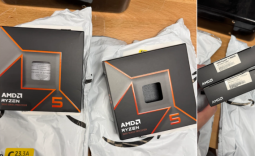 Redditor receives not one but TWO empty boxes of Ryzen 5 9600X from Amazon
 Xbox Series X25 Limited Edition Console is priced at $900, arrives November 2026
 Dave Bautista officially cast as Kratos in Amazon's 'God of War' TV Series, replaces Ryan Hurst
 Take-Two begins the hunt for GTA 6 leaker CyberLeek, subpoenas Microsoft and Discord
 PlayStation 6 handheld not expected to stay under $600, warns leaker
 AMD confirms the Radeon RX 9050 4GB will have a tiny 64-bit bus and just 16MB Infinity Cache
 Intel 'Nova-Lake-S' 28-core CPU with bLLC reportedly draws 296W at PL2
 Cooler Master MasterFan A120 Fan Review
 GIGABYTE MO27Q2A Gaming Monitor Review: 1440p, 280Hz, and QD-OLED is a winning combination
 Cooler Master V8 ACE 3DHP BLACK CPU Cooler Review
 ASUS ROG Strix XG129C Review: A $199 Gaming Monitor You Don't Play Games On
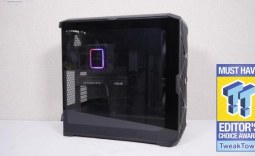 Cooler Master HAF II 500 Mid-Tower Chassis Review
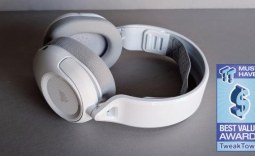 Corsair HS35 v3 Wireless Gaming Headset Review - An Affordable Winner
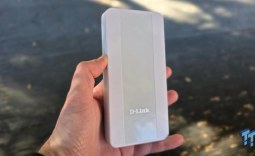 D-Link F518 5G Wi‑Fi 6 AX1800 Mobile Hotspot Review: All-Day Mobile Hotspot
 Bose Lifestyle Ultra Speaker Review - Impressively Detailed Room-Filling Sound
 MSI Z890 Gaming Plus WIFI6E Review - Z890 for under $200
 Mortal Kombat (1995) 4K Ultra HD Blu-ray Review
 Using Multiple Monitors? Change these Windows settings for a Better Experience
 Windows Sandbox is The Windows Security Feature Most People Never Use
 I ditched the Windows 11 context menu for this open-source tool, and here's why
 Windows 11 may be encrypting your drive already, and I checked where my recovery key went
 GIGABYTE's 40 Days of INFINITY celebrates 40 Years of Innovation with stunning GeForce RTX graphics cards and rewards
 I swapped File Explorer for this free file manager and finally got the layout I wanted
 How to tell if someone has been using your Windows PC without your permission
 6 Task Manager tips for troubleshooting Windows performance problems
 ASUS ROG's 20th Anniversary Line-up of Premium PC Gaming Gear has Arrived - Here's Everything You Need to Know
 Six File Explorer tips every Windows user should know