Learn about how TweakTown tests and reviews hardware. As an Amazon Associate, we earn from qualifying purchases. TweakTown may also earn commissions from other affiliate partners at no extra cost to you.
Stay Updated
Follow TweakTown for breaking tech news, reviews, and daily updates.


SK Hynix and Samsung race to build the memory powering NVIDIA and AMD's next AI monsters
The AI industry boom is undoubtedly unprecedented, and consumers are feeling the pinch of supply constraints on memory and storage prices. This problem is so widespread that it isn't just consumers who are impacted by higher prices; as new Xbox CEO Asha Sharma recently outlined in a letter, the price Xbox pays for storage and memory has increased by 4x since she took office.

With DRAM manufacturers now turning toward AI-specific memory, such as HBM production, we are beginning to hear rumblings of a race between leading DRAM manufacturers, SK Hynix and Samsung. Reports indicate that both companies are rushing to release the first HBM4E memory solutions, which will undoubtedly be gobbled up by the highest-bidding AI companies and deployed directly in data centers.
HBM4E memory will be a big part of the next generation of data centers, which powers the next generation of AI. The new generation of memory chips will be headed to leading products such as NVIDIA's Rubin Ultra, and AMD's Instinct MI500. Just these two chips, by themselves, are expected to drive millions in sales. As for specifications, it's reported the new HBM4E offering from SK Hynix will arrive in capacities of up to 48GB, and speeds of 16GBps. As for Samsung, the South Korean manufacturer showcased its latest generation, HBM5, on the showroom floor at Computex 2026.
GIGABYTE's 40th Anniversary GeForce RTX 5090 Infinity GPU priced at $5,300
GIGABYTE's new AORUS GeForce RTX 5090 INFINITY graphics cards, created in part to celebrate the company's 40th anniversary, not only feature a premium quad-slot design befitting of a flagship GPU, but a unique one as well. Even though it sports a double flow-through cooling design reminiscent of NVIDIA's own Founders Edition model, the look reminds us of a futuristic spaceship's twin engines and a retro stereo from the 1980s.

The AORUS GeForce RTX 5090 INFINITY's WINDFORCE Hyperburst cooling system includes two large Hawk fans alongside a hidden, smaller fan underneath a mesh panel. With double flow-through cooling, air is pushed through both sides of the reinforced backplate, with composite metal grease, superconducting heat pipes, and a direct-touch vapor chamber found underneath the hood.
It's as premium as it is stylish, and as an OC model it ships with a Boost Clock speed of 2730 MHz, which is notably higher than the 2407 MHz found on the Founders Edition model. Unfortunately, its debut comes amid the current memory and component crisis, which has seen GeForce RTX 5090 prices rise dramatically over the past year. And with that, a MicroCenter listing for the AORUS GeForce RTX 5090 INFINITY puts the price for this new flagship at $5,299.99 USD.
Epic Games pulls back the curtain on Unreal Engine 6, revealing exactly what everyone expected
Epic Games has recently wrapped up its State of Unreal 2026 livestream, where it pulled back the curtain on the upcoming Unreal Engine 6.

Unreal Engine 6 was first teased during a recent Rocket League Champion Series, and in that announcement, Epic Games stated that Rocket League would be the first title to adopt the new version of Unreal Engine, which is quite a considerable jump, as Rocket League was built on Unreal Engine 3. Epic explained that it plans to merge Unreal Engine 5 and the Fortnite Unreal Editor to create Unreal Engine 6, and that this update will include integrating popular AI models, such as Anthropic's Claude and Google's Gemini.
MSI's Maestro 500 Wireless blends gaming, lifestyle, and ANC, into a single headset
MSI's new MAESTRO 500 WIRELESS headset isn't built solely for gaming; in fact, it's more of a versatile lifestyle headset with a stylish design that you can take with you on-the-go. The foldable physical design has more in common with Sony or Bose lifestyle headphones than with previous MSI gaming headsets, and this extends to the inclusion of Active Noise Cancellation (ANC) with an optional Transparency mode for travel or listening in noisy environments, as well as a 6-microphone design for clear voice communications.

The MAESTRO 500 WIRELESS features 40mm drivers that MSI notes are tuned to deliver a balanced, lifelike sound across gaming, music, and even online meetings. Throw in an HD-like frequency response of up to 40 kHz, and we could be looking at MSI's best-sounding headset to date. And for PC gamers, the inclusion of Nahimic for Headset adds an additional layer of audio immersion over low-latency 2.4 GHz, with the MAESTRO 500 WIRELESS also supporting Bluetooth and 3.5mm wired for connecting to a wide range of devices.
One of the more impressive elements of the design is the 6-microphone system, which includes beamforming and Environmental Noise Cancellation (ENC) to isolate your voice and reduce background noise, ensuring clear comms in any environment. It's a design that includes a flip-to-mute microphone for voice, positioning the MAESTRO 500 WIRELESS as a lifestyle-like pair of headphones that's also serious about gaming and chat.
NVIDIA launches ACE Game Agent SDK Beta for in-game AI companions that run on RTX GPUs
As part of Unreal Fest 2026, NVIDIA has announced that its new NVIDIA ACE Game Agent SDK for creating and building in-game AI companions that run on GeForce RTX hardware is now available in Beta. This suite of tools includes Unreal Engine 5 plugins for the AI-powered Automatic Speech Recognition (ASR), Small Language Models (SLM), and Text-to-Speech (TTS) components of NVIDIA ACE.

Examples of the technology in action are already available, with KRAFTON recently launching its new PUBG Ally in-game AI teammate as part of a limited-time Beta to test and gauge feedback on a new Ally Duo Mode that will pair humans with AI. Another in-development example is Creative Assembly adding an AI advisor to Total War: PHARAOH.
Naturally, the NVIDIA ACE Game Agent SDK will allow any game developer to play around with in-game AI companions, with NVIDIA noting that it has been designed as a "lightweight, C/C++ agentic framework" for seamless integration thanks to the inclusion of a ready-to-use Qwen 3.5 4B model for decision-making and an ultra-lightweight Chatterbox Turbo 350M model for text-to-speech. As seen with the new PUBG Ally, ACE Game Agents can run on GPUs with only 8GB of VRAM, and cards like the GeForce RTX 3060. So yeah, you won't need a GeForce RTX 5080 to run them.
PUBG's new Ally Duo game mode pairs you with an AI teammate powered by NVIDIA ACE
PUBG: BATTLEGROUNDS helped define the Battle Royale genre, and the game remains one of the most-played multiplayer titles on Steam and other platforms. And this week, as part of the game's latest update, the game is introducing a new Ally Duo Mode that introduces a PUBG Ally or AI companion powered by NVIDIA ACE technology.

The PUBG Ally and Ally Duo Mode will be available in Beta through PUBG Arcade for the next two weeks, until June 30, via Steam. NVIDIA says this will allow KRAFTON to "collect invaluable real-world player feedback" and to help guide "the future of AI agents in games." Now, generative AI in PC gaming is controversial, but based on what we've seen in early hands-on demos of the AI-powered PUBG Ally, the idea of an AI-controlled in-game partner or helper is a potential game-changer in the right circumstances.
The good news is that the PUBG Ally, called Ella, is powered by optimized, lightweight models, so it will run on GeForce RTX GPUs with at least 8GB of VRAM, with the GeForce RTX 2080 Ti and GeForce RTX 3060 listed as the minimum specs. As for the recommended specs, KRAFTON lists the GeForce RTX 4070, which features 12GB of VRAM.
Nintendo finally fixed the Switch eShop after nearly a decade by replacing its sluggish web wrapper with a native app
Nearly a decade after launch, Nintendo has fixed the one thing Switch owners have been complaining about since 2017. Firmware update 22.5.0, released for the original Nintendo Switch, converts the eShop from a painfully slow web-based interface into a native app. This brings it in line with what Switch 2 users have had since the console launched last year.

For context, the original eShop was always so sluggish because it was running as a wrapped web app rather than a proper native application. This meant every scroll and page load was fighting against the overhead of a browser session. Switch 2 solved this at launch by building the eShop as a native app from the start. Nintendo has now done the same for the original hardware.
Users who tested the update described the eShop as "buttery smooth", with games showing up in batches as you scroll instead of slowly loading one at a time. Daniel Vuckovic on Bluesky posted a clip of the new experience in action, and the contrast with the old version is stark. It is not quite as fast as Switch 2's eShop, given the hardware difference, but it is a world apart from where it was.
AMD, Google, Tesla, and Groq turn to Samsung Foundry as TSMC runs out of capacity
TSMC's fully booked production capacity is no longer just an industry talking point, as the ripple effects are becoming increasingly difficult to ignore. According to a report from Nikkei Asia, a growing list of major chip customers, including AMD, Google, Nvidia-backed Groq, Tesla, and BYD, are in discussions with Samsung Foundry about manufacturing future chips as demand continues to outstrip TSMC's available capacity.

AMD is reportedly in talks with Samsung about manufacturing certain future CPUs starting in 2028. Google is discussing two separate Samsung engagements. One covers its next-generation Axion processors expected around 2028, while the other involves components tied to its 10th-generation Tensor Processing Unit, codenamed Icefish, which is being co-developed with MediaTek.
Meanwhile, Tesla has already confirmed that its next-generation AI6 chip will be produced at Samsung's Texas facility. BYD, the world's largest electric vehicle maker, is also in discussions with Samsung about manufacturing future autonomous driving chips. Groq, which develops language processing units and is backed by NVIDIA, is already producing chips at Samsung and may also use the foundry for its next-generation products.
Destiny 2's future still bleak despite huge 100K player counts on Steam
Destiny 2 may stay in retirement as the recent wave of players may not be enough to sway Bungie's/Sony's decision on sunsetting the online FPS.

Faced with financial pressures, Bungie is putting Destiny 2 into stasis. The studio simply doesn't have enough money to fund Marathon and Destiny 2 at the same time, and the studio's assets have been hit hard by a hefty $750 million impairment charge. This basically means that Bungie's games failed in a way that triggered accounting adjustments that impacted and lowered Bungie's net profit by creating another expense on its income statement.
The news sparked a campaign among hopeful gamers that Destiny 2, or the Destiny franchise, could be revived if enough players showed up. The game has had over 100K players on Steam for the past 9 days in a row, since the Monument of Triumph update released. Unfortunately, sources tell Forbes' Paul Tassi that this outpouring of player support hasn't affected the decision around Destiny 2.
AMD confirms Ryzen Threadripper TR6 'Mustang Peak' with Zen 6 cores, 2nm process, and PCIe 6.0 support
AMD has officially confirmed its next-generation Ryzen Threadripper family, codenamed "Mustang Peak." The upcoming lineup will move to a new TR6 platform, bringing Zen 6 cores built on TSMC's 2nm process and PCIe 6.0 support. The confirmation comes from AMD's own documentation, spotted by leaker IntaLatX64, which lists "TR6 Mustang Peak" as a Threadripper Pro CPU under the Family 1Ah Model A8h series.

AMD has not released specifics such as SKUs, core counts, clock speeds, cache sizes, TDPs, chipsets, or a release window. What the documentation does confirm is DDR5 memory support and PCIe Gen 6, the latter doubling per-lane bandwidth compared to the PCIe 5.0 lanes on the current TR5 platform.
The current Ryzen Threadripper 9000 series, codenamed Shimada Peak, is based on 3nm Zen 5 architecture and tops out at 96 cores and 192 threads with a 350W TDP and up to 128 PCIe 5.0 lanes. TR5 has served two generations now, covering both the Threadripper 7000 and 9000 families, making TR6 the first platform change since the 7000 series launched.
Sony has patented a PlayStation controller with buttons that change hardness during gameplay
Sony Interactive Entertainment has filed a patent for a PlayStation controller with buttons that physically change their hardness and resistance during gameplay. The application was filed with the World Intellectual Property Organization in November 2024 and published in May 2026, with the patent recently brought to light by the folks at Cheat Happens.

The DualSense controller introduced adaptive triggers and haptic motors that changed how controllers could respond to on-screen context. However, the face buttons and joysticks themselves still provide a fixed physical feel. This patent aims to change that by bringing adaptive feedback to the face buttons as well, using two main approaches.
The first uses a magneto-viscoelastic elastomer, a material embedded with magnetizable particles that can soften or harden in response to a surrounding magnetic field controlled by the game in real time. The second approach involves fluid-filled membranes that achieve a similar tactile effect. Both methods would allow the game to dynamically alter how much force is required to press a button depending on what is happening on screen.
Hackers are using Steam's Wallpaper Engine to distribute malware that can steal your logins
If you use Wallpaper Engine, now's a good time to pay attention. Kaspersky researchers have discovered that hackers are hiding malware inside wallpaper packages on the Steam Workshop, using them to steal Steam accounts and install additional malicious software on victims' PCs. The bad actors are exploiting the popularity of Steam's Wallpaper Engine to funnel users to the Workshop, from which they distribute malware.

Here's why this works so well: unlike a regular JPEG or PNG, Wallpaper Engine's "application wallpapers" are actual Windows executables that run on your system like any other program. That makes them a pretty convenient hiding spot for bad actors. The Wallpaper Engine also houses wallpapers in other formats, but it is these "application wallpapers' that are the primary source of the attack.
Once you launch one of these infected wallpapers, it drops a backdoor onto your system, part of the DarkKomet malware family, and quietly installs a modified system library designed to hunt down your Steam credentials and hijack your active session. After taking over your Steam account, the attackers use it to upload additional infected wallpapers, perpetuating the cycle by compromising more PCs.
Report: Bethesda layoffs may be happening as Xbox Game Studios breaks up
Microsoft is currently breaking up its Xbox Game Studios label to reduce costs, and the layoffs are also hitting other divisions like ZeniMax.

New reports indicate that layoffs have begun at Bethesda's parent ZeniMax. People behind the scenes have told Duke Nukem creator George Broussard that layoffs are currently happening at ZeniMax, potentially affecting all groups under the limited-integration company--ZeniMax Online Studios, Bethesda Game Studios, id Software, Arkane Lyon, and Machine Games.
"Getting word that layoffs at Zenimax has begun. Heard rumblings recently that the cuts may be much deeper than you expect," Broussard said on Twitter. The 3D Realms co-founder goes on to say that only developers working on Fallout and The Elder Scrolls may be 'safe' from the layoffs.
Intel's 18A-P process node is now in risk production, will power next-gen Xeon 'Diamond Rapids' processors
Intel used the 2026 VLSI Symposium in Honolulu this week to confirm that its 18A-P process node has officially entered risk production, hitting the timeline it promised customers and partners last year. That is a meaningful checkpoint. Risk production means the node is transitioning from R&D to early-stage manufacturing, with data indicating it will meet customer requirements before full qualification.

The numbers Intel put on the board are solid for what is a node refresh rather than a full generational leap. It looks like 18A-P delivers 9% higher performance at the same power draw compared to standard 18A, or 18% lower power consumption at equivalent performance. Thermal resistance improves by 20-40%, and via resistance drops by 10-30%.
In terms of features, Intel also unveiled Power Boost, a new dual-contact, low-resistance transistor option that increases drive current and gives designers more frequency headroom. As we previously covered, these figures were already circulating before VLSI, and Intel has now officially confirmed them all.
MSI adds HUDIMM DDR5 memory support to its 600, 700 and 800 series Intel motherboards
MSI joins GIGABYTE, ASUS, and ASRock as the fourth manufacturer to add HUDIMM support to its DDR5 Intel motherboard lineup. MSI announced in a blog post that it has rolled out motherboard updates for its entire Intel 600, 700, and 800 series motherboard lineups, adding support for the budget-friendly memory form factor. If you own a compatible board, you can go to the product page for your MSI motherboard to download the appropriate BIOS update.

HUDIMM is a new memory form factor that was made in collaboration with ASRock, Intel and TeamGroup to counter the skyrocketing prices of DRAM thanks to the AI boom. These budget-focused modules are cut-down versions of traditional DDR5 DIMMs, featuring just a single sub-channel, cutting memory bandwidth in half compared to regular DDR5 DIMMs. This bandwidth reduction is so significant that DDR4 memory can outperform HUDIMM DDR5 - depending on memory speed. Despite this, synthetic testing has shown that gaming performance could be largely unaffected by HUDIMM's bandwidth-limiting single-channel configuration, especially when two memory sticks are present and running in a dual-channel configuration.
Motherboards supporting HUDIMM memory can mix and match the modules with traditional DDR5 DIMMs. This is beneficial in specific cases where buying mixed DDR5 memory setups consisting of HUDIMMs and traditional DIMMs is a more cost-effective and/or performant solution compared to buying just DDR5 DIMMs. For example, pairing a single 16GB DIMM with an 8GB HUDIMM will yield better performance than buying a single 24GB DIMM. Mixing and matching is also highly beneficial for existing setups where users want to upgrade their DDR5 setups with HUDIMM memory.
Xbox used Ninja Theory's 'Senua' unveil at Xbox Games Showcase to market Ninja Theory, not the game
After showcasing Senua, Ninja Theory's upcoming new game in the Hellblade franchise, Xbox announced it was closing down Ninja Theory just eight days after Senua was unveiled, marking a world record for the fastest turnaround time for a publisher unveiling an AAA title and then announcing the closure of the studio behind that title.

However, new details have emerged that have shed light on the situation, with Game File reporting that the reveal of Senua at The Xbox Games Showcase was intentional,, as Xbox used it as an opportunity to advertise Ninja Theory in an effort to attract a buyer.
Additionally, the report states that the decision to close Ninja Theory's doors was made before the announcement of Senua on June 7. The advertising opportunity for the studio has apparently been failing, as reports continue to surface stating Ninja Theory isn't engaging in negotiations and is preparing for closure. These same reports state that the other two studios Xbox announced were closing, Compulsion and Double Fine, are actively negotiating with Microsoft's gaming arm.
This Nissan Skyline was turned into a gaming PC and racing rig for Forza Horizon 6
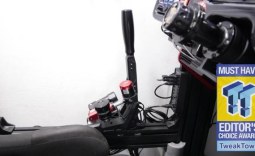
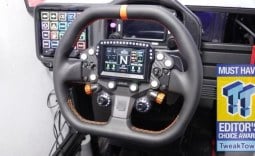
Okay, as far as custom PCs and mods go, this one from creator modifiedgg is a little out there because it puts a gaming PC and full racing rig inside an actual 1998 Nissan Skyline R34 GTT. Yes, this classic Japanese automobile is renowned for its stylish design and performance and is featured in the latest open-world racing hit, Forza Horizon 6, which is set in Japan.

So yeah, on paper, an ambitious mod and build like this, highlighted by NVIDIA as part of its GeForce Garage build series, makes sense as a Forza Horizon 6 custom PC, but it's still incredibly over-the-top. For example, the actual PC hardware is mounted under the hood in a chassis designed to resemble the 1998 Nissan Skyline R34 GTT engine it replaces.
And that's not all, as you've got premium Moza Racing sim peripherals mounted inside the Skyline, replacing the existing steering wheel and so forth, with multiple AOC monitors, including a super ultrawide display mounted in place of the front windscreen and left and right-side passenger windows.
NVIDIA's RTX Remix Skills lets modders without coding skills use AI agents to help remaster classic PC games
NVIDIA's RTX Remix continues to evolve and expand as more modders use it to breathe new life into classic PC games thanks to its ability to remake and rebuild games with modern path-traced lighting, remastered assets, and more. This week NVIDIA is releasing RTX Remix 1.5, which is available now via GitHub or through the NVIDIA App, and it brings several notable updates.

The first of which, and one that the RTX Remix community has heavily requested, is called Smooth Normals. Basically, this takes the blocky, polygonal look of classic PC games and lets modders make environments and objects look less blocky and more modern with path tracing.
The second notable update is the arrival of RTX IO support to speed up loading times, stream high-quality assets, and reduce overall mod install sizes. RTX IO leverages your GeForce RTX GPU for decompression, freeing up the CPU for other tasks, and it works with Microsoft's DirectStorage API. NVIDIA notes that notable RTX Remix projects on Steam, like Portal with RTX, Portal: Prelude RTX, and the Half-Life 2 RTX demo, all feature RTX IO.
Lenovo's new Tab Plus Gen 2 tablet has a built-in Bluetooth speaker
Although tablets have evolved over time with more advanced processors, improved displays, and lighter form factors, the overall functionality hasn't really changed. And really, you could boil the options down to two categories: Apple's iPad devices running iOS and everything else running Android. However, Lenovo's new surprisingly affordable Tab Plus Gen 2 tablet is different from anything else we've seen because it's a tablet and portable Bluetooth speaker in one.

Partnering with the audio experts at JBL, the Tab Plus Gen 2 includes an integrated JBL 9-unit Pro speaker system with Dolby Atmos support, a nine-speaker system that's essentially a portable Bluetooth speaker mounted to the back of the tablet. And the Lenovo Tab Plus Gen 2 features a dedicated Bluetooth speaker mode so it can function as a standalone speaker in addition to being a 12.1-inch tablet.
And to support the dual nature of the device and using the speaker for watching movies, streaming shows, or listening to music, the Tab Plus Gen 2 features an integrated 360-degree kickstand that can support multiple portrait and landscape orientations. And you get a custom carrying sleeve for portability and transport.
Continue reading: Lenovo's new Tab Plus Gen 2 tablet has a built-in Bluetooth speaker (full post)
Microsoft launches new Snapdragon X2-powered Surface laptops, teases RTX Spark model
Microsoft has announced the availability of its new Surface Pro and Surface Laptop devices powered by Qualcomm's Snapdragon X2 processors. These Windows on Arm devices arrive as the Windows 11 x86 alternative continues to expand, with Microsoft also teasing that its premium Surface Laptop Ultra, powered by NVIDIA's new RTX Spark processor, is on track to release sometime "later this year."

Microsoft notes that the Surface Laptop Ultra is its "most powerful Surface Laptop ever, built for developers and creative professionals pushing their work further." In addition, Microsoft will release a Surface RTX Spark Dev Box, marking Surface's entry into the Mini PC realm with a powerful Windows on Arm box featuring the new RTX Spark processor.
As for the new Snapdragon X2 devices, they are definitely more affordable options (early word from all RTX Spark partners hints that those devices are "premium," which means expensive), with the Surface Pro 13-inch being a 2-in-1 tablet-and-laptop hybrid. Starting at $1,499 USD, Microsoft is touting a 53% improvement in graphics performance compared to first-gen Snapdragon X devices, up to 15.5 hours of battery life, and impressive features such as an OLED display and a 1440p Quad HD camera.