












One of the biggest stories for the consumer-facing PC market, that is, the non-data center and AI-only space, was Micron announcing that it would no longer produce consumer SSD and RAM products under its long-standing Crucial brand. It was a surprising move, but on the plus side, it looks like KIOXIA, the inventors of flash memory, is stepping in to fill that void with a new range of SSD offerings built for OEMs and the consumer PC market.

In addition to the affordable EG7 and BG8 Series of SSDs that cover PCIe Gen4 and Gen5 interfaces and leverage the company's groundbreaking BiCS FLASH 3D flash memory with its CBA (CMOS directly Bonded to Array) technology, KIOXIA is also introducing the new XG10 Series of SSDs for PC OEMs, targeting high-performance users.
With its PCIe 5.0 interface delivering sequential read speeds of up to 14,000 MB/s and sequential write speeds of up to 12,000 MB/s, the XG10 Series is built for content creation workloads such as editing, immersive next-gen cinematic gaming, and local AI training and inference. Compared to the previous generation's XG8 Series, that's double the performance while also delivering improvements of 122% in random read and 158% in random write.
The new KIOXIA XG10 Series also features Self-Encrypting Drive (SED) support for robust data protection. Shipping in the popular M.2 Type 2280 form factor, KIOXIA XG10 Series SSDs will be available in 512GB, 1TB, 2TB, and 4TB capacities when they begin shipping in the second quarter of 2026. The KIOXIA XG10 Series will also be on display at the upcoming Dell Technologies World event, taking place from May 18 to 21 in Las Vegas.
"PCIe 5.0 represents a major step forward for client storage, particularly in the performance segment," said Maulik Sompura, senior staff director, product management, SSD business unit at KIOXIA America, Inc. "With the KIOXIA XG10 Series, we are delivering significantly enhanced performance that improves the overall client storage experience for content creators, gamers, and professionals working with increasingly demanding workloads."
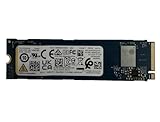


 KIOXIA introduces new mainstream PCIe Gen5 BG8 Series SSDs for PC OEMs
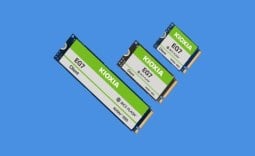 KIOXIA fires back at rising SSD costs with new EG7 Series for PC OEMs
 KIOXIA's next-gen BG7 Series SSDs to fill the void left by Crucial for PC OEMs
 KIOXIA says that it has already 'sold out' of NAND flash and SSDs for 2026
 KIOXIA is showcasing its flash memory solutions for AI and more at CES 2025
 Kingdom Hearts 4 reveals Pixar's Coco-inspired Land of the Dead world and late 2027 release window
 Budget GPU shortages to get even worse in second half of 2026, warns PC Partner
 Intel plans an entry-level Panther Lake chip with 4 Xe3 cores for handhelds
 AMD denied any review samples for the Radeon RX 9050 because it's embarrassing
 Killing physical discs will make digital games cheaper, according to a former Square Enix exec
 Crucial refuses to send back a user's defective RAM, also denies warranty replacement
 Intel Razor Lake -AX will reportedly use Nova Lake CPU cores, and won't feature overclocking support
 Linux support is coming to the reworked Epic Games Launcher, new app will run on Tauri instead of Unreal Engine
 Steam Frame launch is 'just around the corner,' VR game developer confirms
 Pokemon Pokopia becomes the Switch 2's second-best-selling exclusive
 Corsair HS35 v3 Wireless Gaming Headset Review - An Affordable Winner
 D-Link F518 5G Wi‑Fi 6 AX1800 Mobile Hotspot Review: All-Day Mobile Hotspot
 Bose Lifestyle Ultra Speaker Review - Impressively Detailed Room-Filling Sound
 MSI Z890 Gaming Plus WIFI6E Review - Z890 for under $200
 Mortal Kombat (1995) 4K Ultra HD Blu-ray Review
 CPS PCCOOLER YS1200 ATX 3.1 80 PLUS Gold PSU Review
 ASRock X870E Taichi White Review: a premium AM5 motherboard with 10G LAN and WiFi 7
 Asetek Initium Pedal Modular Upgrades Review
 Thinkware U3000 Pro Review - Smart Dashcam with Wi-Fi quirks
 Montech TG3 Mid-Tower Chassis Review
 Windows Sandbox is The Windows Security Feature Most People Never Use
 I ditched the Windows 11 context menu for this open-source tool, and here's why
 Windows 11 may be encrypting your drive already, and I checked where my recovery key went
 GIGABYTE's 40 Days of INFINITY celebrates 40 Years of Innovation with stunning GeForce RTX graphics cards and rewards
 I swapped File Explorer for this free file manager and finally got the layout I wanted
 How to tell if someone has been using your Windows PC without your permission
 6 Task Manager tips for troubleshooting Windows performance problems
 ASUS ROG's 20th Anniversary Line-up of Premium PC Gaming Gear has Arrived - Here's Everything You Need to Know
 Six File Explorer tips every Windows user should know
 I switched my PC to encrypted DNS in Windows 11, and browsing felt more private