







Science, Space, & Robotics - Page 28
Explore the latest Science, Space, Health, and Robotics news from TweakTown. Coverage includes space launches, medical tech, discoveries, and rockets. - Page 28
Stay Updated
Follow TweakTown for breaking tech news, reviews, and daily updates.


As an Amazon Associate, we earn from qualifying purchases. TweakTown may also earn commissions from other affiliate partners at no extra cost to you.
Elon Musk's SpaceX may stop humans going to the moon in 2025
The 50-year-long journey of returning humans back to the moon for the first time since 1972 is being undertaken by NASA, and according to a new report from the U.S. Government Accountability Office, the space agency's target date for the launch of 2025 is unlikely to be hit.

The new report from the U.S. Government Accountability Office (GAO) has thrown a wet blanket on NASA's plans for humans returning to the surface of the moon in 2025, as the report has pointed out "multiple challenges" with the space agency's schedule, particularly with the development of the Human Landing System (HLS).
The report released on November 30 outlines development problems with the HLS, which is a modified version of SpaceX's Starship launch vehicle, transportation to the surface of the moon, and design problems such as including larger oxygen tanks within spacesuits used by astronauts exploring the surface of the moon.
Continue reading: Elon Musk's SpaceX may stop humans going to the moon in 2025 (full post)
NASA telescope spots two objects with masses 120 trillion times the mass of the Sun
NASA has taken to its website to reveal a new image snapped by the iconic Hubble Space Telescope. The image is of two objects located in deep space that have masses equivalent to around 30 trillion and 120 trillion times the mass of the Sun.

The Hubble Space Telescope has honed its powerful instrument on the galaxy cluster known as Abell 3192, which is located in the constellation Eridanus. Originally, Abell 3192 was documented in 1989 in an update of the catalog of galaxy clusters that was first published in 1958. In that 1989 update, astronomers believed Abell 3192 was a single cluster of galaxies that was located at a specific distance. However, follow-up observations revealed something surprising to astronomers - the galaxy cluster's mass appeared to be in two distinct points and not one.
This discovery led astronomers to update their description of Abell 3192 to include two independent galaxy clusters, one located in the foreground that's located 2.3 billion light-years from Earth, and the other background galaxy located 5.4 billion light years from our planet. NASA writes on its website that researchers estimate that the masses of these galaxy clusters would be anywhere between 30 trillion and 120 trillion times the mass of the Sun.
Officials sound the alarm on powerful 'cannibal' solar burst that will hit Earth soon
Officials from the National Oceanic and Atmospheric Administration (NOAA) have warned the public of a solar burst that is expected to hit Earth on November 30.

The Sun has been quite active, with officials explaining that over the past few days, it has been having outbursts of super-hot plasma, officially known as Coronal Magnetic Ejections (CME). These CMEs are released into the surrounding space, and sometimes Earth gets smacked. These charged solar particles from the Sun collide with Earth's magnetic field, and the majority remain in the upper atmosphere of the planet, protecting life on the surface.
Additionally, Earth's magnetic field funnels the charged particles to its poles, and the interaction between the charged particles and the molecules in the upper atmosphere produces a phenomenon known as auroras or the Northern/Southern Lights. The collision of the CME into Earth's magnetic field creates what is known as a geomagnetic storm, and depending on the severity of the CME, the storm can be global, pushing the auroras closer to the equator.
Here's where you can watch the Cybertruck Delivery Event with Elon Musk
After delays through production and manufacturing issues that lasted many years, the time has finally come, as Tesla is about to deliver the very first Cybertruck.

The highly-anticipated moment has been simply titled the "Cybertruck Delivery Event" and will be held at the Texas Gigafactory in Austin, Texas. For those that can't make it there in person, the entire event is going to be live-streamed, with the video being available on X at noon P.T. (3 p.m. ET), on Nov. 30. The details surrounding the event are somewhat vague, but given by the title the event will include Tesla delivering its first Cybertruck's to customers that pre-ordered the vehicle back in 2019 when it was first announced.
It can be expected that Tesla won't be able to deliver many Cybertruck's to customers across the day, as company CEO Elon Musk previously explained that Tesla is currently in the process of ramping up production of the Cybertruck to fulfill its pre-orders. Musk said that it would take Tesla five years of manufacturing to complete every single Cybertruck order. At its current rate of manufacturing, Tesla is making about 10 Cybertrucks a day, with expectations of reaching 250,000 a year by 2025.
NASA announces its iconic space telescope has stopped working
NASA has taken to its blog and social channels to announce that the Hubble Space Telescope has stopped working following the detection of a gyroscope

The space agency explained via its blogpost that the Hubble Space Telescope entered safe mode on November 23 due to an "ongoing gyroscope (gyro) issue", and that the space telescope's instruments remain in good health. NASA further explained that Hubble entered into safe mode automatically when one of its three gyroscopes provided faulty readings. For those that don't know, Hubble's gyro's measure the turn rates of telescope, which is a component of the telescope knowing which direction it's pointing in.
Furthermore, NASA revealed that Hubble first entered into safe mode on November 19, but was promptly recovered by ground teams that were able to get Hubble back to an appropriate level for scientific operations. However, the following day, the gyro problem reared its head again, resulting in scientific operations being suspended again on November 21, which was followed by another recovery and then another failure on November 23.
Continue reading: NASA announces its iconic space telescope has stopped working (full post)
Scientists discover six alien worlds that are an exceptional hidden jewel in the Milky Way
A team of scientists has discovered six exoplanets orbiting a star called HD 110076, and what's interesting about these exoplanets is that they are in a rare phenomenon known as a chain of resonance.

So, what is a chain of resonance? This phenomenon occurs when two bodies orbiting a third body interact with each other gravitationally, and their orbital periods line up. Notably, these orbital periods don't have to line up 1:1. An example of this phenomenon is Pluto and Neptune - Pluto completes 2 orbits around the Sun for every 3 of Neptune's, creating a resonance of 2:3. Another example is some of Jupiter's moons such as Ganymede, Europa, and Io. For every 1 of Ganymede's orbits, Europa completes 2 orbits and Io 4 orbits, creating a 1:2:4 chain.
Using telescope's, the researchers discovered six exoplanets that vary in size from 1.94 to 2.85 times the size of Earth. As for their orbital periods; 9.11 days, 13.67 days, 20.52 days, 30.79 days, 41.06 days, and 54.77 days (from the innermost exoplanet to the outermost). Their chain of resonance is as follows: 3:2, 3:2, 3:2, 4:3, and 4:3. This discovery marks just the sixth system known to date with six exoplanets in a chain of resonance, and due to the chain of resonance still being untouched, it represents a region of space that has hardly been influenced by outside forces such as asteroid impacts and planetary migration.
NASA technician reveals he crashed a Mars rover two weeks before launch
Former NASA technician Chris Lewicki has revealed that he accidentally crashed the Spirit Mars rover two weeks before it was meant to launch.

The former NASA technician took to his website to reveal the behind-the-scenes story that took place in February 2003 at NASA's Jet Propulsion Laboratory, where it was like any other day at work. However, this day, Lewicki was testing the Rock Abrasion Tool (RAT), a tool designed to cut into Martian rock and reveal just beneath its surface. To verify the integrity of the motors powering the RAT, Lewicki sent an electric charge to the components and checked the chart reading. A smooth decreasing line on the chart indicates a functioning motor, while spikes indicate problems.
Lewicki's chart during this test was not "like anything we had seen before. It did not even look like a broken motor. It was decidedly - something else." Here's where it went wrong.
NASA's Webb hits milestone with a significant discovery in an exoplanet's atmosphere
The James Webb Space Telescope (JWST) has pointed its instruments at the exoplanet named WASP-80 b, leading to the first time Webb has discovered methane in the atmosphere of an exoplanet.

The discovery can be traced back to recently published findings in the scientific journal Nature, and also NASA's website where it explains that while methane has been detected in abundance within our solar system (Jupiter, Saturn, Uranus and Neptune), it hasn't been discovered in the atmosphere of transiting exoplanets by space-based spectroscopy.
Webb honed its instruments on the exoplanet WASP-80 b, which researchers describe as a "warm Jupiter" as its similar in size and mass to the planet, but is approximately 1,025 Fahrenheit. WASP-80 b is located 163 light-years away from Earth within the constellation Aquila, and according to the researchers behind the study there is clear evidence for absorption from water and methane within the atmosphere of WASP-80 b.
NASA announces it discovered 300 objects shooting gamma-rays into deep space
NASA has taken to its YouTube channel to announce the discovery of 300 additional pulsars that are shooting out the most powerful form of known energy in the universe.

Pulsars are neutron stars that are spinning, and neutron stars are the leftover remains of a star that has gone supernova, the exhaustion of all its fuel, and its end-of-life stage. The corpses of a once bright star are neutron stars, and approximately 10% of all pulsars shoot gamma rays from their poles, making their discovery prominent. So, why do pulsars shoot the most powerful form of energy from their poles?
Pulsars, like neutron stars, are extremely dense, with only a teaspoon of a neutron star weighing about 4 billion tons, or as much as 10,000 Empire State Buildings. This density, combined with its extremely strong magnetic field, creates funnels at the pulsar's poles. These funnels accelerate particles to incredible speeds, creating two beams of light from their poles. Since the poles of the magnetic field aren't aligned with its axis of spin, the beams of light are shot into random directions in space.
World's most powerful space telescope photographs a newborn star within a cosmic crib
NASA's James Webb Space Telescope (JWST) has pointed its extremely powerful instruments at a region of space that contains newborn stars.

Astronomers have captured an image of a Herbig-Haro object and released it as one of Webb's latest images, explaining the significance of such a photograph and how it plays into the evolution of stars. NASA's JWST has pointed its Near-InfraRed Camera (NIRCam) instrument at HH 797, a luminous cloud of gas and dust that resides approximately 1,000 light years from Earth. HH 797 is the long strip of gaseous material found taking up the majority of the bottom half of the above image.
Joining HH 797 is the young open star cluster called IC 343, located on the right-hand side of the image. So, why is this image so special? Newborn stars, more specifically named protostars, spew out jets of high-speed stellar wind that collide with nearby dust and gas. This collision produces the interaction we can see in the above image. Previously, astronomers believed that the string of gas seen at the bottom of the image was caused by just one newborn star, but Webb's observations have revealed the presence of two newborn stars.
Scientists discover element in Apollo lunar sample that may revolutionize living on the moon
A team of researchers analyzing lunar samples acquired during the Apollo missions has discovered a key ingredient that may lead to an altering of the general understanding of the Moon's composition.

The research comes from the US Naval Research Laboratory, which NASA gave lunar samples to for an updated analysis of their composition. According to the study that was published in the scientific journal Nature, the team discovered traces of hydrogen within lunar soil sample 79221. Why is this important? Firstly, researchers know the Moon has a large presence of ice at its poles, and this ice can be broken down into its two components, hydrogen and oxygen.
These two molecules can be used by astronauts living on the lunar surface for oxygen, and also for rocket fuel to conduct trips back to Earth, or beyond the Moon. Essentially, discovering water ice on the surface of the Moon is discovering resources that, if utilized correctly and efficiently, will enable astronauts to have a sustained flow of transportation and oxygen while exploring the surface of the Moon.
NASA telescope captures the violent past of an object millions of light years away
NASA has honed the instruments aboard the Hubble Space Telescope at a distant cosmic object that had an extremely violent past.

Using data acquired by its Advanced Camera for Survey's, NASA and the European Space Agency's Hubble Space Telescope produced the above image of the spiral galaxy known as NGC 941. While the spiral galaxy is certainly gorgeous to view, astronomers are more interested in an event that occurred years earlier - the supernova called SN 2005ad.
This supernova was discovered by amateur astronomer Kōichi Itagaki, and after follow-up observations by professional astronomers, it was verified as a hydrogen-rich supernova called a type II supernovae. So, what makes this supernova so special? SN 2005ad represents the importance of amateur astronomers and the role they play in discovering astronomical events. Online systems have been set up for amateur astronomers to report identifying events, which are then followed up on by professional astronomers and cataloged.
NASA's Webb telescope shares jaw-dropping photo of the heart of our own galaxy
NASA has revealed never-before-seen features within one of the biggest star-forming regions in the galaxy, Sagittarius C, which is located approximately 300 light-years from the Milky Way's central supermassive black hole, Sagittarius A*.

The space agency has taken to its website to explain that thanks to Webb's highly sensitive infrared instruments, the observatory is able to cut through dense regions of dust and gas, revealing never-before-seen details that lead researchers to understand more about the evolution of the universe. Additionally, Webb being able to see directly into the heart of our galaxy enables astronomers to test their theories of star evolution in the most intense star-forming regions in the galaxy.
NASA writes in its blog and on its social media channels that the above image contains an estimated 500,000 stars, and among these stars are clusters of proto-stars, or stars that are still in the process of gaining mass. Sagittarius C is located approximately 25,000 light-years from Earth, and NASA has highlighted specific regions of the image that astronomers have identified.
Secret payload on Chinese rocket caused a weird double crater on the moon
It was a few weeks ago when a group of researchers published a paper claiming they had discovered the origin of the mysterious rocket that crashed into the surface of the moon.

The researchers reported that the strange double crater discovered on the surface of the moon lined up with the trajectory of this rogue rocket. Additionally, the researchers traced the rocket's trajectory back to China, specifically the Long March 3C rocket body that was discarded from China's 2014 Chang'e 5-T1 mission.
Reports indicate that an undisclosed additional payload aboard the rocket is what caused the strange double crater that one aerospace engineer said, "This is the first time we see a double crater," per Tanner Campbell from the University of Arizona. Campbell further explained that to get two craters roughly the same size, you need two "roughly equal masses that are apart from each other".
NASA has fired a laser at an object 10 million miles away in deep space
NASA is revolutionizing how spacecraft communicate with a new experiment officially called Deep Space Optical Communications (DSOC).

According to a NASA blog post found on the NASA JPL website, DSOC has achieved "first light" by successfully sending data via laser to and from a metallic asteroid in deep space. The space agency reports that the milestone in deep space communications was achieved on November 14 when Psyche's flight laser transmitter, a next-gen device capable of sending/receiving near-infrared signals, locked onto a powerful uplink laser beacon transmitted from the Optical Communications Telescope Laboratory near Wrightwood, California.
Once the uplink was established, the transceiver was able to focus its downlink laser back at Caltech's Palomar Observatory in San Diego County, California. The new communications technique enables higher-data-rate communications between ground-based systems and spacecrafts, which will be essential for humanity's next big leap; colonizing the surface of the moon and Mars.
SpaceX shares the best photos and videos of Starship's latest launch
Over the weekend, SpaceX conducted its second orbital launch attempt with the world's largest and most powerful rocket, Starship.

The launch took place on Friday last week and was an overall success, with SpaceX inching closer to being the company that can provide a viable and reusable means of transportation to the lunar surface and Mars. Starship is the launch vehicle to do that, and while both orbital launch attempts ended in an explosion, much knowledge was gained, and milestones were reached.
The main objective for the second orbital launch attempt was to successfully achieve hot staging, or the part of the launch where the booster separates from the main ship. Below, you will find some video footage of SpaceX hitting this milestone with hot staging successfully completed. SpaceX CEO Elon Musk visited the Starship launchpad and reported that it was in "great condition" and won't require any refurbishment, unlike the first orbital launch attempt.
Continue reading: SpaceX shares the best photos and videos of Starship's latest launch (full post)
First black hole ever photographed appears to have galactic 'lightsaber' jets
Black holes are almost impossible to observe through telescopes as the massive cosmic monsters have such a strong gravitational pull that light isn't even able to escape them, making them blobs of cosmic darkness that is slowly but surely consuming everything around them.

It was in 2021 that humanity was able to capture the very first photograph of a black hole, specifically the supermassive black hole known as M87. The Event Horizon Telescope (EHT) analyzed the cosmic monster that is located 55 million light years from Earth, and the EHT data was combined with other radio telescopes to discover that M87 was actually spinning.
Researchers have now looked at the M87 image again and found that the black hole's magnetic field can sometimes be strong enough to stop the black hole from consuming matter. Further analysis led researchers to discover that the magnetic field of the black hole could also be responsible for slowing down the rotation of the black hole, similar to how a spinning top eventually begins to wobble after being spun.
AOC launches 27-inch 4K IPS MiniLED display with a 160Hz refresh rate and 1ms response time
AOC has launched its newest gaming monitor, adding another eye-catching display to its stack of offerings. Introducing the U27G3XM, a 4K 160Hz QD-MiniLED gaming monitor that's priced at $480.

AOC is no stranger to the gaming monitor market and has made its name a staple for making affordable low to mid-range displays that can be both used strictly for gaming, as well as work activities. Earlier this month AOC announced it was launching U27G3XM in Chinese markets for a price of 3499 yuan, or approximately $480 USD. The U27G3XM is a 27-inch display with a 3840 x 2160 resolution, smooth 160Hz refresh rate, a peak brightness of 1200 nits thanks to its MiniLED technology which ushers in 2304 precise LED light sources.
The U27G3XM also features HDR1000 certification, 10-Bit color, 1.07 billion colors and a 98% DCI-P3 color gamut. Moving onto connectivity, the U27G3XM comes with a 3.5mm audio output, two HDMI 2.1 ports, one DisplayPort 1.4, one USB upstream port, and two USB 3.2 Gen 1 ports. Furthermore, the U27G3XM comes with Adaptive Sync technology and a 1ms GTG response time. If you are interested in reading more about the U27G3XM, check out this link here.
ALMA telescope shares significant milestone with its highest resolution image ever
A ground-based telescope in Chile has shared its highest-resolution image ever, showcasing the final stages of star evolution within our galaxy 1,350 light-years from Earth.

The telescope is officially called the Atacama Large Millimeter/submillimeter Array (ALMA), and is the largest millimeter-wave telescope in the world. Recently, the ground-based telescope pushed its capabilities by capturing its highest-resolution image to date, with researchers pointing its sensitive instruments at a star called R Leporis. To push ALMA to new levels, researchers devised a new calibration technique called band-to-band, enabling astronomers to probe objects with a level of precision that was once beyond their reach.
The new image was released on November 15 and was captured using ALMA's highest frequency Band 10 receiver. This array configuration spans some 10 miles, and allows the telescope to see objects at an angular resolution of 5 milli-arcseconds, or the equivalent of seeing a 33-foot-long bus on the surface of the moon from Earth.
Video of Elon Musk's SpaceX Starship exploding during second orbital launch goes viral
On Friday, the world's largest and most powerful rocket, Starship, took off from the surface of Earth in its second orbital launch attempt.

The historic launch marks the second time SpaceX's Starship has attempted to reach orbit, and while the launch did end with the Starship vehicle exploding, it was deemed a success as many mission objectives were reached. Starship is the world's largest and most powerful rocket, and during its development phase, there will be catastrophic failures. With each failure, more is learned about how to fly such a massive rocket (394 ft fully stacked), with the ultimate goal being able to send Starship to orbit and safely back down to the surface of Earth reliably - much like Falcon 9 and Falcon Heavy.
The first orbital launch attempt took place on April 20, 2023, and Starship was unable to complete hot-staging, or the part of the mission where the first stage, or booster (called Super Heavy), separates from the second stage, Starship. That was the main objective of the second orbital launch attempt, and SpaceX was able to achieve a safe separation, continuing the mission for many minutes until a Rapid Unscheduled Disassembly (RUD) was initiated.
 Victim of first autonomous agent cyberattack explains what happened and why
 Valve promises Steam Machine reservation holders will get their chance to buy before 2027
 KIOXIA's UFS 5.0 embedded flash memory opens the door to powerful, compact, on-device AI
 KIOXIA's next-gen NX1 Series SSDs for AI deliver close to 40% more performance with support for direct liquid cooling
 NVIDIA is giving away 3-Month Discord Nitro subscriptions to all GeForce gamers
 AMD Software Adrenalin 26.7.1 WHQL driver adds support for a brand-new RDNA 4 GPU
 Xbox Helix's biggest feature may be what hurts the Xbox console the most
 ASRock, PowerColor, and SAPPHIRE launch new entry-level Radeon RX 9050 GPUs
 AMD launches new entry-level Radeon RX 9050 8GB GPU for $279
 Pope's official prayer app exposed data of more than 700,000 users
 Logitech G316 X 98 Wired Gaming Keyboard Review - Retro-Inspired Board that Falls a Little Short
 Biwin M560 2TB SSD Review - Best Overall Retail-Ready DRAMless SSD
 Logitech G512 X 98 Analog Mechanical Gaming Keyboard Review - An Innovative Two-in-One
 Thrustmaster T.Flight HOTAS 5 MSFS Edition Review
 SteelSeries Arctis Nova Pro Omni Wireless Headset Review - One Headset to Rule Them All
 SteelSeries Arctis Nova 7 Wireless Gen 2 Headset Review - New and Improved, But Is It Enough?
 AMD Ryzen 7 7700X3D Review - Days of Future Past
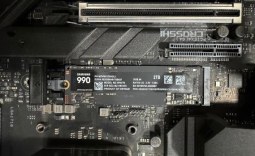 Samsung 990 2TB SSD Review - Ninth Gen QLC at PCIe Gen4 Speeds
 ASUS ExpertBook Ultra (Panther Lake) 14" Business Laptop Review
 ASUS ROG Raikiri II Xbox Wireless Controller Review - Ready to Take Control
 Printer Not Working in Windows? How to fix detection, print queues and drivers
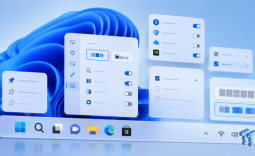 The Ultimate Guide to Personalizing Your Windows 11 Taskbar
 How to Turn Your Windows Laptop Into a Second Monitor with Miracast and Wireless Display in Minutes
 6 Mistakes to Avoid When Buying a Windows Laptop
 I capped Windows Update's bandwidth with Delivery Optimization, and my downloads stopped choking
 I use this decade-old free tool that finds files faster than Windows Search does
 I install and update most of my apps with this Windows command now, and I stopped downloading sketchy installers
 Hisense U6SF 65-inch MiniLED TV: High Performance Meets Leisurely Convenience
 I stopped digging through Windows menus after I set up this one folder
 Don't sell your Windows laptop until you do these things