



A team of researchers analyzing lunar samples acquired during the Apollo missions has discovered a key ingredient that may lead to an altering of the general understanding of the Moon's composition.
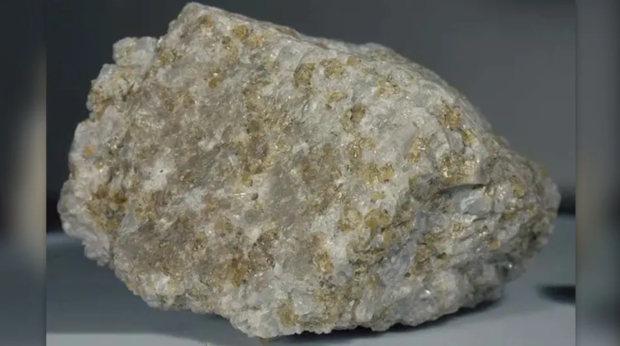
The research comes from the US Naval Research Laboratory, which NASA gave lunar samples to for an updated analysis of their composition. According to the study that was published in the scientific journal Nature, the team discovered traces of hydrogen within lunar soil sample 79221. Why is this important? Firstly, researchers know the Moon has a large presence of ice at its poles, and this ice can be broken down into its two components, hydrogen and oxygen.
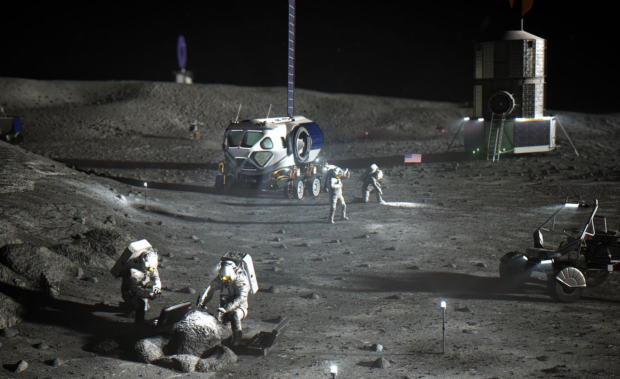
These two molecules can be used by astronauts living on the lunar surface for oxygen, and also for rocket fuel to conduct trips back to Earth, or beyond the Moon. Essentially, discovering water ice on the surface of the Moon is discovering resources that, if utilized correctly and efficiently, will enable astronauts to have a sustained flow of transportation and oxygen while exploring the surface of the Moon.
If the correct technologies are developed to utilize these resources, they will become the most valuable resources on the surface of the Moon as they will dramatically reduce the cost of lunar exploration trips from Earth.
"Hydrogen has the potential to be a resource that can be used directly on the lunar surface when there are more regular or permanent installations there. Locating resources and understanding how to collect them prior to getting to the Moon is going to be incredibly valuable for space exploration," said Dr. Katherine D. Burgess, geologist in NRL's Materials Science and Technology Division.
"This is the first-time scientists have demonstrated detection of hydrogen-bearing species within vesicles in lunar samples. Previously, the same team at NRL used state-of-the-art techniques such as scanning transmission electron microscopy and electron energy loss spectroscopy to detect helium in lunar samples, and other researchers have found water in other planetary samples, but this is the first publication to show hydrogen in-situ in lunar samples," said Dr. Burgess.