









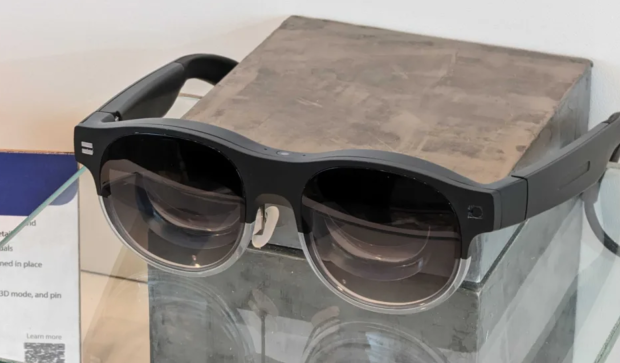




The Consumer Electronics Show (CES) is always full of surprises, and this year, ASUS had one of them with the unveiling of the AirVision M1, a wearable device that gives users the ability to generate multiple virtual displays.
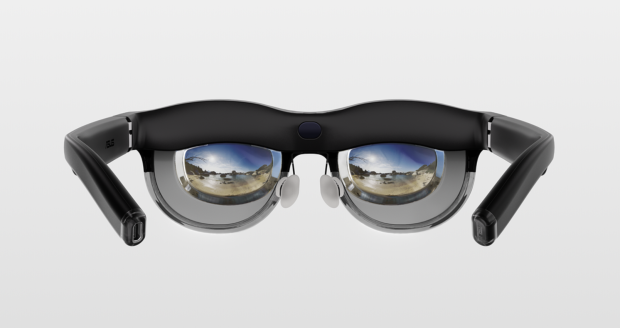
ASUS has announced the AirVision M1, a wearable display that packs a multi-monitor experience all within a pair of glasses. The company explains that this wearable features a 1920 x 1080 Micro OLED display that is capable of 1100 nits and a 95% DCI-P3 color gamut for those juicy visuals. According to ASUS's press release, users are able to drag and drop virtual screens to specific locations in their preferred aspect ratio: 16:9, 21:9, 32:9, and more.
Users interact with the glasses via a touchpad located on the left temple. This touchpad allows for customization for brightness, 3D mode activation, and screen pinning. Furthermore, the AirVision M1 is equipped with a USB-C port for charging, features DisplayPort Alt Mode for widespread compatibility, TUV-certified low blue-light and flicker reduction, noise-canceling microphones, and speakers.
Furthermore, ASUS writes that content displayed to the user won't appear on the outside of the glasses, ensuring users have a private experience with the glasses. Unfortunately, these glasses aren't wireless; they need to be connected to a PC or phone via USB-C to work. ASUS has not revealed any price point for the glasses or stated when they will become available.
Due to their size and my estimated price of less than $1,000, I can safely predict that the AirVision M1 isn't attempting to compete with the Apple Vision Pro or even the Meta Quest 3. ASUS is just doing it differently, and that's great to see!


 ASUS's ROG XREAL R1 micro-OLED gaming AR glasses now available for pre-order
 ASUS ROG shows how its next-gen OLED ultrawide comes with a gaming monitor's best friend
 ASUS's new ProArt P16 laptop includes a game-changer next-gen OLED display
 ASUS intros ProArt PA32KCX: world's first 8K HDR Mini-LED professional monitor
 Phantom Gaming 32-inch QD-OLED 240Hz unveiled at Computex 2025
 Iconic N64 shooter GoldenEye 007 is getting a native PC port
 Diablo 4 is coming to the Switch 2 with both expansions in a special Age of Hatred Collection
 CXMT DDR5 memory hits 9,000 MT/s speed milestone on AMD AM5 motherboard
 Sony says PlayStation 6 release date and pricing are still up in the air
 Lexar's DRAM-less Thor Ultra series PCIe Gen 5 SSDs are built for desktop and laptop PC gaming
 Gaming monitors are next in line for a price hike as manufacturers can no longer absorb costs
 Linux 7.2 makes TSC support mandatory for x86 CPUs, but it's not like Windows 11's TPM 2.0 check
 ChatGPT can now build a timeline of everything you do on your Mac
 Redditor finds a working RTX 2080 Super in the dump, gets a huge free upgrade
 Redditor sends a gaming laptop with 64GB RAM for repair, comes back with 32GB RAM
 Cooler Master HAF II 500 Mid-Tower Chassis Review
 Corsair HS35 v3 Wireless Gaming Headset Review - An Affordable Winner
 D-Link F518 5G Wi‑Fi 6 AX1800 Mobile Hotspot Review: All-Day Mobile Hotspot
 Bose Lifestyle Ultra Speaker Review - Impressively Detailed Room-Filling Sound
 MSI Z890 Gaming Plus WIFI6E Review - Z890 for under $200
 Mortal Kombat (1995) 4K Ultra HD Blu-ray Review
 CPS PCCOOLER YS1200 ATX 3.1 80 PLUS Gold PSU Review
 ASRock X870E Taichi White Review: a premium AM5 motherboard with 10G LAN and WiFi 7
 Asetek Initium Pedal Modular Upgrades Review
 Thinkware U3000 Pro Review - Smart Dashcam with Wi-Fi quirks
 Using Multiple Monitors? Change these Windows settings for a Better Experience
 Windows Sandbox is The Windows Security Feature Most People Never Use
 I ditched the Windows 11 context menu for this open-source tool, and here's why
 Windows 11 may be encrypting your drive already, and I checked where my recovery key went
 GIGABYTE's 40 Days of INFINITY celebrates 40 Years of Innovation with stunning GeForce RTX graphics cards and rewards
 I swapped File Explorer for this free file manager and finally got the layout I wanted
 How to tell if someone has been using your Windows PC without your permission
 6 Task Manager tips for troubleshooting Windows performance problems
 ASUS ROG's 20th Anniversary Line-up of Premium PC Gaming Gear has Arrived - Here's Everything You Need to Know
 Six File Explorer tips every Windows user should know