

With the entire computing industry caught by the DRAM crunch, memory makers appear to be pushing ahead with denser memory technology. Hardware sleuth Golden Pig Upgrade Pack suggests we could see 4GB and 6GB GDDR7 modules in the next two years. These could put workstation GPUs with up to 192GB of memory on shelves, assuming your pockets are deep enough, that is.
Today's GDDR7 market, largely used by NVIDIA's RTX 50 series, has settled around 28-32 Gbps, even though memory makers have demonstrated considerably faster modules. Samsung's 24Gb chips, for example, can reach up to 42.5 Gbps, while SK hynix has demonstrated operation up to 40 Gbps.
Popular Now: Xbox Series X can now run PS5 games thanks to a new emulator
With the current RTX 50 SUPER refresh in limbo, higher-density 3GB modules have yet to see widespread adoption in consumer desktop GPUs. That being said, capacity per module may increase considerably over the next couple of years as well. Golden Pig Upgrade Pack suggests that 4GB (32Gb) and 6GB (48Gb) modules may be available by 2027-28.
These would be the densest GDDR memory chips we've seen to date. While JEDEC's GDDR6 definition did allow for 4GB (32Gb) modules, they never materialized as the industry progressed to GDDR7.
Putting price aside for a moment, 6GB chips could double or even triple the amount of memory available across the same bus width, depending on the chips they replace.

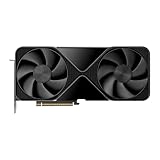
Take the RTX 5060, for example. Its 128-bit interface and four 2GB GDDR7 chips currently provide 8GB of VRAM. Swap those for hypothetical 6GB chips, and the same four-chip configuration could accommodate 24GB.
On the other extreme sits the RTX PRO 6000 Blackwell. NVIDIA equips the card with 96GB of GDDR7 across a 512-bit interface, using 32 3GB chips in a clamshell configuration. Replacing those with 6GB chips could push the design to 192GB of VRAM.
That is a massive leap in memory capacity, but the obvious caveat will be pricing. The RTX PRO 6000 Blackwell, which initially debuted near $8,000, has risen in price to $16,000. With many conflicting reports of when the next-gen RTX 60 GeForce GPUs, reportedly based on Rubin, will debut, it is hard to say where we'll see the first implementation of these modules.

Either way, 192GB of VRAM opens up a lot of room for local AI inference, especially with MoE (Mixture of Experts) models like Qwen3.8-Flash-Next and quantized variants of DeepSeek-V4-Flash and Z.ai's GLM-5.3-Flash.
For now, 3GB (24Gb) GDDR7 chips remain limited to relatively high-end products, including NVIDIA's RTX PRO 6000, the recently announced 84GB RTX PRO 5500, and the GeForce RTX 5090 Laptop GPU. Reports from industry analysts suggest that 3GB GDDR7 chips currently cost substantially more than their 2GB counterparts.

Frequently Asked Questions
Open a question for an answer from TweakTown's coverage of this news, or ask your own below.
What changes would 6GB GDDR7 chips make for workstation GPU memory capacity on the same bus width?
Could 4GB or 6GB GDDR7 modules fit into current RTX 50 series designs, or would they need new boards?
How much do 3GB GDDR7 chips cost compared with 2GB parts, and why are they still limited to high-end products?
What does the move to 4GB and 6GB GDDR7 mean for local AI inference workloads on workstation GPUs?
Have a question that isn't listed here? Ask below, and TweakBot will answer it.

If the memory situation improves, hopefully we'll see these higher-density modules move beyond workstation hardware and into consumer-facing Radeon, GeForce, and Arc graphics cards.