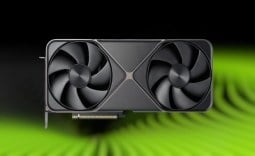
The RTX 50 Super series has been swinging between rumoured cancellations and signs of life depending on which leak you believe. The latest update lands somewhere in between. According to VideoCardz, at least one NVIDIA board partner has already received physical RTX 50 Super graphics cards, meaning development is past the prototype stage. The catch is that NVIDIA has reportedly told its partners to hold off on the launch.
The reason is the cost of 3GB GDDR7 memory chips. The entire Super series is built around these higher-density modules, which allow NVIDIA to increase VRAM capacity without changing the number of chips or widening the memory bus. A single 3GB GDDR7 chip currently costs between $60 and $70 according to VideoCardz's sources. A standard 2GB GDDR7 chip costs around $20. That is three times the price for 50% more capacity, and across a card with six or eight modules, the difference amounts to hundreds of dollars in additional memory costs per GPU.

Three Super models are affected: the RTX 5070 Super with 18GB, the RTX 5070 Ti Super with 24GB, and the RTX 5080 Super with 24GB. The RTX 5050 9GB is also on hold for the same reason. Without these 3GB chips, the Super series loses its entire identity, as the RTX 5070 Ti Super and RTX 5080 Super carry the same CUDA core counts as their standard counterparts. Only the RTX 5070 Super gets a minor 4% bump in CUDA cores.

Frequently Asked Questions
Open a question for an answer from TweakTown's coverage of this news, or ask your own below.
Which RTX 50 Super models are confirmed to be affected by the 3GB GDDR7 pricing issue?
How much more does a 3GB GDDR7 chip cost compared to a standard 2GB GDDR7 module according to the article?
How does the use of 3GB GDDR7 chips impact the VRAM configurations of the RTX 5070 Super, RTX 5070 Ti Super, and RTX 5080 Super?
How is competition from NVIDIA’s AI/enterprise product lines contributing to the supply and pricing problem for 3GB GDDR7 chips?
Have a question about this content not listed here? Ask below and TweakBot will answer it.

Part of the supply problem is that the same 3GB GDDR7 memory modules are also being used across NVIDIA's high-margin AI lineup, including the RTX Pro 6000 Blackwell and Rubin CPX. That means GeForce is competing with enterprise AI for the same memory chips, even as the industry deals with an ongoing memory shortage. As a result, the reportedly completed RTX 50 Super cards are sitting in warehouses waiting for supply and pricing conditions to improve.