







Mobile Devices - Page 79
Mobile device news - smartphones, tablets, iPhone, Android, and foldables. Launches and trends from TweakTown. - Page 79
Stay Updated
Follow TweakTown for breaking tech news, reviews, and daily updates.


As an Amazon Associate, we earn from qualifying purchases. TweakTown may also earn commissions from other affiliate partners at no extra cost to you.
iPhone 2018 model will feature massive LTE speeds
KGI Securities analyst Ming-Chi Kuo has said that that iPhones that will be released in 2018 that will feature upgraded liquid crystal polymer (LCP) antenna modules which would contribute to an overall improvement in LTE transmission speeds.

Kuo continues by saying that the iPhone models will be using two LCP LTE antenna modules which would make them very similar to the iPhone X, but instead will feature support improvements for 4x4 MIMO standards.
Kuo spoke of this in a recent note that was sent out to Apple investors: "Antenna design upgrade a key factor in anticipated boost to LTE transmission speed in new 2H18F iPhone models. As a LTE antenna FPCB material, LCP is superior to PI in properties related to high-frequency, thermal performance and moisture resistance. We predict 2H18 new iPhones will be equipped with two LCP LTE antenna modules same as iPhone X or more, but with higher specs to support 4x4 MIMO standards."
Continue reading: iPhone 2018 model will feature massive LTE speeds (full post)
Samsung might have accidentally teased foldable Galaxy X
Samsung is expected to unveil its next-gen Galaxy S9 and Galaxy S9+ smartphones sometime in the March/April 2018 timeframe, and then 6 months later they should unveil the big new Galaxy Note 9. But remember, there's still a foldable smartphone on the way in the form of the Galaxy X.

Galaxy X has just been teased again with Samsung uploading a new support page for the SM-G888N0 handset. The SM-G888 family of devices has been used before, with the model number always found near Galaxy X rumors. Dutch site MobielKopen revealed that the SM-G888 had already received a few certifications from regulators including the Bluetooth SIG, Wi-Fi Alliance, and South Korea's own National Radio Research Agency.
I'd dare say that Samsung's launch of the foldable Galaxy X smartphone will be a very limited affair, with less than 50,000 units available at launch. It's going to be incredibly difficult to manufacture, something that won't happen in mass scale anytime soon, either.
Continue reading: Samsung might have accidentally teased foldable Galaxy X (full post)
Samsung could launch the Galaxy S9 sooner than expected
Samsung will most likely experience the biggest smartphone launch of all time when it launches its flagship Galaxy S9 smartphone next year, but with the increased threat from Apple with the new iPhone X, the South Korean giant could reveal the new Galaxy S9 in a few months time.

Italian tipsters are now teasing that Samsung will unveil the Galaxy S9 early, but didn't specify when. If we look back at previous Galaxy smartphone reveals, Samsung unveiled the Galaxy S8 in March around a month later than expected; at MWC in February. They delayed it to let the flames die down a little bit surrounding the explosive problems of the Galaxy Note 8 at the time.
India Today reports that Samsung will unveil the Galaxy S9 at MWC 2018 in February, but cites no sources. This is probably all rumor, but it's not going to be unexpected that Samsung launches the Galaxy S9 in March-April, with a reveal 2-4 weeks earlier at either MWC 2018 or its own Samsung Unpacked 2018 event in March.
Continue reading: Samsung could launch the Galaxy S9 sooner than expected (full post)
Qualcomm team up with ZTE and China Mobile for 5G networks
Qualcomm is blazing towards its 5G dominance in the near future with a team up between ZTE and China Mobile, with the companies testing their systems for 5G networking which will deliver speeds like nothing we've seen before.

The companies have created an end-to-end 5G NR test system that is capable of a data connection based on the 3GPP R15 standard, meaning the companies are testing the quality of data transmissions over 5G networks that will one day replace 4G LTE networks. The upcoming 3GPP standard will be a big part of the global 5G radio rollout, marking the first time that a compliant data connection has been made between multiple vendors.
The demo was completed at China Mobile's 5G Joint Innovation Center and used ZTE's new 5G NR pre-commercial base station alongside a prototype 5G NR sub-6GHz chip from Qualcomm, which uses the 3.5GHz spectrum and supports 100MHz bandwidth.
Continue reading: Qualcomm team up with ZTE and China Mobile for 5G networks (full post)
Some iPhone X displays have 'nasty green line' problems
Apple isn't having a good time with its new iPhone X smartphones, with a bunch of customers on Apple's forums and Reddit complaining that their new iPhone X has an annoying green line that runs down the side of the screen.

The green line on the display looks like an entire row of bright pixels, like you would get on a faulty display and in this case an OLED display manufactured and supplied by Samsung. You can simply swap over your new iPhone X with a new one at any Apple Store, but it's still a huge hassle after you might have set it all up and now have to wipe it and do it all over again.
On top of that, we have 'cold weather responsiveness' issues with the iPhone X, and FaceID not working with some users' faces when they're wearing glasses.
Continue reading: Some iPhone X displays have 'nasty green line' problems (full post)
Apple rumored to be preparing AR glasses and 'rOS' for 2020
We've heard it before, but Apple is working on augmented reality products with a new report from Bloomberg saying the company would be reading to show off its AR tech in 2019, shipping AR glasses in 2020.

Apple CEO Tim Cook has been into AR for quite a while now, with the first seed being planted in the AR garden with Cook revealing ARKit, allowing iOS devices to run augmented reality apps and experiences. Apple's release of AR glasses would drive this home, but the company needs its own custom chip that can handle the graphics and computational tasks required, which will be in real-time, and something that you wear.
The new AR glasses would be interacted with through head gestures, voice commands that you'd use Siri with, or a touchscreen-based remote. Apple is expected to unveil rOS with its AR glasses, which stands for reality operating system.
Continue reading: Apple rumored to be preparing AR glasses and 'rOS' for 2020 (full post)
Broadcom rumored to acquire Qualcomm in $100 billion deal
Qualcomm is one of the biggest, and most innovative companies in the world, with rumors now circling that Broadcom is interested in acquiring Qualcomm in a deal worth over $100 billion.

Bloomberg is reporting that Broadcom would purchase Qualcomm at around $70 per share, in a deal that would include both cash and stock options. Broadcom is said to make the offer to Qualcomm in the next few days, but nothing is on paper just yet.
If this deal does come through, it'll send some large shockwaves through the industry as Qualcomm is in legal battles with Apple. Qualcomm has its technology and IP in billions of devices across the world, with a finger in everything cellular (3G, 4G, 5G, etc) and has as huge stranglehold in the mobile market with their Snapdragon line of products, as well as Quick Charge technology.
Continue reading: Broadcom rumored to acquire Qualcomm in $100 billion deal (full post)
Razer's new smartphone rocks 120Hz screen, no headphone jack
Razer has finally unveiled its first smartphone, simply called Razer Phone, which is built for high-performance games and streaming high resolution TV and movie content.

Inside, the new Razer Phone features a remarkable 120Hz UltraMotion display, and powered by Qualcomm's Snapdragon 835 processor. Razer has provided high-end technologies like Dolby ATMOS and THX certified audio, mixing it with 8GB of RAM, 12-megapixel dual cameras, and a 4000mAh battery.
Razer has taken a leaf out of Apple's book, with Razer Phone not including a 3.5mm headphone jack. Instead, Razer Phone has a USB-C to 3.5mm adapter in the box, but this hasn't been confirmed.
Continue reading: Razer's new smartphone rocks 120Hz screen, no headphone jack (full post)
Razer smartphone rumored to rock next-gen 120Hz display
Razer is expected to unveil its first smartphone any minute now, with the Razer Phone said to feature an enthusiast gaming worthy 120Hz display.

Razer is said to use a 5.7-inch IGZO display with 120Hz, Dolby ATMOS sound with dual front-facing speakers and amplifiers that were certified by THX. Inside, we have 8GB of RAM and a 4000mAh battery, with a dual 12-megapixel camera setup on the back and support for Qualcomm Quick Charge 4.0.
If these rumors are true, Razer could not just surprise with their first smartphone, but they could be pushing for a world's first with 120Hz/Dolby ATMOS in a smartphone. My hype meter just went from 7/10 to 10/10 on the 120Hz display rumor alone. Bring it on, Razer... my wallet is ready.
Continue reading: Razer smartphone rumored to rock next-gen 120Hz display (full post)
Galaxy S9 logo leaks, still has a headphone jack
Samsung will be ramping up to the Galaxy S9 early next year, but that doesn't stop the 24/7 rumor mill from pumping away with Galaxy S9 rumors - with the 3.5mm headphone jack looking like it's around to stay, thankfully. We now have a look at the new logos Samsung could use for the Galaxy S9 and Galaxy S9+ smartphones.

The latest rumor about the Galaxy S9 is that it will feature the fingerprint sensor on a small notch, on the front of the phone, versus the absolutely stupid position it is on the Galaxy S8, S8+, and Galaxy Note 8. Samsung will reportedly make the bezel even smaller on the next-gen Galaxy S9 and S9+ by putting higher-end hardware inside, which will leave more room for the battery, and just enough room to throw in a fingerprint sensor on the front.
The way that Samsung can pull this off is by having a small notch that can be 'pressed-in' on the Super AMOLED display on the Galaxy S9, something you'd feel by running your thumb over the screen and 'into' the small 'fingerprint sensor button'. The in-display fingerprint sensor would be a big selling point of the Galaxy S9, something Apple couldn't pull off even with their new iPhone X (which has Face ID instead), and the tech wasn't ready to throw into the Galaxy S8 or Note 8 smartphones.
Continue reading: Galaxy S9 logo leaks, still has a headphone jack (full post)
Surface Pro LTE delayed until at least Spring 2018
Qualcomm and Microsoft made a big fuss over the upcoming LTE-capable Surface Pro at Computex 2017 earlier this year, but according to a listing on the Microsoft Store, Surface Pro LTE has been delayed until Spring 2018.

Microsoft's listing for the Surface Pro LTE on their store states: "The new Surface Pro with LTE will be made available for purchase at retail Spring 2018. We're excited to bring you a Surface Pro that is now faster, lighter, quieter, and more connected than ever".
Microsoft's new Surface Pro LTE will rock 4G capabilities, which should cost a decent chunk more than the base model Surface Pro which sells for $799. We should expect more details at CES 2018, where I'm sure we'll find out everything we're meant to know with Qualcomm and Microsoft's upcoming new slate.
Continue reading: Surface Pro LTE delayed until at least Spring 2018 (full post)
Galaxy S9: 6GB RAM, headphone jack is a selling point
Samsung has out innovated Apple for a while now, but the next-gen Galaxy S9 could be an iterative upgrade over the Galaxy S8 and even the newly-released Galaxy Note 8, with the inclusion of a 3.5mm headphone port, and more.

The latest rumors for the Galaxy S9 peg it to have 6GB of RAM and 128GB of storage, which puts the stock 64GB of storage on the Note 8 to shame. The new rumors tease that Samsung would use Qualcomm's Snapdragon 845 processor in the US and China, while they'll use their in-house Exynos 9 Octa processor - both on 10nm, for the Galaxy S9. Both the Galaxy S9 and Galaxy S9+ would feature the same specs, with different screen sizes, just like the current Galaxy S8 and S8+ smartphones.
Continue reading: Galaxy S9: 6GB RAM, headphone jack is a selling point (full post)
Qualcomm unveils its new Snapdragon 636 processor
Qualcomm took the wraps off of its new 5G breakthrough, reaching a huge 1Gbps but they weren't done - the company has just unveiled its new Snapdragon 636 processor, too. The new Snapdragon 636 has support for extra-tall FHD+ resolution screens (2160x1080), too.

Qualcomm's new Snapdragon 636 processor is the successor to the mid-range Snapdragon 630, which is ready for Assertive Display - for increased visibility in not-so-great lighting. Adreno 509 graphics are just 10% faster than the previous-gen chip, while the Kryo 260 CPU is 40% faster.
Inside, we have up to 600Mbps LTE support, while we have Qualcomm's impressive Spectra 160 image signal processor that will provide great photo-taking abilities. Qualcomm will be shipping its new Snapdragon 636 processors out to phone makers in November.
Continue reading: Qualcomm unveils its new Snapdragon 636 processor (full post)
Qualcomm the first to test 5G, debuts 5G reference phone
Qualcomm is at the absolute bleeding edge of connectivity technology, with the world's first tests of 5G connections on a mobile device now completed.

The company tested the 5G internet connection on their own X50 5G modem, using the 28GHz millimeter wave frequency band. Qualcomm adds that they reached over 1Gbps with the test, but 5G is capable of much higher speeds of 5Gbps once the 5G deployments are complete.
Qualcomm also unveiled the world's first 5G smartphone reference design, which the company will use to test 5G modems, radios, and networks with smartphone makers over the next 1-2 years, as we get closer to companies releasing 5G-capable smartphones. 5G smartphones are expected in the first half of 2019, while Qualcomm's new 5G reference smartphone rocks an edge-to-edge display, and is just 9mm thick.
Continue reading: Qualcomm the first to test 5G, debuts 5G reference phone (full post)
Qualcomm wants to ban iPhone sales in China
Qualcomm is heating up its battle against Apple, with the chipmaker wanting to see the iPhone banned from sale in China.

According to sources close to the matter, Qualcomm has filed lawsuits with a Beijing intellectual property court, with the company claiming patent infringement while seeing injunctive relief. Qualcomm is fighting Apple over power management and touchscreen technology, something Apple calls Force Touch, in their current-gen iPhones.
Qualcomm says that there are even more examples of their technology being used on Apple devices, which Apple is making a mountain of cash from. Qualcomm spokesperson Christine Trimble, said that Apple hasn't paid its supplier to use that tech in its devices. Qualcomm said: "Apple employs technologies invented by Qualcomm without paying for them".
Continue reading: Qualcomm wants to ban iPhone sales in China (full post)
Apple ditches Touch ID, goes all-in with Face ID
Apple changed everything with its Touch ID home button, a fingerprint sensor that doubled as a home button, but now that Apple has collected enough fingerprints, it's moving onto collecting your face ID.

The company announced their iPhone X, the first iPhone to receive Apple's new facial recognition technology, Face ID. KGI Securities analyst Ming-Chi Kuo said that Apple isn't likely to make a new iPhone with Touch ID in 2018. Kuo issued a note, saying that the biometric touch sensor in Apple's future iPhones is uncertain, saying that the decision to kill Touch ID has already been made by Apple.
Kuo said that 3D sensing is the "key selling point" on all iPhones for 2018 and "[Apple intends to] capitalize on its clear lead in 3D sensing design and production for smartphones", with Apple making a big point about that focus with the announcement of iPhone X. Apple made a very big point about the TrueDepth cameras and plethora of sensors inside of the iPhone X, and is now pushing all-in with Face ID, something Apple can capitalize on since they're one of the first with good facial recognition on a smartphone.
Continue reading: Apple ditches Touch ID, goes all-in with Face ID (full post)
Samsung CEO resigns, claims 'unprecedented crisis'
Samsung Electronics CEO and Vice Chairman, Kwon Oh-hyun, has just resigned from the company, where he will step down from his positions on the board, and as CEO of Samsung Display.

Kwon said in a letter to employees: "It is something I had been thinking long and hard about for quite some time. It has not been an easy decision, but I feel I can no longer put it off. As we are confronted with unprecedented crisis inside out, I believe that time has now come for the company start anew, with a new spirit and young leadership to better respond to challenges arising from the rapidly changing IT industry".
The letter to Kwon's employees continued: "There are no words to describe how proud I am that we built together one of the most valuable companies in the world. We have come a long way to create a company that truly changes how people live, work and communicate with each other. But now the company needs a new leader more than ever and it is time for me to move to the next chapter of my life".
Continue reading: Samsung CEO resigns, claims 'unprecedented crisis' (full post)
Razer gaming smartphone: Snapdragon CPU, 8GB RAM, 1440p
The hype train for Razer's purported gaming smartphone is heating up, with new rumors teasing that it might rock a desktop worthy 8GB of RAM, as well as a slew of other somewhat impressive specs.

Razer's upcoming gaming smartphone will reportedly be powered by Qualcomm's Snapdragon 835 processors, while we'll have a large 5.7-inch display with a native 2560x1440 resolution. Razer is using mostly off the shelf components, without going into the manufacturing of its own... well, anything inside of this phone. The design and look of the phone are expected to be custom, I can't see Razer launching a new gaming smartphone and not wanting to impress.
I'm expecting RGB LEDs of some form, because if Razer doesn't unveil an RGB gaming smartphone, Corsair will be the ones with their own RGB smartphone soon enough.
Continue reading: Razer gaming smartphone: Snapdragon CPU, 8GB RAM, 1440p (full post)
Google spends $7 billion PER YEAR to be on your phone
Google doesn't get to be Google without spending a crap ton of money, so it should come as no surprise that Google spend $7.2 billion getting its apps and search bar onto your smartphone.

Google has been paying Android partners to place search bars on their homescreens, and include pre-loaded apps like YouTube and Chrome. The search giant even pays its biggest competitor, Apple, so that Google can be the default option for built-in search box placement in Safari. Google says that the $7.2 billion is their "traffic acquisition costs", with the amount increasing every year.
Google spends over $19 billion on traffic acquisition per year overall, with nearly half of it getting their apps and services on as many smartphones as it can. But the company is running into walls with EU and US regulators concerned, which has investors worried as well. If regulators start pushing, they could allow OEMs to renegotiate their agreements with Google, and even leave their contracts.
Continue reading: Google spends $7 billion PER YEAR to be on your phone (full post)
Microsoft knows that Windows Phone is dead
Microsoft has quietly put Windows Phone to rest, with Corporate Vice President in the Operating Systems Group at Microsoft, Joe Belfiore saying over Twitter that even with incentives given to developers and even writing apps for them, the "volume of users is too low for companies to invest".

Bill Gates has switched to Android, and so has the Corporate VP of the OSG at Microsoft... so that's saying something. Developers haven't embraced Windows Phone, and with the early problems in the Windows Phone app store, mostly boring and definitely not mainstream (yet forced in TV shows, movies, etc) smartphones.
Microsoft will instead focus on investments into iOS and Android, which will only be good for the company and its users. This will however mean we probably won't ever see a Surface smartphone, and as a hardcore Android fan, that still disappoints me because Microsoft have well and truly proved themselves in the hardware business with many great Surface products.
Continue reading: Microsoft knows that Windows Phone is dead (full post)
 US Army is giving soldiers time off to play GTA 6 as an incentive
 GTA 6 nears $500 million in pre-order revenue with 77% sales on PS5, per analysis
 Crucial offers a $250 refund for a RAM kit that costs $1,800, forgets to ship back the working module
 Noctua has no plans to introduce RGB lighting or screens to its coolers, instead it wants to focus on raw performance
 Iconic N64 shooter GoldenEye 007 is getting a native PC port
 Diablo 4 is coming to the Switch 2 with both expansions in a special Age of Hatred Collection
 CXMT DDR5 memory hits 9,000 MT/s speed milestone on AMD AM5 motherboard
 Sony says PlayStation 6 release date and pricing are still up in the air
 Lexar's DRAM-less Thor Ultra series PCIe Gen 5 SSDs are built for desktop and laptop PC gaming
 Gaming monitors are next in line for a price hike as manufacturers can no longer absorb costs
 ASUS ROG Strix XG129C Review: A $199 Gaming Monitor You Don't Play Games On
 Cooler Master HAF II 500 Mid-Tower Chassis Review
 Corsair HS35 v3 Wireless Gaming Headset Review - An Affordable Winner
 D-Link F518 5G Wi‑Fi 6 AX1800 Mobile Hotspot Review: All-Day Mobile Hotspot
 Bose Lifestyle Ultra Speaker Review - Impressively Detailed Room-Filling Sound
 MSI Z890 Gaming Plus WIFI6E Review - Z890 for under $200
 Mortal Kombat (1995) 4K Ultra HD Blu-ray Review
 CPS PCCOOLER YS1200 ATX 3.1 80 PLUS Gold PSU Review
 ASRock X870E Taichi White Review: a premium AM5 motherboard with 10G LAN and WiFi 7
 Asetek Initium Pedal Modular Upgrades Review
 Using Multiple Monitors? Change these Windows settings for a Better Experience
 Windows Sandbox is The Windows Security Feature Most People Never Use
 I ditched the Windows 11 context menu for this open-source tool, and here's why
 Windows 11 may be encrypting your drive already, and I checked where my recovery key went
 GIGABYTE's 40 Days of INFINITY celebrates 40 Years of Innovation with stunning GeForce RTX graphics cards and rewards
 I swapped File Explorer for this free file manager and finally got the layout I wanted
 How to tell if someone has been using your Windows PC without your permission
 6 Task Manager tips for troubleshooting Windows performance problems
 ASUS ROG's 20th Anniversary Line-up of Premium PC Gaming Gear has Arrived - Here's Everything You Need to Know
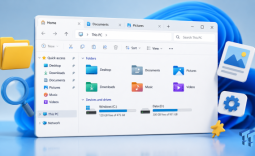 Six File Explorer tips every Windows user should know