







Business, Financial & Legal - Page 166
Catch up on business, finance, and legal news shaping tech, gaming, and science - mergers, lawsuits, antitrust, IPOs, Big Tech earnings, and market trends. - Page 166
Stay Updated
Follow TweakTown for breaking tech news, reviews, and daily updates.


As an Amazon Associate, we earn from qualifying purchases. TweakTown may also earn commissions from other affiliate partners at no extra cost to you.
Foxconn leaving China?
Foxconn has been in the news a lot lately after ten workers at one of its Chinese factories where Apple products are built have killed themselves this year. Some blame harsh working conditions at the plant for the suicides.
Microsoft Courier concept terminated
You might recall that cool dual screen Courier concept that Microsoft was showing off. I know I was looking forward to seeing how the device turned out. If you were interesting in the project, we have bad news today.
[img]3[/img]
Microsoft has decided to kill off the Courier tablet. The cancellation is surprising considering that we had been hearing the device was on track to hit stores in 2011.
Microsoft's Frank Shaw told Gizmodo, "At any given time, we're looking at new ideas, investigating, testing, incubating them. It's in our DNA to develop new form factors and natural user interfaces to foster productivity and creativity. The Courier project is an example of this type of effort. It will be evaluated for use in future offerings, but we have no plans to build such a device at this time."
Continue reading: Microsoft Courier concept terminated (full post)
Apple to shutter Lala next month
Anyone with half a brain knew when Apple purchased online music service Lala that its days were numbered. Apple was either looking to axe some competition or was out to integrate Lala into its own online subscription music offering (or both).
[img]2[/img]
I know I am hoping for the second option and according to TechCruch sources are telling it that is exactly what will happen and perhaps as early as June. Lala will be available for existing subscribers until May 31. No new subscribers are being accepted.
Apparently, anyone with money left in Lala will have the funds transferred over to iTunes. I know many folks who may be sad to lose Lala, but will be hopeful that Apple finally offers that subscription service.
Continue reading: Apple to shutter Lala next month (full post)
HP acquires Palm for 1.3 Billion
It's been known for quite a while Palm has been struggling to keep its head above water and the marketplace tells the story pretty quickly they've been failing to compete at a required level to survive in the ever growing, fast paced smartphone world.
At this rate, the end of the road for the company is not all that far away unless something drastic takes place. And that's exactly what's just happened. HP has just announced it's swallowing them up for 1.2 Billion, working out to about $5.70 per share of Palm common stock.
Continue reading: HP acquires Palm for 1.3 Billion (full post)
Apple considers moving across to AMD
It's no secret that Apple has been using Intel processors for several years now. However, a story over at AppleInsider hints that perhaps Apple's relationship with Intel isn't as strong as it seems.
Rumour has it the company is considering jumping ship to AMD and has even been testing AMD based chipsets in their labs. But there's no form of substantial evidence to support this as yet.
Continue reading: Apple considers moving across to AMD (full post)
Adobe possibly thinking about legal action against Apple
Not even a week after we tell you that Apple is attempting to ban all third party compilers and porting tools we hear rumors of the law suit to be filed by Adobe. Of course we wanted to know if this was the case and so far have been told that is no grounds for the rumor. Adobe's last comment was that they were looking into the wording of the new SDK agreement, but nothing about any type of legal action.
However all of that might have changed when a statement by Steve Jobs (made in response to Greg Slepak, Co-Founder of To Effects) Jobs is trying to claim, again (Apple tried this with the Mac OS), that by allowing third party tools it will hold back the OS. However, most know that this is not the case and that regardless of the tools used some apps will still come out crappy (just look at a few in the App Store now). Slepak also commented that many apps that are popular on desktop are made by cross-compilers.
Overall I feel this is very ant-competitive and anti-consumer, this feels more like a move to ensure that developers cannot code for multiple platforms with a single set of tools.
Continue reading: Adobe possibly thinking about legal action against Apple (full post)
Hypersonic-PC shuts down, OCZ focusing on core business
Such a shame - boutique PC maker Hypersonic-PC has closed down. According to a message left on its website, "At this time Hypersonic-PC is not accepting any orders. We are honoring all warranties and will continue to support existing customers. All customers that currently own a Hypersonic branded PC or Notebook can contact the following numbers for direct product support."
Continue reading: Hypersonic-PC shuts down, OCZ focusing on core business (full post)
Cracked glass stair from 5th Ave Apple store lands on eBay
Maybe it's just me, but If you swipe something from an Apple Store without the employees knowing it you might not want to post the item on eBay for sale stating that you liberated it from the store. An eBay auction has turned up for a stair from the Apple Store on 5th Ave in NYC.
Continue reading: Cracked glass stair from 5th Ave Apple store lands on eBay (full post)
Newzbin Ltd. vs. MPAA Updates
A few years ago at a CES party I met a trio of MPAA lawyers hanging out with us tech media folk. Who would have ever thought I would get a chance to chat these guys and gals up when they were off guard and drinking up others party favors? I have to admit that they didn't appear to be the sleaze balls I pictured, they were young and had the kind of charm that you would find when taking a trip to Kansas. Seeing my opportunity I had to ask about their own music / movie downloading habits. To my surprise all three admitted to downloading both music and moves from the internet but wouldn't suggest others do it because "now days people are watching."
One group that is currently under the microscope is Newzbin Ltd. What makes Newzbin different than the Torrent trackers is that it catalogs some of the internet's oldest files that sit on Usenet. Newzbin does not have their own Usenet servers but simply catalogs and organizes. The MPAA feeling like they own the Internet has chose Newzbin as their latest victim of legal harassment and court proceedings are already underway.
Newzbin has taken to updating the court proceedings on their home page that serves as a news page. It seems that things are not looking too good for the company at this point but Lady Justice has yet to sing. You can read about the updates by clicking on the News Source link below.
Micron to Acquire Numonyx
The following news story was submitted by Jim Handy of Objective Analysis.
Late Tuesday Micron announced that the company had signed a definitive agreement to acquire Numonyx in an all-stock transaction. Micron will issue 140 million shares of the company's common stock, worth approximately $1.27 billion, to Numonyx shareholders Intel, STMicroelectronics, and Francisco Partners.
Micron Re-Enters NOR
The NOR flash market has been a difficult one for nearly all participants. Leaders Numonyx and Spansion have suffered losses for several years, with Spansion recently turning a profit through a strategy largely focused upon markets for low-density parts used by markets outside of cell handsets, the largest consumer of NOR flash. Micron itself participated in NOR starting in the late 1990s, but abandoned this effort in 2006.
By acquiring Numonyx, Micron is buying the current leader in the market, a position Numonyx is believed to have held for the past two quarters. Numonyx should add roughly $1.5 billion to Micron's revenue stream at today's run rate, increasing the company's share of the semiconductor memory market. Objective Analysis projects for the memory market to explode in 2010, and this is likely to amplify the impact of this acquisition.
What Does Micron Get?
Numonyx is first and foremost a manufacturer of high-density NOR flash. NOR flash has been a large market, but not a profitable one. High-density NOR competes against NAND for camera phone designs, and NAND prices have been depressed for the last three years, dragging NOR prices down with them.
The company has strong technology, a good IP portfolio (which may have strings tied back to parents Intel and ST), one production 200mm fab, and a shell built for a 300mm fab in Sicily.
One key difference between Numonyx and both Spansion and Samsung, the other two competitors in the high-density NOR market, is that Numonyx has been ardently pursuing the phase-change memory (PCM) market, which is expected to take off once NOR flash hits its scaling limit. Interestingly, Numonyx' PCM is licensed from Ovonyx, a company founded by former Micron executive Tyler Lowrey. With the acquisition Micron will gain significant experience in this technology, for which Numonyx had first revenue shipments in late 2008.
What About Hynix?
It is unclear what this means to the Hynix/Numonyx relationship. Numonyx was using Hynix as a NAND and DRAM foundry under a deal in which Numonyx provided flash technology to Hynix. Numonyx also has a 21% stake in a Hynix wafer fab in Wuxi, China. We will be watching this to see what develops.
Executing a Typical Strategy
Micron has a penchant for acquiring companies at a low point in the market using depressed Micron stock to fund the transaction. Perhaps the most notable example is the company's acquisition of Texas Instruments' DRAM business in 1998. Although Intel, STmicroelectronics, and Francisco Partners today will receive $1.27 billion worth of Micron stock at today's prices, this stock is quite likely to increase in value by the end of next year, leading to gains for the parent companies, while allowing Micron to perform the purchase at a relative bargain. This projection is based on Objective Analysis' projection that DRAM prices will behave in their typical manner, remaining roughly level through the end of 2011, when the next overcapacity should begin.
All in all Objective Analysis anticipates that this will be a good deal for both buyer and sellers. This is the kind of deal we expected to see more of during the current downturn, a kind of hallmark for Micron.
Jim Handy
OBJECTIVE ANALYSIS
PO Box 440
Los Gatos, CA 95031-0440
USA
www.Objective-Analysis.com
DFI says it's not quitting enthusiast mobo business
This past week rumors have been circulating around the good ole Internet that DFI is quitting the enthuaist and retail motherboard business.
We have heard plenty of rumors on the story that both claim that DFI is quitting and ones saying that DFI isn't quitting the business. I'll put it out in the open that we had it from a reliable source last night over an IM chat that DFI is indeed quitting from January 2010, but is trying to kills the rumors as it still wants to sell the rest of its stock and use the parts its ordered from the likes of Intel and Foxconn.
Continue reading: DFI says it's not quitting enthusiast mobo business (full post)
Borders invests in Kobo eBook store
eBook readers are huge right now with an unprecedented demand for them this holiday season meaning that many of the new devices are unavailable. As eBook adoption grows, the demand for more content is growing as well.
[img]2[/img]
Borders has announced that it is investing in Kobo, an eBook store, and will be investing in a new eReader. The eBook service will be built into the Borders.com website starting in 2010.
So far, Kobo plans to offer about 1.8 million books from the Internet that are available free. It will also have 200,000 other books starting at $9.99 each. What the eReader itself will look like is unknown, but Borders said that it hopes to reach the reader who only buys a few books each year. The device would have to be cheap to do that.
Continue reading: Borders invests in Kobo eBook store (full post)
Intel Responds to FTC Suit
As you might have expected; Intel has just released their comments on the suit filed against them by the FTC. Intel claims that this suit will cost the tax-payers money and that the FTC failed to work with Intel towards a settlement.
"Intel has competed fairly and lawfully. Its actions have benefitted consumers. The highly competitive microprocessor industry, of which Intel is a key part, has kept innovation robust and prices declining at a faster rate than any other industry. The FTC's case is misguided. It is based largely on claims that the FTC added at the last minute and has not investigated. In addition, it is explicitly not based on existing law but is instead intended to make new rules for regulating business conduct. These new rules would harm consumers by reducing innovation and raising prices."
Intel senior vice president and general counsel Doug Melamed added, "This case could have, and should have, been settled. Settlement talks had progressed very far but stalled when the FTC insisted on unprecedented remedies - including the restrictions on lawful price competition and enforcement of intellectual property rights set forth in the complaint -- that would make it impossible for Intel to conduct business."
"The FTC's rush to file this case will cost taxpayers tens of millions of dollars to litigate issues that the FTC has not fully investigated. It is the normal practice of antitrust enforcement agencies to investigate the facts before filing suit. The Commission did not do that in this case," said Melamed.
The suit also comes on the heels of Intel's announcement to invest $7 billion dollars in their US manufacturing operations earlier this year.
US FTC sues Intel for Anti-Competitive Practices
So it finally happened. The US Federal Trade Commission is suing Intel for anti-competitive practices.
What is surprising is that they are not just saying that Intel abused its market dominance to injure AMD, but also to injure NVIDIA. This last one comes as an interesting surprise to me. Although I will not say that Intel has been nice to NVIDIA. The claim that they are being anti-competitive there is something of a stretch. After all I believe that NVIDIA opened the war by refusing to sign a new licensing agreement with Intel for their CPUs with integrated memory controllers, then went on a rant about how the CPU was dead amongst other things.
But hey, I suppose all of that will come out in the trial. One thing the FTC was careful about was to make sure no one will try to piggyback on their suit by making it only an accusation of violating monopoly and competition laws. If the suit is successful the FTC wants to prevent Intel from unfair bundling, offering incentives, and exclusory licensing. The last one is a tad ridiculous to me as it is like telling someone they have to share all their hard work for free or at least very little.
The suit comes at an interesting time and with an odd angle to me. If it was a real anti-trust complaint then why lock private companies (like AMD and NVIDIA) out of it? On the surface this looks like an attempt to replace some government money at the expense of Intel. After all Intel just enriched the EU for $1.45 Billion and also dropped $1.25 Billion into AMD's bank account. I suppose the bean counters in Washington DC are thinking they need a cut too.
Continue reading: US FTC sues Intel for Anti-Competitive Practices (full post)
Intel updates Q4 financial expectations
As you might have expected there has been some financial fallout from the surprise settlement between Intel and AMD. Presently AMD stock is up $1.09 to $6.41 (20.49%), while on the other side, Intel saw a very small gain of +$.03 (.15%). But this is not the only fallout.
Intel has just updated its Q4 financial expectations as they intend to take the hit from the $1.25 billion USD check to AMD all in Q4. They have changed their earlier statement to reflect a total R&D spending plus MG&A (Mergers and Acquisitions) to $4.2 billion (up from 2.9 billion). Tax rate is expected to drop by 20%, which is down from 26%. Everything else is unchanged.
Which brings us to the real cost of this. $1.25 billion is a large amount of money; make no mistake - this is not a small settlement. But in terms of total cost to Intel it is. By AMD agreeing to drop all of its complaints (although the New York case is still on according to AMD), Intel will actually save money as there has been a growing momentum against Intel. This means they would have more than likely lost their case In Japan and other countries that AMD was pursuing them in. The potential loss could have been significantly higher than what Intel is paying out right now.
Still Intel has been having a very good year and is capable of recovering from this event in any case. AMD on the other hand just got a nice check that represents a little less than half of their outstanding debt. We do have to wonder, now that Intel has agreed to abide by a set of acceptable business practices, if the suit in New York will also be dropped or settled quickly?
As we said before, the thing to keep your eye on now is the dispute between Intel and NVIDIA. The reason this is so big is that with the new agreement you no longer have to own a FAB to make an x86 CPU. This could open the doors for NVIDIA and give them the "in" they so often claim they are not even interested in.
Continue reading: Intel updates Q4 financial expectations (full post)
AMD and Intel reach a settlement
It looks like AMD and Intel's long running fight over anti-trust and competition has finally come to an end.
Today we have received news that AMD and Intel have reached a settlement. But the settlement does not just cover the matter of Intel's alleged anti-competitive behavior, but also the x86 cross licensing agreement that has been at issue ever since the Global Foundries spin off.
The terms of the agreement are listed below (taken straight from the press release)
Under terms of the agreement, AMD and Intel obtain patent rights from a new 5-year cross license agreement, Intel and AMD will give up any claims of breach from the previous license agreement, and Intel will pay AMD $1.25 billion. Intel has also agreed to abide by a set of business practice provisions. As a result, AMD will drop all pending litigation including the case in U.S. District Court in Delaware and two cases pending in Japan. AMD will also withdraw all of its regulatory complaints worldwide. The agreement will be made public in filings with the Securities and Exchange Commission.
The settlement is great news on a few levels. First it brings the long running squabble between AMD and Intel to a close (globally). It gives AMD a much needed cash injection ($1.25 billion will go a long way) and allows for the sharing of technology between the two companies. These all add up to an excellent future for the consumer as AMD can stop bleeding out money on lawsuits and complaints around the world and get back the business of competing with Intel in a very serious manner.
Maybe the extra money can go towards helping AMD to finalize Bulldozer and get it to the public quicker than their current plans; if so this would be very good news indeed as Bulldozer is the first CPU from AMD that shows true promise in a very long time.
Of course, now all eyes are turning towards the NVIDIA versus Intel squabble. After all, if Intel settled with AMD, maybe a settlement with NVIDIA is in the near future (and perhaps an x86 CPU with it)
Continue reading: AMD and Intel reach a settlement (full post)
Gartner lists Top 10 Strategic Technologies for 2010
There is a new list of the top 10 technologies that will be strategic for companies in 2010.
The list was compiled by the Gartner who defines a strategic technology as one that can have a significant impact on the enterprise within two years.
So what is on the list? What new technologies should you be concerned with for 2010? After each we will give you a little of our take.
Gartner lists the following:
Cloud Computing
This is being shoveled to the IT world in great and greater volumes. The thing is for anyone that is in IT and understands security this is not a solution. It is a method for service providers (including software service providers) to save money at the expense of the customer. We know that security for these types of services are nowhere near what they need to be yet we now hear it is a leading strategic technology for 2010.
Advanced Analytics
This is actually an old one that is just getting more prominence because it is now economically viable to run much of this from a computer. In the past it was decision flow charts and long documents covering "what if"
Client Computing
Again a regression back in time. Many Many years ago the concept of the client/server was nothing more than a server (mainframe) and a dumb terminal (client) all of the processing was done on the server and the client was used to display the results only. Yet here we are 20 years down the road and seeing a return to this model. I guess the more things change... It is also a way to push cloud computing on the market as the "client OS" can be pushed from a cloud based service.
IT for Green
This one is actually one that we agree with completely. IT and its services have to become more ecologically conscious. However, we must proceed with caution as the "green" initiative has been used as an excuse to push cloud computing
Reshaping the Data Center
This is another move that we can support. The shift from the traditional floor space eating Data Centers to a more modular "Pod" based setup. Take a look at the trailer based setup that Google and Microsoft have to get an idea.
Social Computing
This is the security experts nightmare, Social Computing. You see everyone wants to be connected to their personal lives even when at work. But should a company support that? Should a company really engage in using a Facebook, Twitter, or other social computing products? Personally I say no. It is enabling a decay in the way information is presented and consumed. The short attention span posts found on Twitter and places like Facebook should not be the way companies talk to the world.
Security - Advanced Monitoring
Ah, another move towards the cloud. This one is interesting in that it does provide a needed service but, can take the control away from many companies. The problem is not that many companies do not know how to deal with threats. It is in fact that too many companies do not even know there are threats. Since upper management lacks this knowledge they often will not spend the money on hiring the right people to perform this service in house. If someone offers them this for a reasonable cost they will jump at it.
It is sadly not the right way to go, but one that is inevitable.
Flash Memory
We have been in contact with Seagate an others about this move and it seems that too many enterprise class companies are not going to consider this as viable until they see a clear standard. Right now everyone has their own way of making SSDs, USB keys, pretty much any type of Flash memory. There are also long term usage issues that must be resolved before considering this in a mission critical space.
Virtualization for Availability
Another one that has been long in coming. In fact many companies use this already. with Products like VMWare's ESX and VSphere using V-Motion it is easy to setup. With V-Motion live migration you store the VM (Virtual Machine) images on a central SAN (Storage Area Network) this is then connected to a bank of identical servers (at least two). If one server goes down or is overloaded V-Motion can automatically shift those VMs to another server to keep you up and running. The down side is that the initial cost is pretty hefty for the equipment you must have to use this. Because of this Virtualization for Availability will remain out of the reach for many companies.
Mobile Applications
Depending on how you read this it can mean applications for mobile devices like smart phones and smart books or it can again be a push towards cloud services. Either way you are looking at increased security risks. The loss of a corporate device is not something to be taken lightly, while storing all of your applications and data on a remote server leaves you open to a larger base of attack (the bigger the target the more attacks per minute).
It is an interesting list. Gartner does know what they are doing here. Indeed all of these should be carefully watched. Especially as they are not all they seem on the surface. Many of these are technologies that have been out for years, but now are being pushed as a method to reduce costs. The rub is that most of these will take a lot of money to get in place and working, this leave the small, medium and many larger businesses out as they just do not have the funds to invest in this type of project.
So, while it is nice to cover these and talk about them as strategic technologies that companies should plan for, it is not really going to make that large of an impact and certainly not in the 2-3 year time frame. Adoption of any high capital outlay technology is significantly slower than that especially in a slow economy.
Continue reading: Gartner lists Top 10 Strategic Technologies for 2010 (full post)
Microsoft's first Store opens Thursday
In timely fashion with the launch of Windows 7 this coming Thursday, Microsoft plans to open its first "Microsoft Store" in Scottsdale. To help gather the masses MS has decided to give the first 1,000 visitors free gift bags as well as tickets to an Ashley Tisdale concert set to kick off come 5PM.
Continue reading: Microsoft's first Store opens Thursday (full post)
NVIDIA's Tegra gains more ground with Nintendo's DS
NVIDIA's Tegra is looking pretty good right now. First it manages to land in Microsoft's Zune HD player. This iPod Touch competitor has been doing great so far with many stores reporting that they are sold out of them and waiting for stock. This is good for both Microsoft and NVIDIA. For MS it shows that they can compete in the Apple centric PMP market. For NVIDIA it shows that Tegra is a viable product and one that is capable of doing the job in a small package.
Now we hear that Nintendo is planning to drop Tegra (either the current or next gen version) into their new DS portable game player. This is great news and one that is sure to push the Tegra towards the 50% company revenue goal that NVIDIA CEO, Jen-Hsun Huang talked about earlier this year.
The news comes from multiple sources and seems to be close to the mark. Of course neither NVIDIA nor Nintendo are commenting on this as of this writing but our sources also confirm this and say that we should see quite a few more items with Tegra under the hood, including SmartPhones, Netbooks, SmartBooks and more. Some of these devices have already reached internal testing by different providers. This means we could see even more Tegra based products alone with the Nintendo DS next year.
Continue reading: NVIDIA's Tegra gains more ground with Nintendo's DS (full post)
NVIDIA Partners Order Large Numbers of Fermi GPUs
In the wake of the (somewhat inaccurate) news of the GT200 parts being discontinued we hear that many partners have ordered significant quantities of NVIDIA's new Fermi GPU. In some cases it was ordering Fermi that caused the shortage of GT200 GPUs in the first place. According to a few sources that we spoke with they anticipated delivery of Fermi GPUs earlier as such they were shifting from production of the GTX 260, 275 and 285s for the holiday season.
As such many manufacturers have had to shift allocation from their EMEA divisions to the US to meet demand there this has caused a false famine in parts at some companies.
Now while all of that is interesting, it does point out one thing. The GT300 appears to have been pushed back from the original production date. We have heard that originally GT300 was supposed to launch around the end of October. Now the time for the public launch is sometime in the middle of November. This could be the reason for the early demo of the Fermi Architecture instead of an actual launch.
All of that aside, OEMs are very eager to get their hands on Fermi. All of the ones we spoke to believe the GT300 will be quite the performer once they are able to get it out in the stores. The Fermi team has their work cut out for them as they still have yet to show Fermi Running DX11 or any type of real gaming performance. We hope they are up to it though, as it is sort of boring in a one sided GPU world.
Continue reading: NVIDIA Partners Order Large Numbers of Fermi GPUs (full post)
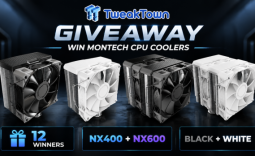 Giveaway: 12 Winners Will Score MONTECH NX400 and NX600 CPU Coolers
 Dave Bautista officially cast as Kratos in Amazon's 'God of War' TV Series, replaces Ryan Hurst
 Take-Two begins the hunt for GTA 6 leaker CyberLeek, subpoenas Microsoft and Discord
 PlayStation 6 handheld not expected to stay under $600, warns leaker
 AMD confirms the Radeon RX 9050 4GB will have a tiny 64-bit bus and just 16MB Infinity Cache
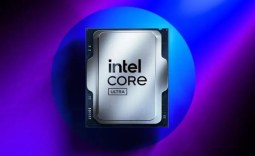 Intel 'Nova-Lake-S' 28-core CPU with bLLC reportedly draws 296W at PL2
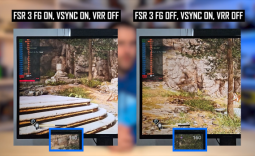 FSR 4 Frame Generation suffers from frame pacing issues causing the tech to be borderline unusable
 STALKER 2 receives massive performance boost with new 2.0 update, game gets upgraded to Unreal Engine 5.5.4
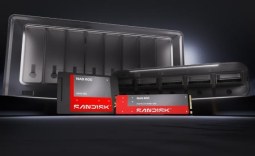 Sandisk NAS 800 NVMe SSD delivers PCIe Gen5 speeds for demanding NAS environments
 RayNeo announces new iO Smart Glasses and GT Series with 'cinema-grade' display
 IQUNIX launches premium EC75 Hall Effect keyboard with 0.01mm Rapid Trigger
 Cooler Master MasterFan A120 Fan Review
 GIGABYTE MO27Q2A Gaming Monitor Review: 1440p, 280Hz, and QD-OLED is a winning combination
 Cooler Master V8 ACE 3DHP BLACK CPU Cooler Review
 ASUS ROG Strix XG129C Review: A $199 Gaming Monitor You Don't Play Games On
 Cooler Master HAF II 500 Mid-Tower Chassis Review
 Corsair HS35 v3 Wireless Gaming Headset Review - An Affordable Winner
 D-Link F518 5G Wi‑Fi 6 AX1800 Mobile Hotspot Review: All-Day Mobile Hotspot
 Bose Lifestyle Ultra Speaker Review - Impressively Detailed Room-Filling Sound
 MSI Z890 Gaming Plus WIFI6E Review - Z890 for under $200
 Mortal Kombat (1995) 4K Ultra HD Blu-ray Review
 Using Multiple Monitors? Change these Windows settings for a Better Experience
 Windows Sandbox is The Windows Security Feature Most People Never Use
 I ditched the Windows 11 context menu for this open-source tool, and here's why
 Windows 11 may be encrypting your drive already, and I checked where my recovery key went
 GIGABYTE's 40 Days of INFINITY celebrates 40 Years of Innovation with stunning GeForce RTX graphics cards and rewards
 I swapped File Explorer for this free file manager and finally got the layout I wanted
 How to tell if someone has been using your Windows PC without your permission
 6 Task Manager tips for troubleshooting Windows performance problems
 ASUS ROG's 20th Anniversary Line-up of Premium PC Gaming Gear has Arrived - Here's Everything You Need to Know
 Six File Explorer tips every Windows user should know