












In 2025, NVIDIA launched the GeForce RTX 50 Series for PC gaming, creative, and AI workflows. Powered by the company's latest RTX Blackwell architecture, the GeForce RTX 50 Series also debuted DLSS 4, cementing AI-powered DLSS Super Resolution as the gold standard for boosting PC gaming performance and image quality.

The rapid-fire launch and arrival of the desktop line-up, led by GeForce RTX 5090 and RTX 5080, were generally well received, aside from initial scarcity, inflated prices, and criticisms surrounding VRAM capacity. But as things normalized, more or less, the 2025 holiday season saw the GeForce RTX 5070 become one of the most popular gaming GPUs worldwide, according to Steam data.
As part of NVIDIA's latest financial results for the fiscal year, we learned that NVIDIA's Gaming and AI PC revenue grew by 41% to hit a record $16 billion. Although this is only a fraction of the $193.7 billion of Data Center segment revenue for the year, it does show us that GeForce RTX is still a money maker and extremely popular.
However, even though fourth-quarter revenue of $3.7 billion was up 47% year over year, NVIDIA CFO Colette Kress has stated that the company expects "supply constraints to be a headwind to Gaming in the first quarter of fiscal 2027 and beyond." Which is a shame, because a year ago, we were expecting to see the mid-generation GeForce RTX 50 SUPER Series refresh at this point.
But we're not, and it's all due to the unprecedented demand for memory, storage, and even GPU silicon from the AI sector, which is impacting all corners of the consumer technology market. And it's something that will continue to impact the PC gaming market for a while. So, we should probably expect NVIDIA's record Gaming revenue to drop if there are fewer GeForce RTX graphics cards on the market.


 NVIDIA's Gaming revenue hits a record $3.8 billion thanks to the GeForce RTX 50 Series
 GeForce RTX 5060 is NVIDIA's 'fastest-ramping x60-class GPU ever'
 NVIDIA's Gaming revenue is up, while Data Center and AI earnings exceed analyst predictions
 NVIDIA teases DLSS Frame Generation for GeForce RTX 30 Series owners
 NVIDIA's GeForce RTX and RTX AI PC revenue hits $4.3 billion in Q3, up 30% from a year ago
 Giveaway: 12 Winners Will Score MONTECH NX400 and NX600 CPU Coolers
 GTA 6 leaks have reportedly led to a morale drop at Rockstar, with Netflix frustrated as well
 The Blood of Dawnwalker won't hit 60 FPS on any console, PS5 Pro tops out at 40 FPS
 AMD claws back ground against Intel in the CPU market, climbs to 35% share in desktop CPUs
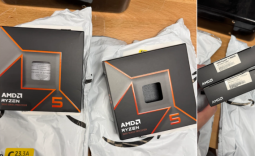 Redditor receives not one but TWO empty boxes of Ryzen 5 9600X from Amazon
 Xbox Series X25 Limited Edition Console is priced at $900, arrives November 2026
 Dave Bautista officially cast as Kratos in Amazon's 'God of War' TV Series, replaces Ryan Hurst
 Take-Two begins the hunt for GTA 6 leaker CyberLeek, subpoenas Microsoft and Discord
 PlayStation 6 handheld not expected to stay under $600, warns leaker
 AMD confirms the Radeon RX 9050 4GB will have a tiny 64-bit bus and just 16MB Infinity Cache
 Intel 'Nova-Lake-S' 28-core CPU with bLLC reportedly draws 296W at PL2
 Cooler Master MasterFan A120 Fan Review
 GIGABYTE MO27Q2A Gaming Monitor Review: 1440p, 280Hz, and QD-OLED is a winning combination
 Cooler Master V8 ACE 3DHP BLACK CPU Cooler Review
 ASUS ROG Strix XG129C Review: A $199 Gaming Monitor You Don't Play Games On
 Cooler Master HAF II 500 Mid-Tower Chassis Review
 Corsair HS35 v3 Wireless Gaming Headset Review - An Affordable Winner
 D-Link F518 5G Wi‑Fi 6 AX1800 Mobile Hotspot Review: All-Day Mobile Hotspot
 Bose Lifestyle Ultra Speaker Review - Impressively Detailed Room-Filling Sound
 MSI Z890 Gaming Plus WIFI6E Review - Z890 for under $200
 Mortal Kombat (1995) 4K Ultra HD Blu-ray Review
 Using Multiple Monitors? Change these Windows settings for a Better Experience
 Windows Sandbox is The Windows Security Feature Most People Never Use
 I ditched the Windows 11 context menu for this open-source tool, and here's why
 Windows 11 may be encrypting your drive already, and I checked where my recovery key went
 GIGABYTE's 40 Days of INFINITY celebrates 40 Years of Innovation with stunning GeForce RTX graphics cards and rewards
 I swapped File Explorer for this free file manager and finally got the layout I wanted
 How to tell if someone has been using your Windows PC without your permission
 6 Task Manager tips for troubleshooting Windows performance problems
 ASUS ROG's 20th Anniversary Line-up of Premium PC Gaming Gear has Arrived - Here's Everything You Need to Know
 Six File Explorer tips every Windows user should know