













The AI gold rush presents interesting opportunities to disrupt key markets and streamline operations with greater levels of automation. There's been lots of talk and excitement about how AI could help gaming.
The prospect of creating a kind of AI that can sustainably write, fabricate, and maintain the infinitely-complex machine that is games development is an appealing pipe dream--but developers, CEOs, and publishers are quick to shake off this fantasy.
Although AI will likely help the games industry by reducing crunch and opening the doorways to more productivity and complexity of games, the days of AI replacing actual humans in this field are a long ways away--if it happens at all. There's just some things you can't fake.
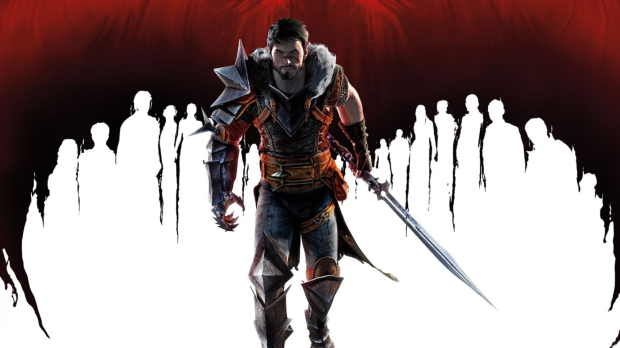
The truth is that game developers have been trying to automate certain processes for a while now. BioWare, who has produced some of the most lauded game stories in the entire industry, has experimented with procedurally-generated dialog and quest lines for quite some time. And, according to Dragon Age writer David Gaider, every attempt ended in disaster.
"Ah, yes, the dream of procedural content generation. Even BioWare went through several iterations of this: "what if we didn't need every conversation to be bespoke?" Unlimited playtime with dialogue being procedurally created alongside procedural quests!
"Each time, the team collectively believed--believed down at their core--that this was possible. Just within reach. And each time we discovered that, even when the procedural lines were written by human hands, the end result once they were assembled was... lackluster. Soulless.
"And I say such an AI will do exactly as we did: it'll create something shaped like a narrative, constructed out of stored pieces it has ready... because that's what it does. That is, however, not going to stop a lot of dev teams from thinking it can do more. And they will fail."
NVIDIA's latest Computex 2023 keynote presentation really underlines Gaider's points. NVIDIA showed off an in-game NPC dialog interaction that was entirely created in real-time using AI, and it was criticized by viewers for being hollow and unbelievable.
Other major games companies are optimistic on AI, but hold skepticism in it becoming a far-reaching revolution.
Take-Two Interactive CEO Strauss Zelnick believes that artificial intelligence is a "rising tide that raises all boats," but is quick to say that AI will not replace human creative talent.
"Our view is that AI will allow us to do a better job and to do a more efficient job. When you're talking about tools and they are simply better and more effective tools."
"No AI is not going to allow people to push a button to make a hit. However, AI is going to make certain elements of any process that requires coding easier for everyone, for everyone, not disproportionately for anyone, for everyone."
Zelnick also says that Take-Two has tried to use AI models to create games...and it didn't work.
Electronic Arts CEO Andrew Wilson has a more opportunistic approach to AI:
"As it relates to AI, I think that, again, as an industry, we're probably going to be one of the greatest beneficiaries of AI broadly. I think that it will allow us to do what we currently do more efficiently."
EA Chief Operating Officer Laura Miele echoes Wilston's sentiments:
"We're thinking about the advantage of this next wave of technology as the accelerator in game development for players and player experience and as we also think about truly life services at scale. So, in game development, you would imagine the velocity of content, creative iteration is going to be advantaged greatly by having really smart content tools."
Gamers also have a very skeptical outlook on AI as it relates to any sort of creative influence in games.
Chinese games firms Tencent, NetEase, and miHoYo were all criticized heavily by overseas gamers for using AI-created promotional art for games. There's also reports that Chinese companies are using AI to help speed along games development, but the methods remain unclear.



 Blizzard co-founder 'blown away' at the progress of generative AI
 AI is an opportunity for game devs, Fallout creator Tim Cain says
 SEGA to 'proceed carefully' with AI use, admits gen AI faces 'strong resistance' from creatives
 PS5 architect mostly interested in using AI for graphics and gameplay performance
 GTA 6 won't cost $100 but it could be made with AI, former Rockstar dev says
 RAM crisis is getting worse, Valve engineer warns
 Xbox's return to exclusives was decided 'very early on' by CEO Asha Sharma
 Xbox console exclusives can include multiplayer games too
 Assassin's Creed Black Flag Resynced sells over 3 million copies, New Game+ is coming
 Modder plays GTA Vice City and GTA III on a TV inside GTA San Andreas
 Enthusiast puts 11 fans and an AiO on an RTX 3080, gains only 4 FPS
 Spotify removed 75 million AI-generated tracks in 2025 as it cracks down on royalty abuse
 YouTuber claims Sony is using social media bots to push back against backlash over its physical disc announcement
 Apple's first OLED iPad mini could launch as early as October
 Ryzen 7 7700X3D outperforms Ryzen 7 5800X3D with just one stick of DDR5, making AM4 a terrible option for your next build
 SteelSeries Arctis Nova 7 Wireless Gen 2 Headset Review - New and Improved, But Is It Enough?
 AMD Ryzen 7 7700X3D Review - Days of Future Past
 Samsung 990 2TB SSD Review - Ninth Gen QLC at PCIe Gen4 Speeds
 ASUS ExpertBook Ultra (Panther Lake) 14" Business Laptop Review
 ASUS ROG Raikiri II Xbox Wireless Controller Review - Ready to Take Control
 MOZA FMP18 Panel Bundle Review: authentic F/A-18 Hornet cockpit controls for flight sims
 Micron 6600 ION 245.76TB Enterprise SSD Review - Best in Class Programming Speeds
 MOZA MA3F EFCM Flight Control Module Review: authentic Airbus A320 autopilot panel for simulators
 Turtle Beach Stealth Pro II Wireless Gaming Headset Review - Premium Sound, Fantastic Features
 MOZA MGX1000 Instrument Panel Review: a realistic Garmin G1000 replica for immersive flight sims
 I use this decade-old free tool that finds files faster than Windows Search does
 I install and update most of my apps with this Windows command now, and I stopped downloading sketchy installers
 Hisense U6SF 65-inch MiniLED TV: High Performance Meets Leisurely Convenience
 I stopped digging through Windows menus after I set up this one folder
 Don't sell your Windows laptop until you do these things
 6 PC cleaning mistakes to avoid for safer hardware maintenance
 Phison and Intel Take Aim at Local AI's Memory Wall with aiDAPTIV
 How to Remap Keyboard Keys in Windows using Microsoft PowerToys
 7 tips to organize your Windows files for faster, easier access
 Intel Arc G3 Extreme first impressions with MSI's Claw 8 EX AI+ - Incredible power for an extreme price