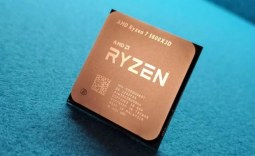
AMD recently re-released the Ryzen 7 5800X3D, giving gamers on the AM4 platform the option to upgrade to a highly performant CPU for gaming even by today's standards. However, for gamers looking to build a new rig, AM4 is substantially less appealing even with the 5800X3D being an option for $349. ComputerBase published an article revealing that the Ryzen 7 7700X3D is faster with one stick of RAM compared to the Ryzen 7 5800X3D with two sticks.
The computer-focused outlet showed off its benchmarks of most of AMD's Ryzen X3D parts and showed that even with just one DDR5 DIMM, the Ryzen 7 7700X3D handily outperforms the Ryzen 7 5800X3D with two sticks. The memory configuration of both CPUs makes the performance results more impressive, with the Ryzen 7 7700X3D being paired to a rather slow DDR5-5200 CL26 memory stick, while the Ryzen 5 5800X3D was paired with two DDR4-3200 sticks at a very low CL14 latency. DDR4-3200 at CL14 is one of the lowest-latency memory configurations you can buy for DDR4.

At 720p, ComputerBase's benchmark results show the 7700X3D performing 14% better than the 5800X3D on just a single DDR5 stick. Adding another stick to the 7700X3D only improved performance by 5%.
- Read more: Synthetic DDR5 'HUDIMM' testing suggests gaming performance won't be seriously impacted by new modules
- Read more: Ryzen 7 5800X3D 10th Anniversary Edition hits fourth place on Amazon best sellers list, less than a month after release
- Read more: AMD is rumored to bring the Ryzen 7 5800X3D back to life following AM4's 10th anniversary
ComputerBase's results show that opting for a single DDR5 memory stick won't drastically decrease gaming performance with the 7700X3D on the AM5 platform, making single-stick configurations on AM5 an optimal choice for builders. Looking at today's outgoing hardware prices, there's not a big price difference between opting for two 8GB DDR5 sticks or a single 16GB stick. But with the extreme volatility of DDR5 pricing lately, there's no guarantee single-stick options will stay close to the pricing of dual-stick equivalents.

Frequently Asked Questions
Open a question for an answer from TweakTown's coverage of this news, or ask your own below.
How does the Ryzen 7 7700X3D perform versus the Ryzen 7 5800X3D when using a single DIMM versus dual-channel memory?
How much did performance improve on the 7700X3D after adding a second DDR5 stick in ComputerBase's tests?
How do current street prices for the 7700X3D and the re-released 5800X3D compare according to this article?
How much more did the AM5 7700X3D parts list cost compared to the AM4 5800X3D build in the article's example?
Have a question about this content not listed here? Ask below and TweakBot will answer it.

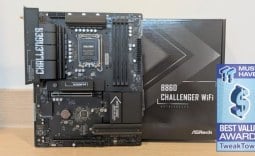
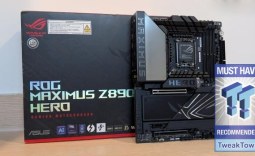
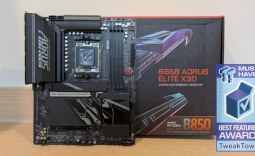
Helping matters more is the pricing of AMD's AM5 X3D CPUs at the time of writing; the Ryzen 7 7700X3D is now available for as low as $279.99, making the AM5 chip $70 cheaper than AMD's re-released Ryzen 7 5800X3D 10th Anniversary Edition. With this low pricing on the 7700X3D, it is now possible to build a new AM5 system that nearly matches the price of a new AM4 system with the new 5800X3D, even with elevated DDR5 pricing. For instance, we put together two parts lists, one for AM4 featuring the 5800X3D and one for AM5 featuring the 7700X3D, with both featuring 16GB of memory and the cheapest B-series motherboard we could find. Overall, the 7700X3D parts list was just $43 more expensive than the 5800X3D equivalent. (Check out the gallery above for the parts we chose specifically.)