

We are still quite far away from the release of AMD's next-gen RDNA 3 architecture, but early rumbles of the Navi 33 are now making their way out of the cracks of the internet.
KittyYyuko posted on Twitter that Navi 33 (or something close to that) is like the Navi 21 (a flagship GPU) but with "Next Gen IP Core" (which would be RDNA 3). The new Navi 33 GPU is reportedly based on a new GPU architecture, and has 80 compute units (CUs) and 5120 cores.
With this much raw power inside of the Navi 33 we would expect the Radeon RX 7600 XT, or whatever it is named, should have similar power to the current near flagship Radeon RX 6800 XT and Radeon RX 6900 XT graphics cards. That would be a big deal for AMD, and great for gamers -- if there's enough of these new Navi 3X cards to go around whenever they make it to market.
This could see a higher-end Navi GPU with something like 96 compute units or more, which could see the flagship Radeon RX 7800 XT or Radeon RX 7900 XT swinging some serious GPU punches against NVIDIA and its next-gen Hopper GPU architecture and GeForce RTX 40 series graphics cards.
We've already heard rumors about Navi 31 being an MCM (multi-chip module) design, similar to the CPU chiplet technology that AMD uses on its Zen CPU architecture. Previous rumors pegged the Navi 31 GPU to rock dual 80 compute unit GPUs for a total of 160 compute units, and 10240 cores (dual 5120).
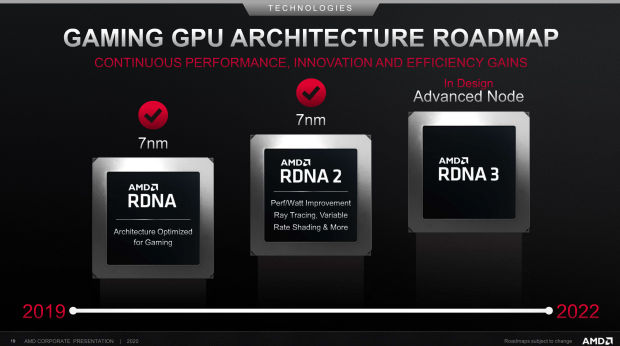
AMD's next-gen RDNA 3-based GPUs will be made on 5nm at TSMC, including the Navi 33 and Navi 31 chips that we've already heard about. TSMC will be making AMD's next-gen Zen 4 chips, NVIDIA's next-gen Hopper GPUs and Intel's new Xe GPUs all on its new 5nm process node.
As for a release window, other tweets suggest that a Q2 2022 is the "most likely release date" while Q3 2022 is a possibility "if they need more 5nm supply". Given the historic chip shortages, the CPU and GPU markets are already spread as thin as they have ever been -- let alone totally next-gen GPUs of the future.