

OpenAI, Microsoft, Amazon, Meta, Google, Tesla, and more are all on the NVIDIA Blackwell train
NVIDIA has unveiled its next-gen Blackwell AI GPU, which features 208 billion transistors, 192GB of super-fast HBM3E memory, a cutting-edge custom TSMC 4NP process, and groundbreaking new networking that sees NVIDIA NVLink deliver 1.8TB/s bidirectional throughput per GPU.

The company also announced its new NVIDIA GB200 Grace Blackwell Superchip, which connects two NVIDIA B200 Tensor Core GPUs to the NVIDIA Grace CPU "over a 900GB/s ultra-low-power NVLink chip-to-chip interconnect." With serious AI horsepower, NVIDIA's powerful next-gen AI hardware arrives during the AI boom, so, unsurprisingly, it announced its long list of Blackwell partners.
NVIDIA writes, "Among the many organizations expected to adopt Blackwell are Amazon Web Services, Dell Technologies, Google, Meta, Microsoft, OpenAI, Oracle, Tesla, and xAI." Even though most, if not all, of these companies are investing in creating their own AI chips and hardware for generative AI-which is used in everything from scientific research to medicine and chatbots-Blackwell will drive many of the advances over the next few years.
Microsoft and NVIDIA to integrate generative AI and Omniverse tech in Azure and Microsoft 365
It's been a massive day for AI news, with NVIDIA's premiere GTC 2024 AI conference underway. Earlier today, the company unveiled its next-gen Blackwell AI GPU - an unprecedented AI monster with 208 billion transistors and 192GB of super-fast HBM3E memory.

NVIDIA's first multi-GPU die is built on a cutting-edge TSMC 4NP process. It allows organizations to run real-time generative AI on "trillion-parameter large language models" at up to 25X less cost and energy consumption than its Hopper predecessor. Throw in the latest version of NVIDIA NVLink that delivers 1.8TB/s bidirectional throughput per GPU, and it's no wonder everyone is signing up to join the Blackwell family - including Microsoft.
Alongside the big Blackwell reveal, NVIDIA and Microsoft have announced that Microsoft Azure will adopt NVIDIA Grace Blackwell Superchips to help accelerate customer and first-party (Microsoft's own) AI offerings, Including Microsoft 365, aka the online versions of Microsoft Word, PowerPoint, Excel, and OneNote. NVIDIA GPUs and NVIDIA Triton Inference Server will help power Microsoft Copilot for Microsoft 365.
NVIDIA Audio2Face uses AI to generate lip synching and facial animation, showcased in two games
Localization is a big thing in gaming, where a game's dialogue and presentation are recorded in various languages to reach a global audience. Like how Netflix dubs all of its original programming into multiple languages, localization for games is a complex process that requires accurately translating dialogue and text, maintaining dramatic or comedic tones, and then re-recording dialogue with voice actors from different countries.

Where games differ from movies or television drama is that all performances are digital and completely malleable, which is why you've got a situation where Sony's PlayStation-exclusive Ghost of Tsushima (which is coming soon to PC) offers both English and native Japanese language options with full lip-syncing and correct facial animation.
Although it's possible to do this for dozens of languages, Ghost of Tsushima limits full lip-synching to two language options due to the task's complexity and the animation involved. This is where generative AI, specifically NVIDIA's Audio2Face technology, will step in.
NVIDIA's Covert Protocol tech demo has you become a detective investigating AI Digital Humans
At GDC 2024, NVIDIA presented a new tech demo for a theoretical detective game, Covert Protocol, created in collaboration with Inworld. If you recall NVIDIA's recent AI collabs, which created cyberpunk-style tech demos featuring AI avatars you can interact with, this takes it all one step further. It presents an old-school adventure game where you're talking to characters to solve a mystery in a brand-new way.

In Covert Protocol, you play a private detective and explore a realistic environment, speaking to 'digital humans' as you piece together critical and key information. The game is powered by the Inworld AI Engine, which fully uses NVIDIA ACE (the technology we've been following over the past year) services to ensure that no two playthroughs are the same.
"This level of AI-driven interactivity and player agency opens up new possibilities for emergent gameplay," NVIDIA writes. "Players must think on their feet and adapt their strategies in real-time to navigate the intricacies of the game world."
NVIDIA creates Earth-2 digital twin: generative AI to simulate, visualize weather and climate
NVIDIA isn't just changing up the GPU and AI GPU game with its Blackwell AI GPU chips, announcing Earth-2 today during the GPU Technology Conference (GTC).

NVIDIA announced its new Earth-2 climate digital twin cloud platform so people could simulate and visualize weather and climate at scales never seen before. Earth-2's new cloud APIs are available on NVIDIA DGX Cloud, allowing virtually anyone to create AI-powered emulations to make interactive, high-resolution simulations ranging from the global atmosphere to localized cloud cover all the way through to typhoons and mega-storms.
The new Earth-2 APIs offer AI models that use new NVIDIA generative AI model technology called CorrDiff, using state-of-the-art diffusion modeling, capable of generating 12.5x higher resolution images than current numerical models that are 1000x faster and 3000x more energy efficient.
Honor reveals the first laptop with 24GB RAM, also packs Intel Core Ultra 'Meteor Lake' CPU
It looks like Honor is the first to market with a new laptop featuring 24GB of DDR5 memory, with its new MagicBook Pro 16 AI laptop teased on Geekbench. Check it out:

The new Honor MagicBook Pro 16 AI laptop features 24GB of LPDDR5X memory, versus the usual SO-DIMM memory modules. Inside, there are 8 individual memory chips, each packing 3GB for a total of 24GB of LPDDR5X-6400 memory. This is great to see, as 24GB of RAM is a fantastic step up from 16GB, and while it's not quite 32GB, it's once again, not 16GB. Great stuff.
We should see 12GB SO-DIMM memory modules in the near future, which will allow for up to 48GB of DDR5 memory as long as the laptop of choice has four DIMM slots, of course.
GIGABYTE teases DGX, Superchips, PCIe cards based on NVIDIA's new Blackwell B200 AI GPUs
GIGABYTE is showing off its next-gen compact GPU cluster scalable unit: a new rack with GIGABYTE G593-SD2 servers, which have NVIDIA HGX H100 8-GPU designs and Intel 5th Gen Xeon Scalable processors inside.

The company has said it will support NVIDIA's new Blackwell GPU that succeeds Hopper, with enterprise servers "ready for the market according to NVIDIA's production schedule". The new NVIDIA B200 Tensor Core GPU for generative AI and accelerated computing will have "significant benefits," says GIGABYTE, especially in LLM inference workloads.
GIGABYTE will have products for HGX baseboards, Superchips, and PCIe cards with more details to be provided "later this year," adds the company.
Sony's next-gen PlayStation 6 should hit 4K 120FPS or 8K 60FPS thanks to PSSR upscaling tech
Sony reportedly awarded AMD with the contract to build a next-generation SoC for its next-generation PlayStation 6 console... which could be capable of 4K 120FPS or 8K 60FPS gaming.

We've had plenty of leaks and rumors about the beefed-up PlayStation 5 Pro console coming later this year, as well as Sony's new PlayStation Spatial Super Resolution (PSSR) technology, which is "currently aiming" for 4K 60FPS and 8K 30FPS gaming, with leaker Tom Henderson reporting "but it's unclear if those internal milestones can be passed".
The upgraded PlayStation 5 Pro playing games at 4K 60FPS and 8K 30FPS will most likely be driven with PSSR upscaling, and that makes sense: 45% more rendering power, with 2-3x the ray tracing performance in PS5 Pro-powered games at 4K 60FPS... and some, not all, at 8K 30FPS would be huge for Sony.
TSMC rumored to build new CoWoS advanced packaging facility in Japan, only place outside Taiwan
TSMC is reportedly considering building advanced packaging capacity in Japan, which would fuel Japan's efforts to reboot its semiconductor industry.

In a new report from Reuters, "two sources familiar with the matter" report that the Taiwanese giant is in the early stages, with the sources "declining to be identified as the information was not public." According to one of the sources who was briefed on the matter, TSMC is considering building a chip-on-wafer-on-substrate (CoWoS) packaging technology in Japan.
All of TSMC's new CoWoS capacity is located in Taiwan, so this would be a significant move for Taiwan Semiconductor Manufacturing Company. TSMC recently built a new fab in Japan in just two hours, with workers working 24-hour days around the clock, which has earned the site the nickname "Nightless Castle." I'm sure there will be many more sleepless nights if TSMC does indeed build new CoWoS packaging technology in Japan.
NVIDIA's new Project GROOT: fully humanoid robot to compete against Tesla Optimus AI robot
NVIDIA had plenty to announce during its GPU Technology Conference (GTC) event, with the launch of Project GROOT: a new foundational model that helps in the development of robots for industrial use (and more).

The new Project GROOT stands for "Generalist Robot 00 Technology," with NVIDIA CEO and founder Jensen Huang teasing robots powered by Project GROOT during GTC 2024, which have been designed to understand natural language and emulate movements made by humans by watching them.
Huang said: "Building foundation models for general humanoid robots is one of the most exciting problems to solve in AI today. The enabling technologies are coming together for leading roboticists around the world to take giant leaps towards artificial general robotics".
 This idiot-proof thermal paste applicator will make applying TIM easy, even for noobs
 MSI no longer interested in under performing AMD Radeon GPUs, now exclusive to NVIDIA
 SDC's new 27-inch 4K 165Hz Nano-IPS monitor features DisplayPort 2.0, costs just $415
 Sabrent wants you to enhance your tech with special savings on SSD, RAM, and enclosure bundle
 LG's 32-inch gaming OLED monitor with 480Hz refresh rate is imminent, with pre-orders live now
 SteelSeries Arctis Nova 4X Wireless Gaming Headset Review
 ACEMAGIC AD08 "Core i9 11900H" Mini PC Review
 Lenovo ThinkPad X1 Carbon Gen 12 Review
 ASUS ROG Swift Pro PG248QP Gaming Monitor Review - Frames, frames, and more frames
 FlexiSpot C7B-Mesh Ergonomic Office Chair Review
 Samsung G8 34-inch QD-OLED Gaming Monitor Review - 175Hz for $900
 ASRock NUCBOX-155H Mini PC Review
 NuPhy Air96 V2 Wireless Mechanical Keyboard Review
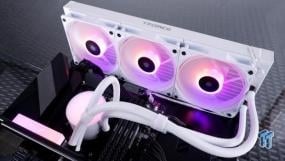 TEAM T-FORCE Siren DUO360 RGB Liquid CPU Cooler Review
 AVerMedia Live Streamer ULTRA HD Review
 Building the Ultimate Home Entertainment Server with an ASUSTOR NAS and Viper Gaming NVMe SSDs
 Everything you need to know about the latest ASUS NUC Mini PCs - NUC 14 Pro and ROG NUC
 How to Overclock Your GPU and Boost Your PC Gaming with ASUS GPU Tweak III
 ASUS's AMD Radeon RX 7000 Series GPU lineup has something for every gamer
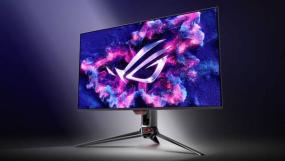 ASUS OLED Premium Care defends the ROG Swift OLED PG32UCDM gaming monitor from burn-in