











Our Verdict
Pros
- Throughput performance
- Cost effective
- Single-sided design
Cons
- Fastest, but not most powerful
Should you buy it?
AvoidConsiderShortlistBuyIntroduction & Drive Details
Biwin's Black Opal X570 SSD is the first of its kind 8-channel controlled DRAMless SSD. Right off the bat, we will make it known that this unique offering is indeed the world's fastest DRAMless SSD. Now, if you are a regular reader of our SSD reviews, you will know that we draw a clear distinction between "fastest" and most "powerful" where others do not. We rank SSDs according to how well they perform in real-world type testing and not by meaningless synthetic sequential read speed results. Even though our test subject is indeed and by far the fastest of its kind we've ever seen, it is not the most powerful or best performing of its kind we've come across.
With that said, Biwin's first PCIe Gen5 DRAMless SSD does have a lot to offer and is overall an excellent SSD. The one thing we cannot speak to about this SSD, though, is its value proposition, as this SSD is currently not sold in the United States. This could soon change, but we do not have a timeline or even know if it will ever be sold in the USA.
As stated, the drive is the first of its kind 8-channel DRAMless SSD, or at least the first we've ever encountered. With a newly minted Maxio 1806A 8-channel controller in front of its YMTC 232-Layer TLC flash array, the X570 can only be outrun sequentially by Samsung's 9100 Pro, which is our current sequential throughput champion. This is indeed groundbreaking for a DRAMless SSD. Using our Intel platform for reference, it is, in fact, 2,800 MB/s faster than any DRAMless SSD we've ever tested, which really comes as no surprise considering it has double the controller channels of any other flash-based DRAMless consumer SSD we are aware of.
Additionally, the X570 employs an advanced 0.5 mm thick graphene thermal pad for effective heat dissipation, giving the drive superior temperature control, ensuring stable performance even under high load scenarios. Furthering the value proposition, Biwin has created a spectacular SSD toolbox called Biwin Intelligence, available free to complement Biwin SSDs.
Now let's dive in and see firsthand what is currently the world's fastest DRAMless SSD can do for you by the numbers.
Drive Details
| Item | Details |
|---|---|
| Model | Biwin X570 2TB |
| MSRP | N/A |
| Model Number | BX570NN02TB-RGX |
| Interface | PCIe Gen5 |
| Form Factor | M.2 2280 |
| Performance | Up to 14,000 MB/s |
| Warranty | 5-Years Limited |


Best Deals: Corsair MP700 PRO 2TB SSD
Price Trend:
Prices last scanned 6 hours and 14 minutes ago

7 days ago: $474.99 USD30 days ago: $474.99 USD
7 days ago: $654.99 CAD30 days ago: $659.99 CAD


When you buy a Biwin SSD, you get free supporting software that makes maintenance and system migration simple and free. Click HERE to download it. Biwin Intelligence is multifunctional management software, designed to support Biwin consumer-brand storage products. For a more convenient and more secure storage experience, this software helps users manage their drives with features like performance testing, data migration, firmware update, and more.

Jon's Test System Specifications
Intel Test System
Our Latest SSD Review Coverage
- Phison E37T SSD Controller Exclusive Preview - The Fastest DRAMless SSD Platform Yet
- Seagate FireCuda X1070 4TB SSD Review - A New Mainstream Contender
- Micron 3610 2TB SSD Review - DRAMless QLC at 11,000 MB/s
- SK hynix Platinum P51 2TB SSD Review - A Powerful Gen5 Alternative
- Biwin Black Opal X570 Pro 8TB SSD Review - Massive Capacity with Elite Performance
| Item | Details |
|---|---|
| Motherboard | ASUS Z890 Apex (Buy at Amazon) |
| CPU | Intel Core Ultra 9 285K (Buy at Amazon) |
| GPU | MSI SUPRIM X RTX 3080 12GB (Buy at Amazon) |
| Cooler | Alphacool Eissturm Hurricane Copper 45 (Buy at Amazon) |
| RAM | Patriot Viper Xtreme 5 8000 48GB (Buy at Amazon) |
| Power Supply | be quiet! Dark Power Pro 12 1200W (Buy at Amazon) |
| Case | PrimoChill's Praxis Wetbench (Buy at Amazon) |
| OS | Microsoft Windows 11 Pro (Buy at Amazon) |
AMD Test System
| Item | Details |
|---|---|
| Motherboard | ASUS ROG Crosshair X870E APEX (Buy at Amazon) |
| CPU | AMD Ryzen 9 9950X (Buy at Amazon) |
| GPU | MSI SUPRIM X RTX 3080 12GB (Buy at Amazon) |
| Cooler | Alphacool Eissturm Hurricane Copper 45 (Buy at Amazon) |
| RAM | Sabrent Rocket DDR5 32GB (Buy at Amazon) |
| Power Supply | be quiet! Dark Power Pro 12 1200W (Buy at Amazon) |
| Case | PrimoChill's Praxis Wetbench (Buy at Amazon) |
| OS | Microsoft Windows 11 Pro (Buy at Amazon) |
Please note: We employ an M.2 AIC for testing on our Intel Core Ultra 9 285K platform.
Sony PlayStation 5 - M.2 Storage Expansion
PS5 Read Performance
With Sony's wildly popular PlayStation 5 console now enabled for M.2 NVMe SSDs to be used as fast storage expansion, we are including results for PS5-compatible SSDs we test as a part of our reviews going forward.


For SSDs that don't have an adequately sized PS5 compatible heatsink or other SSDs where the heatsink provided doesn't fit right and can be removed, we both use and recommend Sabrent's unparalleled PS5 heatsink available HERE.


We only chart SSDs that can deliver a minimum of 5,500 MB/s read, which is Sony's original recommendation.
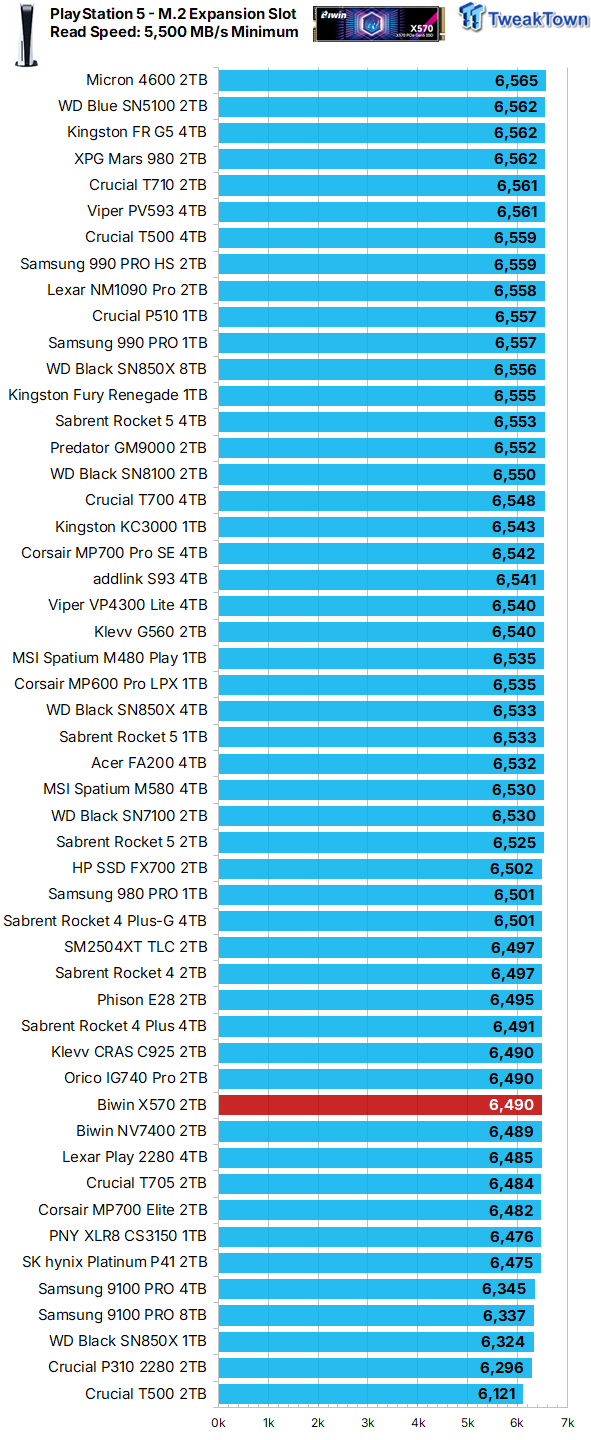
At 6,490 MB/s sequential read on our PS5 platform, the X570 delivers good enough to be sure, but not as much as we were expecting based on other Biwin-made 4-channel DRAMless SSDs.
Synthetic Benchmarks: CDM, Max IOPS, ATTO
CrystalDiskMark
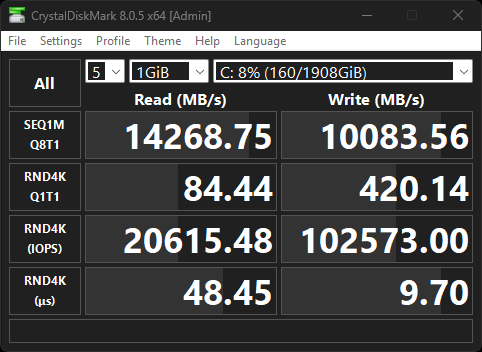
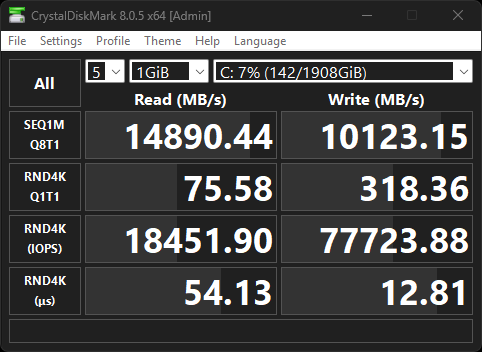
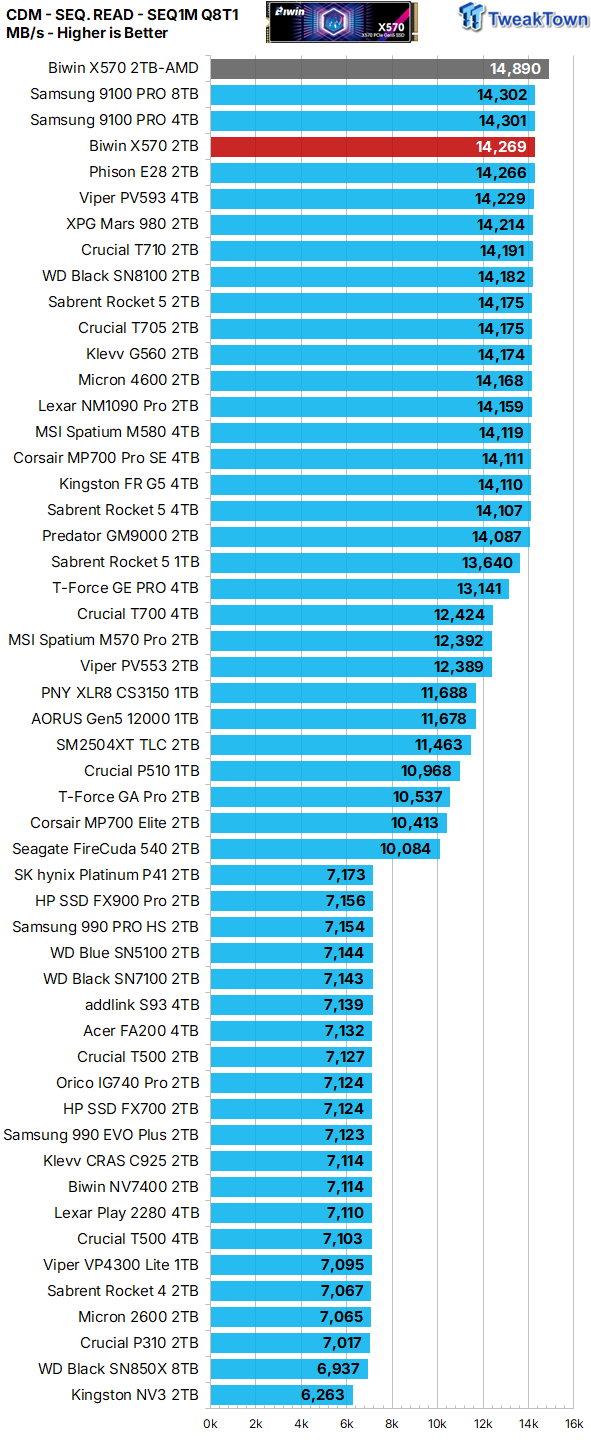
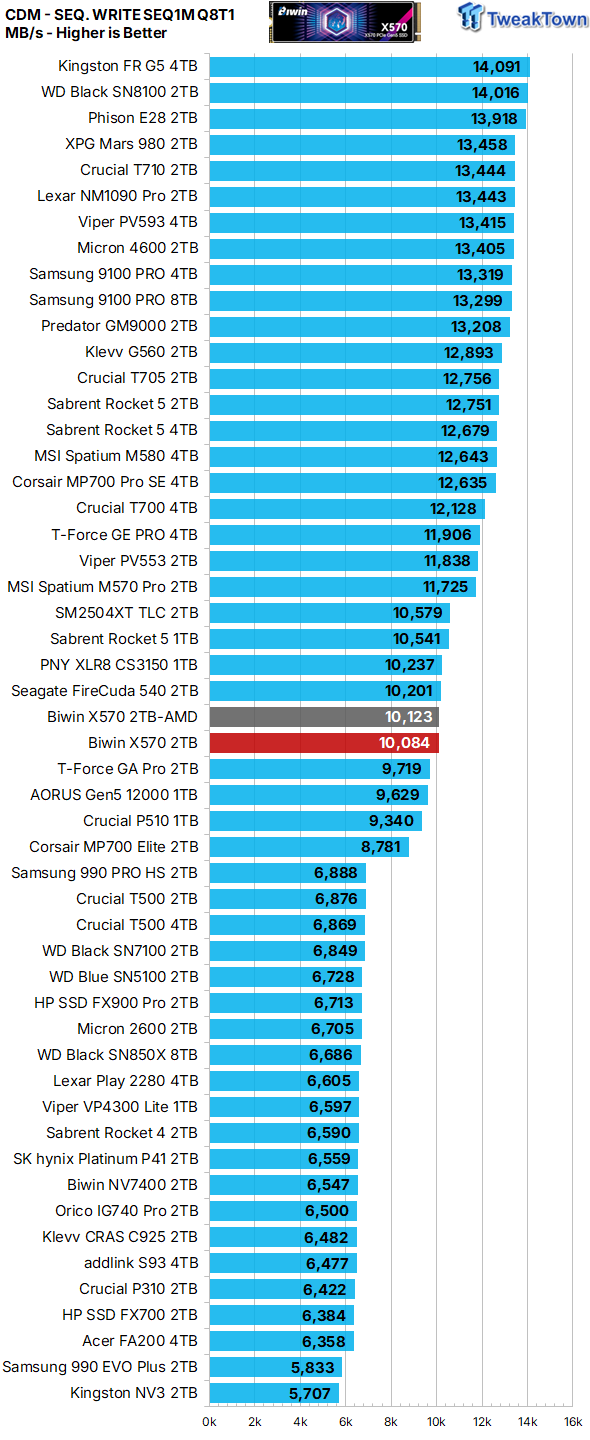
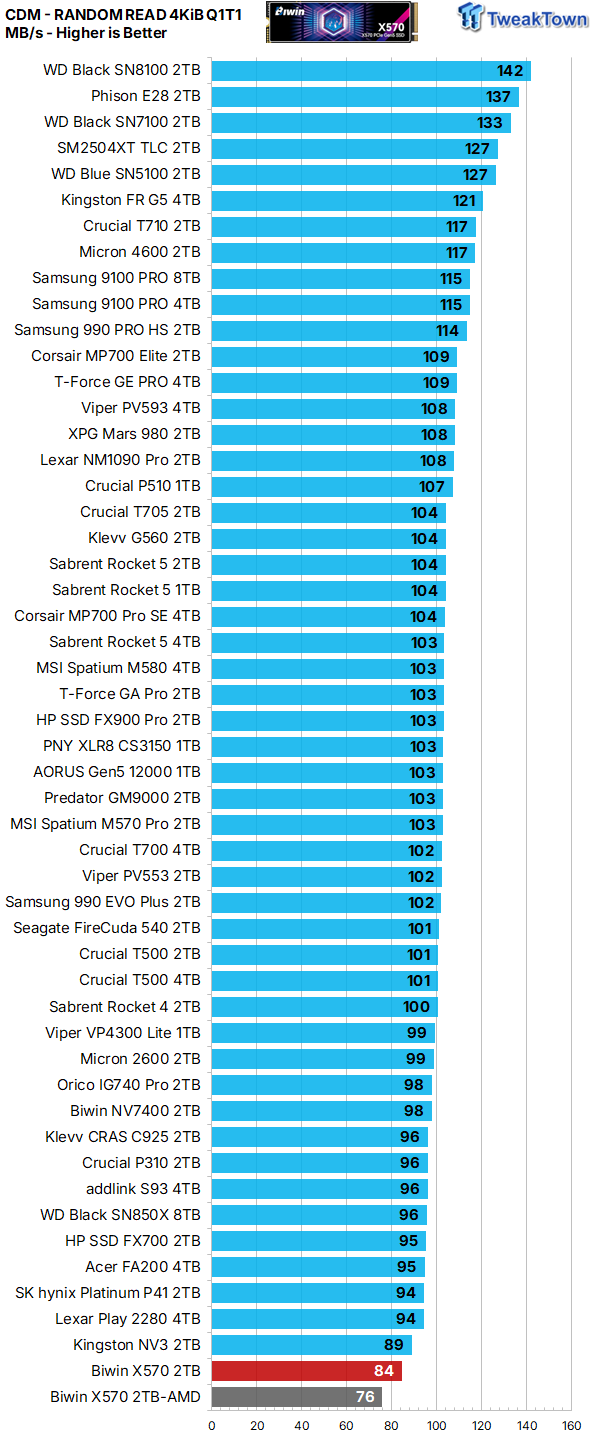
We employ CDM as our standard measurement for both sequential throughput and Q1T1 random read. In terms of sequential throughput, we find our test subject is not only the "fastest" DRAMless SSD we've ever seen, but it is the second "fastest" of all consumer SSDs we've ever tested. Impressive. However, and this is a clear indicator of why the X570 is not the most "powerful" of its kind, take a look at the drive's abysmal 4K QD1 random read speed.
Max IOPS
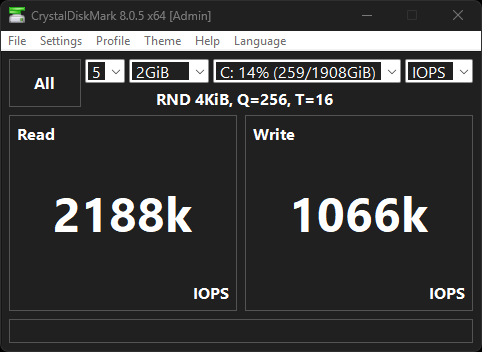
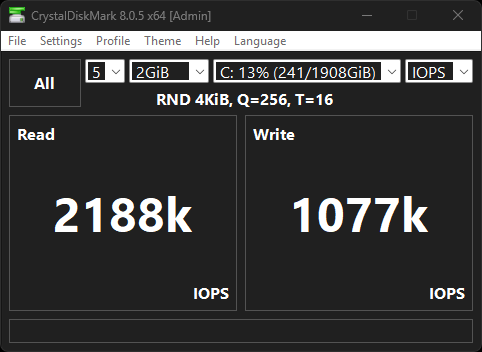
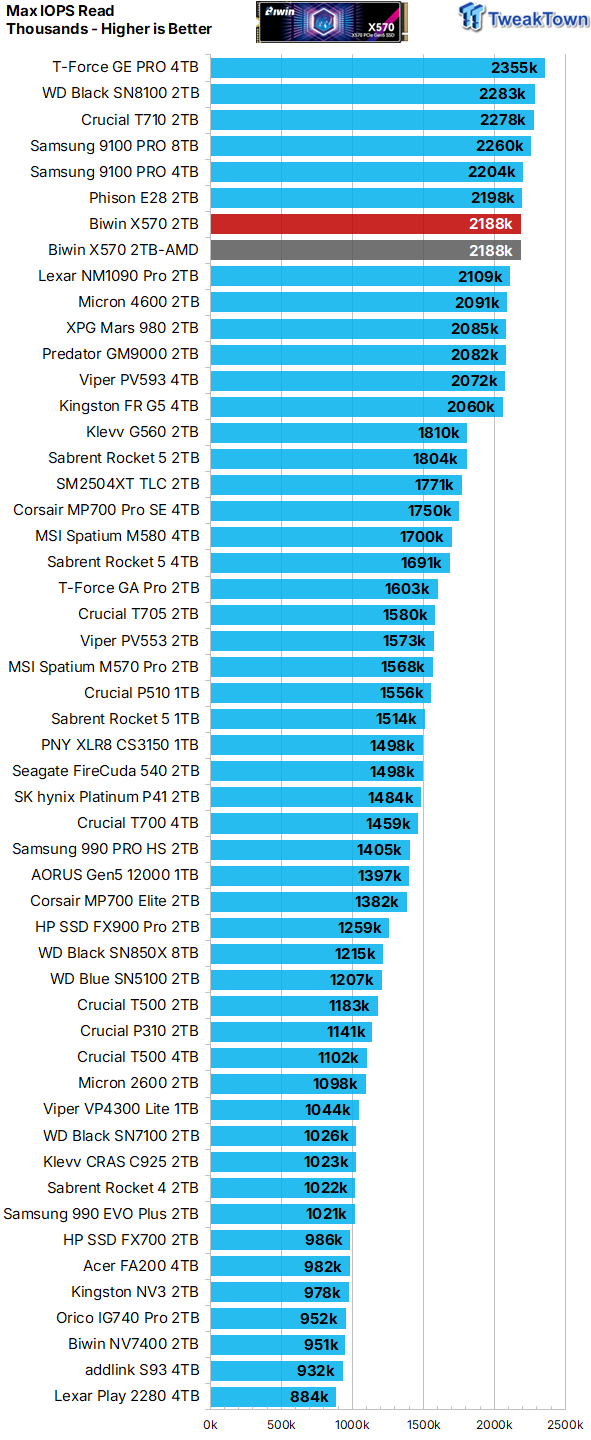
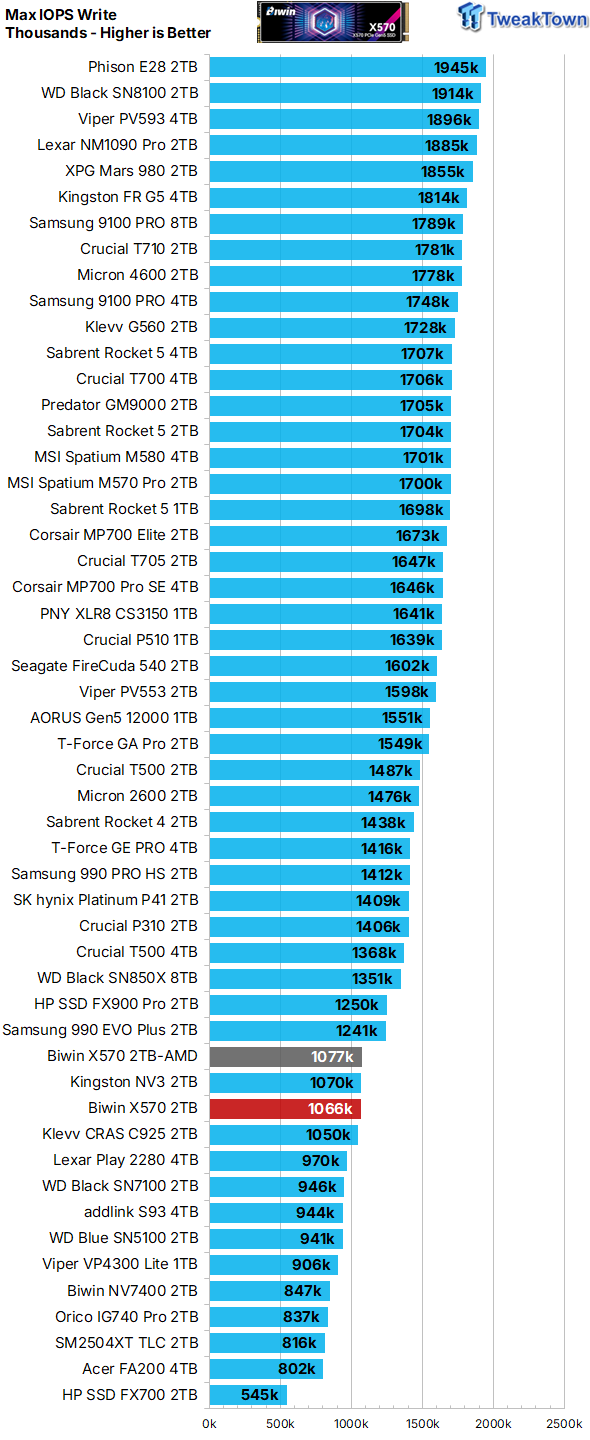
Max 4K random read performance for the X570 2TB SSD is factory specified for up to 2,000K IOPS, and we have no problem getting there. 4K random write is factory spec'd at up to 1,400K IOPS, and here we are falling short, but this is still plenty good enough for our liking, especially considering our much more demanding user state.
ATTO
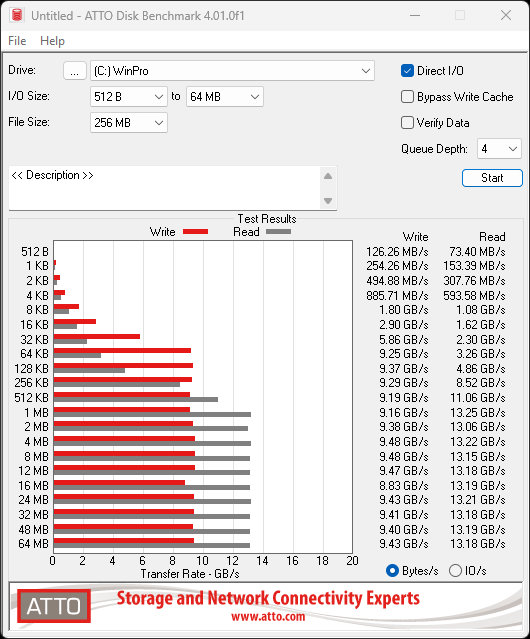
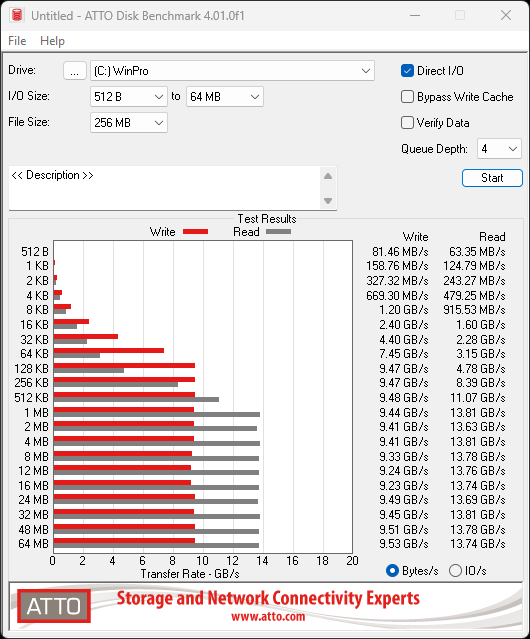
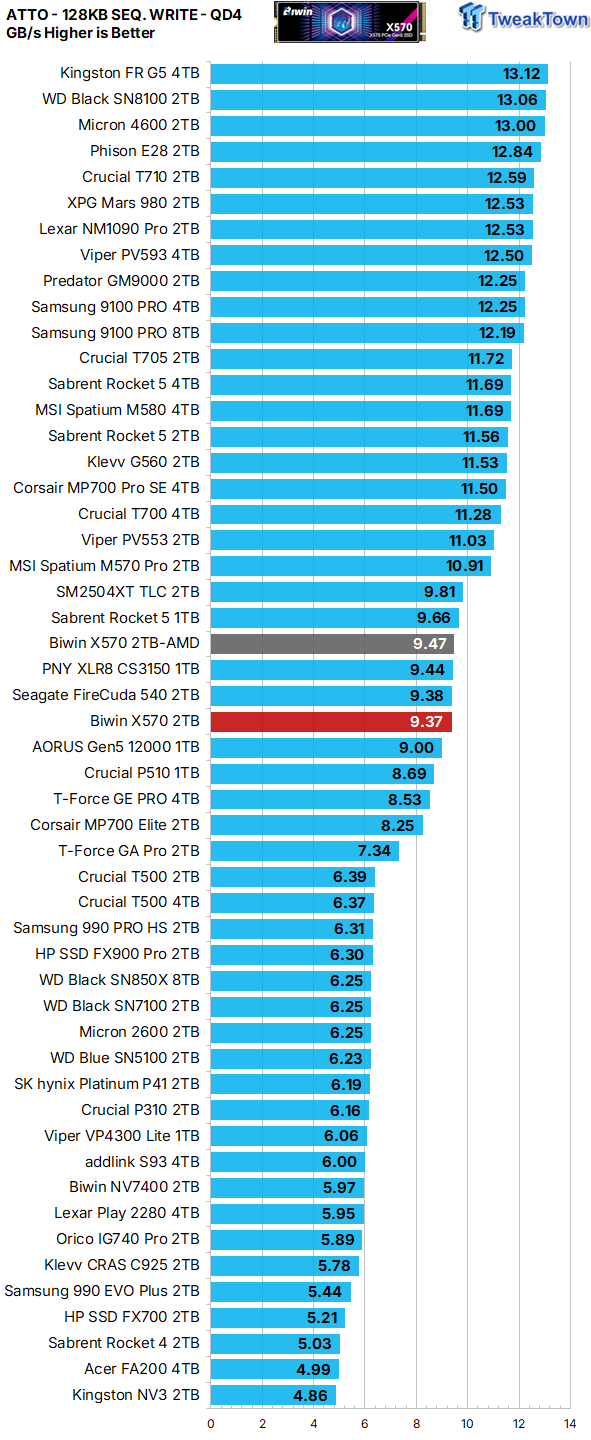
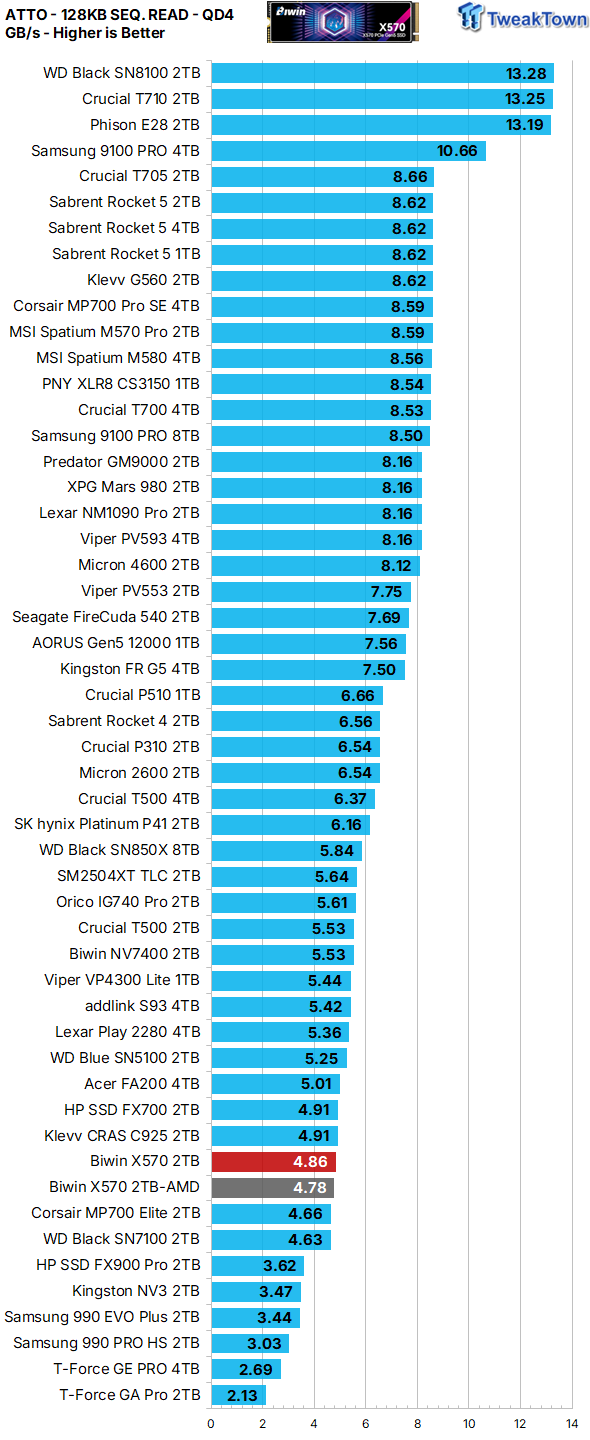
ATTO gives us a clear picture of what transfer sizes a particular SSD favors in terms of QD4 sequential throughput. We chart 128K transfers. At a queue depth of four, the 2TB X570 favors sequential transfers of 1MB or larger when serving data to the host (reading) and 64KB or larger when programming (writing) data.
Real-World Testing: Transfers, 3DMark SSD Gaming Test, PCM10 Storage
Transfer Rates
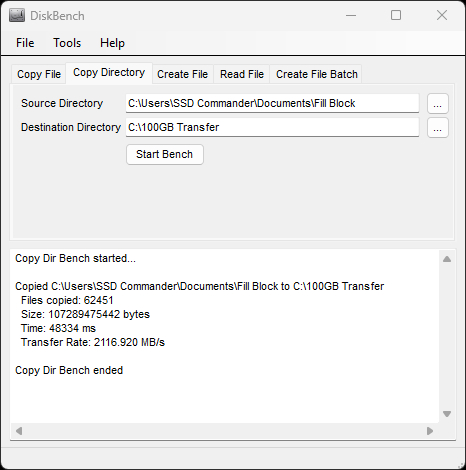
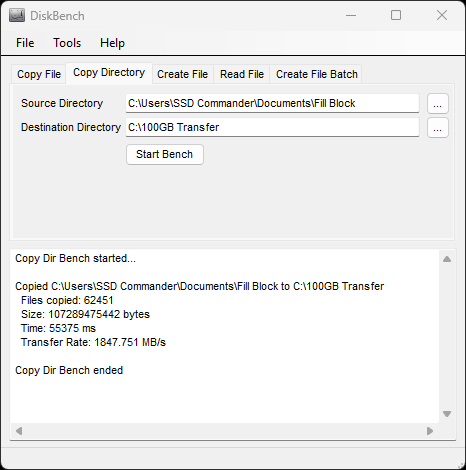
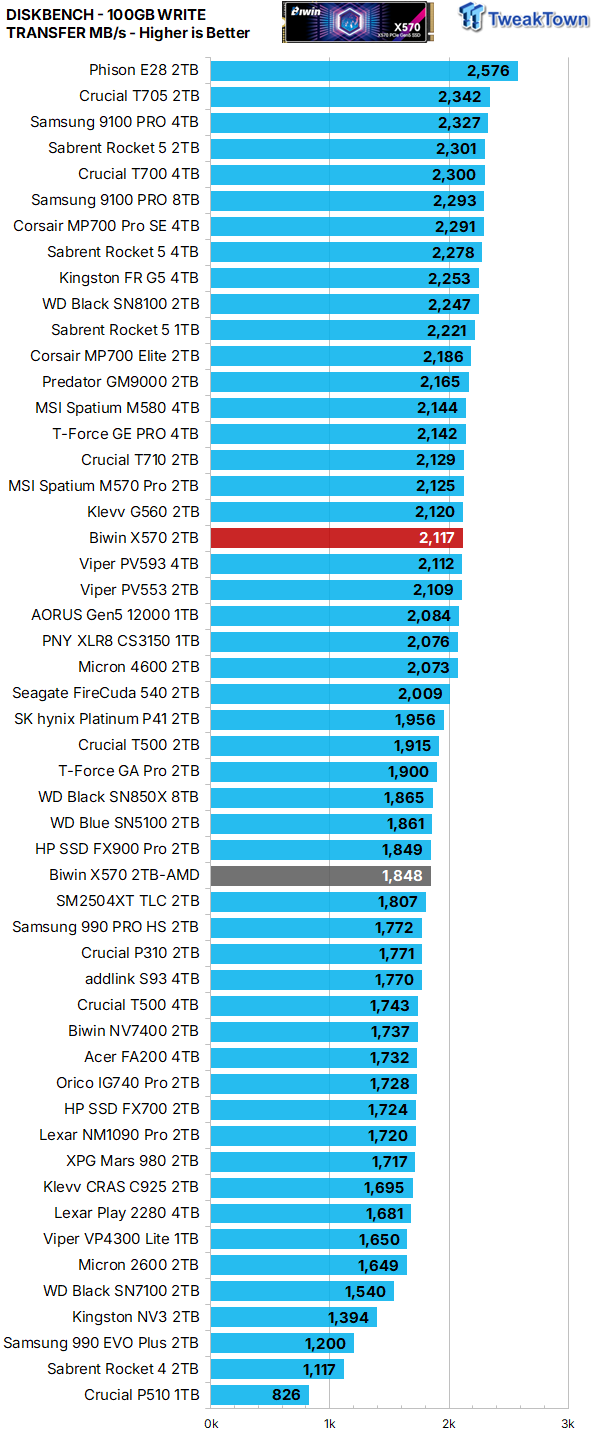
Our 100GB data transfer test is not your ordinary 100GB of data; ours is a crushing mix composed of more than 62K files. Write performance, random or sequential, is an infrequent operation and, as such, we do not consider it to be an important performance metric in the consumer space. An example is how many times a game is installed vs. how many times it's played. Again, by far the "fastest" we've ever seen from a DRAMless SSD.
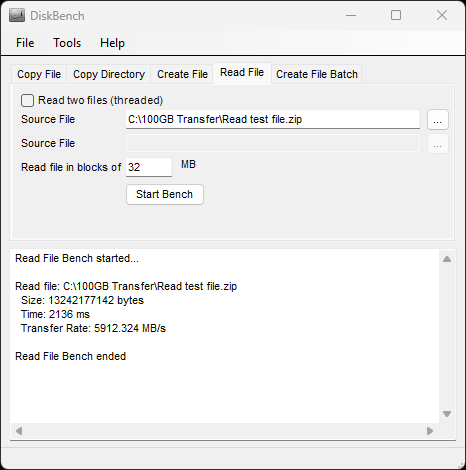
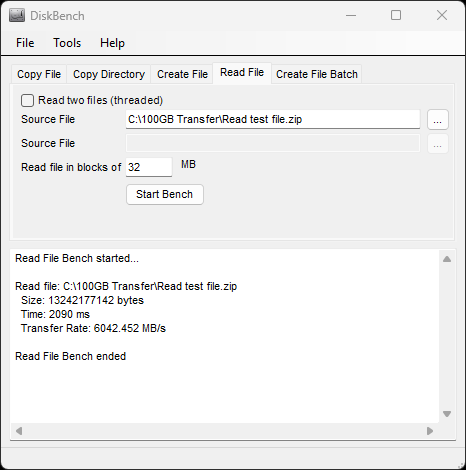
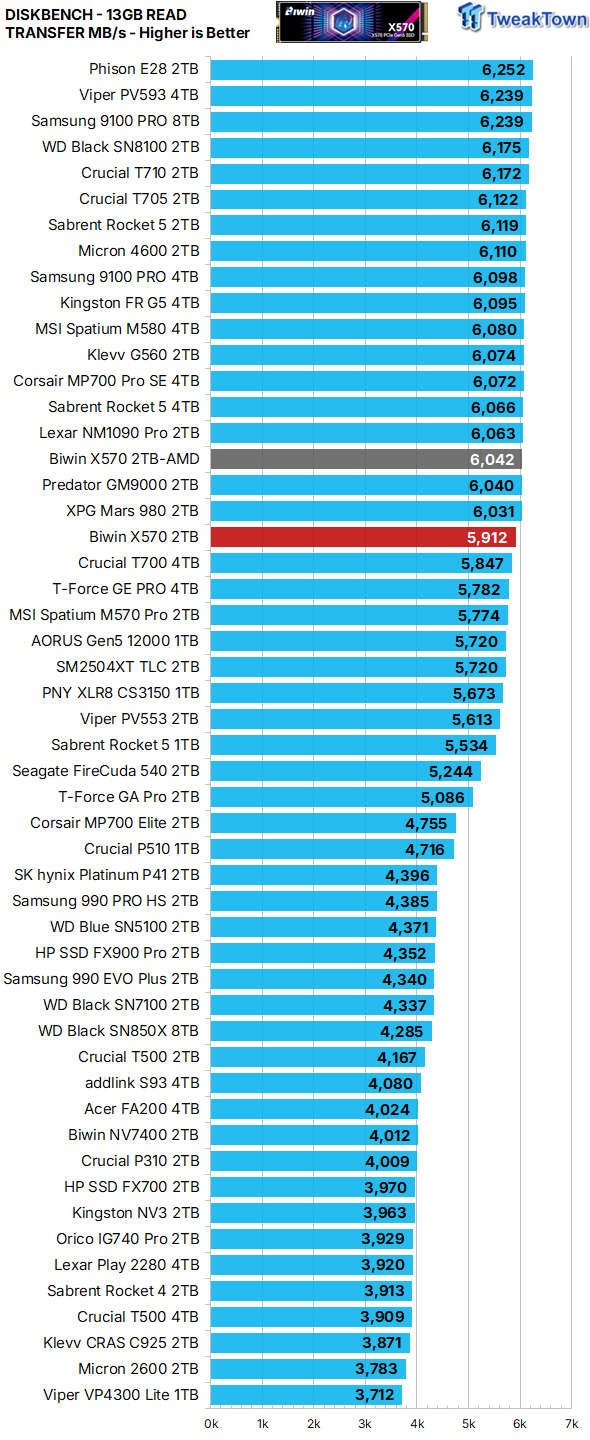
Unlike programming (writing) data, serving data to the host (reading) is typically an important performance metric as it relates to the consumer space. Here we find our test subject delivering what is again the highest rate for any DRAMless SSD we've tested, although the most powerful DRAMless SSD we've ever tested, the 4-channel controlled SMI SM2504XT reference SSD, isn't far behind.
3DMark SSD Gaming Test
UL's newest 3DMark SSD Gaming Test is the most comprehensive SSD gaming test ever devised. We consider it superior to testing against games themselves because, as a trace, it is much more consistent than variations that will occur between runs on the actual game itself. This test is the same as running the actual game, just without the inconsistencies inherent to application testing. In short, we believe that this is the world's best way to test an SSDs gaming prowess and accurately compare it against competing SSDs. The 3DMark SSD Gaming Test measures and scores the following:
- Loading Battlefield V from launch to the main menu.
- Loading Call of Duty Black Ops 4 from launch to the main menu.
- Loading Overwatch from launch to the main menu.
- Recording a 1080p gameplay video at 60 FPS with OBS (Open Broadcaster Software) while playing Overwatch.
- Installing The Outer Worlds from the Epic Games Launcher.
- Saving game progress in The Outer Worlds.
- Copying the Steam folder for Counter-Strike Global Offensive from an external SSD to the system drive.


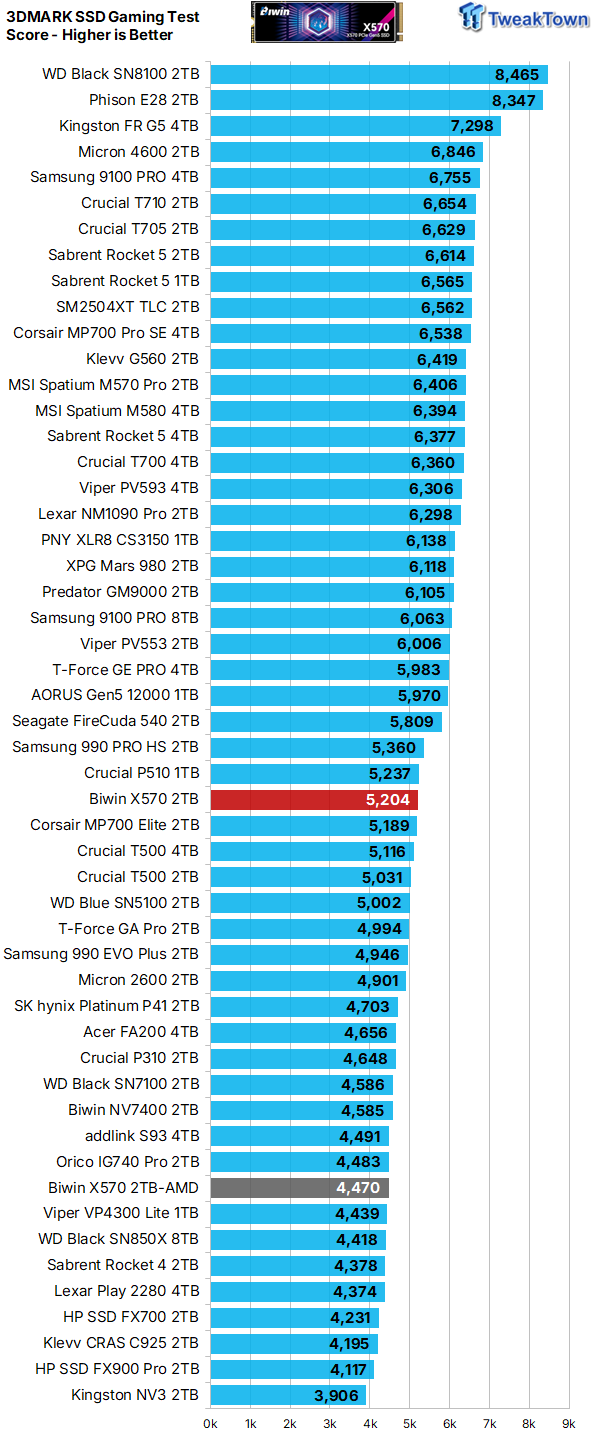
Gaming is a performance metric that matters to most DIY consumers, especially for the enthusiast crowd that TweakTown caters to. Now we've reached the point where results start to matter as they are a direct reflection of user experience.
Decent gaming performance here; third best for a DRAMless SSD, but it's not even close to what we can extract from the 4-channel DRAMless SM2504XT. This is where we begin to see a perfect example of exactly why "fastest" doesn't necessarily equate to most "powerful".
PCM10 Storage Tests
PCMark 10 Storage Test is the most advanced and most accurate real-world consumer storage test ever made. There are four different tests you can choose from; we run two of them. The Full System Drive Benchmark and the Quick System Drive Benchmark. The Full System Drive Benchmark writes 204 GB of data over the duration of the test. These tests directly correlate with mainstream user experience.
PCMark 10 Full System Drive Benchmark
This test writes 204GB of data and covers a broad range of common consumer tasks, including booting Windows 10, file transfers, Adobe and Office applications, and startup times for games such as Battlefield V, COD Black Ops 4, and Overwatch. Unlike synthetic numbers, this is comprehensive real-world data, which is why we use it to rank SSDs in terms of user experience.


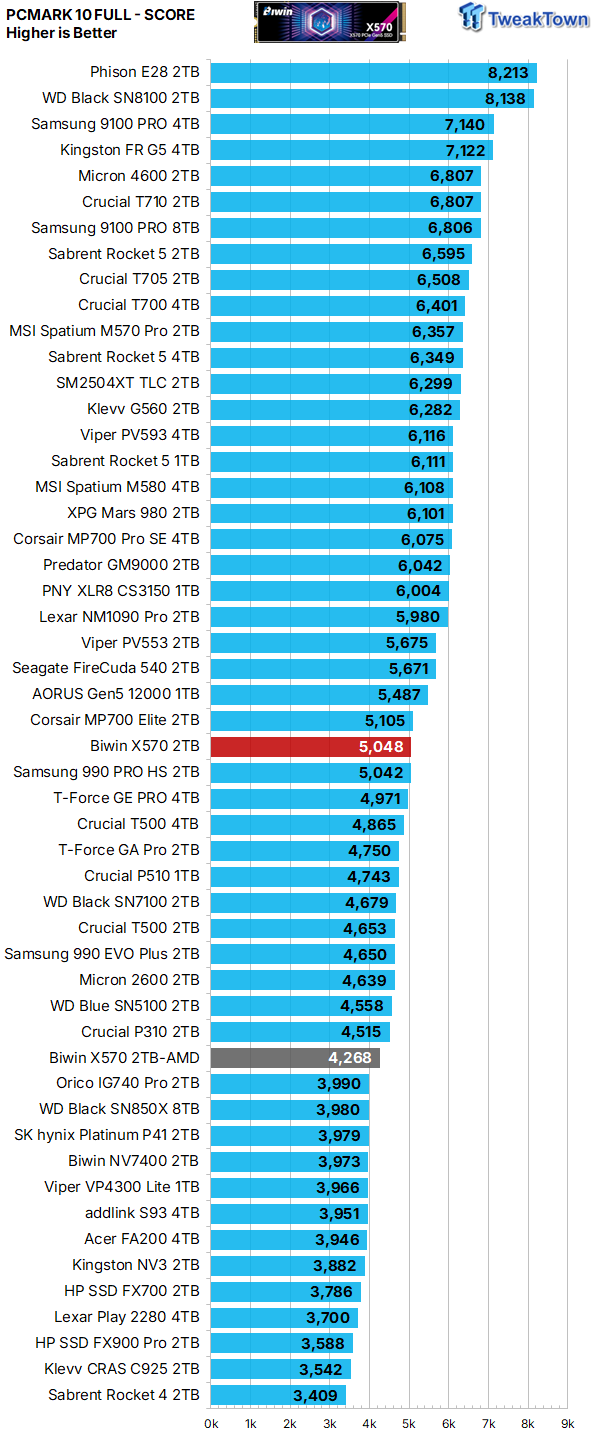
Here we find our test subject delivering the second-best result we've extracted from a DRAMless SSD, but again, it's not even close to delivering what the SM2504XT delivers.
PCMark 10 Quick System Drive Benchmark
The Quick System Drive Benchmark writes 23 GB of data over the duration of the test.


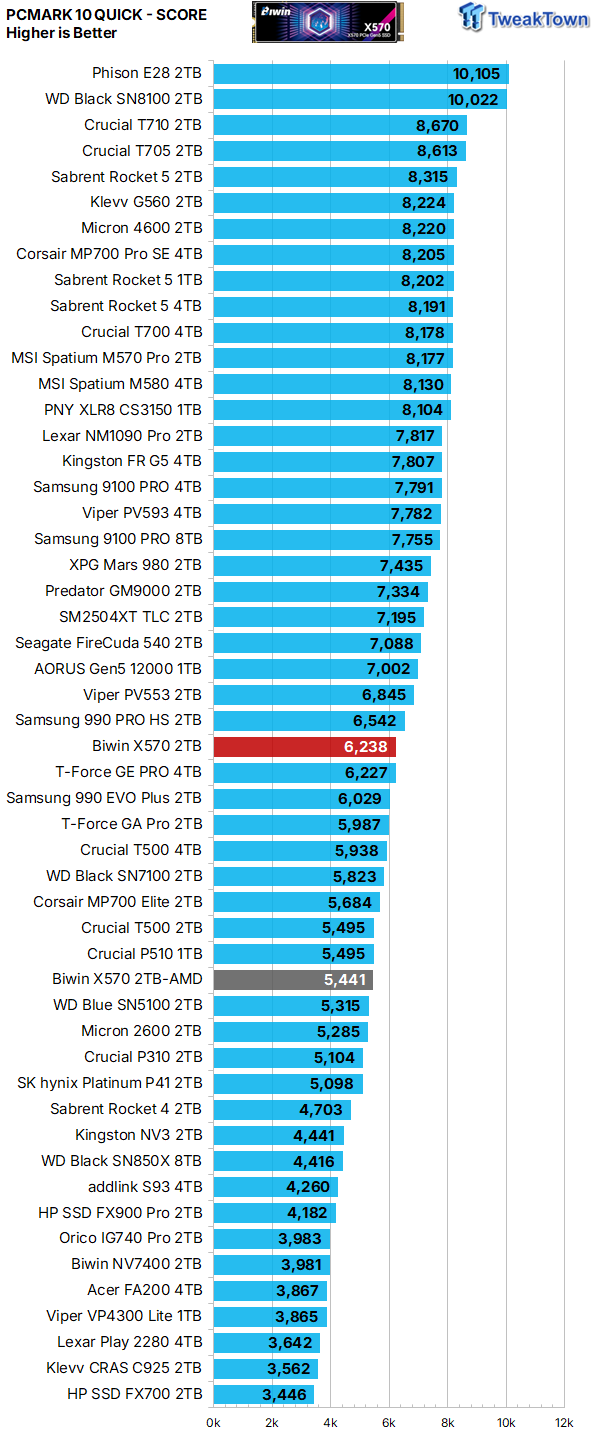
Of all the benchmarks we run, it can be argued that this one offers the best reflection of a typical consumer use case scenario. Results are exactly as expected based on the previous two results. Second best, but way off the pace of the best.
Final Thoughts
As we see things concerning Biwin's Black Opal X570 2TB, it is certainly an interesting SSD, being that it is indeed the "fastest" DRAMless SSD we've ever seen, while at the same time just edging out the 4-channel controlled MP700 Elite 2TB for the second most "powerful" DRAMless we've encountered. We would expect the 8-channel controlled X570 to easily best the MP700 Elite, and at least threaten the SM2504XT for DRAMless supremacy, but neither is the case here.
Even so, we are still looking at the second-best performing consumer DRAMless SSD we've seen to date, and it is in fact the fastest AND most powerful of its kind to make its way into retail channels, as the SMI SM2504XT SSD we've been comparing the X570 to has not made its way into retail circulation as of yet.
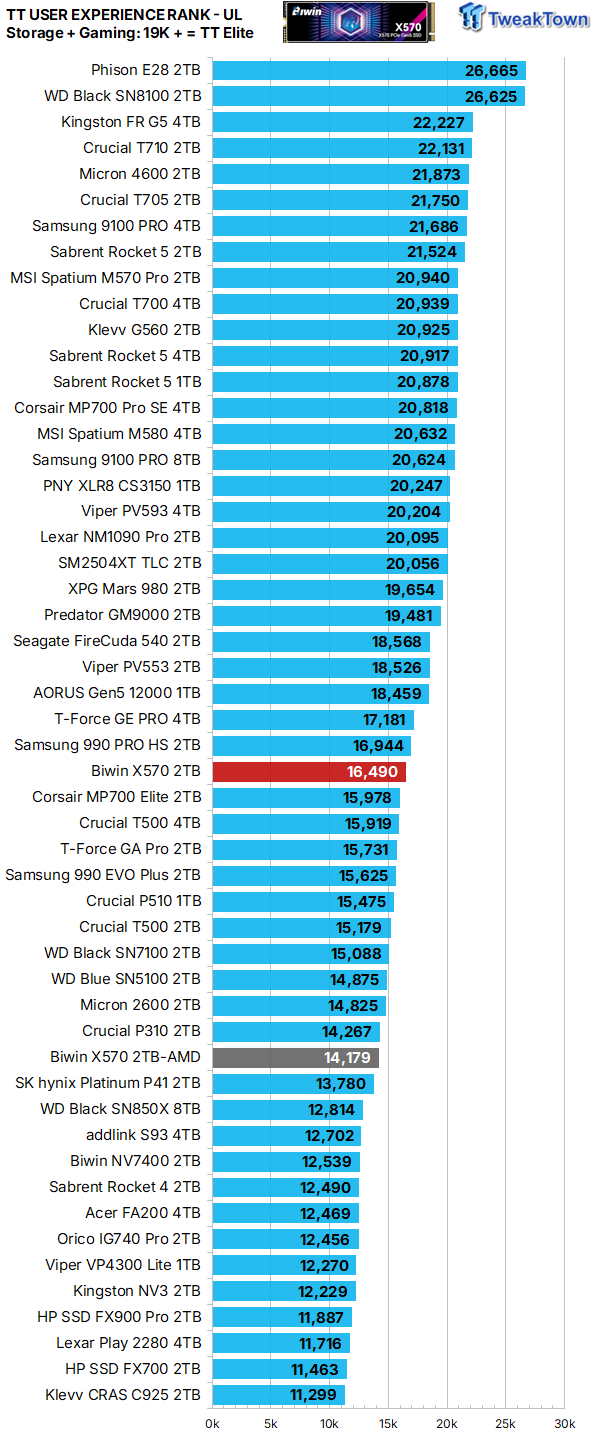
We rank SSDs in terms of overall user experience (performance where it matters most) as expressed by PCMark 10 storage and 3DMark gaming storage tests. Currently, we consider a user experience score of 19K or more to verify an SSD as a TweakTown Elite performer. We no longer consider any flash-based PCIe Gen4 SSD to be a TT Elite performer. We were hoping the X570 would be the second DRAMless SSD to make 19K TT Elite, but it's just not in the cards, at least not today.

If you can get one, we recommend you do if the price is right, as the drive is indeed an excellent performer.


 Phison E37T SSD Controller Exclusive Preview - The Fastest DRAMless SSD Platform Yet
 Seagate FireCuda X1070 4TB SSD Review - A New Mainstream Contender
 ASUSTOR Lockerstor 2 Gen2+ AS6702T v2 NAS Review - Fast Performance
 TERRAMASTER D1 SSD Pro Thunderbolt/USB Portable Enclosure Review - Incredible Potential
 Orico K20 Mini 2TB Magnetic Portable SSD Review - Ultra-Thin MagSafe Drive
 Activision to release Black Ops 1 & 2 on PS4, PS5 to get past Sony's lack of PS3 backward compatibility
 AMD plans to increase the price of its graphics cards by 10-15% in the second half of 2026
 Black Myth Wukong mirrors GTA V success with 30 million copies sold in less than 2 years
 Steam Controller supply can't keep up with demand, Valve pushes orders to 2027
 Steam Machine shipments spotted, as Valve is rumored to launch the gaming PC next week
 HDMI 2.2 products are coming in 2027 as chip makers begin sampling FRL2 silicon this year
 Solo dev tries to make his own GTA 6 with AI, as he got tired of waiting for Rockstar
 A HandBrake update just gave Threadripper owners up to a 215% performance boost for free
 Repair channel buys ASUS RTX 4090 for $222 and finds plastic die with fake NVIDIA markings
 Epic's gen AI use deters partners, Vampire Survivors x Fortnite might get cancelled
 UGREEN FineTrack Mini 2 Air Tracker Tag Review - Long battery life, lesser performance
 Speed Racer (2008) 4K Ultra HD Blu-ray Review: a stunning remaster of the cult classic
 MOAIPLAY ORA PRO G1 850W ATX 3.1 PSU Review: high efficiency and 10-year warranty for $119.99
 Navman MiVue Smart True 4K Surround Dashcam Review - Seeing In All Directions At Once
 IQUNIX Magi96 Pro Aluminum Low Profile Mechanical Keyboard Review - Premium Build, Satisfying Sound
 Asetek Forte S-Series Racing Simulator Bundle Review
 Razer Pro Type Ergo Wireless Split Ergonomic Keyboard Review - Built for Comfort and Support
 ASUS ROG Strix Morph 96 Wireless Gaming Keyboard Review - Great Performance, More Affordable
 SAPPHIRE Radeon RX 9070 GRE PULSE OC Review - A New 1440p Challenger Has Arrived
 NZXT H6 RGB+ Compact Dual-Chamber Chassis Review
 7 ways to transfer data from Android to Windows PC quickly and easily
 I read the Windows Backup app screen carefully, and it does not back up what most people think
 Low Sound Volume on Windows 11? How to fix audio issues and restore normal volume
 8 Critical Warning Signs You Should Never Ignore in Windows 11
 This Windows security feature protects Documents from ransomware, but it is off by default
 Windows 11 already has a voice typing tool, and it is the one most people are not using
 Quick Assist is the only remote-support tool I open when a relative calls about their PC
 The PowerToys utilities I keep enabled on every Windows 11 PC, and the ones I turned off within a week
 TweakTown's Best of Computex 2026 Awards - The Best Hardware, Gaming Gear, and AI