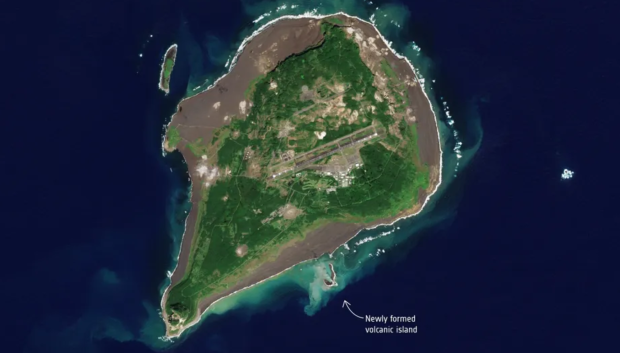




At the end of October 2023, a new island appeared on the surface of the Pacific Seas off Japan, and now satellites have imaged its continuous growth.
The new island has been officially called Niijima, which translates to "new island" in Japanese. According to the University of Tokyo, the new island was caused by an underwater volcanic eruption that occurred on October 21, 2023, and then on October 30, magma interacted with the ocean water, producing a massive explosion. This interaction created massive rock chunks several feet long, with reports indicating some were hurled more than 160 feet into the air.
The European Space Agency's Copernicus Sentinel-2 satellite snapped the below image of the new island on November 27, which shows the underwater volcanic activity is still proceeding. On November 27, the Japan Coast Guard took to X to share footage of the island being rocked by a following volcanic eruption, which is still ongoing. Notably, Japan Meteorological Agency's volcanic division expert Yuji Usui spoke to AP and said that the survival of Niijima may depend on its rock composition.
"We just have to see the development, but the island may not last very long," said Usui
If it's made of now-hardened lava, it may survive, while if it's made of more loosely packed dirt, it could eventually disperse back into the Pacific.