

Newsletter IconFacebook IconX IconThreads IconInstagram IconYouTube IconPinterest Icon
Giveaway: Win an NZXT H6 RGB+ Case, Kraken Elite AIO, RGB Fans and 1200W PSU

Hubble telescope photographs 'cosmic monster' showing off the magic of space

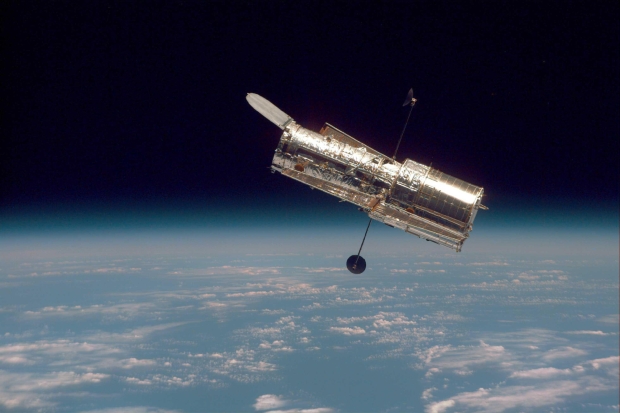
NASA and the ESA's Hubble Space Telescope has pointed its instruments at a 'cosmic monster' located eight billion light years away from Earth.

Hubble telescope photographs 'cosmic monster' showing off the magic of space
Comments
Tech and Science Editor
Published
Updated
45-second read time
Voice: Jak Connor
0:00 / --:--
Use left and right arrow keys to seek audio.

The European Space Agency (ESA) has taken to its website to share an image of a "cosmic monster" lurking out in deep space.
Hubble telescope photographs 'cosmic monster' showing off the magic of space 15565

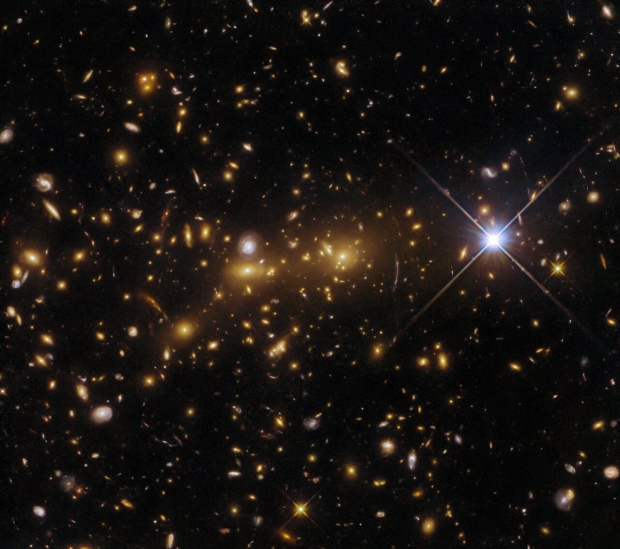
NASA and the ESA's Hubble Space Telescope has photographed a galaxy cluster called eMACS J1353.7+4329, which is located eight billion light years away from Earth within the constellation Canes Venatici.

According to the ESA blog post highlighting the photograph, eMACS J1353.7+4329 is a "cosmic monster in the making" as it consists of two elliptical galaxy clusters that are on the verge of colliding together to form one super galaxy cluster.

The image shows hundreds of galaxies, each with a glowing orange halo around its bright inner cores. There is a star located on the right side of the image, and according to the ESAs, its four long spikes are diffraction spikes caused by Hubble's instruments.

"Gravitational lensing is a dramatic example of Einstein's general theory of relativity in action. A celestial body such as a galaxy cluster is sufficiently massive to distort space-time, which causes the path of light around the object to be visibly bent as if by a vast lens," ESA officials wrote in the statement.

"Gravitational lensing can also magnify distant objects, allowing astronomers to observe objects that would otherwise be too faint and too far away to be detected. It can also distort the images of background galaxies, turning them into streaks of light. The first hints of gravitational lensing are already visible in this image as bright arcs which mingle with the throng of galaxies in eMACS J1353.7+4329," added the ESA.

Photo of the Diablo IV - PlayStation 5

Best Deals: Diablo IV - PlayStation 5

Prices last scanned 2 minutes ago

* Prices may be inaccurate. As an Amazon Associate, we earn from qualifying purchases. We earn affiliate commission from any Newegg or PCCG sales.

News Sources:esahubble.org and space.com

Comments

Tech and Science Editor

Email IconX IconLinkedIn Icon

Jak joined TweakTown in 2017 and has since reviewed 100s of new tech products and kept us informed daily on the latest science, space, and artificial intelligence news. Jak's love for science, space, and technology, and, more specifically, PC gaming, began at 10 years old. It was the day his dad showed him how to play Age of Empires on an old Compaq PC. Ever since that day, Jak fell in love with games and the progression of the technology industry in all its forms.

Stay Updated

Follow TweakTown for breaking tech news, reviews, and daily updates.

Add TweakTown as a preferred source on GoogleFind TweakTown on Apple News
Newsletter Subscription