

Newsletter IconFacebook IconX IconThreads IconInstagram IconYouTube IconPinterest Icon
Giveaway: Win an NZXT H6 RGB+ Case, Kraken Elite AIO, RGB Fans and 1200W PSU

NASA telescopes snaps breathtaking photo of a star cluster out in deep space

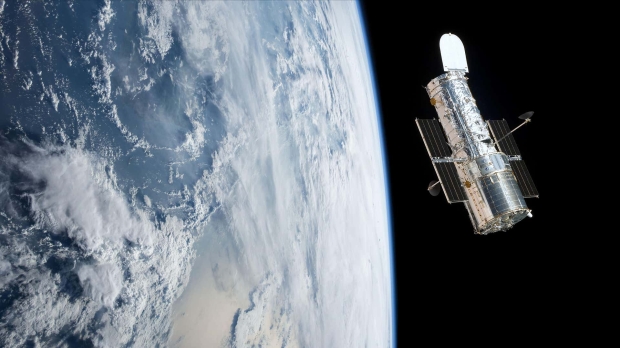
NASA's Hubble Space Telescope has snapped a breathtaking photograph of a distant star cluster that is loosely bound together by gravity.

NASA telescopes snaps breathtaking photo of a star cluster out in deep space
Comments
Tech and Science Editor
Published
Updated
45-second read time
Voice: Jak Connor
0:00 / 1:57
Use left and right arrow keys to seek audio.

One of NASA's most-famous space telescopes, the Hubble Space Telescope has fixed its sensitive optical cameras onto a distant star cluster and snapped a gorgeous photograph.
NASA telescopes snaps breathtaking photo of a star cluster out in deep space 88

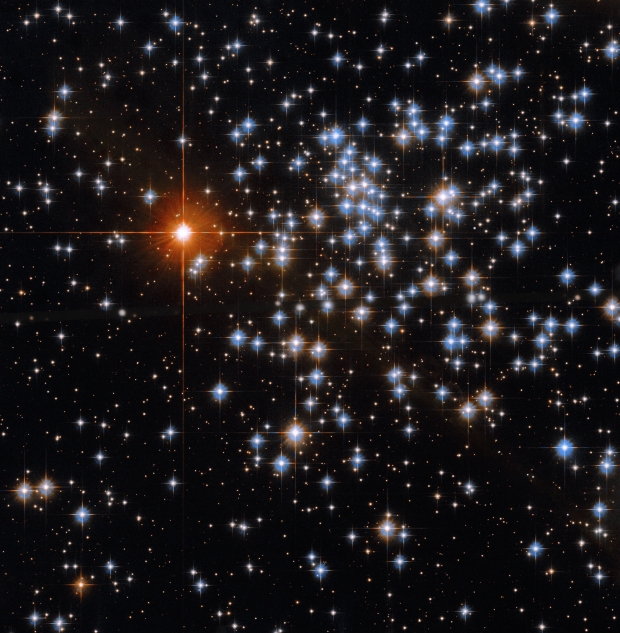
NASA published the above image on November 29, 2022 and explained that its a Hubble photograph of a distant dazzling star cluster that is called NGC 2660. The space agency states that NGC 2660 is an open star cluster that is located 8,617 light-years from Earth within the constellation Vela.

NASA explain that an open star cluster is a group of stars that can contain anywhere between ten to a few hundred stars and that these stars are loosely bound together by gravity. There is a chance that this group of stars may eventually disperse and spread out from each other as a result of the small gravitational pull. It should be noted that the bright red object that is located in the upper left-hand corner of the image is much closer to Earth than the stars in the background and is not part of the open star cluster.

"The stars of open clusters form out of the same region of gas and dust and thus share many characteristics, such as age and chemical composition. Unlike globular clusters - their ancient, denser, and more tightly-packed cousins - open clusters are easier to study since astronomers can more easily distinguish between individual stars. Their stars can be old or young, and they may disperse after a few million years into the spiral or irregular galaxies where they are born." writes NASA officials on the blog post.

Photo of the NASA Logo Pullover Hoodie

Best Deals: NASA Logo Pullover Hoodie

* Prices may be inaccurate. As an Amazon Associate, we earn from qualifying purchases. We earn affiliate commission from any Newegg or PCCG sales.

News Source:nasa.gov

Comments

Tech and Science Editor

Email IconX IconLinkedIn Icon

Jak joined TweakTown in 2017 and has since reviewed 100s of new tech products and kept us informed daily on the latest science, space, and artificial intelligence news. Jak's love for science, space, and technology, and, more specifically, PC gaming, began at 10 years old. It was the day his dad showed him how to play Age of Empires on an old Compaq PC. Ever since that day, Jak fell in love with games and the progression of the technology industry in all its forms.

Stay Updated

Follow TweakTown for breaking tech news, reviews, and daily updates.

Add TweakTown as a preferred source on GoogleFind TweakTown on Apple News
Newsletter Subscription