
NASA's James Webb Space Telescope, the most powerful space telescope in the world, has pointed its extremely sensitive instruments at a dying star, showcasing how it is being reduced to dust and gas.

NASA has explained in a recent blog post that the Helix Nebula has been known about for 20 years, and throughout that time, it has been imaged by various telescopes, including the famed Hubble Space Telescope. The space agency explains that Webb's NIRCam (Near-Infrared Camera) has captured the Helix Nebula in unprecedented detail, revealing the complex nature of nebulae and the destruction and reformation of celestial objects.
The space agency explains that the blue in the above image marks the hottest gas, energized by intense ultraviolet light from the white dwarf star at the center. Moving farther from the center, the gas cools and forms yellow regions where hydrogen atoms join to form molecules. The outer edges, with their reddish tones, represent the coolest material, where gas begins to thin, and dust starts to form.
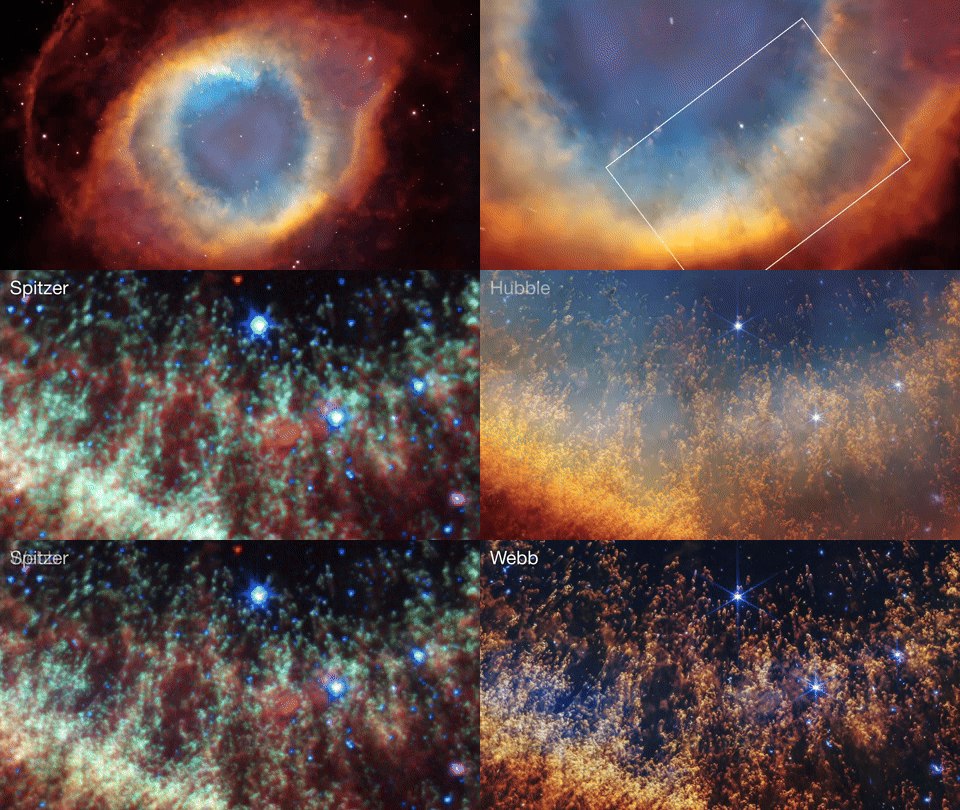
Notably, the Helix Nebula is located just 650 light-years from Earth, making it relatively close by for the immense distances in space. Furthermore, NASA writes the Helix Nebula is a "favorite among stargazers" due to its relatively close proximity to Earth, "and its similar appearance to the "Eye of Sauron.""