

Newsletter IconFacebook IconX IconThreads IconInstagram IconYouTube IconPinterest Icon
Giveaway: Win an NZXT H6 RGB+ Case, Kraken Elite AIO, RGB Fans and 1200W PSU

NASA's Webb captures the clearest image of Neptune's rings in 30 years

NASA's James Webb Space Telescope (JWST) has honed in on the eighth planet from the Sun and snapped the clearest image of its rings in more than 30 years.

NASA's Webb captures the clearest image of Neptune's rings in 30 years
Comments
Tech and Science Editor
Published
Updated
1 minute & 15 seconds read time
Voice: Jak Connor
0:00 / --:--
Use left and right arrow keys to seek audio.

NASA's James Webb Space Telescope (JWST) is honing in on planets in our solar system, with NASA's newest observatory focusing its instruments on Neptune.
NASA's Webb captures the clearest image of Neptune's rings in 30 years 02

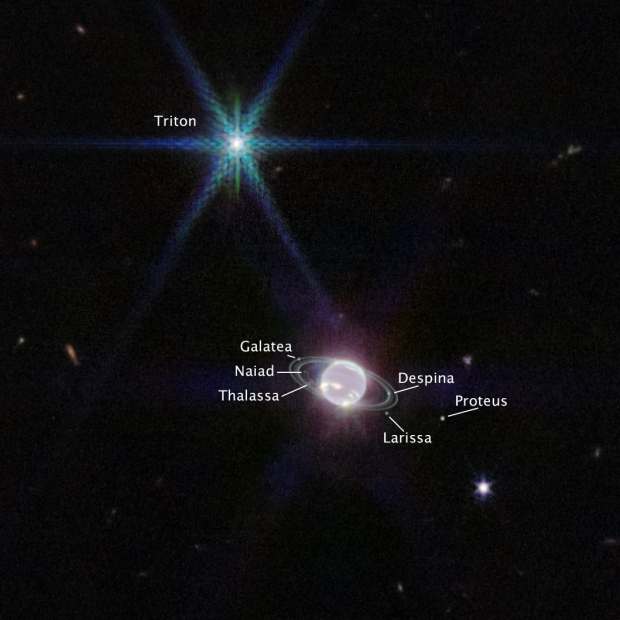
NASA has announced in a new release that researchers have used Webb's Near-Infrared Camera (NIRCam) to reveal an incredible view of Neptune's rings, which haven't been imaged at this level of clarity since NASA's Voyager 2 probe flew past the planet in 1989. Neptune is located approximately 30 times father from the Sun than Earth, making it our solar system's most distant planet.

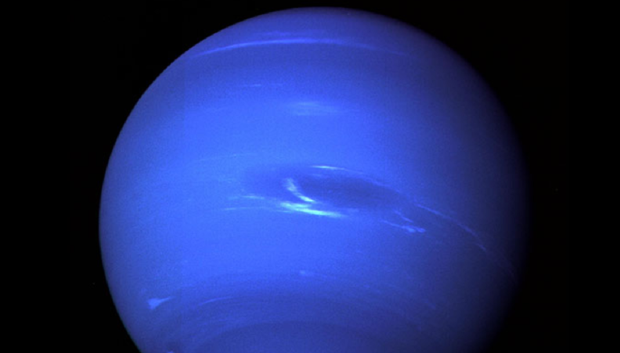
Additionally, planets such as Neptune and Uranus are ice giants and are different to the gas giants such as Jupiter and Saturn. Ice giants are mostly composed of gaseous methane versus gas giants being almost entirely composed of hydrogen and helium. The methane that is present in ice giants such as Neptune and Uranus give it the blue color when observed through the visual light spectrum.
NASA's Webb captures the clearest image of Neptune's rings in 30 years 01

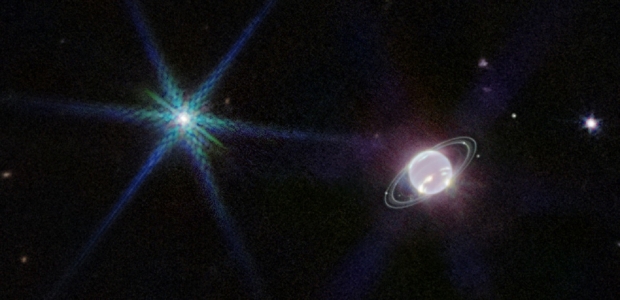
Furthermore, the above image showcases Neptune's nitrogen-covered moon Triton, which is outshining the planet in terms of brightness. Since Neptune is mostly methane and methane strongly absorbs infrared light, Webb's infrared camera that was used to observe the planet shows Neptune being relatively dim when compared to Triton. The white streaks or specks seen across the surface of Neptune are a result of high altitude methane ice that is reflecting sunlight.

In other space news, a video of an incredible fireball streaking across the night sky has been confirmed by officials to be a meteor approximately the size of a golf ball.

Photo of the Aeisage NASA Hat Vintage Baseball Cap NASA Logo Cotton Caps

Best Deals: Aeisage NASA Hat Vintage Baseball Cap NASA Logo Cotton Caps

Prices last scanned 6 hours and 15 minutes ago

* Prices may be inaccurate. As an Amazon Associate, we earn from qualifying purchases. We earn affiliate commission from any Newegg or PCCG sales.

News Source:astronomy.com

Comments

Tech and Science Editor

Email IconX IconLinkedIn Icon

Jak joined TweakTown in 2017 and has since reviewed 100s of new tech products and kept us informed daily on the latest science, space, and artificial intelligence news. Jak's love for science, space, and technology, and, more specifically, PC gaming, began at 10 years old. It was the day his dad showed him how to play Age of Empires on an old Compaq PC. Ever since that day, Jak fell in love with games and the progression of the technology industry in all its forms.

Stay Updated

Follow TweakTown for breaking tech news, reviews, and daily updates.

Add TweakTown as a preferred source on GoogleFind TweakTown on Apple News
Newsletter Subscription