Newsletter IconFacebook IconX IconThreads IconInstagram IconYouTube IconPinterest Icon
Giveaway: Win an NZXT H6 RGB+ Case, Kraken Elite AIO, RGB Fans and 1200W PSU

This gamma-ray burst emitted more energy than the Sun's 10b year life

NASA's Hubble Telescope is studying a gamma-ray burst that habored the most energy ever seen.

Comments
Tech and Science Editor
Published
Updated
1-minute read time
Voice: Jak Connor
0:00 / --:--
Use left and right arrow keys to seek audio.

NASA has said that the Hubble Space Telescope is giving astronomers a look at the location of the most powerful gamma-ray burst ever recorded.

This gamma-ray burst emitted more energy than the Sun's 10b year life | TweakTown.com

According to the post on the official NASA website, in January this year, a gamma-ray burst was detected by many of NASA's telescopes, and since then further study has been made by Hubble and astronomers. This gamma-ray burst was a trillion times more powerful than visible light, and just within the few seconds of the blast happening, it emitted more energy than the sun has provided over its 10 billion year life.

Andrew Levan of the Institute for Mathematics, Astrophysics and Particle Physics Department of Astrophysics at Radboud University in the Netherlands said, "Hubble's observations suggest that this particular burst was sitting in a very dense environment, right in the middle of a bright galaxy 5 billion light years away. This is really unusual, and suggests that this concentrated location might be why it produced this exceptionally powerful light".

Astronomers have traced the gamma-ray burst back to the central region of a massive galaxy. NASA says that the extremely dense environment could have been a critical factor in why this burst was of this magnitude. NASA also says that the energy detected is the highest energy ever observed.
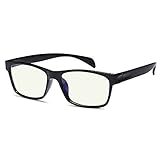
Photo of the Gamma Ray Blue Light Blocking Glasses Amber Tint

Best Deals: Gamma Ray Blue Light Blocking Glasses Amber Tint

Prices last scanned 1 hour and 3 minutes ago

* Prices may be inaccurate. As an Amazon Associate, we earn from qualifying purchases. We earn affiliate commission from any Newegg or PCCG sales.

News Source:nasa.gov

Comments

Tech and Science Editor

Email IconX IconLinkedIn Icon

Jak joined TweakTown in 2017 and has since reviewed 100s of new tech products and kept us informed daily on the latest science, space, and artificial intelligence news. Jak's love for science, space, and technology, and, more specifically, PC gaming, began at 10 years old. It was the day his dad showed him how to play Age of Empires on an old Compaq PC. Ever since that day, Jak fell in love with games and the progression of the technology industry in all its forms.

Stay Updated

Follow TweakTown for breaking tech news, reviews, and daily updates.

Add TweakTown as a preferred source on GoogleFind TweakTown on Apple News
Newsletter Subscription