Intel's discrete desktop GPU ambitions are alive, at least according to one of its top executives. At a media Q&A during Computex 2026 in Taiwan, Intel EVP and GM of Client Computing Alex Katouzian was asked directly by Tweakers about the future of Arc desktop graphics cards.
He said that desktop GPUs remain a "super important" part of the company's PC lineup, pointing to gaming as a major revenue driver across both mobile and desktop. He also said Intel is seeing good traction with its GPU cores, and that gamers and game engine developers are actively working with the company.
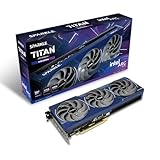
Despite Alex's optimism, the comments come at an awkward time. The Battlemage generation only produced two gaming desktop cards, the Arc B580 and B570, and the long-rumored "Big Battlemage" Arc B770 has still not materialized. The B770 was expected to drop this year, but Intel chose to limit that SKU to the professional and workstation market.

Meanwhile, leakers have confirmed that Xe3-based desktop gaming GPU variants are not coming anytime soon, and even the next-generation Xe4 "Druid" architecture is being reconsidered for dedicated gaming GPUs. This leaves gamers high and dry in a GPU market that is becoming increasingly sparse, with competitors AMD and NVIDIA now focusing their efforts towards the workstation segment.
The Arc B580 launched at $249 with 12GB of VRAM at a time when NVIDIA and AMD were still shipping budget cards with 8GB, and it sold well because of it. Intel proved it can compete on value. The problem is that one good card from over a year ago is not a GPU lineup, and the longer the silence drags on, the harder it becomes to hold onto any mindshare it built.
Intel's most recent discrete releases were the Arc Pro B65 and B70, which capped out the Xe2 Battlemage architecture on the professional side. The company's recent GPU activity has otherwise shifted toward integrated and mobile graphics, with Arc G3 processors for gaming handhelds and newer Arc graphics baked into Panther Lake laptop CPUs.

So Intel says it's committed, but the product cadence tells a different story. The Arc B580 remains the only real option for desktop gamers right now, and it launched over a year ago. Words from an exec are reassuring, but without a new card on the horizon, desktop Arc buyers are essentially waiting with no clear timeline.
Intel's lack of initiative in the desktop GPU space is surprising from a business standpoint as well. NVIDIA and AMD are clearly focusing their efforts and resources elsewhere, which makes the situation ripe for the taking. Whether Xe4 Druid becomes a genuine gaming GPU or gets quietly redirected to workstations again is the real question Intel needs to answer.