












NVIDIA formally announced and unveiled its Pascal architecture during the launch of the Tesla P100 accelerator a decade ago. Ten years to the day, basically, and although it would take a few weeks for the first Pascal-powered desktop gaming GPU to hit the market, the architecture led to the arrival of some of the most iconic PC gaming graphics cards - including the GeForce GTX 1080 Ti and the GeForce GTX 1060.

So iconic that the mainstream GeForce GTX 1060 is still one of the most popular PC gaming GPUs according to the latest data from Steam, which shows us that as of March 2026, there are more 1060s out there than any single Radeon GPU. Although the flagship GeForce GTX 1080 Ti didn't arrive until 2017, it offered such a massive performance increase over anything else that it only recently began to feel obsolete due to its lack of dedicated AI hardware and DLSS support.
The Pascal architecture was a game-changer in the data center space, especially for AI and other applications, but for gamers, its debut arrived with the GeForce GTX 1080 on May 17, 2016, built on Pascal's efficient 16nm FinFET process with 8GB of GDDR5X memory. It was the first GPU to power 4K 120 Hz gaming via DisplayPort 1.4, while also leveraging architectural improvements to elevate VR and 3D gaming. Yes, 2017 was a very different time.
"The GeForce GTX 1080 is the most exciting video card in years, blending the new 16nm FinFET process and next-gen Pascal architecture into an amazing mix of GPU technology," our launch day review of the GeForce GTX 1080 says. "Right behind those two exciting factors of the GTX 1080 is the 8GB of GDDR5X that NVIDIA has used. All three of these technologies are infused together for the GeForce GTX 1080, a card that not only has more performance than every other single-GPU video card on the market, it uses far less power.
Pascal and the GeForce GTX 10 Series also marked the end of an era, as NVIDIA's next architecture, Turing, represented a massive shift in design, thanks to dedicated AI and ray-tracing hardware. Pascal was also one of the first architectures that felt data-center-first, in that NVIDIA was looking beyond PC gaming as the foundation for its GPU designs.


 NVIDIA's GeForce GTX 10 Series is celebrating its 10th anniversary this week
 Game Ready Driver support for the iconic GeForce GTX 1080 Ti to end soon
 NVIDIA releases important GeForce Security Update Driver for GeForce GTX 10 Series GPUs
 NVIDIA Game Ready Driver support for the GeForce GTX 10 Series is ending soon
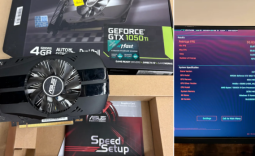 Redditor scores a working GTX 1050 Ti for just $2 at Goodwill
 GTA 6 appears to have leaked from Rockstar India, also suspected to be a PC version
 Xbox struggles to move physical discs, accounts for only 4% of disc sales in the US this year
 Samsung Foundry raises manufacturing prices, may impact the Nintendo Switch 2
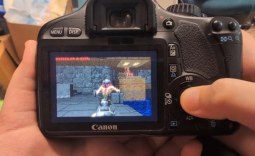 Modder manages to run DOOM on a 16-year-old Canon EOS 550D DSLR Camera
 Leaked Steam Frame unboxing video hints at an imminent launch
 Call of Duty: Modern Warfare 4's PC Shader Compilation will run before you even launch the game
 Call of Duty Modern Warfare 4 will run on a GPU with only 3GB of VRAM
 LG unveils FLiPP, its 'dream next-generation OLED technology'
 AMD on track for a 20X increase in AI rack-scale energy efficiency by 2030
 Windows 11 is finally adding per-app controls for desktop programs accessing your microphone, camera, and location
 GIGABYTE MO27Q2A Gaming Monitor Review: 1440p, 280Hz, and QD-OLED is a winning combination
 Cooler Master V8 ACE 3DHP BLACK CPU Cooler Review
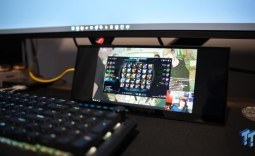 ASUS ROG Strix XG129C Review: A $199 Gaming Monitor You Don't Play Games On
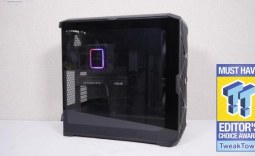 Cooler Master HAF II 500 Mid-Tower Chassis Review
 Corsair HS35 v3 Wireless Gaming Headset Review - An Affordable Winner
 D-Link F518 5G Wi‑Fi 6 AX1800 Mobile Hotspot Review: All-Day Mobile Hotspot
 Bose Lifestyle Ultra Speaker Review - Impressively Detailed Room-Filling Sound
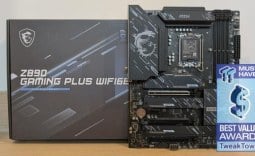 MSI Z890 Gaming Plus WIFI6E Review - Z890 for under $200
 Mortal Kombat (1995) 4K Ultra HD Blu-ray Review
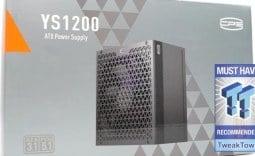 CPS PCCOOLER YS1200 ATX 3.1 80 PLUS Gold PSU Review
 Using Multiple Monitors? Change these Windows settings for a Better Experience
 Windows Sandbox is The Windows Security Feature Most People Never Use
 I ditched the Windows 11 context menu for this open-source tool, and here's why
 Windows 11 may be encrypting your drive already, and I checked where my recovery key went
 GIGABYTE's 40 Days of INFINITY celebrates 40 Years of Innovation with stunning GeForce RTX graphics cards and rewards
 I swapped File Explorer for this free file manager and finally got the layout I wanted
 How to tell if someone has been using your Windows PC without your permission
 6 Task Manager tips for troubleshooting Windows performance problems
 ASUS ROG's 20th Anniversary Line-up of Premium PC Gaming Gear has Arrived - Here's Everything You Need to Know
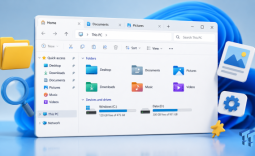 Six File Explorer tips every Windows user should know