












AMD's Anti-Lag 2 technology is getting a rename, and it will now carry the FSR prefix, becoming FSR Latency Reduction 2.0. The move appears to be part of the red team's broader push to bring its various FidelityFX technologies under one unified FSR brand. Since FSR no longer refers exclusively to upscaling, AMD wants a single umbrella term that covers the several technologies working together under its gaming stack.
The rename wasn't officially announced. Weeks before AMD's Redstone release last year, the company quietly updated its technology nomenclature, a change that only came to light after VideoCardz spotted it on AMD's website. FidelityFX Super Resolution became FSR Upscaling, Frame Generation became FSR Frame Generation, and two newer technologies, Ray Regeneration and Radiance Caching, also picked up the FSR prefix. Now, Anti-Lag 2 is the latest technology to receive this quiet change.

Anyone familiar with other GPU vendors will recognize what AMD is doing here. NVIDIA has long used the DLSS prefix to cover DLSS Super Resolution, DLSS Frame Generation, and DLSS Ray Reconstruction under one roof. Intel has taken a similar approach with XeSS 2.
All of this sits under AMD's new Redstone, which the red team describes as a suite of machine-learning-based gaming features built for upcoming RDNA 4 hardware. The full stack includes FSR Upscaling for reconstructing higher-resolution images from lower-resolution inputs, FSR Frame Generation for inserting AI-generated frames between rendered frames, FSR Ray Regeneration for rebuilding ray-traced detail from sparse samples, and FSR Radiance Caching for more efficient global illumination.

For AMD, bringing everything under one name makes it easier to showcase its technology as a complete package. But gamers will now have to pay closer attention to what "supports FSR" actually means. Still, it's a smart move from AMD that all GPU vendors now have similar naming schemes. At the moment, FSR Latency Reduction 2.0 has not appeared on AMD's website, suggesting the change will land with the next FSR SDK update.


 AMD improves FSR 3 upscaling quality in update that also paves the way for FSR Redstone
 AMD's FSR 3 and FSR 4 are now both called FSR Upscaling, but there's a catch
 AMD FSR 4 announced, AI-powered and 'developed for RDNA 4'
 Intel XeSS 2 Super Resolution and Frame Generation now works on NVIDIA and AMD GPUs
 Crimson Desert is the next game to support AMD's FSR Redstone technology
 Intel Core Ultra 9 4950K leaked as Nova Lake-S flagship with 28 cores
 SteamOS now works on the Intel Arc B580 without workarounds on the latest beta
 GeForce RTX 3080 cards with 20GB of VRAM are being sold in second-hand markets
 Snapdragon X2 Elite Extreme outpaces Intel's Panther Lake by up to 87%
 Hydra unlocks VRAM overclocking and 125% power limits for all GeForce RTX 50 Series GPUs
 ASRock DeskMeet X300 build significantly outperforms the Steam Machine for the same price
 Star Citizen livestream full of bugs, glitches, and performance issues raises fresh concerns about the $1 billion game
 GTA 6 gameplay leaks ahead of its big reveal, showcasing full map, six-star wanted level, and more
 US Army is giving soldiers time off to play GTA 6 as an incentive
 GTA 6 nears $500 million in pre-order revenue with 77% sales on PS5, per analysis
 Cooler Master V8 ACE 3DHP BLACK CPU Cooler Review
 ASUS ROG Strix XG129C Review: A $199 Gaming Monitor You Don't Play Games On
 Cooler Master HAF II 500 Mid-Tower Chassis Review
 Corsair HS35 v3 Wireless Gaming Headset Review - An Affordable Winner
 D-Link F518 5G Wi‑Fi 6 AX1800 Mobile Hotspot Review: All-Day Mobile Hotspot
 Bose Lifestyle Ultra Speaker Review - Impressively Detailed Room-Filling Sound
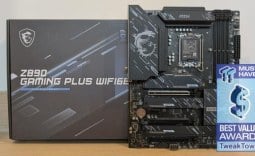 MSI Z890 Gaming Plus WIFI6E Review - Z890 for under $200
 Mortal Kombat (1995) 4K Ultra HD Blu-ray Review
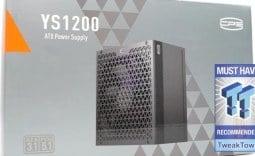 CPS PCCOOLER YS1200 ATX 3.1 80 PLUS Gold PSU Review
 ASRock X870E Taichi White Review: a premium AM5 motherboard with 10G LAN and WiFi 7
 Using Multiple Monitors? Change these Windows settings for a Better Experience
 Windows Sandbox is The Windows Security Feature Most People Never Use
 I ditched the Windows 11 context menu for this open-source tool, and here's why
 Windows 11 may be encrypting your drive already, and I checked where my recovery key went
 GIGABYTE's 40 Days of INFINITY celebrates 40 Years of Innovation with stunning GeForce RTX graphics cards and rewards
 I swapped File Explorer for this free file manager and finally got the layout I wanted
 How to tell if someone has been using your Windows PC without your permission
 6 Task Manager tips for troubleshooting Windows performance problems
 ASUS ROG's 20th Anniversary Line-up of Premium PC Gaming Gear has Arrived - Here's Everything You Need to Know
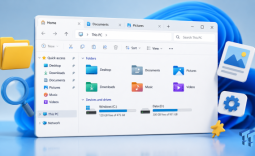 Six File Explorer tips every Windows user should know