The annual Game Developers Conference (GDC) is wrapping up. Although the event is focused on game developers and networking for their projects, it's also home to game technology companies and hardware makers who discuss what's on the horizon, what's next, and new technologies. At GDC 2026, Microsoft began its first public deep dive into its next-generation Project Helix console that will play both Xbox and PC games.

For NVIDIA and the GeForce RTX team, we got a release date for DLSS 4.5's impressive Dynamic Frame Generation technology, first looks at a suite of new titles with RTX-powered path tracing like 007 First Light and Control Resonant, new GeForce NOW cloud-testing tools, and ComfyUI AI video generation for developers. Plus, it's bringing Microsoft's Advanced Shader Delivery (ASD) to GeForce RTX users later this year.
For AMD, specifically Radeon, RDNA 4, and the recent launch of FSR Redstone, there was nothing to confirm or announce. Granted, AMD announced that it was developing its own version of AI-powered Multi Frame Generation, but this was for Project Helix and its suite of FSR Diamond technologies - with no word if it's coming to Radeon gamers on PC.
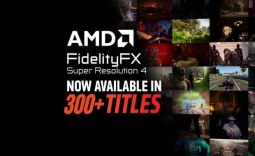
For PC gamers with a Radeon RX 9000 Series GPU, it's hard not to feel a little disappointed, as there's been very little news after the recent FSR Redstone to confirm more titles will be adding support for the latest AI-powered FSR Upscaling, Frame Generation, and Ray Regeneration technologies. In fact, when it comes to these technologies that make up the still-new FSR Redstone suite, the only news we got was that next-generation versions are being developed and optimized for the next-gen Xbox console.
Of course, this isn't to say that RDNA 4 gamers won't benefit from these updates or that FSR's AI Upscaling won't be ported over to RDNA 3 for the many Radeon gamers with older cards. Not to mention modern PC gaming handhelds like the Lenovo Legion Go 2 that feature RDNA 3.5 graphics. However, if there's nothing to announce, especially with so many great-looking games that are at GDC alongside brand-new DirectX technologies, it's a little troubling for a brand that has been actively trying to catch up, feature-wise, with NVIDIA and GeForce.
Put it this way: if you viewed all of the games and technology announcements at GDC 2026, you'd walk away with the impression that GeForce RTX powers all things PC gaming, while AMD gaming hardware and technologies are tied to current and next-gen gaming consoles.