

HDR, or High Dynamic Range, is now commonplace in modern smart TVs, offering brighter images with more realistic color and generally more detail. Samsung, the company behind the popular HDR10+ format, has just announced HDR10+ Advanced, featuring new features and technologies for movies, TV shows, and games.

One of the new features is called HDR10+ Bright, which adds new metadata to images to enable displays to better render tonal differences in the source, resulting in an overall brighter HDR output. Like HDR10+ before it, HDR10+ Advanced will be open for display makers and platforms like Prime Video (which has already signed on to adopt the new tech) to integrate, with Samsung's next-generation of TVs set to include HDR10+ Advanced with additional AI tools and algorithms that will offer a peak brightness of up to a massive 5,000 nits.
Although this brightness relates to HDR intensity and not the overall uniform brightness of a display, it's more than enough to make whatever takes advantage of this level of HDR10+ Advanced brightness visible in bright daylight. Samsung also notes that with HDR10+ Bright, its next-generation TVs will deliver 100% of the BT.2020 color spectrum, which is the industry standard for mastering 4K and 8K HDR content.
In addition to HDR10+ Bright, HDR10+ Advanced also introduces the following features.
- HDR10+ Genre - Adding genre-specific information to images and video will enable HDR10+ Advanced TVs and displays to optimize tone mapping and image processing based on genres or types of content, including drama, comedy, and sports.
- HDR10+ Intelligent FRC - This is the next-gen version of motion smoothing, motion plus, frame interpolation, or frame generation. The phenomenon where a 24Hz movie is converted to 60 or 120Hz and appears unnatural, resembling a soap opera. This will enable the inclusion of specific motion smoothing data in content, allowing creators and streaming platforms to dictate how it should be applied to a scene or adjust to different lighting conditions.
- HDR10+ Intelligent Gaming - This sees Samsung expand HDR10+ for gaming by improving how it deals with streaming games over the cloud with services like GeForce NOW or Xbox Game Pass. It's designed to adapt in real-time to enhance tone mapping, performance, and image quality.
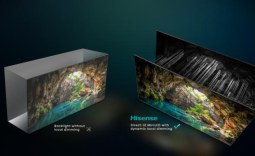
- HDR10+ Local Tone-mapping - This feature enhances contrast, color accuracy, and overall image detail by dividing the image into more zones, allowing for more precise brightness and dimming controls. Likewise, creators and platforms will also be able to send more precise color detail information to HDR10+ Advanced displays via the new Advanced Color Control feature.
Many of the features detailed here will also be available in Dolby Vision 2. It is expected that we'll see both Dolby Vision 2 and new HDR10+ Advanced displays and TVs on display at CES 2026.