












TSMC's 2nm (N2) process is shaping up to be one of the most important semiconductor nodes in recent history. Compared to 3nm, demand for 2nm is expected to be significantly higher, as mobile, HPC, and data center customers are knocking at TSMC's door, asking to be added to its customer list.
Notably, N2 will mark a shift in semiconductor technology as it features the Gate-All-Around transistors (GAAFET), which promises big improvements in efficiency and density compared to traditional FinFETs. GAAFET is slated to allow for increased performance at the same power level or lower power at the same performance compared to older technology. GAAFET was expected to enter risk production in late 2024 and mass production in 2025, with a commercial launch for chips set for the first half of 2026.
With the shift to a new technology, TSMC has tech companies flocking to become customers, and one of the first major adopters of the N2 node is AMD, with the company already confirming it will be using the N2 with its next-generation EPYC CPUs codenamed "Venice," which are headed for data centers. TSMC's N2 node is truly the bleeding edge, and AMD's commitment to the Taiwanese semiconductor manufacturer is to further strengthen its position against Intel, its direct competitor.

As for Intel, the company is planning a mix of internal and external manufacturing, with the company's Nova Lake CPUs now being expected to feature a compute tile produced on TSMC's N2 process. According to a Morgan Stanley note shared by @QQ_Timmy, Intel has decided to jump on the N2 train for Nova Lake CPUs due to subpar yield rates of the 18A node. However, that hasn't been confirmed.
We will have to wait until Intel releases its Panther Lake CPUs to know how well the 18A node has matured, and those processors are expected to debut this quarter, with mass production expected to be pencilled in for early 2026.
Zooming out, TSMC stands to dominate next-gen CPU production, as both AMD and Intel have seemingly committed to its N2 process. Then there's TSMC's development in the GPU space, with the Taiwanese semiconductor manufacturer being the sole provider of all of NVIDIA's cutting-edge GPUs, which are fuelling the global AI race and the vast majority of PCs around the world.
Zooming out even further, TSMC is the backbone of the entire semiconductor market, underscoring the dominance of the Taiwanese manufacturer and the global reliance on its cutting-edge chip supply, whether it be CPUs or GPUs.


 TSMC's new 2nm node progressing smoothly: matching 5nm, surpassing 3nm, 7nm at similar stages
 AMD says TSMC's new 2nm node is superior to ALL alternatives, talks using Samsung Foundry
 TSMC's new 2nm chip yields are so good, it's making it hard for Samsung to win clients
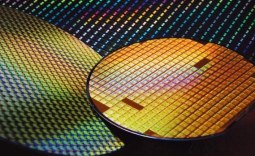 TSMC is ramping up 2nm production, 100K monthly wafers by the end of 2026
 NVIDIA rumored to be the first customer for TSMC's most advanced A16 process node in 2026
 Giveaway: 12 Winners Will Score MONTECH NX400 and NX600 CPU Coolers
 Assassin's Creed Odyssey becomes the highest-rated entry in the franchise, thanks to Nolan's 'The Odyssey'
 PlayStation gamers' planned week-long 'PS Blackout' begins today
 Nintendo Switch 2 will rise to £419.99 in the UK, starting September 1
 One retailer says 91% of attempts to buy DDR5 memory are coming from bots
 Jensen Huang signed NVIDIA RTX Pro 6000 graphics card sells for $57,450 at auction
 GTA 6 leaks have reportedly led to a morale drop at Rockstar, with Netflix frustrated as well
 The Blood of Dawnwalker won't hit 60 FPS on any console, PS5 Pro tops out at 40 FPS
 AMD claws back ground against Intel in the CPU market, climbs to 35% share in desktop CPUs
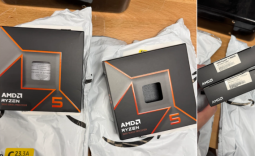 Redditor receives not one but TWO empty boxes of Ryzen 5 9600X from Amazon
 Xbox Series X25 Limited Edition Console is priced at $900, arrives November 2026
 Cooler Master MasterFan A120 Fan Review
 GIGABYTE MO27Q2A Gaming Monitor Review: 1440p, 280Hz, and QD-OLED is a winning combination
 Cooler Master V8 ACE 3DHP BLACK CPU Cooler Review
 ASUS ROG Strix XG129C Review: A $199 Gaming Monitor You Don't Play Games On
 Cooler Master HAF II 500 Mid-Tower Chassis Review
 Corsair HS35 v3 Wireless Gaming Headset Review - An Affordable Winner
 D-Link F518 5G Wi‑Fi 6 AX1800 Mobile Hotspot Review: All-Day Mobile Hotspot
 Bose Lifestyle Ultra Speaker Review - Impressively Detailed Room-Filling Sound
 MSI Z890 Gaming Plus WIFI6E Review - Z890 for under $200
 Mortal Kombat (1995) 4K Ultra HD Blu-ray Review
 Using Multiple Monitors? Change these Windows settings for a Better Experience
 Windows Sandbox is The Windows Security Feature Most People Never Use
 I ditched the Windows 11 context menu for this open-source tool, and here's why
 Windows 11 may be encrypting your drive already, and I checked where my recovery key went
 GIGABYTE's 40 Days of INFINITY celebrates 40 Years of Innovation with stunning GeForce RTX graphics cards and rewards
 I swapped File Explorer for this free file manager and finally got the layout I wanted
 How to tell if someone has been using your Windows PC without your permission
 6 Task Manager tips for troubleshooting Windows performance problems
 ASUS ROG's 20th Anniversary Line-up of Premium PC Gaming Gear has Arrived - Here's Everything You Need to Know
 Six File Explorer tips every Windows user should know