












It's not often you see a massive graphics card partner exit from the GPU market, with the last big exit in recent memory being EVGA in 2022. Now MSI can be added to that list, but just for Radeon RX 9000 series graphics cards.

In a recent statement to Tom's Hardware, MSI has confirmed it will not be manufacturing any graphics card based on AMD's RDNA 4 architecture, which means the company will be skipping out on the entire line-up of RX 9000-series graphics cards.
The partnership between MSI and AMD isn't completely dissolved, as the company will keep the door open for future collaborations, but nothing will be manufactured for this current generation. For comparison, MSI manufactured 45 models of AMD's RDNA 2 generation or the RX 6000-series graphics card. As for the RDNA 3, or the RX 7000-series, MSI only made four models, which equates to a massive reduction of 91% between the two aforementioned generations.
- Read more: MSI Afterburner receives 'unofficial' support for RDNA 4 GPUs, as well as 'future' RTX 50 cards
- Read more: AMD's next-gen UDNA GPUs for new Radeon, PlayStation 6, Xbox: 20% faster raster, 2x in RT, AI
- Read more: Here's how to tune into AMD's next-gen Radeon RX 9070 'RDNA 4' GPU unveiling event

With that in mind, this decision not to make any RX 9000-series GPUs isn't totally surprising and is clearly something MSI has had planned for quite some time. But the big question is, why pull out at all? There are several factors to MSI's withdrawal, one of which is the dominance of NVIDIA GPUs, which equates to a staggering 83% of the gaming market, according to Steam's Hardware Survey.
Additionally, EVGA's exit from the graphics card market left a hole to be filled by other partners, MSI included, with another reason being the reported delays in landing an MSRP for the RX 9000-series. This reported delay resulted in problems emerging with manufacturing calculations, production planning, and shipping.

As previously stated, the relationship between MSI and AMD isn't completely dissolved, and perhaps we will see a return of MSI AMD-based GPUs in the future when AMD re-enters the higher-end market with its UDNA architecture. For the time being, the withdrawal of MSI opens up an opportunity for other partners, such as Acer, which has recently been increasing its AMD-based graphics card offerings.
Ultimately, it comes down to market competition and whether or not it's worth it financially for a partner to provide options on either side of the fence. Unfortunately, for both consumers and seemingly partners, NVIDIA's dominance has made partners question whether it is really even worth providing an AMD option to consumers when NVIDIA owns more than 80% of the GPU market anyway. Partners are likely considering if the money spent on producing AMD cards could be better utilized elsewhere, whether it be in producing more NVIDIA cards or another aspect of the business.
In a nutshell, if NVIDIA and AMD were neck and neck with performance/price, it'd benefit every partner to provide options for both sides, as both sides would be selling equally. However, that simply isn't the case right now.


 MSI Afterburner receives 'unofficial' support for RDNA 4 GPUs, as well as 'future' RTX 50 cards
 MSI Afterburner is adding support for 'RDNA 4' Radeon GPUs like the 9070 XT
 AMD's next-gen RDNA 4 pricing rumor: Radeon RX 9070 XT for $599, RX 9070 for $499
 AMD seems to have no plans for RDNA 4 gaming laptops, Radeon RX 9000 GPUs focused on desktop
 Here's how to tune into AMD's next-gen Radeon RX 9070 'RDNA 4' GPU unveiling event
 CPS PCCOOLER unveils all-in-one modular PC where you can replace the display and upgrade its hardware
 NVIDIA and LG are building a next-generation humanoid robot that will make its debut at CES 2027
 Intel will continue supplying Raptor Lake CPUs for 'years to come' thanks to the memory crisis
 NVIDIA's next-gen 'Feynman' GPUs to be built with TSMC's 1.6 nm A16 process
 OLED monitor shipments have doubled in a year, with ASUS as the global leader
 SK Hynix is running out of SSD replacements, leaving customers with inadequate refunds
 Kingdom Hearts 4 reveals Pixar's Coco-inspired Land of the Dead world and late 2027 release window
 Budget GPU shortages to get even worse in second half of 2026, warns PC Partner
 Intel plans an entry-level Panther Lake chip with 4 Xe3 cores for handhelds
 AMD denied any review samples for the Radeon RX 9050 because it's embarrassing
 Cooler Master HAF II 500 Mid-Tower Chassis Review
 Corsair HS35 v3 Wireless Gaming Headset Review - An Affordable Winner
 D-Link F518 5G Wi‑Fi 6 AX1800 Mobile Hotspot Review: All-Day Mobile Hotspot
 Bose Lifestyle Ultra Speaker Review - Impressively Detailed Room-Filling Sound
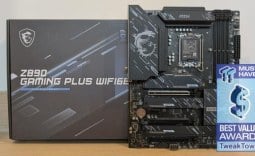 MSI Z890 Gaming Plus WIFI6E Review - Z890 for under $200
 Mortal Kombat (1995) 4K Ultra HD Blu-ray Review
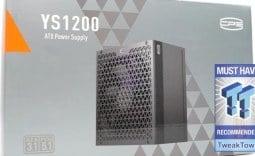 CPS PCCOOLER YS1200 ATX 3.1 80 PLUS Gold PSU Review
 ASRock X870E Taichi White Review: a premium AM5 motherboard with 10G LAN and WiFi 7
 Asetek Initium Pedal Modular Upgrades Review
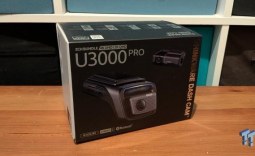 Thinkware U3000 Pro Review - Smart Dashcam with Wi-Fi quirks
 Windows Sandbox is The Windows Security Feature Most People Never Use
 I ditched the Windows 11 context menu for this open-source tool, and here's why
 Windows 11 may be encrypting your drive already, and I checked where my recovery key went
 GIGABYTE's 40 Days of INFINITY celebrates 40 Years of Innovation with stunning GeForce RTX graphics cards and rewards
 I swapped File Explorer for this free file manager and finally got the layout I wanted
 How to tell if someone has been using your Windows PC without your permission
 6 Task Manager tips for troubleshooting Windows performance problems
 ASUS ROG's 20th Anniversary Line-up of Premium PC Gaming Gear has Arrived - Here's Everything You Need to Know
 Six File Explorer tips every Windows user should know
 I switched my PC to encrypted DNS in Windows 11, and browsing felt more private