







Business, Financial & Legal - Page 28
Catch up on business, finance, and legal news shaping tech, gaming, and science - mergers, lawsuits, antitrust, IPOs, Big Tech earnings, and market trends. - Page 28
Stay Updated
Follow TweakTown for breaking tech news, reviews, and daily updates.


As an Amazon Associate, we earn from qualifying purchases. TweakTown may also earn commissions from other affiliate partners at no extra cost to you.
SK hynix is now the second biggest company in South Korea by market value, only behind Samsung
SK hynix has become the second biggest company in South Korea, with its market value soaring above $100 billion for the first time, with Samsung in first place with a market cap of over $360 billion, reports Bloomberg Canada.

SK hynix has been riding an incredibly successful wave of success due to it providing its cutting-edge HBM (High Bandwidth Memory) that's used in AI GPUs, with the South Korean memory giant being the sole supplier of HBM3 memory chips for NVIDIA's mega-successful Hopper H100 AI GPU.
The company recently kicked off its next-gen HBM3E memory wave, which will be used on NVIDIA's new Blackwell B200 AI GPU, leading SK hynix to have around 90% of the HBM market share. Samsung has been falling behind its South Korean rival when it comes to HBM, but Samsung has also recently formed a new dedicated HBM team to get production yields up so it can better fight SK hynix in the HBM arena.
TSMC is preparing partnership with Kyushu University in Japan to recruit new talent
TSMC is reportedly partnering with Kyushu University in Japan, where the two will sign a memorandum for comprehensive collaboration that will be aimed at training and conducting joint research on semiconductors.

The news comes from the usual "sources close to the university," which have said that under the new agreement, TSMC -- the world's largest contract chip manufacturer -- will hold future seminars at Kyushu University. Taiwan Semiconductor Manufacturing Company is expected to cooperate on new research with Kyushu University, too.
TSMC was rumored to be building a new CoWoS advanced packaging facility in Japan, the only one outside of Taiwan. With this new agreement, TSMC and Kyushu University are fully cooperating to revive the semiconductor industry in Japan.
TSMC executives outline how they'll get to a monster 1 trillion transistor GPU
TSMC chairman Mark Liu and TSMC chief scientist Philip Wong have co-written a new piece about the road towards a 1-trillion transistor GPU.

The two Taiwan Semiconductor Manufacturing Company (TSMC) executives pointed to the importance of advanced semiconductor packaging (CoWoS, SoIC, etc.) and the vital role silicon photonics will play in boosting data transfer speeds between chips. The two TSMC executives wrote that if the AI revolution is to continue at its current pace, "it's going to need even more from the semiconductor industry."
Within 10 years, the TSMC executives said we'll need a 1-trillion-transistor GPU, which is a GPU with 10x as many transistors as today. NVIDIA's new Blackwell B200 AI GPU has 208 billion transistors with a chiplet design, and two separate GPUs with 104 billion transistors per chip. 1 trillion transistors will be incredible to see roll out in front of our eyes over the next 5-6 years.
Dutch government to spend $2.7B on enhancing Eindhoven region, to keep ASML in the Netherlands
The Dutch government will spend $2.7 billion on infrastructure and education projects in the Eindhoven region after ASML threatens to move its operations overseas.

According to an emailed statement from the Dutch government on Thursday, the $2.7 billion in funding will be spent upgrading the roads, bus, and train networks, educating technical workers, providing vocational training, funding housing projects, and more.
ASML is the company behind bleeding-edge EUV (extreme ultraviolet) lithography machines, which Intel just took delivery of at the cost of $380 million for US semiconductor manufacturing. The Dutch government recently launched "Operation Beethoven," which will keep Europe's most valuable company --ASML -- from expanding out of the Netherlands.
South Korean government considering semiconductor subsidies for the first time
The South Korean government is considering subsidies for the semiconductor industry. The government reportedly decided to review the provision of subsidies for South Korea's wide-ranging high-tech industries, including the semiconductor industry.

This would be a first for South Korea, where on March 27, the government discussed a comprehensive support plan for specialized clusters in advanced strategic industries based on the proposals at the 5th National Advanced Strategic Industry Committee, which was held at the South Korean Government Complex in Seoul and chaired by Prime Minister Han Duck-soo.
In a new report from Business Korea, the outlet reports that the South Korean government said: "The competition for investment subsidies among rival countries is intensifying," and that "in addition to the current investment incentive support, we will continue to review the expansion of incentive systems for advanced investments".
China president: we don't need ASML, 'no force can stop the pace of China' tech development
ASML is the only company in the world with advanced High-NA EUV lithography machines, with Intel as its latest $380 million customer. Now, Chinese President Xi Jinping has told visiting Dutch Prime Minister Mark Rutte-ASML, who is in the Netherlands, that attempts to restrict China's success to technology will not stop his country's advancement.

The Netherlands slapped down export licensing requirements in 2023, stopping the sale of high-end machinery that is capable of making the world's most advanced processors. The US started by blocking access to advanced chips and the equipment required to make them, citing security concerns with China, seeing the Netherlands impose similar restrictions.
Chinese President Xi Jinping said: "The Chinese people also have the right to legitimate development, and no force can stop the pace of China's scientific and technological development and progress."
Cocoa bean price hits record high: $10,000 per metric ton, biggest shortfall in over 60 years
If you thought the insatiable AI GPU demand was (and is, and will continue) nuts, well... the cocoa beans market is in trouble, with the price of cocoa beans skyrocketing. The price of cocoa beans has smashed through $10,000 a ton for the first time in the futures market.

The last major cocoa tree planting spree happened throughout the early 2000s in West Africa, which, if you didn't think was important to the global cocoa business, you're wrong: West Africa counts for around 75% of the global supply of cocoa beans. After already bad weather amplified by the ongoing El Nino phase of the Pacific Ocean, cocoa trees throughout Ghana and the Ivory Coast have been decimated.
Fast-forward to today, and the world is heading to an annual supply deficit of between 300,000 and 500,000 tons of cocoa beans, the largest shortfall in over 60 years. Right now, the price of cocoa is more expensive than copper on the commodities market, and we're sprinting directly into Easter, which is when chocolate makers have now increased pricing for consumers after multiple years of subpar cocoa harvests in West Africa with another on the way.
LG invests $74 billion in South Korea until 2028: AI, biotech, batteries, clean tech, displays
LG is promising a whopping 100 trillion won (around $74.3 billion USD) in investments in South Korea through 2028. Half of the $74.3 billion will go towards future growth drivers, including AI, biotechnology, batteries, and displays.

According to LG, the huge $74.3 billion sum will be 65% of LG's entire global investment for the same four-year period. The gigantic new investment plan was announced on Wednesday at LG's recent 62nd shareholders meeting. It comes in hot off the heels of fellow South Korean company -- SK hynix -- which announced an even bigger $90 billion investment for the "world's largest mega fab complex" in South Korea.
LG Chairman Koo Kwang-mo, said: "The global management environment in 2024 will have more uncertainties as a number of inflection points reside related to the generalization of AI, decarbonization, and so on. While closely monitoring the industries around our core businesses, we will bolster future businesses like AI, bio and cleantech so they can grow into main pillars of our future business portfolio".
SK hynix plans $4 billion advanced chip packaging facility for Indiana, USA
SK hynix is putting $4 billion worth of investment into a new advanced chip packaging facility that will be built in West Lafayette, a western city in Indiana.

The news is coming from The Wall Street Journal sources, which say it's not yet decided on the new advanced chip packaging investment. If SK hynix goes ahead with its $4 billion investment, we'll see the facility operational by 2028 if there are no delays between now and then.
SK hynix's new advanced chip packaging facility would add between 800 and 1000 new jobs, with this news on the heels of the South Korean giants' plans to invest $90 billion on the world's largest fab complex, which will be completed by 2046. There will be multiple facilities at SK hynix's new fab complex, with some of them operational in the next couple of years.
Microsoft names Pavan Davuluri as its new Windows and Surface chief starting today
Microsoft has just announced that its new Windows and Surface chief is Pavan Davuluri, after losing Panos Panay to Amazon last year, where Microsoft split Windows and Surface teams with two different leaders.

Davuluri took over as the Surface silicon and devices boss, with Mikhail Parakhin leading a new team that will work on Windows and web experiences, but now both Windows and Surface are under the responsibility of Davuluri, as Parakhin has left as he "decided to explore new roles".
Microsoft is pooling the Windows and devices team together, which is news learned by an internal memo from Microsoft's head of experiences and devices, Rajesh Jha, who outlined the new Windows organization. The Verge got their hands on the memo, where Jha explained: "This will enable us to take a holistic approach to building silicon, systems, experiences, and devices that span Windows client and cloud for this AI era".
TSMC gets 3nm orders from Apple, Intel and AMD: for iPhone 16, Lunar Lake CPUs and Zen 5 CPUs
TSMC is enjoying an increasing number of orders as chip giants trip over themselves to get 3nm process node manufacturing for their upcoming designs. Customers include Apple, AMD, Intel, and more.

In a new report from Economic Daily News, we hear that TSMC's new 3nm process node orders are set to see huge growth throughout the year and to "remain robust until the end of the year." Q4 2023 saw TSMC (Taiwan Semiconductor Manufacturing Company) see 15% of its revenue derived from 3nm orders, but that's expected to pass 20% this year.
Apple will use TSMC's new 3nm process node for its upcoming A18 series processor, which will power its next-gen iPhone 16 family of smartphones later this year. Apple will also use the N3 node from TSMC for its upcoming next-gen M4 processor, which will power upcoming MacBook laptops.
SK hynix plans $90 billion on 'world's largest mega fab complex' fully complete in 2046
SK hynix has announced it has planned a mega fab complex called Yongin Semiconductor Cluster, which will begin construction in March 2025, with an estimated completion date in 2046... so we're still a while away.

The South Korean giant has prepared at least $90 billion towards the project, which will see four separate fabbing facilities and would be one of -- if not the -- biggest fab complex on the planet. SK hynix will have new bleeding-edge facilities on its site, as well as room for companies like South Korean rival Samsung to build other facilities there.
SK hynix will have multiple facilities up and running before its 2046 completion date, with the first of the four fabs to be operational in 2027. This is just two years after construction starts, similar to TSMC's new bleeding-edge facility in Japan, which also took just two years to build... meanwhile, Intel and TSMC continue to struggle with US semiconductor fab construction with multi-year delays ahead for Intel's plant in Ohio.
Intel CEO Pat Gelsinger publicly invites Tesla CEO Elon Musk for a tour of semiconductor fab
Intel CEO Pat Gelsinger has publicly invited Tesla and SpaceX CEO Elon Musk for a private tour of Intel's new semiconductor fab lines.

In a new post on X, Intel CEO Pat Gelsinger posted: "@ElonMusk - I was thinking of you at our Chips Act ceremony this week with @POTUS and @SecRaimondo. I am looking forward to giving you a personal tour of our semiconductor fab lines! Follow me so we can migrate our conversations to X on DM".
Gelsinger asked Musk to follow him on X so that the Intel CEO could continue the conversations over the DM, or direct messages. I think it would be a great angle for Intel Foundry Services to have Elon Musk tour their facilities, he's one of the brightest people on the planet with a huge following that would get a glance into what Intel is building on US soil.
Intel's new fab in Germany finds 6000-year-old ancient burial ground from human sacrifice
Intel's new semiconductor chip plant in Germany has had archaeologists working on the site discovering two prehistoric burial mounds with human, and animal remains from a prehistoric human and animal sacrifice.

The State Office for Heritage Management and Archaeology Saxony-Anhalt (LDA) examined the 300-hectare industrial site ahead of site development works planned by Intel in Germany. There, they discovered two approximately 6,000-year-old monumental wooden chambers containing multiple human and animal remains.
Archaeologists traced one of the two burial mounds to the Baalberg group, an anxiety Neolithic culture that existed in central Germany between about 4100 and 3600 BC. There were two large, trapezoidal burial chambers built using wood inside the mound, with a corridor running between the two chambers that experts said would've been used as a procession route by settlers in the next millennium.
NVIDIA's next-gen RTX and AI GPU IP will be found in MediaTek's new Dimensity SoCs
MediaTek announced during GTC 2024 last week that four new automotive SoCs within its Dimensity Auto Cockpit portfolio, with the new chips featuring NVIDIA GPUs ready for AI workloads.

The next-gen Dimensity Auto Cockpit SoCs feature Arm-based Cortex cores under the latest Armv9 instruction set architecture, as well as NVIDIA's next-gen GPU that runs AI workloads including large language models (LLMs). The built-in NVIDIA GPU inside of the SoC will handle real-time ray tracing graphics and even DLSS 3-based AI upscaling.
NVIDIA DRIVE OS is the heart behind the system, which allows automakers to use all of NVIDIA's software and IP designed for the platform.
DOJ officially comes after Apple for its iPhone ecosystem being illegal
The Department of Justice (DOJ) is officially coming after Apple and its walled-garden ecosystem, with the regulator claiming Apple has forced its way into becoming a monopoly that gained it an "astronomical valuation" at the expense of consumers, developers, and competing phone makers.

The new lawsuit filed on Thursday by the DOJ states that Apple implemented changes such as blocking cross-platform messaging apps, limiting third-party wallet and smartphone compatibility, disrupted non-Appe Store programs/cloud streaming services in an effort to keep consumers purchasing iPhones. CNBC reports that Apple's fight against the lawsuit will cost the company money, which may prevent it from releasing new products and services, thus hurting consumer demand.
Notably, 16 attorneys general stated that Apple's ecosystem anticompetitive tactics are also within its advertising, browser, FaceTime, and news offering, with Attorney General Merrick Garland saying in the recent release, "If left unchallenged, Apple will only continue to strengthen its smartphone monopoly." An Apple spokesperson told CNBC that the company completely disagreed with the lawsuit and would defend against it.
China is 'on track to be ready to invade Taiwan by 2027' top US admiral testifies
A top US admiral has just testified that China is building its military and nuclear arsenal on a scale not since seen World War II, preparing to invade Taiwan by 2027.

Admiral John Aquilino, the leader of the Indo-Pacific Command, told the US House Armed Services Committee in a prepared testimony on Tuesday that Beijing's defense budget has ballooned by 16% over the last few years to over $223 billion. In the three years since he's taken command, he said that the People's Liberation Army (PLA) had added another 400 fighter jets and 20 new major warships to its arsenal. Admiral Aquilino said China has doubled its ballistic and cruise missile inventory since 2020.
Admiral Aquilino said: "All indications point to the PLA meeting President Xi Jinping's directive to be ready to invade Taiwan by 2027. The PLA's actions indicate their ability to meet Xi's preferred time-line to unify Taiwan with mainland China by force if directed".
NVIDIA CEO says the company needs to 'create more resilience in our supply chain' for AI GPUs
NVIDIA has finally unveiled its next-gen Blackwell B200 AI GPU and new DGX systems for the future of AI, with CEO Jensen Huang saying that his company needs to focus on both compliance and resilience when it comes to serving the Chinese market.

Jensen noted that many parts of NVIDIA's systems are made in China, saying "that's just the truth," and that NVIDIA needs to do everything in its power to create more resilience in the supply chain. Jensen said: "There are two things we have to do right away. One is to make sure we understand the policies and comply. And the other is to do everything we can to create more resilience in our supply chain".
Jensen noted that many of NVIDIA's systems use parts made in China, where the NVIDIA CEO added: "That's just the truth," adding that the same thing is true for both the auto and defense industries. Jensen continued: "The supply chain of the world is quite complicated. We have every confidence that the goal of the nations is not adversarial... the doomsday scenario is not likely to happen".
Intel gets $19.5 billion in funding from CHIPS Act for US semiconductor manufacturing
The CHIPS and Science Act was signed by the Biden administration in 2022, authorizing $280 billion in new funding to see the US becoming the beacon for the best semiconductor factories and chips made on the planet.

Today, the Biden administration unlocked $53.7 billion to unleash R&D and semiconductor manufacturing, with billions going to the likes of Intel, Samsung, and TSMC. The US Commerce Department has announced that Intel has signed a non-binding preliminary memorandum of terms for federal grants of up to $8.5 billion, while Intel can access up to $11 billion of loans from the CHIPS Act.
Intel will also claim US Treasury Department's Investment Tax Credit (ITC) of up to 25% for its planned investments of around $100 billion to establish multiple facilities and fabs in the USA. This includes a new fab in Arizona, an advanced packaging center in New Mexico, a leading-edge manufacturing site in Ohio -- which was just delayed from 2025 to 2027 or 2028 -- and a new R&D center in Oregon.
Intel delays launch of Ohio fab plant from 2025, now expected somewhere in 2027-2028
It looks like there are some major issues with US semiconductor manufacturing plans, with Intel pushing out the launch date of its bleeding-edge plant in Ohio. It was meant to be producing chips in 2025, but now that has been delayed until somewhere between 2027-2028.

Intel is working on two new semiconductor manufacturing facilities in Licking County, Ohio, with the company promising $20 billion of investment into the construction project and that the fabs would be operational in 2025. But in a new report published by Ohio Governor Mike DeWine on Wednesday, Intel has coughed up just $1.5 billion of the money and that the fabs would be operational "between 2027 and 2028".
Intel promised $20 billion but has so far only committed around $4.5 billion into the Ohio plant project, with over $2 billion received through incentives through the CHIPS Act, from which Intel has been demanding more money. But now, the fab that was meant to be ready by next year, is another two to three away.
 Giveaway: 12 Winners Will Score MONTECH NX400 and NX600 CPU Coolers
 GTA 6 leaks have reportedly led to a morale drop at Rockstar, with Netflix frustrated as well
 The Blood of Dawnwalker won't hit 60 FPS on any console, PS5 Pro tops out at 40 FPS
 AMD claws back ground against Intel in the CPU market, climbs to 35% share in desktop CPUs
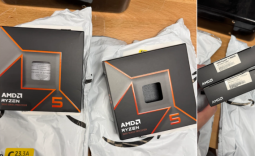 Redditor receives not one but TWO empty boxes of Ryzen 5 9600X from Amazon
 Xbox Series X25 Limited Edition Console is priced at $900, arrives November 2026
 Dave Bautista officially cast as Kratos in Amazon's 'God of War' TV Series, replaces Ryan Hurst
 Take-Two begins the hunt for GTA 6 leaker CyberLeek, subpoenas Microsoft and Discord
 PlayStation 6 handheld not expected to stay under $600, warns leaker
 AMD confirms the Radeon RX 9050 4GB will have a tiny 64-bit bus and just 16MB Infinity Cache
 Intel 'Nova-Lake-S' 28-core CPU with bLLC reportedly draws 296W at PL2
 Cooler Master MasterFan A120 Fan Review
 GIGABYTE MO27Q2A Gaming Monitor Review: 1440p, 280Hz, and QD-OLED is a winning combination
 Cooler Master V8 ACE 3DHP BLACK CPU Cooler Review
 ASUS ROG Strix XG129C Review: A $199 Gaming Monitor You Don't Play Games On
 Cooler Master HAF II 500 Mid-Tower Chassis Review
 Corsair HS35 v3 Wireless Gaming Headset Review - An Affordable Winner
 D-Link F518 5G Wi‑Fi 6 AX1800 Mobile Hotspot Review: All-Day Mobile Hotspot
 Bose Lifestyle Ultra Speaker Review - Impressively Detailed Room-Filling Sound
 MSI Z890 Gaming Plus WIFI6E Review - Z890 for under $200
 Mortal Kombat (1995) 4K Ultra HD Blu-ray Review
 Using Multiple Monitors? Change these Windows settings for a Better Experience
 Windows Sandbox is The Windows Security Feature Most People Never Use
 I ditched the Windows 11 context menu for this open-source tool, and here's why
 Windows 11 may be encrypting your drive already, and I checked where my recovery key went
 GIGABYTE's 40 Days of INFINITY celebrates 40 Years of Innovation with stunning GeForce RTX graphics cards and rewards
 I swapped File Explorer for this free file manager and finally got the layout I wanted
 How to tell if someone has been using your Windows PC without your permission
 6 Task Manager tips for troubleshooting Windows performance problems
 ASUS ROG's 20th Anniversary Line-up of Premium PC Gaming Gear has Arrived - Here's Everything You Need to Know
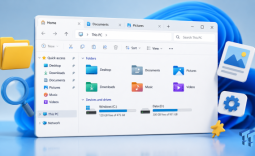 Six File Explorer tips every Windows user should know