






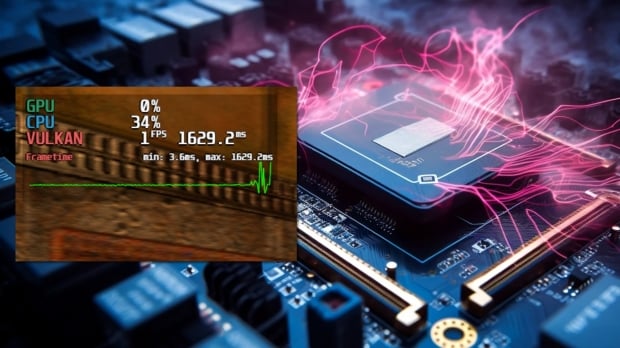




Real-time ray tracing has been one of the biggest advances in GPU rendering and PC gaming in the past decade. Due to the sheer hardware grunt required to achieve it, it kickstarted the push into the world of DLSS AI-powered upscaling and Frame Generation.
In 2024, we're at the point where some high-end GPUs in the GeForce RTX line-up can run games like Cyberpunk 2077 and Alan Wake II with full path-traced lighting, offering a glimpse into the future of immersive game visuals. So, the idea of real-time ray-tracing or going "RTX On" with just a CPU sounds like a recipe for poor performance.
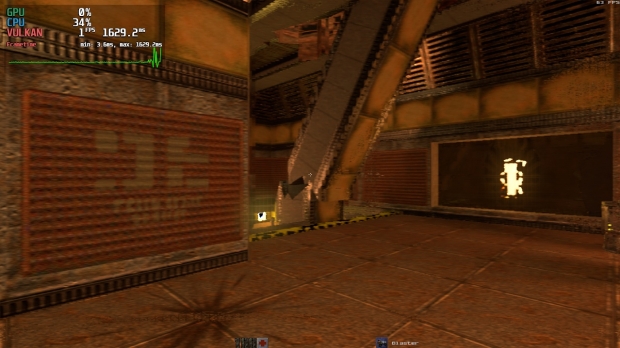
And that's what you've got with the latest Mesa 3D Graphics Library and its Vulkan driver-CPU-level support for ray tracing. The library ports the work to support ray tracing on older Radeon GPUs to CPUs, with Mesa developer Konstantin Seurer writing 'don't ask about performance' underneath a Quake II RTX screenshot.
Quake II RTX is an NVIDIA-developed real-time ray-tracing mod for id Software's iconic shooter. It was released alongside its GeForce RTX 20 Series debut, pre-dating the rise of DLSS rendering to boost performance.
The screenshot shows Vulkan RT performance is 1 FPS with a frame time of over 1600ms. According to someone who contacted the developer, the CPU used was the Ryzen 5600X, and the overlay reported incorrect data. The actual performance was closer to one frame every 15 minutes.
Interestingly, Intel showcased a ray-traced version of Enemy Territory: QUAKE Wars back in 2008 (shout out to Videocardz for remembering this), with Team Blue able to get that running at close to 30 FPS at 720p on a 24-core CPU. And seeing as integrated GPUs in 2024 are more powerful than ever, ray-tracing without a discrete GPU (with decent performance) is simply a matter of when.
The CPU-based Vulkan ray-tracing will be available in the upcoming Meda 24.1 release, though don't expect it to lead to CPU-based RT gaming.


 PS5 Linux can run path-traced Cyberpunk 2077 at 35 FPS, but Quake II RTX is the surprising winner
 Max Payne 2 RTX Remix looks incredible, but performance drops from 1200 FPS to below 40 FPS
 Alan Wake 2 is the first game to use NVIDIA's groundbreaking new RTX Mega Geometry tech
 Half-Life 2 RTX Remix with NVIDIA's new groundbreaking Neural Shaders running on the RTX 5090
 F1 24 with ray-traced reflections, shadows, and more requires RTX 4080 SUPER for native 4K 60
 007 First Light has Denuvo DRM added just before launch - and a pre-order cancelling rebellion is underway
 Assassin's Creed Black Flag Resynced will get a PS5 Pro-dedicated version
 Google unveils the new generation of ads coming to AI-powered Search
 Samsung Chairman Lee Jae-yong visits Taiwan to lure MediaTek away from TSMC
 GTA 6 Trailer 3 release date, and 'a little something' at Sony's State of Play
 Has your Chromecast just stopped working? You're not alone as reports flood in of problems with first-gen model
 Assassin's Creed Black Flag Resynced is a REMAKE, not a remaster, confirms Ubisoft
 Destiny 3 not in development, Bungie to hold more layoffs following Destiny 2's retirement
 Fallout 4 mod storage increases to 100GB on Xbox Series X/S and 15GB on PlayStation consoles
 GTA 6 expected to help drive record $8.1 billion earnings for Take-Two
 GAMDIAS Atlas P6 CG Dual Chamber Mid-Tower Chassis Review
 SAPPHIRE Radeon RX 9070 XT NITRO+ PhantomLink Review - RDNA 4's Beast Mode
 MSI Roamii BE Pro Wi-Fi 7 Mesh System Review - Affordable price, good mid-range performance
 SAMA S50 Mid-Tower Chassis Review
 Montech Ten SFF Chassis Review
 PCCooler CPS RZ620M X CPU Cooler Review
 Memblaze PBlaze 7 7A40 Ocean 61.44TB Enterprise SSD Review - Oceans of QLC at 3.3 million IOPS
 MOZA SGP Sequential Sim Racing Shifter Review
 COLORFUL iGame GeForce RTX 5070 Ultra OC Review - When Style and Performance Meet
 GIGABYTE Z890 AORUS Elite WiFi7 Plus Motherboard Review - Right in the sweet spot
 The Send To menu is the right-click feature on Windows 11 that nobody bothers to customize
 Windows 11 will not let you pin a folder to the taskbar, but a 30-second workaround does
 ASUS ProArt Displays Unlock Creativity with Professional Monitors for Everyone
 What Happens If You Don't Activate Windows 11? 5 Downsides Explained
 Fast Internet on Your Phone but Slow on Your PC? Try These Fixes
 The Snipping Tool quietly became the only screenshot app I keep installed on Windows 11
 How to Set Up a Windows Computer for a Senior User
 Bluetooth Toggle Missing in Windows? Try These Fixes
 GPU Overclocking Basics in Windows 11: Safe Performance Gains Without the Guesswork
 GIGABYTE's new Ultimate OLED Gaming Monitor Bundle includes Xbox Game Pass