




If anyone is building a PC and asks our advice, we always point out that while it might seem tempting to get a cheap PSU, this isn't a good approach - and if we ever needed an incident to effectively illustrate why, well, here it is.

As Tom's Hardware spotted, a Redditor bought a cheap (claimed) 500W power supply - an Equites T500 (no, we've never heard of the brand either) - and then opened it up.
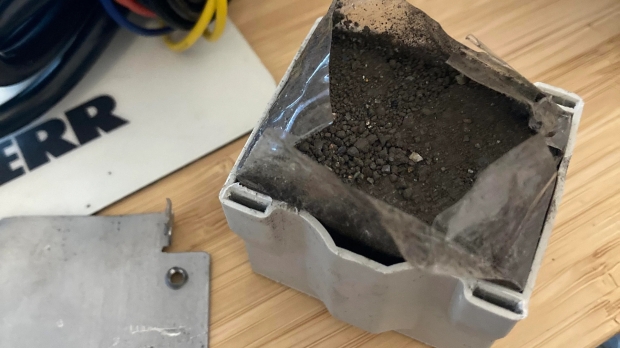
To their surprise, they found at one side of the power supply, a block was attached, filled with iron filings. It had no functional purpose, and wasn't connected to anything, the block was just sat to one side of the PSU, doing nothing.
So what was the point of this addition? Well, it's just a matter of making the power supply feel heavy.
Generally speaking, high-quality (and high wattage) power supplies are pretty weighty things, so the maker has shoved this block in so the Equites T500 doesn't feel like a light and airy component, but instead something reassuringly hefty.
As another Redditor (Hattix) cautioned:
"That is not a 500W PSU. In fact, I'd barely call it a PSU. It has no input protection, no output protection, doesn't seem to have an OCP controller (you'd see the shunts) or anything a PSU needs. Heck, there's no class-Y capacitor, no inrush limiting, and I'm fairly sure those two resistors aren't discharge resistors."
The poster further warned that this unit was more like a 250W/300W PSU, and using such a power supply - with no regulatory conformance marks - would even render your house insurance invalid if the unit started a fire (which is a distinct risk, going by what Hattix claims).
Granted, this is an extreme scenario, but it does underline the point that you don't want to go for the super-cheap end of the market, or have any truck with unrecognizable no-name brands.
The sad truth is that when putting together the components for a new PC, or configuring one at a PC vendor's website, people often focus on getting the most out of their CPU, GPU, memory, motherboard and other core components, spending all the money there, and as little as possible on the PSU (and case).
Now, while you don't have to buy a tier-one power supply that costs a fortune - well, unless you're planning an RTX 4090 and other supercharged components in some kind of beefy gaming PC - you should steer well away from lower-tier units in our books.
It won't cost all that much to get something decent in the way of a mid-tier PSU from a trusted and known brand, and it's well worth doing this. After all, if your budget power supply goes 'pop' down the line, it could take some of your other more expensive components with it (or even all of them).