

Newsletter IconFacebook IconX IconThreads IconInstagram IconYouTube IconPinterest Icon
Giveaway: Win an NZXT H6 RGB+ Case, Kraken Elite AIO, RGB Fans and 1200W PSU

NASA confirms humans will never go to the biggest planet in our solar system

NASA has admitted that humans will never go on a trip to the biggest planet in our solar system, but we may go to one of its promising moons.

NASA confirms humans will never go to the biggest planet in our solar system
Comments
Tech and Science Editor
Published
Updated
1 minute & 15 seconds read time
Voice: Jak Connor
0:00 / --:--
Use left and right arrow keys to seek audio.

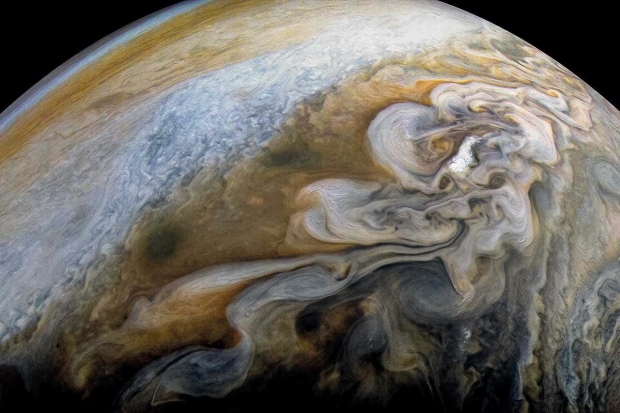
NASA has taken to its social channels to say that humans will never visit the biggest planet in the solar system, but we may visit one of its moons.

That planet is, of course, Jupiter, and according to NASA, humans won't be going there anytime soon - in fact, no human currently alive will be visiting Jupiter. Why? Well, the answer is simpler than you may expect, Jupiter is entirely made of gas, hence its categorization as a gas giant. Additionally, the scientific value of humans visiting isn't worth the risk when valuable observations can be conducted from space and ground telescopes. So, with Jupiter crossed off the list of potential locations to visit, what's the next best option?

Europa, one of Jupiter's 95 moons, orbiting the massive gas giant. NASA has already selected this moon as a location for a satellite to be launched. This mission is called "Europa Clipper" and is scheduled to launch next year on the back of a SpaceX Falcon Heavy rocket. Europa is slightly smaller than Earth's moon and is the sixth closest to Jupiter. Furthermore, Europa is made of silicate rock and has a water-ice crust that researchers believe may have oceans beneath its surface that contain extraterrestrial life.
NASA confirms humans will never go to the biggest planet in our solar system 594114

NASA may eventually send astronauts to explore the surface of Europa, but for now, the space agency is pushing for the public to be content with engraving their name on the Europa satellite. The public has been quick to remind NASA about how technology can develop in leaps and bounds in such a short amount of time and that its pessimism isn't appreciated.

Photo of the Starfield: Standard Edition - Xbox Series X

Best Deals: Starfield: Standard Edition - Xbox Series X

Prices last scanned 31 minutes ago

* Prices may be inaccurate. As an Amazon Associate, we earn from qualifying purchases. We earn affiliate commission from any Newegg or PCCG sales.

News Source:wccftech.com

Comments

Tech and Science Editor

Email IconX IconLinkedIn Icon

Jak joined TweakTown in 2017 and has since reviewed 100s of new tech products and kept us informed daily on the latest science, space, and artificial intelligence news. Jak's love for science, space, and technology, and, more specifically, PC gaming, began at 10 years old. It was the day his dad showed him how to play Age of Empires on an old Compaq PC. Ever since that day, Jak fell in love with games and the progression of the technology industry in all its forms.

Stay Updated

Follow TweakTown for breaking tech news, reviews, and daily updates.

Add TweakTown as a preferred source on GoogleFind TweakTown on Apple News
Newsletter Subscription