



The Steam Deck has been out for quite some time, and has been undeniably popular - particularly at its launch - but we've now seen the first signs that sales for the handheld gaming PC are starting to fall off.
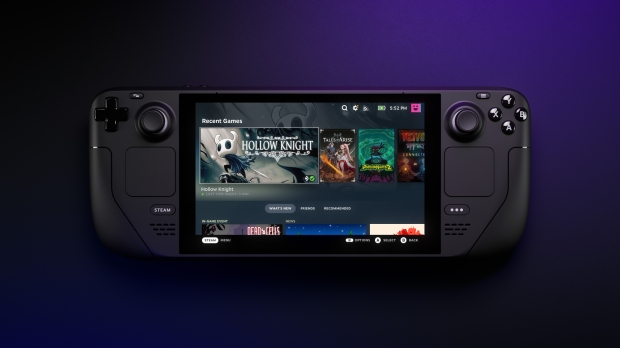
Valve's Steam Deck was launched early in 2022, and has been around for over a year and a half now, and in that time it has consistently been up there among the company's best-selling products.
As Gaming On Linux reports, the Steam Deck has been in the top 10 of Valve's own weekly top-selling products (globally) for 83 weeks (which is, of course, mostly games - this is all the firm's sales, hardware and software).
If that sounds surprising, remember that the ranking is compiled not by units sold, but total revenue, so the price tag of the Steam Deck (particularly the beefier models) is going to skew that a lot (compared to a game).
At any rate, for the first time ever since its release, the Steam Deck dropped out of the top 10 in the last week of September, slipping to number 11, and then in the first full week of October (last week), it dropped further to number 15.
As Gaming On Linux points out, the Steam Deck has had such a consistently good run on this best-seller chart that it actually occupied the top spot for over 20 weeks of the time the portable spent in the top 10. Pretty impressive indeed.
So, why is the Steam Deck finally slipping with its money-making potential here? Well, over time, it's inevitable that there will be fewer folks wanting to buy Valve's handheld gaming PC. It's a great device, there's no argument about that, but there's only a certain niche audience who want such a portable.
On top of that, the marketplace for these miniature gaming PCs is getting a more and more crowded place.
We have notable new entries to the scene, such as the ASUS ROG Ally, which has been very well-received (largely), as well as a number of other devices from more unknown firms.
All these rivals are, of course, competition for the attention of buyers (particularly the ASUS offering), and that's bound to poach at least some sales from Valve's Steam Deck.
So, it's a combination of a natural decline in pace as many of the target audience now have their Steam Deck, and an increase in the competition in this space. Both of which are predictable factors, really - the Steam Deck's popularity right from when it was announced meant it was pretty inevitable a lot of copycat hardware would be produced.