






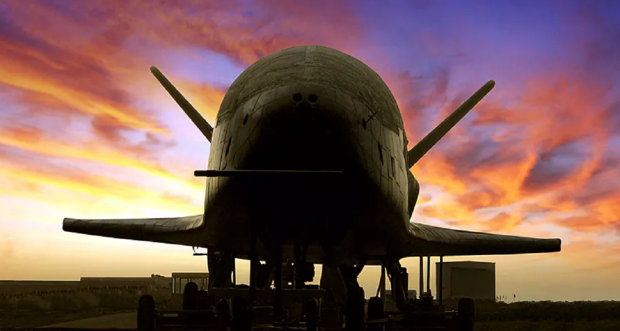




One of the most secretive missions under the US military has recently reached a milestone, as the X-37B plane hit 900 days in orbit.
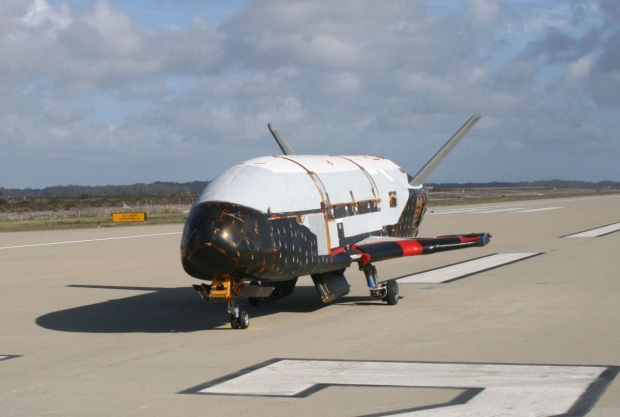
The elusive X-37B space plane was originally launched on May 17, 2020, from Cape Canaveral Space Force Station in Florida, and recently the space plane managed to pass 900 days in orbit while carrying its experimental payload. Notably, the mission currently doesn't have a public end date announcement, which means the X-37B may just keep on flying around Earth until it simply just isn't possible anymore - whenever that will be.
Furthermore, this particular X-37B robotic space plan is technically called Orbital Test Vehicle 6, or OTV-6. Space.com reports that OTV-6 successfully deployed the small satellite called FalconSat-8, which was developed by the US Air Force Academy, while also currently hosting two NASA experiments aimed at testing radiation impact on seeds used to grow food.
Those aren't the only experiments aboard OTV-6 as the US Naval Research Laboratory also has an experiment onboard, which is a new piece of technology called the Photovoltaic Radio-frequency Antenna Module, which is designed to convert solar power into radio frequency microwave energy.
The OTV-6 undoubtedly has many other experiments aboard, but considering the mostly classified nature of the X-37B program, the public isn't at liberty to find out what those experiments entail or why they are being tested over such a long flight. However, what is known is that the X-37B program tests advanced aviation systems such as guidance control, navigation, thermal protection, high temperatures, seals, electromechanical flight systems, autonomous orbital flight systems, reentry to Earth, and much more.
For those wondering about previous OTV missions, the first was launched on April 22, 2010, and landed on December 3, 2010, spending 224 days in orbit. OTV-2 launched on March 5, 2011, and landed on June 16, 2012, reaching 468 days in orbit. OTV-3 launched on December 11, 2012, and landed on October 17, 2014, hitting 674 days in orbit. OTV-4 launched on May 20, 2015, and landed on May 7, 2015, reaching 718 days in orbit. OTV-5 launched on September 2017 and landed on October 27, 2019, spending 780 days in orbit.
OTV-6 may very well reach 1,000 days in orbit. No one really knows.


 Intel USAI initiative shows commitment to US manufacturing, announces AI agents for US military
 Here's every game trailer and release date from PlayStation's State of Play
 TSMC begins mass production at its 1st Japan fab, will break ground on 2nd fab in Q1 2025
 DeepSeek database contains chat history, internal secrets for anyone to see
 NASA photographs mile-wide asteroid approaching Earth with its own moon
 Trump Mobile website is reportedly leaking customer data including names, addresses and order numbers
 Ubisoft reports loss of 1.3 billion Euros on costly game cancellations and delays
 PS5 Linux can run path-traced Cyberpunk 2077 at 35 FPS, but Quake II RTX is the surprising winner
 PlayStation State of Play returns June 2, will showcase 1 hour of footage including Marvel's Wolverine
 Ubisoft to release new Assassin's Creed, Far Cry, and Ghost Recon games by March 2029
 Xbox hires analyst who predicted GTA 6 may cost $100 to lead gaming strategy
 Kingdom Come dev Warhorse working on new Lord of the Rings Middle-earth RPG
 Adding PS5 Pro's upgraded PSSR into 007 First Light was 'remarkably smooth,' dev IO Interactive says
 AMD unveils EPYC 8005 'Sorano' server CPUs, up to 84 cores and 225W TDP
 Fate of Metro,Tomb Raider, Lord of the Rings, Kingdom Come and more now in the hands of new Fellowship Entertainment spin off
 MSI Roamii BE Pro Wi-Fi 7 Mesh System Review - Affordable price, good mid-range performance
 SAMA S50 Mid-Tower Chassis Review
 Montech Ten SFF Chassis Review
 PCCooler CPS RZ620M X CPU Cooler Review
 Memblaze PBlaze 7 7A40 Ocean 61.44TB Enterprise SSD Review - Oceans of QLC at 3.3 million IOPS
 MOZA SGP Sequential Sim Racing Shifter Review
 COLORFUL iGame GeForce RTX 5070 Ultra OC Review - When Style and Performance Meet
 GIGABYTE Z890 AORUS Elite WiFi7 Plus Motherboard Review - Right in the sweet spot
 PNY GeForce RTX 5080 Slim OC Review - A Compact 4K Powerhouse
 HP OmniBook 7 (Panther Lake) 16" Laptop Review
 Windows 11 will not let you pin a folder to the taskbar, but a 30-second workaround does
 ASUS ProArt Displays Unlock Creativity with Professional Monitors for Everyone
 What Happens If You Don't Activate Windows 11? 5 Downsides Explained
 Fast Internet on Your Phone but Slow on Your PC? Try These Fixes
 The Snipping Tool quietly became the only screenshot app I keep installed on Windows 11
 How to Set Up a Windows Computer for a Senior User
 Bluetooth Toggle Missing in Windows? Try These Fixes
 GPU Overclocking Basics in Windows 11: Safe Performance Gains Without the Guesswork
 GIGABYTE's new Ultimate OLED Gaming Monitor Bundle includes Xbox Game Pass
 I automated 5 annoying Windows maintenance tasks, and my PC basically runs itself