



Elon Musk's SpaceX has another successful launch under its belt as it recently deployed fifty-one new Starlink satellites and a space tug into orbit.
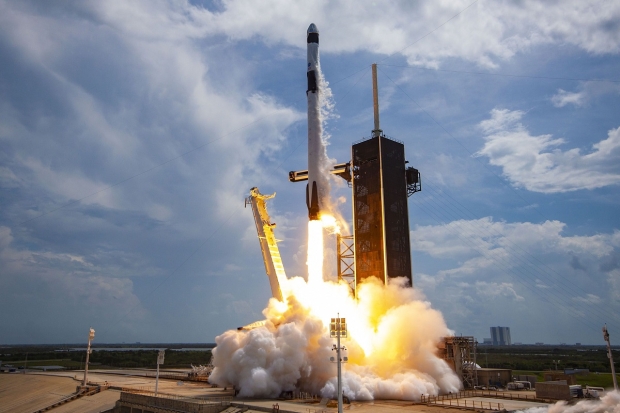
SpaceX has taken to its social channels and confirmed via its livestream that it's Falcon 9 rocket has completed its mission of deploying Starlink Group 4-20 and Sherpa-LTC2. The rocket lifted off from Cape Canaveral Space Force Station in Florida on Sunday night, and about 49 minutes after liftoff, it deployed the Sherpa-LTC2, followed by the deployment of the Starlink satellites 23 minutes later.
The space tug, Sherpa-LTC2, was provided by Spaceflight Industries and developed by its subsidiary Andrews Space. The space tug is carrying a payload for Boeing's Varuna Technology Demonstration Mission (Varuna-TDM), which aims to test the V-band communications for a proposed constellation of 147 non-geostationary broadband satellites. SpaceX took to its Twitter account to share updates on the launch, with it tweeting in real-time that it had completed its 40th mission of the year so far.
Additionally, the Falcon 9 rocket made a safe landing on a drone ship called Just Read the Instructions, which marked that particular booster's seventh flight. Furthermore, SpaceX released some incredible photos of the Falcon 9 engine firing and a long exposure shot of it blasting its way through Earth's atmosphere.
So far, SpaceX has sent more than 3,000 Starlink satellites into orbit in an effort to create a large constellation that will provide broadband internet to users all around the world. The company has already conducted more than 25 Starlink-centered missions throughout 2022 and is no doubt will continue to ramp up its efforts to get as many Starlink satellites in orbit as possible. SpaceX has already received approval for 12,000 Starlink satellites, with the possibility of international regulators giving Musk the approval for 30,000 total.
Starlink won't just be for home internet, as SpaceX has announced plans to equip cruise liners, planes, and even cars with Starlink compatibility. Recently, SpaceX founder and CEO Elon Musk said that plans were being developed between SpaceX and T-Mobile to get Starlink available for mobile phones. In other SpaceX news, NASA has agreed to pay the company $1.4 billion for space transportation.